I remember the first time I hung a heavy set of velvet curtains in my old apartment. I’d bought this fancy, ornate rod, and I was so proud of how it looked. Within a week, though, the whole thing was sagging like a sad, droopy mustache. One side was noticeably lower than the other, and I was constantly worried it was going to rip right out of the drywall. That’s when I learned a hard, humbling lesson about what’s really holding up your window treatments. So, are wall anchors necessary for curtains? Let me tell you, it’s not always a simple yes or no.
Honestly, the default answer for most people is probably leaning towards yes, but the truth is a bit more nuanced. It depends on a lot of factors, from the weight of your drapes to the type of wall you’re dealing with.
The Weighty Truth About Curtains
Look, I’ve hung more curtains than I care to admit. From sheer, floaty voiles that weigh next to nothing to blackout monstrosities that feel like they’re carved from lead, I’ve seen it all.
The common advice you’ll find plastered everywhere is to just screw the curtain rod brackets directly into the wall studs. And yeah, if you can hit a stud every single time, and every single stud is perfectly aligned with where you need your rod, then bully for you.
But for the rest of us? That’s not always a reality. My living room window, for instance, has studs spaced about 20 inches apart, but I wanted my rod centered, which put the brackets smack in the middle of a drywall void. Zero chance of hitting wood there.
This is where the myth that you must hit a stud starts to unravel. Not every wall is perfectly structured for your exact curtain rod placement needs. Even if you do hit a stud, how strong is that stud, really?
Old houses can have questionable framing. Then there’s the weight issue. Think about it: you’ve got the fabric itself, which can be surprisingly heavy, especially if it’s lined or made of thick material like velvet or thermal fabric. Then you’ve got the rod, finials, and any decorative elements.
Now add wind, if you have drafts, or just the natural sway that happens when you open or close them. It all adds up.
I once installed a double rod system with heavy linen curtains, and even with one bracket hitting a stud, the other bracket, which was only in drywall, started to pull away after about six months. It wasn’t a catastrophic failure, but it was definitely a ‘uh oh’ moment, a visual reminder that the drywall alone wasn’t cutting it.
The real problem isn’t just the weight of the curtain; it’s the use. The further the rod sticks out from the wall, the more force is applied to those brackets, especially when you’re tugging on the curtains to open or close them. That’s use, my friends.
And drywall, bless its flimsy heart, is not designed for sustained used forces. It crumbles.
It cracks. It gives way. You can patch it, sure, but then you’re back to square one, hoping the patch holds. So, while hitting a stud is the ideal, it’s often not achievable or even sufficient on its own.
This is why I’ve become a firm believer in the humble wall anchor for curtain rods, especially for anything beyond the lightest of treatments.
When Drywall Becomes Your Enemy
Let’s talk about drywall. It’s cheap, it’s everywhere, and it’s surprisingly brittle. When you’re just hanging a small picture frame, it’s usually fine. You can get away with a small nail or a tiny screw. But curtain rods? They’re a different beast. The forces involved are significantly greater. You’re not just dealing with static weight; you’re dealing with dynamic forces, especially when you pull the curtains. And let’s be honest, how many of us are gentle with our curtains? I’m not. I yank them open in the morning, often while half-asleep, and I slam them shut at night to block out the streetlights. Those yanks and slams are death to drywall anchors that aren’t up to the task.
I had a moment of sheer panic a few years back. I’d hung a set of medium-weight cotton curtains in my guest bedroom. I thought I was being clever by spacing the brackets perfectly, knowing I wouldn’t hit studs. I used those little plastic expansion anchors you get in a pack of fifty for about $3. (See Also: Can Concrete Anchors Be Used In Brick )
They looked okay initially. Fast forward a couple of months, and I noticed a tiny crack radiating from one of the screw holes.
Then another. And another. It looked like a spiderweb of impending doom.
I started gently pushing on the bracket, and the whole thing wobbled alarmingly. The plastic anchors had started to disintegrate or loosen their grip. It was a stark reminder that not all anchors are created equal, and cheaping out here is a recipe for disaster. The screws, which were supposed to be held fast, were just spinning in a larger, crumbling hole.
This experience really drove home the importance of selecting the right anchor for the job. It’s not enough to just shove any old plastic plug into a hole. You need anchors designed to handle shear and pull-out forces.
Some anchors are designed for light-duty tasks, while others are engineered to support substantial weight. For curtains, especially heavier ones, you’re looking at the latter. The type of wall material is also a huge factor.
Plaster and lath, common in older homes, can be even more unpredictable than drywall. They can be brittle and prone to cracking if you’re not careful, and the lath itself might not be securely fastened. So, while you might be tempted to skip anchors to save a few bucks or because you think it’s overkill, I’m here to tell you that for most curtain installations, especially if you can’t guarantee hitting studs, anchors are not just a good idea; they’re a necessity for a long-lasting, secure installation.
Types of Anchors: What Actually Works
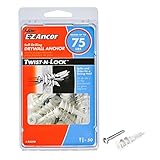
Okay, so we’ve established that anchors are often your best friend. But not all anchors are created equal. This is where people get confused, and frankly, where I’ve wasted money on products that overpromised and underdelivered. You see those little white plastic expansion anchors? They’re fine for a lightweight shelf or a small picture, but for curtains? I wouldn’t trust them with anything heavier than a single layer of sheer linen. They rely on friction and the slight expansion of the plastic to hold, and over time, especially with the constant tugging and vibration from curtains, they tend to loosen and fail. I’ve had them crumble into dust inside the wall cavity.
My go-to anchors for curtain rods, and honestly for most medium-to-heavy duty tasks in drywall, are the toggle bolts and the molly bolts (also known as hollow wall anchors). Toggle bolts are fantastic because they have these large wings that spread out behind the drywall, creating a much larger surface area for support. You drill a bigger hole, shove the bolt through, and when you tighten the screw, those wings flip open and grip the back of the drywall like a champ.
They can hold a surprising amount of weight, often hundreds of pounds. The only downside is you need a fairly large hole, and they can be a bit fiddly to install.
Molly bolts are similar in principle but have a metal sleeve that expands as you tighten the screw, creating a threaded receiver in the wall. They’re generally easier to install than toggle bolts and offer excellent holding power. I’ve found that the 1/4-inch or 3/8-inch sizes are usually more than sufficient for most curtain rod brackets.
Then there are screw-in anchors, which you just twist directly into the drywall. Some of these can be quite strong, especially the metal ones, and they’re incredibly easy to install. You just screw them in, and then screw your bracket screw into them. For lighter curtains or rods, these might be enough. However, I’m still a bit skeptical of their long-term holding power compared to toggles or mollies, especially with the constant stress of curtain use. They can sometimes strip the drywall if you overtighten them or if the drywall itself is a bit soft. My personal hierarchy for curtain rod anchors usually goes like this:
| Anchor Type | Holding Power | Ease of Install | Best For | My Verdict |
|---|---|---|---|---|
| Plastic Expansion | Low-Low | Easy | Light pictures, small decor | Avoid for curtains. Too flimsy. |
| Screw-in (Heavy Duty) | Medium-High | Very Easy | Medium weight curtains, lighter rods | Decent, but check tightness often. |
| Molly Bolt (Hollow Wall) | High | Medium | Medium-heavy curtains, standard rods | My go-to for most situations. Reliable. |
| Toggle Bolt | Very High | Medium-Hard | Heavy curtains, large rods, questionable walls | The bomb-proof option. Use when you need serious grip. |
The key is to match the anchor’s weight rating to the expected load. Most anchor packaging will give you a pound rating for shear strength (pulling down) and pull-out strength (pulling out). Always err on the side of caution and pick an anchor with a significantly higher rating than you think you’ll need. Better safe than sorry, especially when you’re talking about a curtain rod that’s 8 feet wide and holding up 20 pounds of fabric!
Common Mistakes and How to Avoid Them
I’ve made my fair share of DIY blunders, and when it comes to hanging curtains, there are a few classic mistakes that pop up time and time again. One of the biggest is simply not planning enough.
People eyeball it, they guess where the studs are (or aren’t), and they end up with a crooked rod or, worse, a bracket that pulls out of the wall. Always use a stud finder, even if you plan to use anchors. (See Also: Can Cords Be Used To Make Anchors Climbing )
Knowing where the studs are can help you position your rod more strategically, potentially allowing you to use fewer anchors or at least place them closer to a stud for added support. If you can get at least one bracket into a stud, that’s a huge win.
Another common mistake is using the wrong kind of anchor, like I mentioned before. People grab the cheapest, smallest plastic anchors they can find because they’re easy. But they just don’t have the holding power for the forces involved with curtain rods. When you’re buying anchors, look for ones specifically rated for heavy-duty use or hollow walls.
And always, always check the weight rating. Don’t just assume an anchor will work. It’s like trying to build a bridge with toothpicks; it’s just not going to hold. I remember one friend who tried to hang a very heavy, floor-to-ceiling curtain.
He used those little self-drilling drywall anchors. Within a month, the entire rod had ripped out of the wall, taking a chunk of drywall with it. It was a mess, and he had to do a significant repair job.
Over-tightening is another sneaky problem. With some anchors, especially the plastic expansion ones, if you crank down too hard, you can actually strip the hole or crack the drywall. This is counterproductive because it weakens the anchor’s grip. When installing anchors, especially toggle or molly bolts, follow the instructions carefully.
You want them snug and secure, but not so tight that you feel like you’re going to break something. And don’t forget about the curtain rod brackets themselves.
They need to be sturdy. Cheap, flimsy brackets are more likely to bend or break under load, even if the anchors holding them are solid.
Always check the quality of the brackets you’re buying. Sometimes, you might need to use larger screws with your anchors than what comes with the curtain rod kit.
The small screws provided are often just there to make the kit look complete, not for actual solid holding power. If your anchors come with specific screws, use those, or upgrade to a comparable or slightly thicker gauge screw if needed, making sure it’s compatible with your chosen anchor type.
Real-World Scenarios: When Anchors Are a Must
So, let’s get down to brass tacks. When are wall anchors really a no-brainer for curtain rods? My rule of thumb is this: if you can’t hit a stud with all your bracket placements, you absolutely need anchors. Period.
Even if you can hit one stud, if the other bracket is in drywall, it needs an anchor. This covers a massive percentage of typical home installations.
Another big indicator is the weight of your curtains. Are they lightweight sheers?
Probably okay with just screws into studs or decent anchors. Are they thick, lined, blackout curtains? Think velvet, thermal, heavy linen, or multi-layered drapes? Then yes, anchors are highly recommended, even if you can hit studs.
The added weight and potential for snagging means you need that extra security. (See Also: Can Anchors In Your Shoulder Break )
Consider the environment too. If you’re in a high-traffic area, or if you have kids or pets who might bump into or pull on the curtains, you need that extra reinforcement. I’ve seen toddlers make short work of poorly installed curtain rods.
A well-anchored rod can withstand a surprising amount of abuse. If you’re hanging a very wide curtain rod – say, over 6 feet – the stress on the brackets and the wall increases significantly due to the use. This is another scenario where anchors are a must. Longer rods have more flex, and if the brackets aren’t perfectly secure, you’re asking for trouble.
Even if you’re just hanging a lightweight curtain on a shorter rod, but you’re mounting it on plaster and lath that feels crumbly, you’re better off using anchors. Plaster can be very brittle, and you don’t want to end up with a large hole that’s impossible to repair cleanly.
Finally, think about your own peace of mind. Do you want to constantly worry about that sagging rod or the sound of creaking drywall?
Probably not. Investing a few dollars in good quality anchors and taking the extra 15 minutes to install them properly is well worth the security and longevity of your curtain installation. I’ve personally had to replace drywall after a curtain rod failed, and it’s a far bigger headache than just installing anchors from the get-go. My own living room has a 12-foot rod with heavy, lined drapes.
I managed to get two studs, but the middle brackets? Pure drywall.
I used heavy-duty toggle bolts for those, and they’ve held perfectly for over three years. Zero sag, zero worry.
People Also Ask
Can You Hang Curtains Without Studs?
Yes, you can hang curtains without studs, but it’s generally not recommended for anything beyond the lightest fabrics. If you cannot locate studs for all your bracket placements, you absolutely must use appropriate wall anchors designed for the weight of your curtains and rod. The key is to use anchors that spread out behind the drywall or have a strong gripping mechanism, like toggle bolts or molly bolts, to distribute the weight and prevent the bracket from pulling out of the wall.
What Holds Up a Curtain Rod?
A curtain rod is typically held up by brackets that are screwed into the wall. Ideally, these brackets are screwed directly into wall studs, which are the wooden or metal studs that form the frame of your wall. When studs are not available or perfectly positioned, wall anchors are used to provide a secure mounting point in the drywall or plaster. The strength of the rod, the brackets, and the fasteners (screws and anchors) all work together to support the weight of the curtains.
How Much Weight Can a Curtain Rod Hold?
The amount of weight a curtain rod can hold varies dramatically based on the rod’s material, diameter, and construction, as well as the quality of the brackets and how they are installed. Lightweight rods, often made of thin metal or plastic, might only support 5-10 pounds. Heavier-duty rods, typically made of thicker metal, can often support 20-50 pounds or more. However, the weakest link is often the installation method. A rod rated for 30 pounds could fail if installed only with weak anchors in drywall, whereas it would easily hold that weight if properly secured to studs or using heavy-duty anchors.
Do You Need Anchors for Curtain Rod Brackets?
You need anchors for curtain rod brackets if you cannot secure all bracket locations directly into wall studs. For lighter curtains and rods, screws into studs might suffice. However, for medium to heavy curtains, or if any bracket placement falls between studs, using appropriate wall anchors is key for a secure and lasting installation. Anchors provide the necessary support when the drywall or plaster alone cannot bear the load.
Final Verdict
So, the short answer to whether are wall anchors necessary for curtains is often a resounding yes, especially if you want your window treatments to stay put for more than a few months. I’ve learned the hard way that skimping on proper wall anchors is a false economy. You’ll end up spending more time and money on repairs than you would have on a few decent toggle bolts.
Always assess the weight of your curtains, the type of wall you have, and your own tolerance for potential sagging or failure. For anything heavier than a light sheer, or if you can’t guarantee hitting studs for every bracket, invest in good quality, heavy-duty anchors like molly bolts or toggle bolts. It’s a small step that makes a massive difference in the long run.
Before you start drilling, grab a stud finder, check the weight rating on your anchors, and take your time. Your curtains, and your walls, will thank you for it. Go forth and hang with confidence!