I remember the first time I hung a heavy mirror. I used those little plastic anchors that came with it, figuring they were good enough. Big mistake. That mirror didn’t just fall; it took a chunk of drywall with it. So, to answer the burning question: are wall anchors necessary? The short, blunt answer is: usually, yes. Especially if you don’t want your expensive TV or that antique bookshelf ending up on your floor.
It’s not just about avoiding a disaster, though. It’s about doing it right the first time and saving yourself headaches and money. Let’s cut through the noise and get real about what works and why.
Why Your Drywall Deserves Better Than Just a Screw
Look, screwing directly into drywall feels like the easiest route, right? You drill a hole, pop in a screw, and bam, you’re done.
I’ve been there. I once thought I was saving myself time by just using screws on a set of floating shelves.
They looked good for about a week. Then, one morning, I heard this sickening creak.
The shelves were sagging, and one of them had already pulled away, leaving a nasty tear in the wall. That’s when I learned my lesson: drywall itself has very little holding power. It’s basically compressed gypsum dust with paper on either side.
A screw can hold a few pounds, maybe ten if you’re lucky and the drywall is in perfect condition, but that’s about it. Anything heavier, or anything that might experience even a slight tug or vibration – think doors, cabinets, or even just kids bumping into things – and you’re asking for trouble. The screw will just pull right out of that crumbly gypsum, taking a chunk of your wall with it.
It’s not a matter of ‘if’ but ‘when’.
Then there are those hollow-core doors or the thin particleboard backing on some furniture. Trying to screw into those is like trying to nail jelly to a tree. You get zero grip. This is where the magic of wall anchors comes in. They’re designed to spread the load, to create a solid point of purchase where there isn’t one. They’re the unsung heroes of hanging anything that isn’t feather-light. Without them, you’re basically gambling with gravity, and gravity always wins.
People often get confused because there are so many types. You’ve got your basic plastic ones, those metal toggle bolts, screw-in anchors, and even some fancy self-drilling ones. Each has its place, and understanding the difference is key to not having a repeat of my shelf incident. It’s about choosing the right tool for the job, and for anything beyond a picture frame, that tool is usually an anchor. (See Also: Can Concrete Anchors Be Used In Brick )
The Different Types of Anchors: Not All Heroes Wear Capes
Okay, so you know you need anchors, but which one? This is where most people get lost in the aisle at the hardware store. Let’s break down the common players:
- Plastic Expansion Anchors (The Blue/White/Red Ones): These are the most basic. You drill a hole, hammer them in, and then screw into them. They work by expanding as you screw, pushing against the drywall. They’re okay for light stuff, like a small mirror or a coat hook holding a single jacket. My rule of thumb? If it weighs more than a loaf of bread, I’m probably looking at something stronger. They’re cheap, but they’re also the first to fail under any real stress.
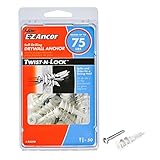
- Self-Drilling Anchors (The Screw-In Kind): These are a step up. They have a sharp point and threads that cut directly into the drywall. You just screw them in like a screw. They offer better holding power than plastic ones because they distribute the weight over a larger area of drywall. I’ve used these for things like curtain rods and lighter shelving units. They’re easier to install than some other types, which is a big plus.
- Toggle Bolts: These are the heavyweights for drywall. They consist of a bolt with a spring-loaded wing on the back. You drill a larger hole, push the bolt through, and the wings spring open behind the drywall, creating a secure anchor point. They can hold serious weight, like cabinets or large TVs. The downside? You need a bigger hole, and if you lose the bolt, the wings can fall into the wall, which is just… frustrating.
- Molly Bolts (Expansion Anchors with Sleeves): Similar to toggle bolts in holding power, but they use a sleeve that expands behind the wall. You drill a hole, insert the molly bolt, and as you tighten the screw, the sleeve expands. These are great for medium to heavy-duty applications where you don’t want a giant hole like a toggle bolt requires.
- French Cleats: While not strictly an ‘anchor’ in the same sense, these are worth mentioning for heavy items. They’re a system of interlocking angled pieces that attach to the wall and the item you’re hanging. The weight is distributed across multiple points into studs or anchors. Great for heavy artwork, mirrors, or shelving units.
For the question of are wall anchors necessary, the answer heavily depends on what you’re hanging and where. If you’re drilling into a wall stud, you might not need an anchor for lighter items. But most of the time, you’re not hitting a stud exactly where you need it. That’s where these guys shine.
When Are Anchors Not Necessarily the First Choice?
Okay, before you go nuts buying anchors for every single thing you hang, let’s talk about the exceptions. This is where common advice sometimes goes wrong. Everyone wants to tell you to anchor everything, but that’s just not true, and it can even be overkill.
The biggest exception? Studs. If you can locate a wall stud and drive a screw directly into it, you’ve got the strongest possible attachment point. A good lag screw into a solid piece of wood will hold hundreds of pounds. I’ve hung heavy tool chests, massive bookshelves, and even a swing chair onto studs, and they’ve held up perfectly for years.
The trick is finding them. My go-to method involves a stud finder, but I also do the ‘tap and listen’ trick – a solid thud means wood, a hollow sound means empty space. Sometimes I’ll even use a tiny nail to probe for wood after I think I’ve found it.
This way, I’m not making a giant hole if I’m wrong.
Another situation is when you’re dealing with a very light item. A small, lightweight framed photo that weighs maybe a pound? A simple picture hook with a small nail hammered in at an angle is usually fine. The weight is minimal, and the stress on the drywall is negligible. These plastic anchors are often provided with such items, and for them, they’re often adequate. You just have to be honest about the weight. Don’t hang a 20-pound mirror with a plastic anchor and a tiny nail; it’s asking for it to fall.
My personal contrarian opinion? Most people over-anchor. They’ll put a heavy-duty toggle bolt in for a small calendar. Why? Because they’re scared. And while being cautious is good, being over-cautious leads to unnecessary holes and more work. Learn to identify a stud, and use that whenever possible. For lighter items, a simple nail or a self-drilling anchor might be all you need. It’s about matching the fastener to the load and the wall material, not just blindly following advice to anchor everything.
Real-World Scenarios: When I Actually Used Anchors (and When I Didn’t)
Let’s get down to brass tacks. I’ve done a lot of DIY over the years, mostly out of necessity because I couldn’t afford to hire someone for every little thing. This has given me plenty of opportunities to learn the hard way. So, are wall anchors necessary? Here are a few real-world examples that solidified my understanding: (See Also: Can Cords Be Used To Make Anchors Climbing )
Scenario 1: The Floating Shelf Nightmare
I wanted to install some sleek floating shelves in my living room. They looked great in the store, and the instructions said to use the included hardware. Well, the included hardware was basically fancy screws and some tiny plastic anchors. I installed them, loaded them with books (I know, dumb), and within a month, I heard that tell-tale creak. One shelf ripped out, taking a significant chunk of drywall with it. I had to patch the wall, then re-drill, this time using heavy-duty toggle bolts that I bought separately. Lesson learned: never trust the ‘included hardware’ for anything heavy. Verdict: Anchors were necessary, the ones provided were not sufficient.
Scenario 2: Hanging a Heavy Mirror
I inherited a beautiful, heavy antique mirror. It easily weighed 40 pounds, maybe more. The back had D-rings. My gut screamed ‘stud’. I spent about twenty minutes with a stud finder, mapping out the wall. Found one, about 16 inches from the corner. I pre-drilled a pilot hole into the stud and used a beefy lag screw with a washer. The mirror has been hanging there for five years without an issue. Verdict: Anchors were not necessary because I found and used a stud.
Scenario 3: The TV Mount Debacle
Mounting a 55-inch TV is no joke. These things are heavy, and they’re also expensive. The mount instructions explicitly said to mount into studs. I found the studs, drilled my pilot holes, and used the thick, sturdy lag bolts that came with the mount. It felt rock-solid. This is a situation where skipping anchors and going for studs is the only sensible option. Verdict: Anchors were not necessary; mounting into studs was the only safe way.
Scenario 4: A Row of Picture Hooks
I wanted to hang a gallery wall of about ten medium-sized framed photos, none weighing more than 5 pounds. Instead of trying to find studs for every single one (which would be impossible and look terrible), I opted for a row of sturdy picture hooks. I hammered them in at an angle as recommended, and they’ve held up perfectly. They distribute the weight across multiple points, and the individual load on each hook is low. Verdict: Anchors were not necessary; specific picture hooks were appropriate.
So, what’s the takeaway? If you have a stud, use it. If you don’t, and the item is anything more than a feather, you need an anchor. The type of anchor depends on the weight and the wall material. It’s about making an informed decision, not just slapping something on the wall.
Common Mistakes That Lead to Disaster
I’ve made my fair share of DIY blunders, and many of them revolve around wall anchors. It’s easy to get it wrong, especially when you’re in a hurry or you think you know better. Here are some classic mistakes that can turn a simple hanging job into a disaster:
- Using the Wrong Anchor for the Weight: This is the big one. That little plastic anchor that comes with a lightweight shelf is NOT going to hold a heavy TV. You need to know the weight of what you’re hanging and choose an anchor rated for more than that weight. Always check the packaging. I once used some older, brittle plastic anchors for a shelf that I thought was light, but over time, they degraded and the shelf sagged and then crashed.
- Not Hitting a Stud When You Should Have: As I’ve said, studs are gold. If you’re hanging something heavy – a TV mount, heavy cabinets, a large mirror – and you skip finding studs, you’re asking for trouble. Even the best anchors will eventually fail if they’re bearing a load that really should be on structural wood. My stud finder is now my most trusted tool for these jobs.
- Over-Tightening or Under-Tightening Anchors: With plastic anchors, over-tightening can strip the hole, making it too big for the anchor to grip. Under-tightening means it won’t expand properly. For toggle bolts, you need to make sure the wings are fully seated behind the drywall. It’s about feeling the resistance and knowing when it’s snug but not forcing it.
- Not Using the Right Drill Bit Size: This is important for expansion anchors and toggle bolts. If the hole is too small, you can’t get the anchor in. If it’s too big, it won’t grip. The anchor packaging will usually tell you the recommended drill bit size. I keep a set of drill bits specifically for this purpose.
- Ignoring Wall Type: Are you drilling into drywall, plaster, concrete, or wood? Each requires a different type of anchor or fastener. Trying to use a drywall anchor in concrete is like trying to start a fire with a wet match – it just won’t work. Make sure you know what your wall is made of.
- Not Considering the ‘Pull-Out’ Strength: Some anchors are rated for sheer weight (how much they can hold straight down), but not ‘pull-out’ strength (how much force it takes to pull them straight out). Things like doors, cabinet doors, or anything that might get a yank need anchors with good pull-out strength. Toggle bolts and molly bolts generally excel here.
My biggest personal screw-up? Trying to install a heavy bathroom vanity onto a plaster wall without finding studs or using appropriate anchors. The vanity ended up tilting precariously, and I had to take it all down, patch the wall, and start over with heavy-duty toggle bolts. It added about three hours to the job and a whole lot of stress. Now, I always double-check my work and the materials before I start.
How to Choose the Right Anchor for Your Needs
So, you’ve decided that yes, in many cases, wall anchors are necessary. Now, how do you pick the right one? It boils down to a few key questions:
| What are you hanging? | Approximate Weight? | Wall Type? | Recommended Anchor Type (General) | My Verdict |
|---|---|---|---|---|
| Small Picture Frame (under 5 lbs) | Light | Drywall/Plaster | Picture Hook, Small Plastic Anchor | Picture hook is usually fine. |
| Medium Mirror (10-20 lbs) | Medium | Drywall/Plaster | Self-Drilling Anchor, Molly Bolt | Self-driller for ease, molly for extra security. |
| Heavy Mirror/Large Artwork (20-50 lbs) | Heavy | Drywall/Plaster | Toggle Bolt, Molly Bolt (Heavy Duty) | Toggle bolt is strong, but molly is easier if you’re not confident. |
| Floating Shelves (with items on them) | Medium-Heavy (depending on load) | Drywall/Plaster | Toggle Bolt, French Cleat (if possible) | NEVER use basic plastic anchors. Toggle bolts are good. |
| TV Mount (30-70+ lbs) | Very Heavy | Drywall/Plaster (into Studs!) | Lag Screws into Studs (no anchor needed) | STUDS ONLY. Do not use anchors for this. |
| Cabinets/Heavy Shelving Units | Very Heavy | Drywall/Plaster (into Studs!) | Lag Screws into Studs, Heavy-Duty Toggle/Molly Bolts | Studs are ideal. Heavy-duty toggles are a fallback. |
| Anything in Concrete/Brick | Variable | Concrete/Brick | Masonry Anchors (e.g., Tapcon screws, wedge anchors) | Specific masonry anchors are a must. |
First, always check the weight rating on the anchor’s packaging. It’s a guideline, but a important one. If the item you’re hanging is, say, 30 pounds, you want an anchor rated for at least 40 pounds, preferably 50 pounds or more, just to be safe. Think about the forces involved. Is it just hanging straight down, or could it be bumped or pulled? If it could be pulled, you need an anchor with good pull-out strength, like a toggle bolt or a molly bolt. (See Also: Can Anchors In Your Shoulder Break )
For drywall, if you’re not hitting a stud, toggle bolts are generally my go-to for anything medium to heavy. They create a very strong anchor point behind the wall. If you’re a bit nervous about drilling the larger hole required for a toggle bolt, or if the weight isn’t extreme, a good quality self-drilling anchor or a molly bolt is a solid second choice. They’re generally easier to install and still provide good holding power.
And remember, if you’re dealing with plaster walls, they can be more brittle than drywall. You might need specialized plaster anchors or be extra careful with your hole size and drilling technique. For concrete or brick, you absolutely need masonry anchors – those plastic or metal ones won’t do anything. Tapcon screws or wedge anchors are the way to go there.
Do I Need Wall Anchors If I Hit a Stud?
Generally, no. If you can securely drive a screw or lag bolt directly into a solid wood stud, that’s your strongest attachment point. Anchors are designed to create holding power where there isn’t any, like in empty drywall. A stud provides that structural support already.
Can I Reuse a Wall Anchor?
It’s usually not recommended. Once a plastic anchor has expanded or a toggle bolt’s wings have opened, they’re often deformed. Reusing them can compromise their holding strength, potentially leading to failure. It’s best to use a new anchor for each installation to make sure safety and stability.
What’s the Difference Between a Molly Bolt and a Toggle Bolt?
Both offer strong support behind drywall. A molly bolt has a sleeve that expands as you tighten the screw, gripping the wall from the inside. A toggle bolt has spring-loaded wings that flip open behind the drywall, acting like a brace. Molly bolts often require less drilling for their size and can be removed and reinserted (though re-use is not advised), while toggle bolts generally offer superior holding power for very heavy items.
How Do I Know If I’ve Hit a Stud?
The most reliable method is using a stud finder. You can also tap the wall; a solid thud indicates a stud, while a hollow sound means there’s empty space. Another trick is to look for electrical outlets or light switches, which are usually attached to studs. If you’re unsure, you can probe with a thin nail to feel for wood behind the drywall.
Final Verdict
So, are wall anchors necessary? For anything heavier than a poster and lighter than a TV mounted into studs, the answer is almost always yes. I’ve learned the hard way that cutting corners here leads to damaged walls and potentially broken belongings. My first mirror incident was a costly, messy lesson that I never want to repeat.
Don’t be the person who hangs a bookshelf full of heavy books using only the flimsy plastic anchors provided. Take a moment, assess the weight, consider your wall type, and choose the appropriate fastener. It’s not just about keeping things on the wall; it’s about doing it safely and properly.
Next time you’re hanging something that isn’t a picture frame, pause and ask yourself: ‘Do I have a stud here, or do I need an anchor?’ Your walls (and your sanity) will thank you.