I remember the first time I hung a heavy mirror in my apartment. It felt so solid, so secure. Then, a year later, that same mirror decided to take a nosedive, taking a chunk of drywall with it. That little incident taught me a brutal lesson: just because something screws into the wall doesn’t mean it’s staying there. So, are wall anchors needed? For most things you don’t want plummeting to the floor, the answer is a resounding yes.
It’s not about being fancy; it’s about basic physics and not having your stuff or, worse, your kids, end up on the floor in a pile of plaster and regret. We’ll cut through the noise and get to what actually matters.
The Stud Myth and Why It’s Not Always Your Friend
The common wisdom you’ll hear is, ‘Just screw it into a stud!’ And yeah, if you can find one, and if your item lines up perfectly with it, that’s gold. But let’s be real, finding studs isn’t always straightforward, and you’re often not lucky enough for your desired hanging spot to align with one. I once spent an embarrassing amount of time with a stud finder, tapping and probing like a detective trying to crack a case, only to discover that the wall in question seemed to be made of pure, unadulterated drywall.
No studs for miles. This isn’t a rare occurrence; many modern homes have builders who are… creative with their framing, or maybe they just want to save a few bucks on lumber. My own experience with a particularly flimsy internal wall in a rental property cemented this for me.
I was trying to hang a decent-sized bookshelf, and after drilling pilot holes and feeling some resistance, I thought I was in luck. Turns out, it was just a particularly stubborn bit of plaster. The whole thing sagged within a week. That was my cue to learn about anchors.
The problem with relying solely on drywall is that it’s basically compressed gypsum dust and paper. It’s strong enough to hold its own weight and some light things, but it crumbles easily under sustained pressure or impact. Think about it: the screw threads are biting into something that’s basically chalk. It’s not designed to bear significant loads, especially not the kind that comes from a shelf full of books or a large TV. So, while a stud provides a solid piece of wood to anchor into, drywall alone is like trying to nail jelly to a tree. You need something to distribute the weight and give those threads something more substantial to grip onto.
Another thing to consider is the variety of walls. Not all walls are created equal. Plaster and lath walls, common in older homes, are a whole different beast. They can be surprisingly strong, but also prone to cracking and crumbling if you hit them wrong. Then you have concrete or brick walls, which require entirely different fasteners. This article focuses primarily on drywall, as it’s the most common material people encounter when hanging things indoors. But it’s worth remembering that your wall type dictates your fastening strategy. Don’t assume all walls are the same, and for the love of all that is holy, don’t assume they’re all full of studs just waiting for your screws.
When the Weight Says ‘nope’ to Drywall Alone
Let’s talk weight. This is where the rubber meets the road, or rather, where your plaster meets the floor.
Anything heavier than a framed photo or a light piece of art needs serious consideration. I’ve seen people hang flat-screen TVs on drywall anchors meant for lightweight shelves, and then act surprised when the TV decides to explore gravity.
It’s pure hubris, or maybe just a lack of understanding about load-bearing capacity. When I was younger, I rigged up a coat rack to a wall using just a couple of screws. It looked fine.
Then my dad, a man of few words but strong opinions on DIY, came over and hung his heavy winter coat on it. Within minutes, the screws were pulling out, leaving two sad, gaping holes.
That taught me that ‘looks okay’ is not the same as ‘is okay.’ The anchors are there to give your screws something substantial to bite into, distributing the load across a wider area of the drywall or providing a solid backing within the wall cavity.
Different types of anchors are rated for different weight limits. This isn’t just marketing fluff; it’s based on physics and materials science. A simple plastic expansion anchor might hold 10-15 pounds in ideal drywall, while a toggle bolt can often support 50-100 pounds or more, depending on the wall condition and the size of the bolt. It’s a massive difference.
My personal rule of thumb is to always overestimate. If something is rated for 25 pounds, I’m not putting 20 pounds on it. (See Also: Can Concrete Anchors Be Used In Brick )
I’m looking for a situation where the anchor is rated for at least double what I intend to hang. This accounts for dynamic loads (like a door slamming that causes a shelf to vibrate) and the inevitable imperfections in your drywall. I learned this the hard way when a heavy mirror, rated for the anchor I used, still managed to wiggle loose because the drywall itself was a bit crumbly.
Overkill is better than re-spackling.
Consider the surface area of the anchor’s engagement. Simple screw-in anchors have a relatively small footprint. Expansion anchors, when properly set, spread out behind the drywall, creating a larger contact area.
Toggle bolts, with their wings, offer an even larger surface area, basically acting like a small shelf inside your wall. The more surface area the anchor has to grip, the more weight it can support.
This is why the cheap plastic ones often fail – they don’t have enough grip. When you’re deciding if wall anchors are needed, ask yourself: what’s the worst-case scenario if this thing falls?
Is it a minor inconvenience, or could it cause damage, injury, or significant cost? If the answer leans towards ‘bad,’ then anchors are your best friend.
Common Anchor Types and What They’re Good For
| Anchor Type | How it Works | Weight Rating (Approximate) | Best For | My Verdict |
|---|---|---|---|---|
| Plastic Expansion Anchor | Expands when screw is driven in, pushing outwards against drywall. | 10-25 lbs | Light picture frames, small decorative items. | Barely adequate for the lightest jobs. Overkill needed for anything else. |
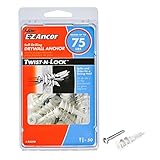
| Self-Drilling Screw-In Anchor | Screws directly into drywall, often with a thread that grips well. | 25-50 lbs | Medium-weight shelves, small cabinets, curtain rods. | Decent for the money, but make sure you get the right size. |
| Toggle Bolt | Wings fold to go through a hole, then spring open behind the wall. | 50-100+ lbs | Heavy shelves, large mirrors, TVs, anything substantial. | The gold standard for serious hanging. A bit more effort, but worth it. |
| Molly Bolt (Sleeve-Type Anchor) | Metal sleeve expands behind the wall as you tighten the screw. | 50-100+ lbs | Similar to toggle bolts, good for heavier items. | Reliable, but can be trickier to install without practice. |
Installation Pitfalls: How to Not Mess It Up
You’d think installing a simple anchor would be foolproof, right? Wrong. I’ve seen people mangle drywall, strip screw heads, and generally make a mess that would make a seasoned pro weep. The most common mistake is not using the right size drill bit.
The anchor manufacturer will usually specify the required hole diameter. Go too small, and you’ll struggle to get the anchor in, potentially damaging it or the wall. Go too large, and it won’t have anything to grip onto, rendering it useless.
I learned this the hard way trying to hang a floating shelf. The instructions said to drill a 1/2-inch hole.
I, in my infinite wisdom, decided a 3/8-inch bit would be ‘close enough’ to make it ‘extra secure.’ Surprise, surprise, the anchor just spun loosely in the oversized hole. Cue an hour of trying to patch and re-drill.
Another frequent error is over-tightening. When you’re screwing in a plastic anchor or tightening a toggle bolt, there’s a point where it feels snug and secure. If you keep going, you risk stripping the threads in the anchor itself, or worse, crumbling the drywall around it. This is especially true with the self-drilling screw-in types; they can easily chew up the drywall if you’re not careful. For toggle bolts, over-tightening can actually break the wings off or pull the bolt head through the drywall if the hole was too large to begin with. Always aim for snug, not ‘I’m trying to break a world record for screw torque.’
Then there’s the issue of not understanding the anchor’s mechanism. For expansion anchors, you need to make sure the screw is driven in straight and fully to engage the expansion. For toggle bolts, you need to make sure the wings have actually sprung open behind the wall before you apply any weight.
If you just pull the bolt tight without making sure the wings are deployed, you’re basically just screwing into a flimsy piece of metal against drywall. A good tip is to gently tug on the anchor after installation to make sure it feels solid before you hang anything. (See Also: Can Cords Be Used To Make Anchors Climbing )
If it wiggles or pulls out, you’ve done something wrong, and it’s time to patch and try again. Don’t just blindly trust that it’s in there. Give it a little shake.
Real-World Use Cases: Where Anchors Shine
Let’s talk about practical applications, the nitty-gritty of where wall anchors genuinely save the day. Think about your kitchen. Hanging pot racks, heavy spice racks, or even just a sturdy shelf for your cookbooks? These things get heavy, especially with filled jars. I once tried to get away with just screws for a spice rack, and the entire thing came down one morning, spilling paprika and cumin all over the floor. It wasn’t just messy; it was a complete waste of spices and a reminder that I should have used proper anchors. For anything that holds weight, especially items that might be jostled or have dynamic loads (like pulling a spice jar out), anchors are a must.
Bathrooms are another hotspot. Towel bars, toilet paper holders, medicine cabinets – these are constantly being pulled on. A towel bar that pulls out of the wall because it wasn’t properly anchored is not only an eyesore but also a pain to fix. I’ve seen medicine cabinets, packed with toiletries, detach from the wall, causing a cascade of broken bottles and a significant mess. For these high-traffic, high-use areas, investing in solid anchors, like toggle bolts or molly bolts, is a must if you don’t hit studs. Even if you’re just hanging a mirror in the bathroom, if it’s a decent size, it needs more than just a couple of picture hooks.
Consider your entertainment center. Mounting a TV is the most obvious example, and if you’re not mounting directly into studs, you absolutely need heavy-duty anchors designed for that specific purpose, often coming with the TV mount itself. But it goes beyond just the TV. Think about shelves for your gaming consoles, DVD players, soundbars, or even decorative items. These items, combined, can add up to a substantial amount of weight. If you’re building a media unit or mounting shelves, and you can’t guarantee you’re hitting studs every time, anchors are your insurance policy against a costly disaster. I’ve seen entire entertainment units sag because the shelves weren’t properly supported. It’s not pretty.
The Contrarian View: When Maybe You Don’t Need Them
Okay, here’s where I might ruffle some feathers. Everyone says you need anchors for everything. I disagree. If you are hanging a very lightweight item, like a single, unframed poster or a small, hollow plastic decoration, and you’ve found a stud, then sure, a simple screw into the stud is perfectly fine. You don’t need a massive toggle bolt to hold up a single piece of paper. The key here is ‘found a stud’ and ‘very lightweight.’ My contrarian take is that people often use anchors when they could have just found a stud and used a direct screw. It’s like using a sledgehammer to crack a nut. Sometimes, the simplest solution is the best, provided you can implement it.
The other situation where you might skip anchors is if you’re dealing with a very specific type of wall construction where anchors aren’t suitable or are overkill. For example, if you’re hanging something on a solid concrete block wall, you’d use concrete screws or appropriate masonry anchors, not drywall anchors. Similarly, if you’re hanging something on a thick, solid wood paneling wall, you might just use wood screws.
But let’s be clear: these are exceptions. For the vast majority of interior walls made of drywall or plaster, relying solely on the material itself for anything beyond the lightest decor is asking for trouble. So, while I preach anchors, I also preach common sense. Don’t anchor a feather to a stud; just use a small nail.
But don’t anchor a TV to a drywall-only wall; that’s just asking for a very expensive accident.
The core of my contrarian point is this: anchors are a solution to the problem of drywall’s low load-bearing capacity. If you can bypass that problem by hitting a solid structural element like a stud, then the need for an anchor is diminished or eliminated. However, the caveat is that finding and hitting a stud consistently can be difficult, and the item’s weight still needs to be considered. A large, heavy picture frame, even if secured to a stud, might still benefit from two anchor points rather than one if it’s particularly wide and prone to tilting.
So, while I’m giving you permission to occasionally skip anchors, it comes with a heavy dose of ‘know your wall, know your item, and err on the side of caution.’ It’s about smart fastening, not just blind adherence to rules.
Choosing the Right Fastener for Peace of Mind
Picking the right fastener is like choosing the right tool for the job. You wouldn’t use a butter knife to cut steak, and you shouldn’t use a flimsy plastic anchor for your 65-inch TV. The weight of the item you’re hanging is the primary factor. If it’s under 5 pounds, you might get away with a simple nail or screw into drywall if you’re feeling lucky (I wouldn’t recommend it).
Between 5 and 20 pounds, consider self-drilling screw-in anchors or plastic expansion anchors, but again, if you can find a stud, use it. For anything over 20 pounds, you’re definitely in anchor territory.
Toggle bolts and molly bolts are your best friends here. They distribute the weight across a much larger area of the wall cavity, providing a secure hold that drywall alone can never offer. (See Also: Can Anchors In Your Shoulder Break )
Beyond weight, consider the type of stress the item will experience. Is it something that will just sit there, like a decorative plaque? Or is it something that will be pulled on, like a towel bar, or have items added and removed, like a bookshelf? Items that experience dynamic loads or repeated stress require stronger anchoring.
Also, think about the material of your wall. As mentioned, drywall is common, but if you have plaster and lath, concrete, or brick, you’ll need specific anchors designed for those materials. Using the wrong type of anchor for your wall material is a recipe for disaster.
For example, a drywall anchor in concrete will just crumble the concrete. Always check the product packaging for the intended wall material and weight rating.
Finally, don’t be afraid to buy a variety pack of anchors. They’re relatively inexpensive, and having a selection on hand means you’re prepared for whatever hanging job comes your way. I keep a box of assorted anchors in my toolbox at all times. It’s saved me countless trips to the hardware store and has prevented me from making hasty, ill-advised decisions with questionable fasteners. When in doubt, buy the beefier anchor. It’s better to have a hole in the wall from an anchor that held strong than a hole from an anchor that failed. My motto: when in doubt, anchor it out.
Faq: Your Burning Questions Answered
Do I Need Wall Anchors for a Mirror?
It depends entirely on the size and weight of the mirror. A small, lightweight decorative mirror might be fine with picture hooks or screws into drywall if it’s very light. However, for anything medium to large, especially framed mirrors that can be quite heavy, you absolutely need wall anchors. Look at the mirror’s weight and use anchors rated significantly higher than that weight. Toggle bolts are a great choice for heavier mirrors.
Can I Use Wall Anchors in a Rental?
Yes, you can use wall anchors in a rental, but you’ll need to patch the holes when you move out. Most anchors leave a larger hole than a simple screw. When removing anchors, you’ll often need to fill the resulting hole with spackle or drywall compound, sand it smooth, and touch it up with paint to match the wall color. This is generally expected and accepted in rental agreements.
What’s the Difference Between a Wall Anchor and a Screw?
A screw is simply a fastener that creates its own threads as it’s driven into a material. A wall anchor is a device that you insert into a hole in the wall, and then a screw is driven into the anchor. The anchor expands or braces itself behind the drywall, providing a much stronger grip than a screw alone would have in drywall, especially for heavier items.
How Much Weight Can a Wall Anchor Hold?
Weight ratings vary significantly by anchor type. Small plastic anchors might hold only 10-25 pounds, while heavy-duty toggle bolts or molly bolts can hold 50-100 pounds or even more. Always check the manufacturer’s specifications for the specific anchor you are using and make sure the item you are hanging does not exceed the anchor’s rated capacity, ideally by a significant margin for safety.
Are Molly Bolts Better Than Toggle Bolts?
Both molly bolts and toggle bolts are excellent for heavy-duty applications and provide substantial holding power. Molly bolts expand behind the wall as you tighten them, while toggle bolts use wings that spring open. The choice often comes down to personal preference and ease of installation. Toggle bolts can sometimes be easier to install in tight spaces, while molly bolts can offer a very flush finish. Both are reliable if installed correctly.
Conclusion
So, are wall anchors needed? For anything more than a postcard or a very light picture, the answer is almost always yes. I learned my lesson the hard way with a falling mirror and a shattered spice rack. It’s not about being paranoid; it’s about understanding how your walls work and choosing the right hardware to keep your belongings safely where you put them.
Don’t be afraid to spend a few extra bucks on decent anchors, especially if you’re hanging something valuable or heavy. Check the weight ratings, consider the type of wall you have, and always, always err on the side of caution. A little effort now saves a lot of headache (and potential damage) later.
Next time you’re hanging something, take a moment to consider the fastener. Your walls (and your stuff) will thank you.