You’re staring at that gorgeous piece of art, or maybe that hefty TV mount, and the instructions scream ‘wall anchor!’ But then you look at your walls. They’re not all the same, are they? If you’ve ever wondered, ‘are wall anchors only for drywall?’, you’re not alone. I’ve been there, staring at a pile of hardware, completely confused about what goes where. My first attempt at hanging a shelf in a plaster wall using a drywall anchor ended with a dramatic crash and a much-loved book collection scattered across the floor. It taught me a valuable, albeit expensive, lesson: not all walls are created equal, and neither are wall anchors.
The idea that you just grab any old anchor and screw it in is a recipe for disaster. It’s like trying to fix a leaky faucet with duct tape – it might hold for a bit, but eventually, it’s going to fail, and you’ll have a bigger mess on your hands.
Walls Aren’t Just Drywall, You Know
Let’s get this straight right off the bat: no, wall anchors are NOT only for drywall. That’s a common misconception, and honestly, a dangerous one. The world of home construction is a lot more varied than a flimsy sheet of gypsum. We’ve got plaster, concrete, brick, wood studs, metal studs – and each one needs a different approach when you want to hang something that isn’t just a feather.
Think about it. Drywall is basically a paper-wrapped gypsum core. It’s relatively soft and brittle. If you just screw into drywall without any reinforcement, you’re relying on the strength of that thin gypsum. Most hollow-wall anchors are designed to expand or flip behind the drywall, creating a larger surface area to distribute the weight. They’re clever, but they’re specifically designed for that material.
But what about a solid concrete wall? You can’t just ‘anchor’ into concrete like you would drywall. You need to drill a hole and then drive in a specialized anchor, usually made of plastic or metal, that bites into the concrete itself. Or a brick wall? Similar principle – you drill into the brick, and the anchor expands within the void. For solid wood or metal studs, you often don’t need an anchor at all; you screw directly into the stud itself. The anchor’s job is to provide a secure point of attachment where there isn’t a structural member.
My own plaster wall incident? Plaster is different. It’s often applied over lath, which can be wood or even metal. It’s harder than drywall but can be crumbly. A standard drywall anchor just pulverized the plaster around it. I should have used a toggle bolt or a lag shield specifically designed for plaster and lath, which distribute the load more effectively. Instead, I learned the hard way that just because it looks like a wall doesn’t mean it’ll hold weight the same way. The key takeaway is that the material of your wall dictates the type of anchor, or if you even need one, you absolutely need to know what you’re dealing with.
The ‘why’ Behind the Anchor: Understanding Load Bearing
So, why do we even bother with wall anchors? It boils down to physics and the often-surprising lack of structural support behind your pretty wallpaper. The primary reason is to increase the load-bearing capacity of a wall when you’re not screwing directly into a solid stud or joist.
A stud is a vertical framing member in your wall, usually made of wood or metal. They are the skeletal structure. If you can locate a stud and screw directly into it, that’s always your strongest, most reliable option. A good screw driven into a solid stud can hold a surprising amount of weight, often hundreds of pounds. That’s why TV mounts, heavy shelves, and anything that bears significant weight should ideally be attached to studs. A stud finder is your best friend here, and honestly, worth every penny. I paid about $25 for a decent one, and it’s saved me countless holes in the wrong places.
When you can’t hit a stud – and let’s be honest, sometimes the placement just doesn’t work out, or you’re dealing with a wall that’s nothing but sheer material like concrete block – that’s where anchors come in. They act as intermediaries. They spread the load over a larger area of the wall material, preventing the screw from pulling out or the wall itself from crumbling under pressure. It’s like putting a wide board under a heavy object on soft ground; it prevents the object from sinking.
The common advice is usually to find a stud. That’s generally good advice, but it’s not the only advice.
When you’re forced to go into the ‘open space’ behind your wall, the right anchor becomes key. I once tried to hang a fairly heavy mirror on a plaster wall, and I couldn’t find a stud for the life of me.
My first instinct was to grab some plastic anchors I had lying around, the kind meant for drywall. Big mistake. The plaster started to crumble almost immediately. After a brief, expletive-laden moment of panic, I remembered I had some toggle bolts left over from a previous project.
These have wings that open up behind the wall, providing a much larger surface area to distribute the weight. That mirror has been hanging securely for years now, a testament to the fact that understanding your wall and the anchor’s mechanism is key.
Types of Anchors: Beyond the Plastic Cone
This is where most DIYers get lost, and honestly, it’s understandable. The sheer variety of anchors out there can be overwhelming. But the good news is, once you understand the basic categories and what they’re good for, it becomes much clearer. Let’s break down some of the common types, beyond the ubiquitous plastic conical anchor that’s often marketed for ‘all walls’ (which is rarely true). (See Also: Can Concrete Anchors Be Used In Brick )
1. Drywall Anchors: These are specifically designed for hollow walls like drywall. They come in several flavors:
- Plastic Expansion Anchors: The basic cone. Good for very light items (picture frames, small decorations). They expand as you screw them in. My experience? They’re often overrated. I’ve had them pull out with surprisingly little force.
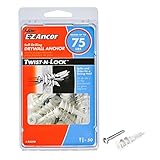
- Self-Drilling Anchors (E-Z Ancor, etc.): These have a screw point and often a sharp thread that cuts its own hole in the drywall. They’re generally stronger than basic plastic ones and easier to install. I’ve had decent luck with these for medium-duty tasks like hanging small shelves or curtain rods.
- Toggle Bolts: These have a spring-loaded ‘wing’ that flips open behind the wall. They offer excellent holding power for their size but require a larger hole. They’re fantastic for heavier items on hollow walls.
- Molly Bolts: Similar to toggle bolts but they have a metal sleeve that expands and grips the back of the drywall. They’re also very strong and often have a screw head that stays put.
2. Concrete/Masonry Anchors: These are for solid materials like concrete, brick, and block.
- Plastic Plug Anchors: Similar in concept to drywall expansion anchors, but designed for masonry. You drill a hole, insert the plug, and then screw into it. Good for light to medium loads.
- Lag Shields: Metal sleeves that you insert into a drilled hole. A lag screw then threads into the shield, expanding it. Very solid for masonry.
- Concrete Screws (Tapcons, etc.): These are specialized screws with aggressive threads that tap their own threads into a pre-drilled hole in concrete or masonry. They are incredibly strong and easy to use. I’ve used these for mounting electrical boxes and even small support brackets on my garage wall, and they hold like iron.
3. Wood/Metal Stud Anchors: For these, you typically don’t use an ‘anchor’ in the same sense. You use screws that are designed to penetrate the stud. Lag screws are common for wood studs, and specialized self-tapping screws are used for metal studs. The key is finding the stud and using a screw long enough to get good penetration into it.
Here’s a little table I put together from my own trial and error:
| Anchor Type | Best For | Holding Power (Estimate) | My Verdict |
|---|---|---|---|
| Basic Plastic Cone | Light decorations, empty frames | 5-15 lbs | Meh. Only if you have absolutely nothing else. |
| Self-Drilling Drywall | Small shelves, curtain rods, mirrors | 20-50 lbs | Decent for medium duty, easy to use. |
| Toggle Bolt/Molly Bolt | Heavy shelves, cabinets, TVs (with multiple) | 50-100+ lbs (per anchor) | My go-to for hollow walls when studs aren’t an option. |
| Concrete Screws (Tapcons) | Anything on concrete/brick (brackets, conduit) | 100-200+ lbs (per anchor) | Fantastic. Strong and easy. Drill bit is key. |
| Lag Screws into Stud | Anything heavy, structural items | 200+ lbs (depends on screw size/wood) | The gold standard. Always aim for this. |
Common Mistakes That Lead to Disaster
I’ve made my fair share of DIY blunders, and a good chunk of them involved hanging things on walls. It’s not just about picking the wrong anchor; it’s about a whole cascade of small errors that add up. Learning from them can save you a lot of frustration (and potentially, a lot of repair bills).
One of the most common, and frankly, infuriating, mistakes is simply not reading the instructions. Or worse, skimming them. Anchors are designed for specific wall types and weight limits. Using a plastic drywall anchor in concrete isn’t just ineffective; it’s a recipe for a crumbled hole that’s then too big for anything else to work.
I once tried to hang a fairly heavy, antique mirror in my entryway. The wall felt solid, so I grabbed what I thought was a strong anchor. Turns out it was a masonry anchor, but I didn’t realize I needed a specific masonry drill bit.
I hammered away with a regular drill bit, just kind of chewing up the surface. The anchor went in, but it didn’t grip. When I hung the mirror, it promptly fell, shattering the glass and leaving a gaping, useless hole. I spent the next hour chiseling out the mess and patching it, all because I didn’t use the right tool for the job and didn’t understand the material.
Another huge mistake is overloading anchors. Every anchor has a weight rating. This rating is usually for shear strength (hanging straight down) and sometimes for pull-out strength (pulling away from the wall).
These ratings are often for ideal conditions and a single anchor. If you’re hanging something heavy, especially something that might vibrate or get bumped, you need to err on the side of caution. Using multiple anchors for a single item, if it’s heavy or awkward, is often a good idea. For instance, hanging a large, heavy cabinet on a wall?
You absolutely need to hit studs, or if that’s impossible, use a significant number of heavy-duty toggle bolts or molly bolts spaced strategically. Relying on just a couple of medium-duty anchors for something that weighs 50 pounds and is going to be frequently opened is asking for trouble.
Underestimating the weight of an item is also a classic screw-up. People often think, “Oh, this shelf doesn’t look that heavy.” But add books, decorations, maybe a plant, and suddenly you’re pushing the limits.
Always overestimate the weight. I learned this with a bike rack. I bought a heavy-duty rack, and the instructions said to mount it into studs. (See Also: Can Cords Be Used To Make Anchors Climbing )
Fine. But I didn’t account for the weight of the bike itself, plus the shock of lifting it on and off.
One of the screws started to pull out of the stud after a few months. It wasn’t a catastrophic failure, but it was a wake-up call. I ended up reinforcing it with lag screws and a couple of extra brackets. It’s better to be over-engineered than under-engineered when it comes to your walls.
Finally, not using the correct drill bit size is a sin. For concrete and masonry, you need a masonry bit that’s the exact diameter recommended for your anchor. For wood, a pilot hole that’s slightly smaller than your screw shank is often necessary to prevent splitting. Using a bit that’s too big means the anchor won’t grip; too small and you risk damaging your screw or the material.
Faq: Are Wall Anchors Only for Drywall?
Can I Use a Drywall Anchor in Plaster?
Generally, no, not effectively. Plaster is often more brittle and can crumble. While some drywall anchors might hold very light items, they are not designed for the unique properties of plaster and lath. For plaster, it’s usually better to look for anchors specifically rated for plaster or use toggle bolts or molly bolts, which distribute the load more broadly behind the wall surface.
What If My Wall Is Made of Concrete or Brick?
You absolutely cannot use drywall anchors in concrete or brick. These solid materials require specialized masonry anchors. You’ll need to drill a pilot hole with a masonry drill bit and then use anchors like concrete screws (Tapcons), lag shields, or plastic plug anchors, depending on the weight of the item you’re hanging. They are designed to grip directly into the solid material.
Do I Always Need to Find a Stud?
While finding a stud is always the strongest and most reliable option for heavy items, it’s not always feasible or necessary for lighter items. If you can’t locate a stud, you can use appropriate hollow-wall anchors (like toggle bolts or molly bolts) for medium-weight items, or appropriate masonry anchors if you have concrete or brick walls.
What’s the Strongest Type of Wall Anchor?
For hollow walls, toggle bolts and molly bolts are among the strongest options, distributing weight over a large area. For solid walls like concrete or brick, concrete screws (like Tapcons) or lag shields with lag screws provide exceptional strength. However, the strongest method overall is always screwing directly into a solid wood or metal stud with an appropriately sized screw.
Real-World Applications and Practical Tips
After years of banging around my own house, trying to hang everything from kitchen cabinets to flat-screen TVs, I’ve picked up a few tricks that go beyond just reading the box. It’s about applying the knowledge of anchor types to real situations, and doing it smartly.
Let’s talk about hanging a TV. This is one of those situations where you really, really don’t want to mess up. A TV falling off the wall is a disaster. The universal advice here, and it’s solid, is to mount your TV bracket directly into wall studs.
Most TV mounts are designed to span the standard 16-inch spacing of studs. If you have an older house or unusual spacing, or if your studs just aren’t in the right place for your desired TV location, you might need to get creative.
This could involve adding blocking (extra wood pieces) between studs or even using multiple heavy-duty toggle bolts if studs are absolutely impossible to reach. I recently helped a friend mount a 65-inch TV, and we found that one of the mounting holes on the bracket lined up with a stud, but the other didn’t. We ended up using a heavy-duty toggle bolt for the second hole, making sure it was rated well above the TV’s weight.
It’s held perfectly, but I was sweating bullets until it was secured.
Kitchen cabinets are another big one. These things hold a lot of weight, especially when loaded with dishes. They must be secured to studs. If you’re installing new cabinets, you’re likely cutting into drywall and hitting studs anyway. (See Also: Can Anchors In Your Shoulder Break )
If you’re trying to hang a single cabinet or a shelf unit, use your stud finder religiously. If you absolutely cannot hit a stud for a specific mounting point, you’re looking at industrial-strength toggle bolts, and even then, I’d be hesitant for anything heavier than a few pots and pans. For cabinets, I’ve seen some DIYers use French cleats, which are fantastic because they distribute the weight across a longer section of wall, often meaning you only need to hit a couple of studs securely.
For lighter duty things, like hanging pictures or mirrors that aren’t massive, there are some subtle but important tips. Clean the wall surface first. Dust can prevent adhesives or even some anchors from getting a good grip. When installing plastic anchors, don’t overtighten. You can strip the hole or crack the anchor. Likewise, for self-drilling anchors, make sure you’re using the correct drill bit size (if required) and not going too fast, which can damage the anchor’s threads.
A contrarian take for you: everyone says “use a level.” And yes, you should. But sometimes, when you’re dealing with slightly imperfect walls or uneven ceilings, a level can lie to you. I once spent an hour agonizing over a perfectly level shelf that looked like it was about to slide off the wall because the wall itself was sloped. My advice? Use the level, but also eyeball it. Step back. Look at it from a distance. Does it look right? Trust your eyes as much as your bubble level, especially in older homes.
Finally, always buy a few extra anchors than you think you’ll need. Dropping one into a hard-to-reach place, breaking one, or realizing you miscalculated the number needed for a large project is infuriating. Having a couple of spares in your toolbox is just good planning. It’s a small investment that saves a big headache.
When to Call in the Pros
Look, I’m all about DIY. I’ve saved thousands of dollars over the years by tackling projects myself. But there are times when you have to admit that you’re out of your depth, and calling in a professional is the smart move, not a sign of failure. Hanging things on walls might seem straightforward, but when you’re dealing with significant weight, complex wall structures, or the potential for serious damage, knowing your limits is key.
The most obvious situation is anything structural. If you’re thinking about moving a load-bearing wall, installing a new beam, or doing anything that affects the integrity of your house’s frame, call a structural engineer and a qualified contractor. That’s not a DIY job, period. But even for things that seem less important, there are points where professional help is wise.
Hanging extremely heavy items on walls that you’re unsure about is a big one. Think a massive antique mirror, a substantial piece of art that’s worth a fortune, or a very large, heavy TV on an older or unconventional wall. If you’ve tried your best with stud finders and different anchor types and you’re still not confident, a handyman service or a contractor can assess the wall structure and make sure it’s done safely. They have access to tools and knowledge that the average homeowner might not, like more advanced stud finders or the experience of dealing with unique wall constructions.
Renovations involving electrical or plumbing are also prime candidates for professional help. If you need to hang a new kitchen cabinet that requires rerouting wires or pipes, or if you’re installing a heavy appliance that needs new electrical hookups, it’s often best to hire the appropriate tradesperson. While you might be able to find a stud for your cabinet, accidentally drilling into a live wire or a water pipe can be incredibly dangerous and expensive to fix. I learned this lesson the hard way when I was trying to mount a new light fixture and misjudged the location of a ceiling joist, only to have plaster dust and a shower of sparks come down. That was a quick call to an electrician.
Finally, if you’re just not comfortable or don’t have the time, hiring someone is perfectly reasonable. DIY should be rewarding, not a source of extreme stress or potential damage. For things like installing multiple heavy floating shelves in a high-traffic area, or mounting a complex multi-piece entertainment center, a professional installer can save you hours of frustration and make sure a perfect result. It’s about weighing the cost of hiring someone against the cost of your time, stress, and potential mistakes. Sometimes, the peace of mind is well worth the fee.
Verdict
So, to circle back to the big question: are wall anchors only for drywall? Absolutely not. They are a diverse family of fasteners, each designed for a specific job and a specific wall material. Understanding the difference between a plastic expansion anchor for drywall and a concrete screw for masonry is the difference between a secure mount and a falling object.
Don’t be the person who learns this lesson the hard way, with a hole in the wall and a broken item. Take a moment, figure out what your wall is made of, and choose the right anchor. If you’re unsure, it’s always better to ask, look up a reputable guide, or even consult a professional.
The next time you’re about to hang something, take a deep breath, assess your wall, and select your hardware wisely. Your walls (and your belongings) will thank you.