You’ve just bought that killer TV stand, the one with the sleek design that’s going to totally transform your living room. Then you get to step three: ‘Secure to wall.’ A cold sweat breaks out. You stare at the flimsy-looking plastic doodads included, and a single, terrifying question pops into your head: Are wall anchors safe? I’ve been there, staring at a box full of hardware and wondering if I’m about to hang my new prized possession or condemn it to the floor in a heap of splintered particle board. Let’s cut through the marketing fluff and get real.
For years, I’ve wrestled with these things, trying to hang everything from heavy mirrors to bookshelves that looked like they’d buckle under their own weight. I’ve seen them hold, and I’ve seen them fail spectacularly. So, when you ask me if wall anchors are safe, my honest answer is: sometimes. It depends on a whole lot of factors that most instructions gloss over.
When a Hole in the Wall Isn’t Enough
Look, drywall is basically compressed gypsum dust and paper. It’s not exactly known for its load-bearing capabilities. Trying to screw anything heavier than a framed photo directly into it is like trying to anchor a battleship to a cloud. That’s where wall anchors come in. They’re designed to give your screws something more substantial to bite into, spreading the load over a wider area of the drywall or even reaching into the studs behind it. Without them, that heavy mirror you’re so excited about? It’s going to come down, taking a chunk of your wall with it.
I learned this the hard way about ten years ago. I bought a big, ornate mirror for my hallway. It was beautiful, heavy, and came with these little plastic anchors that looked like they belonged in a Barbie Dreamhouse. The instructions said, ‘Insert anchor, screw into anchor.’ Easy, right?
Wrong. Two days later, while I was dusting, the entire thing detached from the wall with a crash that made my dog jump three feet in the air. Thankfully, no one was hurt, but the mirror was toast, and the hole in the wall was a ragged mess.
It was a brutal, expensive lesson: not all anchors are created equal, and cheap plastic ones for heavy items are a gamble I’m no longer willing to take.
The basic idea is simple: drill a hole, insert the anchor, and then drive a screw into the anchor. The anchor flares out or expands behind the drywall, creating a secure grip. For lighter items, like small pictures or lightweight shelves, a simple plastic expansion anchor might suffice. But for anything with a bit of heft – like your brand-new entertainment center, a large mirror, or a substantial bookshelf – you need to step up your game.
The common advice is often to find a stud, and while that’s always the best solution, it’s not always practical or even possible. Sometimes, you just don’t have a stud exactly where you need it. That’s where the right anchor becomes your best friend.
There are a few main types you’ll encounter. The most basic are the plastic expansion anchors, often called ‘self-drilling’ or ‘ribbed’ anchors. They’re cheap and easy to use, but their holding power is limited. Then you have toggle bolts, which have wings that deploy behind the wall, offering much better support. Finally, there are the screw-in anchors, which are metal or heavy-duty plastic and screw directly into the drywall, often with a threaded body for better grip. Each has its place, but knowing which one to use and how to install it correctly is what makes the difference between a secure mount and a DIY disaster.
Types of Anchors: Beyond the Little Plastic Tube
Let’s get down to the nitty-gritty of what you’re actually screwing into your wall. Forget those tiny, flimsy plastic things that come with most cheap furniture.
They’re fine for a picture frame holding a single piece of paper, but that’s about it. When we’re talking about safety and load-bearing, we need to look at anchors with a bit more backbone. The first major upgrade from basic plastic is the toggle bolt. (See Also: Can Concrete Anchors Be Used In Brick )
These bad boys have a spring-loaded mechanism that opens up like wings behind your drywall. You drill a hole, push the toggle through, and when you tighten the screw, the wings expand, gripping a much larger surface area.
They’re great for heavier items and work in hollow walls, but they require a larger hole and can be a bit fiddly to install.
Then there are the screw-in or expanding metal anchors. Think of the ones that look like little metal sleeves with threads. You just screw them directly into the drywall. Some are ‘self-drilling,’ meaning they create their own hole, while others require a pilot hole. These offer a good balance of holding power and ease of installation, especially for medium-weight items. I used a set of these for a floating bookshelf that holds a surprising number of paperbacks, and they’ve held firm for over two years now. The key with these is making sure they’re rated for the weight you intend to put on them, and that you screw them in far enough so they’re seated properly in the drywall.
My personal favorite for general-purpose, medium-to-heavy duty wall anchoring are the threaded metal anchors that look a bit like a screw with a wide, flat head and a metal sleeve. They’re often called ‘molly bolts’ or ‘sleeve-type anchors.’ You drill a hole, insert the anchor, and then tighten the screw. As you tighten, the sleeve expands behind the wall. They offer a very strong hold and are relatively easy to install. I’ve used these to hang heavy mirrors and even a small, wall-mounted desk, and they’ve never let me down. They feel far more secure than the plastic ones, and they don’t require the same kind of precise alignment that a toggle bolt does.
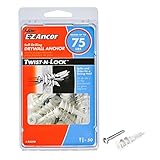
A specific type I’ve come to trust are the screw-in anchors, often made of a dense nylon or metal, that you simply twist into the drywall with a screwdriver. They have deep threads that really bite into the gypsum. For things like mounting a television bracket (assuming it’s not a massive 75-inch beast that demands studs), these can be surprisingly effective. You just need to make sure you’re screwing them into solid drywall, not into a void where a stud might have been. For sheer ease of use and decent holding power for medium loads, these are hard to beat. They don’t require special tools and are quick to install.
| Anchor Type | Best For | Pros | Cons | My Verdict |
|---|---|---|---|---|
| Plastic Expansion | Light frames, very light shelves | Cheap, easy to find | Low weight capacity, can crack | Avoid for anything remotely heavy. Use only for décor. |
| Toggle Bolt | Heavy items in hollow walls | Excellent strength, wide load distribution | Requires larger hole, can be fiddly | Reliable for significant weight when studs aren’t an option. |
| Molly Bolt / Sleeve-Type | Medium to heavy items | Good strength, secure hold, easy install | Requires specific hole size, sleeve can sometimes spin | My go-to for most mid-weight hanging tasks. |
| Screw-In (Threaded) | Medium loads, quick installs | Easy to install, no special tools, good grip | Weight rating can vary greatly, requires solid drywall | Great for speed and convenience if weight is moderate. |
Finding the Right Anchor: More Than Just a Pretty Package
The biggest mistake people make is grabbing whatever comes in the box or the cheapest pack off the shelf without considering what they’re actually hanging. The packaging for wall anchors is often a confusing mess of numbers and diagrams. You’ll see ‘holds up to X lbs.’ But what does that really mean? For starters, that rating is usually based on static load – meaning the item just sits there.
It doesn’t account for dynamic loads, like accidentally bumping into a shelf or the vibration from a nearby washing machine. So, if an anchor says it holds 50 lbs, I’m not trusting it with anything more than 25 lbs, maybe 30 lbs if I’m feeling brave and it’s a really good anchor type.
You also need to consider your wall material. Are you drilling into standard drywall? Plaster? Plasterboard with a solid plaster layer? Or maybe even concrete or brick? Most of the anchors I’ve discussed so far are for drywall. For masonry, you need completely different anchors – usually plastic plugs that you hammer into a pre-drilled hole, and then you screw into those. Using a drywall anchor in concrete is like trying to use a screwdriver as a hammer; it’s just not going to work and you’ll make a mess. Always confirm what your wall is made of.
My rule of thumb? Always buy anchors that are rated significantly higher than the weight of the item you’re hanging. If you’re hanging a shelf that will hold about 30 lbs of books, look for anchors that are rated for at least 75-100 lbs. It’s better to overdo it and have a rock-solid mount than to skimp and risk a disaster. Also, pay attention to the screw size recommended for the anchor. Using a screw that’s too thin or too short won’t engage the anchor properly, drastically reducing its holding power. It’s a system – the anchor and the screw work together.
And here’s a contrarian thought: some people say you should always aim for a stud and never rely on anchors. I disagree, at least for most people and most situations. Yes, a stud is the absolute gold standard for strength. (See Also: Can Cords Be Used To Make Anchors Climbing )
But finding studs can be a pain, especially if you don’t have a good stud finder or if your walls are thick or have metal lath behind the plaster. Plus, not every wall has studs in the exact location you need them. For the vast majority of household items – mirrors, shelves, cabinets, wall-mounted TVs (within reason) – a quality anchor installed correctly in solid drywall is perfectly safe and reliable.
Relying solely on studs limits your placement options too much.
How to Find Wall Studs (when You Really Need To)
Finding a wall stud is often the best way to make sure a secure mount. Here’s how you can do it:
- Use a Stud Finder: Electronic stud finders are the easiest method. Run it along the wall where you want to hang your item. It will typically beep or light up when it detects a stud. Mark the edges and find the center.
- Tap the Wall: Lightly tap the wall with your knuckle. A solid thud usually indicates a stud behind the drywall, while a hollow sound means you’re in between studs. This takes practice and isn’t always reliable.
- Look for Outlets/Switches: Electrical boxes are usually attached to studs. The stud is typically on one side of the box, so check about 16 inches (the standard stud spacing) to either side.
- Use a Thin Drill Bit: In an inconspicuous spot, drill a very small pilot hole. If you hit solid wood, you’ve found a stud. If you go through easily, you’re in a void. Fill the hole afterwards.
Common Mistakes That Lead to Failure
I’ve already touched on a couple, but let’s hammer them home. The most common mistake is using the wrong anchor for the job. Those little plastic cones? They are NOT suitable for hanging your antique grandfather clock. I’ve seen people try to hang heavy bathroom vanities using anchors meant for a small picture frame. It’s a recipe for disaster, and the resulting damage can be far worse than just the falling item – we’re talking structural damage to drywall, electrical wire hazards, and plumbing risks if you’re unlucky.
Another massive error is not drilling the correct size hole. Most anchors come with specific drill bit size recommendations. If you drill too small a hole, you won’t be able to insert the anchor properly, or you’ll damage the drywall trying to force it. If you drill too big a hole, the anchor won’t have enough drywall material to grip, and it’ll just spin loosely or fall out. It’s not rocket science, but it does require following instructions. I sometimes use a piece of tape on my drill bit to mark the depth so I don’t drill too far, especially if I’m not sure what’s behind the wall.
Improper installation is also a huge culprit. For toggle bolts, not letting the wings deploy fully means they’re not grabbing properly. For screw-in anchors, not screwing them in deep enough means they’re not seated securely. For molly bolts, overtightening can sometimes strip the threads inside the wall, rendering them useless. It’s about getting that snug, firm fit. When you install an anchor, it should feel like it’s locked into the wall, not wobbly or loose. If it wiggles, it’s not safe. I always give whatever I’ve just hung a good, firm tug (gently at first, then a bit firmer) to test its stability before I load it up completely.
One less obvious mistake is ignoring the wall material itself. As mentioned, drywall is different from plaster, which is different from concrete. Using a drywall anchor in plaster, for example, can be problematic because plaster can be brittle and might crumble. Conversely, using a masonry anchor in drywall will just create a giant, useless hole. Always know what you’re drilling into. If you’re unsure, it’s better to err on the side of caution and try a different location or consult someone who knows.
Real-World Use Cases: What I Actually Hang
So, what can you actually hang with confidence using wall anchors? For me, it’s a whole host of things that make a house feel like a home. Heavy mirrors are a prime candidate. I hung a large, framed mirror that weighs probably 40 lbs in my dining room using heavy-duty molly bolts. It’s been there for three years and hasn’t budged. Bookshelves are another big one. I have a medium-sized floating bookshelf that holds about 30-40 paperbacks. I used the screw-in threaded anchors for that, rated for about 80 lbs each, and it’s perfectly stable.
Wall-mounted TVs are a common question. Are wall anchors safe for a TV? It depends entirely on the TV’s weight and the mount. For smaller, lighter TVs (say, under 30-40 lbs), and using a high-quality mount with sturdy, appropriately rated anchors (like heavy-duty toggle bolts or molly bolts), it can be done. However, for anything larger or heavier, or if you’re not 100% confident in your installation skills, finding studs is a must. The consequences of a TV falling are just too severe. I once saw a friend’s 55-inch TV crash down because they relied on inadequate anchors. It was a mess of shattered screen and bent metal.
Floating shelves are incredibly popular, and for good reason. They look clean and modern. For these, I usually opt for the screw-in threaded anchors or good quality molly bolts, making sure I use at least two, preferably three, anchors spread out along the shelf’s mounting points. The key here is making sure the shelf’s own mounting hardware is solid enough to handle the load. I also use anchors for hanging cabinets, like small bathroom medicine cabinets or kitchen spice racks. Again, the weight rating and number of anchors are important. (See Also: Can Anchors In Your Shoulder Break )
I’ve also used them for things like curtain rods where the wall doesn’t have a conveniently placed stud. For a standard curtain rod holding lightweight curtains, even some of the better plastic anchors might work, but I prefer to use a screw-in threaded anchor for peace of mind. It’s all about matching the anchor’s strength to the item’s weight and the forces it will experience. Don’t be afraid to over-anchor; it’s a sign of good judgment, not paranoia.
Faq: Your Burning Wall Anchor Questions Answered
Can I Hang a Heavy Mirror with Just Drywall Anchors?
You can, but you need to be very careful. For heavy mirrors (over 15-20 lbs), you must use heavy-duty anchors specifically designed for significant weight, such as toggle bolts or solid molly bolts. Always check the weight rating on the anchor packaging and make sure it’s rated for substantially more than the mirror’s actual weight. Installing them correctly into solid drywall is important, and avoid hanging them in areas where they might experience sudden jolts or vibrations.
Are Self-Drilling Anchors Strong Enough?
Self-drilling anchors can be strong enough for light to medium-weight items, but their strength is highly variable. They come in plastic and metal versions, with metal ones generally being much stronger. They’re convenient because they often don’t require a pilot hole. However, for anything truly heavy or important, like mounting a TV bracket or a substantial shelf, it’s usually better to opt for a toggle bolt, molly bolt, or a screw-in anchor that provides a more secure and spread-out grip behind the drywall.
What’s the Difference Between a Drywall Anchor and a Concrete Anchor?
Drywall anchors are designed for hollow walls made of gypsum board. They work by expanding behind the wall or using a toggle mechanism to grip the material. Concrete anchors, on the other hand, are designed for solid masonry like concrete, brick, or block. They are typically plastic or metal sleeves that are hammered into a pre-drilled hole, and then a screw is driven into the sleeve, expanding it against the solid material.
How Many Wall Anchors Should I Use for a Shelf?
For a shelf, the number of anchors depends on its length, the expected weight it will hold, and the type of anchors you’re using. For most medium-sized shelves, using at least two anchors at either end is a good starting point. For longer or heavier shelves, you might need three or even four anchors spaced evenly along the mounting bracket. Always consult the shelf manufacturer’s recommendations and make sure each anchor is rated appropriately for the load.
Practical Tips for a Secure Hang
Beyond choosing the right anchor, a few practical habits make a world of difference. First, always double-check the weight rating. Don’t just glance at it; read it. And remember my rule of thumb: buy anchors rated at least twice what you think you’ll need. It’s cheap insurance. Second, use the recommended drill bit size. If it says 1/4 inch, use a 1/4 inch bit. Not 7/32, not 5/16. Precision matters here. It’s the difference between an anchor that fits snugly and one that’s too loose or too tight.
Third, when installing anchors in drywall, push them in firmly. They should feel secure, not loose. For toggle bolts, make sure those wings deploy. For screw-in types, give them a good twist until they’re seated flush with the wall surface. If an anchor spins or feels loose during installation, stop and try again, or try a different location. It’s far better to take a few extra minutes to fix a bad installation than to deal with the aftermath of a falling object. And before you hang the item itself, give the installed anchor a firm tug. If it budges, it’s not ready.
Fourth, consider the spacing. Don’t put all your anchors right next to each other unless the item demands it. Spreading the load over a larger area is always better. For shelves and cabinets, using the full length of the mounting bracket and distributing anchors along it will provide the most stable support. Finally, when in doubt, find a stud. While I advocate for quality anchors, studs are the ultimate anchor. If you’re struggling to find one or are unsure, a professional contractor can help you locate studs or advise on the best anchoring solutions for your specific situation.
One last thing: when you’re installing, especially if you’re using a drill, wear safety glasses. Gypsum dust can get everywhere, and bits of plaster or drywall can fly off. It’s a small step, but it’s one that can save your eyes. Trust me, getting drywall dust in your eye is an experience you don’t want to repeat. So, a quick mention of safety gear because sometimes the simplest advice is the most overlooked.
Verdict
So, are wall anchors safe? Yes, when you use the right anchor for the job, install it correctly, and respect its weight limitations. The cheap plastic ones that come with furniture are often more decorative than functional for anything substantial. For peace of mind and actual security, invest in quality anchors like toggle bolts or heavy-duty molly bolts, especially for items that could cause damage or injury if they fall.
The key is doing a little homework: understand your wall type, the weight of the item, and choose an anchor rated significantly higher than you need. Drill the correct size hole, install it firmly, and give it a good tug before you commit. If you’re still unsure, don’t guess; find a stud or consult a pro. Getting it right means your shelves stay up, your mirrors stay put, and you don’t end up with a hole in your wall and a story about a DIY disaster.
Ultimately, when you’re deciding if wall anchors are safe for your project, remember that a little extra effort upfront saves a lot of potential headaches and heartbreak down the line. For most common household items, the right anchor is a perfectly reliable solution.