I remember the first time I tried to hang a heavy mirror in my apartment. The hardware store guy, bless his heart, just shoved a bag of standard plastic anchors at me. They were beige. Beige! When I finally wrestled them into the wall, they looked like beige boogers sticking out. It was a disaster. So, can anchors be white? The short answer is yes, but it’s not as simple as just picking a color.
For years, I’ve been screwing, hammering, and generally wrestling with wall fasteners. I’ve bought the cheap packs, the fancy ones, the ones that promised the moon and delivered… well, usually just a hole in the drywall. I’ve learned the hard way that not all anchors are created equal, and color is just the tip of the iceberg. Let’s cut through the nonsense and talk about what actually matters when you’re trying to get something to stay put on your wall.
The Shocking Truth About Anchor Colors
Look, nobody wants to see a giant beige blob sticking out of their freshly painted wall. It’s an eyesore, plain and simple. When I’m doing a job, especially where the fastener might be slightly visible, color is a consideration. It’s one of those little things that can make a big difference in the finished look. The good news is, yes, you absolutely can find anchors that are white, or at least a very light off-white that blends in much better with most walls than that ubiquitous beige.
The availability of white anchors isn’t just for aesthetics; it’s a practical choice for many DIYers and homeowners. Think about hanging a light-colored shelf, a picture frame on a white wall, or even some types of light fixtures where the anchor might peek through. In these situations, a white anchor disappears, letting the item you’re hanging be the star. The problem is, the most common, cheapest anchors are often beige. You have to specifically look for white ones. It’s not like they’re hiding them, but they’re certainly not the default option you’ll find in every multi-pack.
I’ve spent a good chunk of change over the years trying different brands and types. I once bought a massive box of what I thought were good general-purpose anchors, only to discover halfway through a project that they were all this awful, prominent beige. It wasn’t a dealbreaker for structural integrity, but man, it looked sloppy. Since then, I’ve made a point to seek out the white or clear options whenever the job calls for it. It’s a small detail, but it shows you care about the finish.
What Makes a White Anchor Work (and When It Doesn’t)
So, why are some anchors white and others beige? It often comes down to the material and the manufacturing process. Most standard plastic anchors are made from polyethylene or polypropylene. The natural color of these plastics can be a bit off-white or yellowish. To get a true bright white, manufacturers might add white pigments like titanium dioxide. This adds a small cost, which is why the cheapest, most basic anchors are often the un-pigmented beige ones.
Beyond just color, the material itself matters for performance. Some white anchors are made from nylon, which is generally a bit stronger and more durable than basic polyethylene. Nylon can be easily dyed or molded into a bright white. Clear anchors, often made from polycarbonate or acrylic, are another option that blends in well with almost any wall color, though they can sometimes be more expensive or specialized.
Here’s the kicker: the color itself doesn’t inherently make an anchor better or worse at holding weight. A well-designed beige anchor will hold more than a poorly designed white one. The real question isn’t just ‘can anchors be white?’, but ‘can white anchors be strong enough for my needs?’ You still need to pay attention to the anchor’s type, its weight rating, and what kind of wall material you’re drilling into. A bright white plastic anchor that looks sleek might not be suitable for a heavy-duty application. Always check the packaging for load limits and recommended uses. Don’t get so caught up in the color that you forget about the function.
My First White Anchor Fiasco
I was so excited to finally find these sleek, bright white anchors. They promised to hold up to 50 pounds. I was hanging a pretty substantial bookshelf, filled with cookbooks. I followed the instructions perfectly, drilled the hole, tapped in the anchor, screwed in the shelf bracket. It looked amazing – the white anchors were barely visible against the white wall.
The next morning, I heard a crash. The entire shelf had ripped out of the wall, books scattered everywhere. The white anchors had completely failed. Turns out, while they looked good, they were made of a relatively brittle plastic, and the drywall in that particular spot was a bit crumbly. The weight rating was a lie, or at least an extreme exaggeration for typical use. It taught me a valuable lesson: aesthetics are great, but structural integrity is king. I went back to a reputable brand of toggle bolts for that shelf, and they’ve held strong ever since, even though they’re not exactly pretty.
Types of White Anchors and What They’re Good For
When you’re hunting for white anchors, you’ll primarily encounter a few common types, each with its own strengths and weaknesses. Knowing these will help you pick the right one, color notwithstanding.
First, there are the simple plastic expansion anchors. These are the most basic and are usually the cheapest. They come in various lengths and diameters. You drill a hole, insert the anchor, and then drive in a screw. As the screw goes in, it expands the plastic, creating friction against the wall material. White versions are readily available. They’re best for light to medium-duty tasks, like hanging small pictures, lightweight shelves, or curtain rods in drywall or plaster. Don’t trust them for anything heavy. (See Also: Can Concrete Anchors Be Used In Brick )
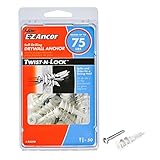
Next, you have self-drilling anchors, sometimes called drywall anchors or screw-in anchors. Many of these are made of plastic and come in white. They have a pointed tip that allows you to screw them directly into the drywall without pre-drilling a hole (though sometimes a pilot hole helps). They then provide a threaded opening for your screw. These are very convenient and often perform a bit better than basic expansion anchors for medium-duty loads, but again, check the weight rating carefully. They can strip out of the drywall if overtightened or overloaded.
Then there are toggle bolts. These are fantastic for heavy-duty applications in drywall. They consist of a bolt with a spring-loaded wing that folds up to go through a hole, then opens up behind the drywall. The wing provides a large surface area for distributing the weight. While the metal toggle itself isn’t white, you can often find white plastic sleeves or covers that go over the bolt and blend in with the wall. These are my go-to for anything I really don’t want falling down, like heavy mirrors or large cabinets. They require a larger hole, but the holding power is immense.
Finally, Molly bolts are similar to toggle bolts but have a metal sleeve that expands behind the wall as you tighten the bolt. Once installed, you can remove the bolt and re-insert it later, leaving the sleeve in place. White versions of the bolt and sleeve are available, making them a decent option for medium-to-heavy duty items where you might need to remove the item occasionally. They offer good holding strength and a cleaner look than basic plastic anchors.
Here’s a quick rundown:
| Anchor Type | Typical Material | Color Options | Best For | My Verdict |
|---|---|---|---|---|
| Plastic Expansion | Polyethylene/Polypropylene | Beige, White, Clear | Light-duty (pictures, small shelves) | Cheap, ubiquitous, but often weak. Only for very light stuff. |
| Self-Drilling | Plastic, Nylon | White, sometimes clear | Medium-duty (medium shelves, decor) | Convenient, easy to install, but can strip. Better than basic plastic. |
| Toggle Bolts | Metal (with plastic options) | Metal, with white sleeves/bolts available | Heavy-duty (cabinets, large mirrors, TVs) | Top-tier holding power in drywall. A bit more effort, but worth it for security. |
| Molly Bolts | Metal (with plastic options) | Metal, with white sleeves/bolts available | Medium to heavy-duty (heavy pictures, light cabinets) | Good grip and reusability. A solid middle ground for heavier items. |
Common Mistakes When Using Anchors (especially White Ones)
People mess up anchor installation constantly, and it’s not always the anchor’s fault. You can buy the fanciest white anchor on the market, but if you use it wrong, it’s going to fail. I’ve made enough of these mistakes myself to write a book, so here’s the stuff you absolutely need to watch out for.
The biggest mistake? Using the wrong anchor for the wall type. Most white anchors you’ll see are designed for drywall. Trying to use them in plaster, concrete, or brick is usually a recipe for disaster. Plaster can be brittle, concrete needs masonry anchors (like wedge anchors or concrete screws), and brick is its own beast. Always know what your wall is made of. If you’re unsure, tap it gently with a knuckle. Drywall sounds hollow; plaster sounds more solid but can still be crumbly; concrete sounds very solid.
Another common blunder is not drilling the correct size hole. Anchors are designed to fit snugly. If the hole is too big, the anchor won’t expand or grip properly, and it’ll just spin or fall out. If the hole is too small, you can’t get the anchor in, or you might split the drywall or plaster. Manufacturers provide drill bit size recommendations on the packaging. Measure twice, drill once. Seriously.
Overtightening is also a huge problem. Especially with self-drilling and plastic expansion anchors, you can strip the threads in the drywall or the anchor itself. This means the screw just spins freely, and your item will fall. It’s tempting to crank down on a screw to make sure it’s tight, but with anchors, ‘snug’ is often ‘tight enough’. Stop when you feel resistance, and don’t force it.
Finally, and this is important: overloading the anchor. People see a 50-pound rating and think, ‘Great, I can hang 50 pounds!’ But that rating is usually for shear strength (pulling straight down) in ideal conditions. Dynamic loads (things that move or vibrate) and angled loads drastically reduce the effective weight an anchor can hold. Always err on the side of caution. If your item weighs 30 pounds, don’t use an anchor rated for 30 pounds. Use one rated for 50 or 75 pounds, or better yet, a heavy-duty type like a toggle bolt. My cookbook shelf incident was a classic case of ignoring this.
Real-World Use Cases for White Anchors
So, where do white anchors actually shine? Beyond just looking pretty, they serve genuine purposes in many homes. I’ve found them most useful in situations where the fastener is visible and aesthetics matter, but the load isn’t extreme. Think about the common areas in a house.
In the living room, hanging lightweight picture frames on a white wall is a perfect job for white plastic expansion anchors or self-drilling anchors. You get a clean look without seeing unsightly beige. For a slightly heavier decorative mirror or a small wall-mounted shelf for remotes, white Molly bolts can be a good compromise between appearance and holding power. (See Also: Can Cords Be Used To Make Anchors Climbing )
In the kitchen, while heavy cabinets absolutely need solid hardware, lighter tasks can benefit from white anchors. Consider hanging pot holders, spice racks, or even a small paper towel holder. Again, the key is knowing the weight of the item and the strength of the anchor. Many decorative kitchen items don’t demand the brute force of a toggle bolt, and white anchors keep things looking tidy.
Bathrooms are another prime spot. Towel bars, toilet paper holders, and small shelves for toiletries can all be mounted with white anchors. Since bathrooms often have white tile or painted walls, light-colored fasteners blend in naturally. Just make sure the anchor is rated for the weight of wet towels, which can be surprisingly heavy.
Children’s rooms are also great candidates. Lightweight wall decorations, a small toy organizer, or even a simple curtain rod can be installed using white anchors. You want things to look nice for the kids, but safety and proper installation are still most important, so always double-check those weight ratings and wall types.
The overarching principle is that white anchors are best used when you need a fastener to be as unobtrusive as possible, and the item being hung is not excessively heavy. They solve the problem of that beige eyesore peeking out, offering a cleaner, more professional finish for lighter-duty tasks.
People Also Ask: Are White Anchors Weaker?
Not necessarily. The color of an anchor doesn’t inherently determine its strength. White anchors might be made of slightly different plastics (like nylon instead of polyethylene) or include pigments. Some higher-quality plastic anchors are indeed white and offer good holding power for their type. However, the most basic, cheapest anchors are often beige, and their weakness is more about the material and design than the color. The real factor determining strength is the anchor’s type, its construction, and its intended weight rating for a specific wall material. Always check the packaging for load limits.
Finding and Using White Anchors Effectively
So, you’ve decided you want white anchors. Where do you find them, and how do you make sure you’re getting the right ones? It takes a little more digging than just grabbing the first bag you see, but it’s doable.
Most major home improvement stores will have some selection of white anchors. You’ll often find them in the fasteners aisle, either in separate small boxes or as part of a more assorted hardware pack. Brands like Toggler, Hillman, and even some generic store brands often carry white plastic expansion anchors and self-drilling anchors. For toggle bolts or Molly bolts, you’ll need to look for models that explicitly state they come with white sleeves or bolts.
Online retailers are your best bet for variety. Amazon, Home Depot’s website, Lowe’s website – they all offer a much wider range of options. You can search specifically for ‘white drywall anchors’ or ‘white plastic anchors.’ Read the product descriptions carefully. Look for mentions of material (nylon is often a good sign for durability) and always check the weight ratings and recommended drill bit sizes. Don’t be afraid to read reviews; other people’s experiences can be incredibly valuable, especially if they mention using them on similar walls.
When you get your white anchors home, treat them with respect. First, identify your wall type. If it’s drywall, great. If it’s plaster, be a bit more cautious; plaster can crumble more easily. Concrete or brick will require completely different anchors.
Follow the instructions on the package precisely. This means using the specified drill bit size. If the instructions say to use a 1/4-inch drill bit, use a 1/4-inch drill bit. If you don’t have one, go get one or borrow one. It’s that important. Drill the hole to the recommended depth. If the anchor doesn’t tap in easily, your hole might be too small, or you might be hitting a stud (which is actually a good thing, as you can screw directly into it!). If it’s too loose, your hole is likely too big.
Once the anchor is in, drive your screw in straight and not too fast. Stop when it feels secure. Then, before you hang your item, give it a gentle tug. Test the connection. It’s better to find out now if it’s going to fail than after your prized possession is on the wall. (See Also: Can Anchors In Your Shoulder Break )
People Also Ask: Can You Use White Anchors in Concrete?
Generally, no. Most white anchors you encounter are plastic expansion or self-drilling types designed for drywall or plaster. Concrete is a much denser and harder material that requires specialized masonry anchors. These are typically made of heavier-duty plastic or metal and are designed to withstand the forces exerted by concrete. Using standard white drywall anchors in concrete will likely lead to failure, as they won’t get a proper grip and the concrete will simply crumble around them.
The Overrated vs. Underrated Anchor Debate
Okay, let’s talk brass tacks. There’s a lot of hype around certain anchor types, and I think some of it is just plain wrong. Everyone says you must use a toggle bolt for anything heavy. And yeah, they’re great, but they’re overkill for a lot of jobs.
Contrarian Opinion: Toggle bolts are overrated for anything under 20 pounds. For lighter-to-medium duty tasks where an anchor is visible, a well-chosen white self-drilling anchor or a Molly bolt is often perfectly adequate and much less conspicuous. The hole required for a toggle bolt can be quite large, and if you’re hanging something on a wall where you might move it later, the larger hole is a pain to patch. If you need serious holding power for something truly heavy (like a TV mount or a heavy cabinet), then yes, toggle bolts or lag shields are the way to go. But for a framed print that weighs 15 pounds? A good white plastic anchor or a Molly bolt is often sufficient and looks way better.
What’s underrated? I think good quality, white plastic expansion anchors for very light loads are underrated when used correctly. People dismiss them because they’re cheap and often beige, but for hanging a single picture frame or a very light curtain rod, they do the job perfectly fine. The trick is to buy them from a reputable brand, use the correct drill bit, and never overload them. They’re efficient and blend in if you get the white ones. They get a bad rap because people try to hang pianos with them.
The whole debate about whether anchors can be white is really a proxy for a larger conversation: that you don’t have to sacrifice appearance for functionality, especially for lighter tasks. It’s about choosing the right tool for the job, and sometimes, that tool can look good too.
People Also Ask: Can I Use a White Anchor for a TV Mount?
It’s a definite maybe, but I’d lean towards no for most standard white plastic anchors. TV mounts are heavy, and they experience dynamic loads when you adjust the TV or if there’s any vibration. The majority of white plastic anchors are designed for light to medium-duty loads and are not suitable for the significant weight and stress of a TV mount. You absolutely need a heavy-duty anchor, like a toggle bolt, a lag shield with backing plates, or specific concrete anchors if you’re mounting into a concrete wall. Always check the weight rating of the mount and the wall material, and err on the side of caution with a much stronger anchor than you think you need.
Can Anchors Be White?
Yes, anchors can absolutely be white. Many manufacturers offer white plastic expansion anchors, self-drilling anchors, and even white sleeves or bolts for toggle and Molly bolts. This allows for a more aesthetically pleasing installation, especially on white or light-colored walls, where beige or colored anchors would be more noticeable.
Are White Anchors Strong Enough?
The strength of an anchor depends on its type, material, and design, not its color. While some basic beige anchors are indeed weak, high-quality white anchors made from materials like nylon can be very strong for their intended load. Always check the weight rating on the packaging and make sure it’s appropriate for the item you’re hanging and the type of wall you’re using it on.
What Is the Difference Between Beige and White Anchors?
The primary difference is cosmetic. Beige anchors are often made from unpigmented plastics, giving them their natural color. White anchors typically have white pigments added, like titanium dioxide, to achieve a brighter color. This can sometimes mean white anchors are made from slightly different or higher-grade plastics, but the color itself isn’t the sole indicator of strength or quality.
What Is the Best Anchor for Drywall?
For light loads, white self-drilling anchors or good quality plastic expansion anchors are often sufficient. For medium to heavy loads, toggle bolts or Molly bolts are generally considered the best options for drywall due to their superior holding power and weight distribution. Always match the anchor type to the weight of the object and the wall condition.
Final Thoughts
So, there you have it. Can anchors be white? Yes, and sometimes it’s the best option for a clean look. But never let the color be the deciding factor. The real victory is getting your stuff to stay on the wall securely. I’ve learned that while beige might be boring, a falling shelf is way more disastrous. Prioritize that weight rating, understand your wall, and for the love of all that is holy, use the right drill bit.
Don’t get sucked into buying the cheapest pack just because it’s a bargain. That false economy can cost you a ruined wall, a broken item, or even an injury. Spend a little extra for a brand you trust or a type of anchor that’s designed for the job. Your walls (and your sanity) will thank you.
Next time you’re at the hardware store, take a moment to really look at the options. If you need something to blend in, seek out those white or clear fasteners. But if you’re hanging something heavy, swallow your pride and go with the industrial-looking toggle bolt. It’s not about being fancy; it’s about being solid.