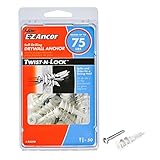
I’ve seen too many folks hang heavy stuff on walls, only to have it come crashing down. It’s a disaster waiting to happen, and usually, the culprit is a misunderstanding about what’s actually holding up your TV or shelves. So, let’s cut to the chase: can anchors go into studs? The short answer is… it depends on what you mean by ‘anchor’ and what you’re trying to achieve.
For years, I’ve wrestled with drywall, plaster, and the endless parade of plastic doodads promising miracles. Most of them are just glorified drywall anchors, and they have no business being shoved into a stud. We need to talk about what actually works, and what’s just a waste of your time and money.
Why You Can’t Just Jam Anything Into a Stud
Look, studs are the skeleton of your wall. They’re solid wood (or sometimes metal), and they’re what your house is built on. When you hang something heavy, you want to hit a stud. That’s where the real strength is.
Think of it like this: a stud is a load-bearing wall on a micro-level. It’s designed to take weight and distribute it safely into the framing of your house. Drywall, on the other hand, is basically just a thin sheet of plaster sandwiched between paper.
It’s crumbly, it’s weak, and it’s only good for a few pounds on its own. Pushing a standard plastic drywall anchor into a stud is like trying to nail Jell-O to a tree – it just doesn’t make sense. The plastic anchor is designed to expand behind the drywall, gripping the back of the drywall itself. If you drive it into a stud, it’s just going to sit there, not expanding because there’s no void for it to grip.
It might feel a little tighter initially because you’re forcing it into solid wood, but it won’t have the proper mechanical advantage or the holding power you’d get from a screw directly into the stud. This is a common mistake people make when they’re trying to be extra secure but don’t understand how the anchor is supposed to function. You’re basically rendering the anchor useless and relying on a friction fit, which is never a good long-term solution for anything heavier than a picture frame.
I remember trying to hang a heavy mirror in my old apartment. The instructions said to use the included anchors.
I found a spot that felt solid, drilled a pilot hole, and screwed in the anchor. It felt snug, so I tightened it up. Then, I screwed the mirror’s bracket into the anchor. It seemed okay.
A week later, I heard a creak. I looked over, and the mirror was hanging at a distinct angle. A few days after that, crash. The anchor had ripped right out of the drywall because I hadn’t hit a stud, and the anchor itself wasn’t designed for that kind of shear force.
It was a lesson learned the hard way: always, always aim for studs when weight is involved, and understand what tool you’re using.
People often confuse “anchors” with “screws.” A screw directly into a stud is the gold standard. Anchors, in the common sense (like those plastic conical things or toggle bolts), are designed for situations without studs. Trying to use them in a stud is a misapplication of the tool. It’s like using a screwdriver to hammer a nail – it’s the wrong tool for the job, and you’ll likely end up frustrated and with a damaged wall.
The Right Way: Screws and Studs, Not Anchors
Let’s be crystal clear: when we talk about hanging heavy items, the goal is always to get a fastener directly into a stud. This is a must for anything beyond a very light decoration. If you’re hanging a TV mount, a heavy bookshelf, a medicine cabinet, or even a substantial piece of art, you absolutely need to locate a stud and drive a screw directly into it.
This is where the term ‘stud finder’ becomes your best friend. These devices, whether electronic or magnetic, help you locate the solid wood framing behind your drywall. Once you’ve found a stud, you’ll typically drill a pilot hole (slightly smaller than the diameter of your screw) directly into the center of the stud.
Then, you drive a substantial wood screw or lag screw through whatever you’re mounting and into that stud. This creates an incredibly strong connection that can hold hundreds of pounds, depending on the screw and the stud itself.
The common, inexpensive plastic anchors you buy in bulk packs at hardware stores? They are explicitly designed for drywall only. (See Also: Can Concrete Anchors Be Used In Brick )
They work by expanding behind the drywall sheet, creating a broader surface area to distribute the load. If you try to drive these into a solid stud, there’s no cavity for them to expand into. They might feel tight for a moment, but they aren’t creating a secure mechanical connection to the stud. They’re just sort of jammed in there.
You’re better off just using a wood screw directly into the stud if you’ve found one. Trying to force a plastic anchor into a stud is a wasted step and a potential point of failure if the anchor just spins without biting into anything solid.
My first few DIY projects were plagued by this misunderstanding. I’d find a spot that felt ‘solid’ and assume it was a stud, then go to town with whatever anchor came with the product. More often than not, I was just drilling into a void and relying on the anchor’s flimsy grip on the drywall.
It’s a gamble that rarely pays off when you’re dealing with anything that has actual weight.
The common advice to “always use an anchor” is only true when you cannot find a stud. If you can find a stud, you bypass the anchor entirely and go straight for the screw. This is why understanding your wall’s construction is key. It’s not about using an anchor in a stud; it’s about using a screw into a stud and using anchors when you can’t get to a stud.
When Anchors are Your Only Option (and How to Choose Wisely)
So, if you absolutely cannot find a stud, or your mounting point is precisely between studs and there’s no way to shift it, what then? This is where the term ‘anchor’ really comes into its own. We’re talking about devices specifically designed to create a secure hold in hollow walls.
There are several types, and they perform very differently. The cheap plastic ones, often called ‘expansion anchors’ or ‘cone anchors’, are okay for very light loads – maybe a few pounds.
Think small pictures or very light shelves. They work by expanding as you screw into them, pushing outwards against the back of the drywall. But they have a low weight rating and can fail if the drywall is weak or if there’s any significant shear force (like pulling downwards).
Then you have ‘toggle bolts’. These are beefier. They consist of a metal wing that folds up to pass through a hole, and then springs open behind the drywall. You then screw the bolt through the toggle.
These can hold significantly more weight, often 50 pounds or more, depending on the size. They require a larger hole, but the holding power is much better. My personal favorite for medium to heavy loads in drywall-only situations are ‘Molly bolts’ or ‘sleeve-type anchors’.
These are metal sleeves with a threaded bolt inside. As you tighten the bolt, the sleeve expands and grips the back of the drywall very securely. Once tightened, you can often remove the bolt, leaving the sleeve in place, and then screw your item into the sleeve. These provide a really solid connection and are what I’d reach for if I had to hang something moderately heavy without hitting a stud.
For very heavy items, you might even look into ‘heavy-duty toggle bolts’ or specialized plaster anchors if you have an older lath-and-plaster wall.
The key is to match the anchor to the weight you need to support and the type of wall material you have. Always check the weight rating on the packaging. Don’t just guess. I once hung a 30-pound coat rack using what I thought were strong anchors. They looked solid, but the packaging was misleading. Within a month, it was sagging. When I took it down, the anchors had basically pulled through the drywall. It was a mess. Always over-engineer slightly if you’re unsure, and read the fine print on those weight limits.
Common Anchors for Drywall (no Stud Needed)
| Anchor Type | Holding Power | Best For | My Verdict |
|---|---|---|---|
| Plastic Expansion Anchors | Very Light (e.g., 5-10 lbs) | Small pictures, lightweight decor | Overrated for anything serious. Only for the lightest tasks. |
| Toggle Bolts | Medium to Heavy (e.g., 25-100+ lbs) | Shelves, mirrors, light cabinets | Reliable if installed correctly. Good strength for the effort. |
| Molly Bolts (Sleeve Anchors) | Medium to Heavy (e.g., 30-150+ lbs) | Heavy shelves, cabinets, TV mounts (check rating!) | My go-to for non-stud situations. Very secure grip. |
The Stud Finder: Your Best Friend and Worst Enemy
Ah, the stud finder. This little gadget promises to save you from blindly poking holes in your walls. And for the most part, they do. Electronic stud finders use sensors to detect changes in density behind the wall, typically indicating a wood stud or metal stud. Magnetic ones detect the nails or screws used to attach the drywall to the studs. They’re a massive improvement over just tapping on the wall and listening for a dull thud (which is how people did it for ages, and frankly, still do). (See Also: Can Cords Be Used To Make Anchors Climbing )
However, they aren’t foolproof. Sometimes, you’ll get false positives. You might think you’ve found a stud, drill your pilot hole, and discover you’ve hit a pipe, a wire, or just more empty space.
This can happen if there’s plumbing or electrical conduit running near where you’re trying to drill, or if the stud finder isn’t calibrated properly, or if you’re using it on a wall with a lot of insulation or a very thick finish. My rule of thumb is to use the stud finder, mark the edges of what it indicates as a stud, and then use a very thin drill bit (like a 1/16th or 3/32nd inch) to drill a small pilot hole. If you hit resistance immediately and the bit bites into something solid, you’re likely in a stud.
If it goes in easily for an inch or more, you’ve missed, and you need to try again. It’s better to drill a few tiny, almost invisible pilot holes than one big hole where you weren’t supposed to.
Another trick is to use the stud finder across a wider area. Studs are typically spaced 16 or 24 inches apart on center. If you find one, you can usually predict where the next one should be. Also, look for visual cues: electrical outlets and switches are almost always attached to the side of a stud.
Window and door frames are also attached to studs. Use these as starting points to help orient your stud finder.
I once spent a solid hour trying to find a stud for a heavy picture frame, only to realize I was looking in the wrong place entirely. I was trying to hang it above a fireplace, and the brickwork was interfering with my electronic stud finder. I finally found the stud by starting at a nearby light switch and measuring over.
It’s a bit of detective work sometimes.
The magnetic stud finders are often more reliable for finding the actual fasteners holding the drywall, which directly confirms the presence of a stud. If you’re serious about DIY and hanging things, investing in a decent quality stud finder is a must. Don’t cheap out here; a bad stud finder is worse than no stud finder at all because it gives you false confidence.
When Not to Use Anchors (and Common Mistakes)
The biggest mistake, as we’ve discussed, is trying to use a drywall anchor in a stud. It defeats the purpose of both. Drywall anchors are for drywall. Screws are for studs. Mixing them up leads to weak connections, damaged walls, and potential disaster. Another common mistake is using the wrong type of anchor for the job. Piling light-duty plastic anchors onto a task that requires a toggle bolt or molly bolt is asking for trouble. Always check the weight rating on the packaging and err on the side of caution. If you’re hanging something that weighs 30 pounds, don’t use anchors rated for 15 pounds. It’s a recipe for failure.
Over-tightening is another issue. While you want things to be snug, over-tightening a drywall anchor can strip the threads in the anchor itself or, worse, crack the drywall around the hole, compromising its integrity. If you’re using a power drill, use a clutch setting to prevent this. I learned this the hard way when I blew out a section of drywall trying to get a molly bolt ‘extra secure’. It just spun and spun until the surrounding drywall crumbled. Lesson learned: firm and snug is good, Herculean effort is bad.
Furthermore, people often don’t prepare the hole correctly. For toggle bolts and molly bolts, you need to drill a specific size hole. Too small, and you won’t be able to insert the anchor. Too big, and it won’t grip properly. Always measure the required hole size and use the correct drill bit. Also, some anchors are designed for specific wall materials. An anchor designed for drywall won’t necessarily work well in plaster, concrete, or masonry. You need to use the right anchor for the right wall type. Trying to use a drywall anchor in concrete is like trying to fit a square peg in a round hole – it just won’t work and can damage your tools.
Finally, people sometimes rely on anchors when they should be using a different mounting solution altogether. For very heavy items like large flat-screen TVs or massive bookshelves, you might need specialized mounting brackets that attach directly to multiple studs or even require blocking to be added between studs. Thinking a handful of drywall anchors will hold a 70-inch TV is pure fantasy. Always consider the total weight of the item, plus any dynamic load (like books being pulled out of a shelf or a TV being bumped). If in doubt, consult a professional or opt for a mounting solution that uses multiple stud attachments.
Real-World Scenarios: When to Use What
Let’s talk practical application. You want to hang a framed family photo that weighs about 5 pounds. You can’t find a stud exactly where you want it. A simple plastic expansion anchor driven into the drywall is perfectly fine for this.
It’s cheap, easy, and will hold the weight securely. Now, let’s say you want to mount a new flat-screen TV, a 55-inch model that weighs around 40 pounds, and the studs in your wall are spaced 24 inches apart, and your ideal mounting spot is right in the middle. You absolutely must find studs here. (See Also: Can Anchors In Your Shoulder Break )
You’d use your stud finder to locate the studs, then use a solid TV wall mount that has pre-drilled holes designed to screw directly into those studs. Lag bolts are typically used for this, going deep into the wood. No anchors needed or wanted here. If, for some bizarre reason, you absolutely had to mount it between studs, you’d need extremely heavy-duty toggle bolts or a specialized mounting system designed for that, but honestly, that’s a risk I wouldn’t take with an expensive TV.
How about a floating shelf that needs to hold books? A typical floating shelf might hold 20-30 pounds. If the mounting hardware screws directly into studs, great.
If the shelf’s mounting bracket has holes that fall between studs, you’ll need to use something stronger than plastic anchors. Toggle bolts or molly bolts rated for at least 50 pounds would be a good choice here, and you’d want to use at least two, ideally more, spaced out to distribute the load. I learned this the hard way with a bookshelf. I used what I thought were decent anchors, and a year later, the shelf was bowing significantly.
I ended up having to reinforce it with screws directly into studs I discovered were only 18 inches away, not the 24 I initially thought.
For hanging cabinets, like a small bathroom vanity or a set of kitchen uppers, you absolutely need to hit studs. Cabinets are heavy even when empty, and then you load them with toiletries or dishes. They are a prime example of a situation where anchors simply will not suffice. You’ll use long screws, often 3 inches or more, driven directly into wall studs.
If the cabinet’s mounting holes don’t align perfectly with studs, you might need to add blocking (extra pieces of wood) between studs to create secure attachment points. This is where hiring a contractor might be a good idea if you’re not comfortable with that level of structural work. Always remember that when it comes to cabinets, medicine chests, or anything that closes and holds items, the potential for failure is higher, and the consequences can be messier.
People Also Ask
Can You Put a Screw and Anchor in the Same Stud?
No, this is generally not recommended and often counterproductive. A screw driven directly into a stud provides the strongest possible hold because it’s penetrating solid wood. Drywall anchors are designed to expand behind the drywall in hollow spaces. If you try to drive a drywall anchor into a stud, there’s no void for it to expand into, so it won’t function as intended. If you’ve already put a screw into a stud, it’s already secured. Trying to add an anchor there won’t improve the hold and could potentially weaken the stud or the surrounding drywall if done incorrectly.
Can You Put a Screw Through an Anchor?
Yes, that’s how many drywall anchors (like plastic expansion anchors, molly bolts, and toggle bolts) are designed to work. You first install the anchor into the drywall, creating a secure receptacle. Then, you insert a screw through the object you want to hang and into the anchor. The screw engages with the anchor, and together they provide the holding power. However, this is only applicable when you are not screwing directly into a stud. If you’ve successfully located and are screwing into a stud, you don’t need an anchor at all.
What Happens If You Put a Screw Into a Stud Without an Anchor?
When you put a screw directly into a stud without an anchor, you are creating the most secure and solid attachment possible for most home applications. The screw threads bite directly into the solid wood of the stud, providing excellent holding power for both shear (sideways) and pull-out (downward) forces. You are bypassing the weak drywall entirely and using the structural integrity of the wall framing. This is the preferred method for hanging heavy items like TV mounts, shelves, and cabinets whenever possible.
Can Anchors Go Into Studs?
No, standard drywall anchors are not designed to go into studs. They are meant for hollow walls where there is no stud present. When you insert a drywall anchor into a stud, it cannot expand or grip properly, rendering it ineffective. For attaching items to studs, you should use screws directly into the wood. Anchors are a workaround for situations without studs, not a supplement to them.
Verdict
So, to circle back to our original question: can anchors go into studs? The answer is a resounding no, for the vast majority of common anchors. They are designed for the void behind the drywall, not the solid wood within it. Trying to use them in a stud is a waste of time and a potential hazard.
Always aim for studs when hanging anything heavier than a small picture. Use a stud finder, drill pilot holes, and drive screws directly into that solid wood. If, and only if, you absolutely cannot hit a stud, then and only then should you select the appropriate heavy-duty drywall anchor for the job, making sure it’s rated for the weight you intend to hang. Don’t guess, don’t assume, and for heaven’s sake, read the packaging.
Understanding this simple distinction between anchors and studs will save you a lot of headaches, damaged walls, and potentially broken possessions. It’s about using the right tool for the right situation, and when it comes to studs, the tool is usually a screw, not an anchor.