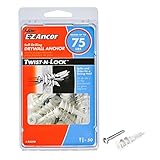
I stood there, staring at the wall, a bag of shiny new drop-in anchors in one hand and a bag of brick ties in the other. The plan was simple: mount a heavy-duty bracket to the exterior brickwork for a new awning. Easy, right? I’d used these anchors a hundred times in solid concrete. But this wasn’t solid concrete. This was old, crumbly mortar joints. And that’s when the big question hit me: can drop in anchors be used in mortar joints? My gut screamed no, but a little voice whispered, ‘maybe if you’re careful.’ I’m here to tell you that voice is a liar.
This isn’t about finding fancy workarounds or clever tricks. It’s about understanding what these anchors are designed for and why forcing them into the wrong material is a recipe for disaster, wasted time, and potentially dangerous failure. Forget the YouTube hack videos; we’re talking about actual, real-world holding power, the kind that won’t let you down when a strong wind blows.
Why Mortar Joints Are a Drop-in Anchor’s Worst Nightmare
Look, I’ve been there. You’ve got a project, you’ve got anchors, and the material you thought you were drilling into turns out to be… less than ideal. I once tried to hang a ridiculously heavy antique mirror on a wall that looked like brick but was actually a facade of thin brick slips over a hollow cavity, with the mortar being the only thing providing any grip.
I thought, ‘Sure, I’ll just drill into the mortar between the slips.’ Big mistake. I used some standard wedge anchors, and after about two weeks, the mirror decided gravity was more appealing.
It didn’t just fall; it took a chunk of the wall with it. That taught me a hard lesson: the substrate matters.
A lot.
Drop-in anchors, the kind you drill a hole for, tap in, and then set with a bolt or screw, rely entirely on the integrity of the material they’re expanding into. When you drill into solid concrete, you’re drilling into a dense, homogenous mass that can withstand significant outward pressure.
The anchor expands, creating a tight, secure grip. Now, picture that same anchor in a mortar joint. Mortar, especially older mortar, is basically sand and cement with lime. It’s designed to bind bricks together, yes, but it’s not designed to be a structural anchor point itself.
It’s brittle, often porous, and can crumble easily. When you expand a drop-in anchor in mortar, you’re basically cracking and pushing apart a material that’s already relatively weak.
It might hold for a bit, especially if the mortar is surprisingly fresh and hard, but you’re living on borrowed time. The expansion forces are just too much for it.
I’ve seen people try to ‘cheat’ by using a larger drill bit, hoping to get a bigger contact area, or by back-filling the hole with epoxy before inserting the anchor. While epoxy can shore up a weak substrate, it’s a completely different ballgame than a standard drop-in anchor install. The anchor’s design is predicated on mechanical expansion into a solid material, not adhesion to a filled void.
You’re introducing variables that the anchor wasn’t designed for, and that’s a path to unpredictable results. The common advice you might see online, suggesting you can ‘make it work’ with careful drilling, is often from folks who haven’t experienced the catastrophic failure later on. I’ve learned to trust the engineers’ intent behind these fasteners.
What Are Drop-in Anchors Actually for?
Let’s get crystal clear on what these things are designed for. Drop-in anchors, often called ‘female’ anchors because the bolt screws into them, are meant for solid, dependable materials. Think concrete, solid brick (where you’re drilling into the brick itself, not the gaps), or solid stone. Their primary mechanism is expansion. You drill a hole of a specific diameter, insert the anchor, and then drive a bolt or screw into it. This drives a cone or wedge at the bottom of the anchor outwards, forcing the outer shell of the anchor to expand and grip the sides of the drilled hole. It’s a mechanical lock. (See Also: Can Concrete Anchors Be Used In Brick )
The key here is ‘mechanical lock.’ It needs something solid to push against. When you try this in a mortar joint, you’re not pushing against solid material; you’re pushing against crumbling sand and cement. The mortar breaks away, and the anchor can spin or pull out with minimal force.
I remember a job where we had to hang a very heavy industrial shelf in a large workshop. The walls were thick, solid concrete blocks, but there were a few sections where the blockwork had been patched with mortar.
We used the specified drop-in anchors everywhere, but on a whim, one guy decided to try one in a particularly solid-looking mortar patch, just to save himself a few minutes of drilling into the block. That shelf ended up with a slight tilt, and when we investigated, that one anchor was barely holding. The mortar around it had completely disintegrated from the expansion. It was a stark visual reminder of why the substrate matters.
The common advice you’ll find is that they’re best for solid masonry and concrete. This isn’t a suggestion; it’s a specification. If you’re drilling into hollow block, or worse, the mortar between the blocks, you’re setting yourself up for failure. I’ve heard people say, ‘Well, if the mortar is really hard, it’ll be fine.’ And sure, maybe it’ll be fine for a week, or a month. But what about a year from now? What about when that awning gets hit by a winter storm? The forces aren’t static. They change, they stress the fastener, and if the substrate is weak, it will give way. You might as well be drilling into Styrofoam.
Here’s a quick breakdown of where they shine and where they falter:
| Material Type | Suitability for Drop-In Anchors | Opinion/Verdict |
|---|---|---|
| Solid Concrete | Excellent | This is their happy place. Strong, reliable, and designed for this. |
| Solid Brick (drilled into the brick) | Good | Works well, but make sure you’re in solid brick, not a void. |
| Solid Stone | Good | Similar to concrete, provided the stone is dense and non-porous. |
| Hollow Concrete Block (drilled into the void) | Poor | Expansion won’t find purchase. Will likely pull out. |
| Mortar Joints | Terrible | Will likely crumble and fail. A ticking time bomb. |
| Drywall / Plaster | Not Applicable | Completely unsuitable. Needs specialized anchors. |
Common Mistakes and Why They Lead to Disaster
The biggest mistake is simply assuming. Assuming the mortar is strong enough, assuming that just because a hole is drilled, it’s a secure point. I once saw a DIYer hang a massive garden trellis on a brick wall using drop-in anchors, but they’d drilled right into the mortar between the bricks. They used about eight anchors, thinking quantity would make up for quality. Within six months, the trellis was sagging precariously, and the mortar around the anchors had completely eroded, leaving gaping holes. It wasn’t just ugly; it was dangerous. Imagine that falling on someone.
Another common error is using the wrong size drill bit. Drop-in anchors require a very precise hole diameter. If the hole is too big, the anchor won’t expand properly. If it’s too small, you can’t get the anchor in or you risk cracking the material prematurely. When you’re dealing with the variable density of mortar, getting that perfect hole is nearly impossible. You’ll be drilling, the drill bit will wander, the mortar will chip away, and suddenly your ‘perfect’ hole is anything but. Then, to compensate, people might try to force the anchor in, which just exacerbates the problem.
Then there’s the ‘good enough’ mentality. People see the anchor seated, they screw in the bolt, and it feels tight at that moment. They don’t consider the long-term. They don’t consider vibration, temperature changes, or the weight of the object over time. Drop-in anchors work through expansion, and that expansion puts stress on the surrounding material. In solid concrete, that stress is distributed and resisted. In mortar, that stress is concentrated and often leads to fracturing. I’ve heard it said that using drop-ins in mortar is like trying to hammer a nail into a biscuit – it might go in, but it’s not going to hold anything up for long.
The irony is, there are often much better, albeit sometimes more involved, solutions for brick and mortar. Using lag shields, sleeve anchors, or even chemical anchors (like epoxy anchors) specifically designed for masonry are far superior options. They engage the material differently and provide significantly more reliable holding power. Relying on a drop-in anchor in a mortar joint is a classic example of using the wrong tool for the job, and it’s a mistake I’ve seen lead to damaged property and near misses more times than I care to admit.
Real-World Scenarios: When You might Be Tempted (and Why You Shouldn’t)
Let’s talk about those moments of temptation. You’re hanging a lightweight shelf, maybe just a few picture frames, on a brick wall.
The brick is old, and the mortar looks… questionable. But there’s a perfect little mortar joint right where you need to drill. It feels solid enough to the tap of your hammer. You think, ‘What’s the worst that can happen?’
I’ll tell you what can happen: a loose picture frame, sure. But what if it’s a conduit box for electrical wiring? Or a small security camera? (See Also: Can Cords Be Used To Make Anchors Climbing )
Or a bracket for a lightweight sign? The potential for failure might seem low, but the consequences can escalate quickly.
If that conduit box fails, you could have exposed wires. If that camera falls, it’s broken.
It’s a slippery slope from ‘lightweight’ to ‘disaster’ when you compromise on the fastener.
I once had a friend who was building a small garden planter box against a brick wall. He wanted to secure it so it wouldn’t tip. He used drop-in anchors in the mortar joints because the wall brick was too hard to drill easily. The planter itself wasn’t heavy, but it was filled with soil and plants, and it got saturated with water regularly. Guess what? The constant moisture and the weight, even if moderate, worked on the brittle mortar. The anchors began to loosen, and the planter started to lean away from the wall. It was a mess, and he had to redo it with proper masonry anchors that actually gripped the brick, not just the crumbling filler.
The temptation is often driven by convenience. Drilling into mortar can feel easier than drilling into hard brick or solid concrete. It’s less wear on your drill bits and your arms. But this is where that old saying comes into play: ‘Haste makes waste.’ Taking an extra ten minutes to drill into the brick itself, or to select and install the correct type of anchor for masonry, will save you hours of potential frustration, repair work, and safety hazards down the line. The few dollars saved on a proper anchor are insignificant compared to the cost of failure.
The key takeaway is to always assess the substrate. If you can’t definitively say it’s solid, dense material like concrete, assume it’s not suitable for a standard drop-in anchor. I’ve learned to carry a small bag of different anchor types – lag shields, concrete screws, even some heavy-duty toggle bolts for hollow walls – just in case I encounter an unexpected substrate. It’s better to be over-prepared than to be stuck with a project that’s guaranteed to fail because I used the wrong fastener. That initial ease of drilling into mortar is a deceptive trap.
Faq: Can Drop in Anchors Be Used in Mortar Joints?
Can Drop in Anchors Be Used in Mortar Joints?
No, drop-in anchors should not be used in mortar joints. Mortar is a brittle material, and the expansion force of a drop-in anchor will cause it to crumble, leading to the anchor failing to hold or pulling out entirely. They are designed for solid substrates like concrete or solid brick.
What Are the Alternatives to Using Drop-in Anchors in Mortar?
For mortar joints or brickwork, consider using sleeve anchors, lag shields (with lag screws), or epoxy anchors. These fasteners are designed to provide more reliable holding power in masonry by either expanding within the material itself or by using adhesion with specialized resins.
Why Are Drop-in Anchors Not Suitable for Mortar?
Drop-in anchors work by expanding mechanically against the walls of a drilled hole. Mortar, especially older mortar, is not strong enough to withstand this expansion force. Instead of gripping, the mortar will break and erode, rendering the anchor useless and potentially damaging the wall.
What Kind of Anchors Are Best for Brick Walls?
For brick walls, it generally depends on whether you are drilling into solid brick or hollow block. For solid brick, sleeve anchors or lag screws with lag shields are good options. If you are drilling into hollow block, you will need anchors designed for hollow substrates, such as toggle bolts or specialized hollow-wall anchors, or consider using epoxy anchors that create a strong bond regardless of substrate integrity.
When All Else Fails: What to Do Instead
So, you’ve drilled your hole, and it’s not solid concrete. It’s brick, or worse, mortar. Panic? Not quite. The first step is to assess the situation honestly. Can you widen the hole slightly and get into solid brick or concrete? If yes, you might be able to use a slightly larger anchor or a different type of anchor designed for a wider range of substrates, like a sleeve anchor or a concrete screw. These often have a wider grip range and are more forgiving. My rule of thumb: if the material feels crumbly, it’s not good enough for a mechanical anchor that relies on outward expansion.
If you’re committed to using the existing hole, and it’s definitely in a mortar joint, you’re in a tough spot. The best, albeit more involved, solution is to use an epoxy anchor system. This involves cleaning the hole thoroughly, inserting a mesh sleeve if the hole is too large for the epoxy to fill, and then injecting a two-part epoxy resin. A threaded rod or bolt is then inserted into the wet epoxy. (See Also: Can Anchors In Your Shoulder Break )
Once cured, this creates an incredibly strong bond that doesn’t rely on mechanical expansion. It’s the most secure method for questionable substrates like crumbling mortar or hollow blocks.
I used this method once to hang a hefty exhaust fan housing on an old factory wall where the bricks were sound but the mortar was shot. It was messy, took time, but it held like a champ.
Another alternative, for lighter loads, is a lag shield. You drill the hole to the size specified for the lag shield, insert the shield (which expands slightly as you tap it in), and then screw in a lag screw. The shield deforms slightly and grips the sides of the hole. While better than a drop-in in mortar, it’s still relying on the mortar’s integrity.
It’s a step up, but not foolproof. The key is that lag shields deform and grip rather than expand outwards like a drop-in.
For truly reliable fastening in brick and mortar, especially for anything load-bearing or safety-related, I’d always lean towards epoxy anchors or making sure you’re drilling into the solid brick itself with a proper masonry anchor like a sleeve anchor or a concrete screw.
Don’t fall into the trap of ‘close enough.’ I once tried to save a few bucks by using a slightly smaller anchor than specified for a load in a cinder block wall.
It seemed okay at first, but after a few weeks, the anchor started to wobble. Turns out, the smaller anchor wasn’t expanding fully within the hollow core of the block. It was just spinning loosely.
I had to take the whole thing down, patch the holes, and start over with the correct anchor, which was a toggle bolt for hollow walls. The time and frustration were not worth the initial savings. When it comes to fasteners, especially in less-than-ideal materials, sticking to the manufacturer’s specifications and choosing the right anchor for the job is a must.
The core principle is simple: understand your substrate. If it’s not solid, dense material, a standard drop-in anchor is a bad bet. For everything else, there’s usually a better, more secure option available. It might take a little more research or a slightly higher upfront cost, but the peace of mind and the security of your installation are well worth it.
Verdict
So, to answer the big question directly: can drop in anchors be used in mortar joints? Absolutely not. It’s a fundamental mismatch of fastener design and substrate capability. You’re setting yourself up for failure, plain and simple. I’ve learned the hard way that cutting corners here isn’t saving time or money; it’s just delaying the inevitable repair or, worse, leading to a dangerous situation.
If you’re looking at a brick wall and thinking about anchors, take a good, hard look at the material. Are you drilling into solid brick, or are you eye-balling the mortar joints? If it’s the latter, stop. Step away from the drop-in anchors. Invest in the right tool for the job. It could be sleeve anchors, lag shields, or even epoxy anchors if the situation is really tricky. Your project, your belongings, and potentially your safety depend on it.
My final, blunt advice? Trust the specifications. Don’t try to reinvent the wheel with questionable substrates. If the instructions say concrete, use it in concrete. If you’re dealing with brick or mortar, find anchors specifically designed for masonry. It’s the only way to get a truly secure hold that won’t let you down when you need it most.