
I’ve been there. You’re rushing out the door, you reach for your glasses, and BAM. One of those tiny screws is gone, leaving your frames askew and your vision blurry. The immediate thought? Can I glue my glasses where the screw fell out? It’s a question that’s probably popped into your head at least once, usually when you’re miles from an optician or a spare screw.
Let’s cut to the chase: the answer isn’t a simple yes or no. It’s more of a ‘well, maybe, but probably not for long, and here’s why it’s a bad idea.’ I’ve seen people try it, and I’ve tried a few desperate measures myself back in my younger, less financially stable days.
The reality is, those tiny screws are doing more than just holding things together; they’re engineered for a specific purpose on your frames. Messing with that can lead to more trouble than it’s worth.
Why Super Glue Is a Terrible Idea (and What to Do Instead)
Alright, let’s talk about the elephant in the room: super glue. You’ve got a tiny screw hole, a tube of super glue from the junk drawer, and a desperate need to see straight. It feels like a quick fix, right?
WRONG. I can’t stress this enough: using super glue or any of those instant adhesives on your glasses where the screw has fallen out is a spectacularly bad idea. I learned this the hard way after a particularly clumsy moment left me with a pair of sunglasses that were basically fused into a permanent, crooked grimace.
I tried to ‘glue’ the arm back on, thinking it was a temporary solution. It held for about three hours before the heat from my forehead made the plastic expand and the glue crack, taking a chunk of the frame with it. Not a temporary fix; a permanent disaster.
The problem is, super glue is brittle. Those little hinge mechanisms on your glasses are designed to have a tiny bit of flex. When you put a hard, inflexible blob of super glue in there, it’s going to crack under the slightest pressure. And trust me, glasses are under constant pressure – from putting them on and taking them off, from resting them on your face, from the occasional bump. Plus, super glue can fog up plastic and ruin the finish on metal frames. It’s like trying to fix a delicate watch with a sledgehammer.
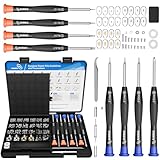
So, what’s the actual solution when you’re in a bind and the screw is MIA? Your best bet is always a proper glasses repair kit. These aren’t some fancy, expensive contraptions. You can find them at most drugstores, online retailers, or even sometimes at optometrists’ offices for a few bucks. A decent kit will have a variety of tiny screws, a small screwdriver, and sometimes even little nose pads.
What to Look for in a Glasses Repair Kit
When you’re grabbing one of these kits, don’t just pick the cheapest one. Look for a few key things:
- Variety of Screws: The most important part. Good kits have an assortment of screw sizes and lengths. Glasses screws are TINY, and they come in different thicknesses and thread patterns.
- Decent Screwdriver: It needs to be small enough to actually fit the screws, and preferably have a swiveling handle so you can get a good grip without cramping your hand. Some kits come with multiple tiny screwdrivers for different types of screws.
- Tweezers: A pair of fine-tipped tweezers is a lifesaver for manipulating those minuscule screws and parts.
- Magnifying Glass (Optional but Handy): Some kits include a small magnifying glass, which is brilliant for those of us who are starting to need reading glasses already (ironic, I know).
Using a kit like this takes a little patience, but it’s the only way to get a repair that actually lasts and doesn’t damage your frames further. It’s the difference between a temporary bandage and a proper stitch.
The Myth of the “temporary” Glue Fix
Everyone says you can just use a dab of super glue, right? It’s that classic piece of advice you hear when you’re in a jam.
Well, I’m here to tell you that advice is mostly garbage. Yes, in a true, absolute, ‘I need these glasses to drive home and I have no other option’ emergency, you might be able to use a minuscule amount of glue to temporarily tack a screw back in if it’s just loose, or maybe a piece of the frame that snapped cleanly off. But ‘temporarily’ is the keyword, and even then, it’s a gamble. (See Also: Can Gorilla Glue Fix Small Screws For Sunglasses )
For the specific scenario where the screw itself is gone and you’re trying to glue the arm directly to the frame? Forget it. That’s a one-way ticket to a broken pair of glasses.
I remember a friend’s wedding. My ‘fancy’ glasses, the ones I wore for special occasions, decided to shed a screw mid-ceremony. Panic set in. I rummaged through my emergency car kit and found some ‘all-purpose’ adhesive.
I applied a tiny bead, held it for what felt like an eternity, and put them on. They stayed on!
For about an hour. Then, as I was trying to take a selfie with the bride and groom, the arm just detached, swinging wildly. I ended up wearing my sunglasses for the rest of the reception.
Embarrassing, sure, but less embarrassing than trying to explain why my glasses were held together with what looked like dried snot. The frame was also permanently scarred where the glue had wicked into the plastic.
The real issue isn’t just the brittleness of adhesives; it’s the incompatibility with frame materials. Many glasses are made from plastics or treated metals that adhesives can react with, causing discoloration, warping, or weakening of the material. Even the ‘flexible’ glues are often not flexible enough for the constant micro-movements of eyeglass frames. They’re designed for crafts or minor household repairs, not for the delicate engineering of something you wear on your face for hours every day. The common advice to just use a dab of super glue is often given by people who haven’t actually tried it and seen the long-term, or even medium-term, consequences. It’s a shortcut that leads to a dead end.
Instead of resorting to adhesives that will undoubtedly fail and potentially ruin your frames, the most practical advice is to get a dedicated glasses repair kit. These kits are designed with the specific materials and tiny components of your eyewear in mind. They are inexpensive, readily available, and actually work. I always keep one in my car and one in my bathroom cabinet now. It’s saved me from countless moments of blurry panic.
What Kind of Glue Can actually Work (and When)?
Okay, so I’ve bashed super glue. But are there any glues that can provide a semi-decent, albeit temporary, fix if you’re truly stranded without a repair kit? The answer is a cautious ‘maybe,’ but it comes with serious caveats. We’re talking about flexible, plastic-specific adhesives here, not your standard hardware store super glue. Think of glues designed for model building or specific types of plastic repair.
One type of adhesive you might consider in a pinch is a cyanoacrylate-based glue that is specifically formulated to be flexible after curing. Some brands offer these for plastics. The key is flexible. However, even these are not ideal. They are still prone to cracking under stress over time, and the application is incredibly tricky. You need to apply an absolute, microscopic amount. Too much, and you’ll gum up the hinge, making it stiff and likely to break elsewhere. Too little, and it won’t hold at all.
Another option, though I’ve never had much luck with it for glasses, is a UV-curing resin. These are often used for jewelry repair or small plastic bonds. They cure hard and clear, and some are quite strong. But again, the application requires precision, and the resin itself can be rigid. The success here depends heavily on the frame material. If you have acetate frames, a specific plastic adhesive might work better than for metal frames. For metal frames where a screw has fallen out, you’re generally out of luck with any kind of glue – you need a mechanical connection, i.e., a screw.
My personal experience with trying to be clever here involves a pair of high-end plastic sunglasses. A screw fell out, and I tried a tiny amount of a flexible plastic cement meant for RC car parts. (See Also: Do Glasses Stores Have Extra Screws )
It held for about two weeks of light use. Then, one day while I was leaning forward to tie my shoe, the arm popped off. The cement had held, but the stress on the hinge was too much. It didn’t just break the bond; it pulled a small chunk of plastic away with it.
So, while these might seem like better options than standard super glue, they are still very much a gamble and a temporary measure at best. The risk of making the problem worse is very high.
The reality is, the tiny screws in glasses are there for a reason. They allow for a precise, adjustable fit and provide the necessary mechanical linkage for the hinge. Trying to replicate that with glue is like trying to build a suspension bridge out of chewing gum. It might hold for a bit, but it’s not engineered for the job. The best ‘glue’ for this situation is actually a new screw, applied correctly. If you don’t have a spare screw, your best bet is to find a repair kit or a professional.
The DIY Approach: What to Actually Try (besides Glue!)
Okay, so we’ve established that glue is a bad idea. But what if you’re really stuck? You’ve lost a screw, and there’s no repair kit in sight. I’ve been in that boat, and I’ve had to get creative. It’s not pretty, and it’s definitely not permanent, but sometimes you just need to make it work for a few days until you can get to a proper fix.
One method I’ve seen work (and used myself in a pinch) is using a tiny piece of plastic from something else. Think of a plastic toothpick, the kind that comes with some food takeout, or even a small piece of a plastic credit card cut with scissors. You need to shave off a minuscule sliver that’s about the diameter of the screw hole. Then, very carefully, you try to insert this sliver into the hole.
The idea is to create enough friction or material to hold the arm in place. It’s incredibly fiddly. You’ll likely need a pair of fine-tipped tweezers and a lot of patience. I once used a sliver of a plastic grocery bag tag to hold an arm on for about three days.
It was loose and wiggly, but it kept my glasses from falling apart entirely.
Another, more solid (but still temporary) method involves using a bit of dental floss or a thin thread. You can try to tie the arm to the frame where the screw should be. This requires threading the floss through the tiny hinge holes if possible, or looping it around the parts that are supposed to connect. Again, this is a very ‘hacker’ approach. It’s not elegant, and it can look pretty rough. The floss can fray, and it might not provide enough stability. But in a desperate situation, it can prevent the arm from detaching completely.
What about a paperclip? Some people suggest bending a tiny piece of a paperclip to act as a makeshift screw. This is more feasible for metal frames where the screw hole is a clean post. You can often bend a small piece of wire to fit through the holes and then twist or bend it on the other side to secure it. However, this requires some dexterity and the right kind of wire. A thick paperclip is too big; you need something quite fine. I tried this once on a pair of wire-frame glasses, and while it held, the metal was a bit rough and kept snagging on my shirt. It was a functional fix, but not a comfortable one.
The key takeaway here is that these are all emergency, last-ditch efforts. They are not designed for long-term wear and can sometimes even cause more damage if not done carefully. The best DIY approach, hands down, is to invest in a good quality glasses repair kit. They cost next to nothing and contain exactly what you need to do the job right. My advice? Keep one in your purse, backpack, or car. It’s cheaper than a new pair of glasses and far more effective than any makeshift fix.
A Comparison: Repair Kits vs. Adhesives vs. Makeshift Fixes
Let’s break down the common solutions you’re likely to consider when you’ve lost a screw from your glasses, and where the trusty glue falls in. I’ve put together a quick rundown of what to expect from each approach. This isn’t about specs; it’s about real-world results and my own frustrations. (See Also: Do Gucci Glasses Have Screws )
| Method | Pros | Cons | My Verdict |
|---|---|---|---|
| Dedicated Glasses Repair Kit | Designed specifically for glasses, includes correct screws and tools, provides a proper, lasting repair, relatively inexpensive. | Requires a bit of dexterity, need to have one on hand when the problem occurs. | The Only Real Solution. If you care about your glasses, this is your go-to. Always keep one handy. |
| Super Glue/Instant Adhesives | Readily available, seems like a quick fix. | Brittle, cracks under stress, can fog/damage frames, permanent damage is likely, rarely holds for long. | Avoid At All Costs. This is a disaster waiting to happen. It’s the worst possible thing you can do. |
| Flexible Plastic Glues/Resins | Potentially less brittle than super glue, might offer a slightly better bond on plastic frames. | Still prone to cracking, tricky application, can still damage frames, temporary at best, limited effectiveness. | A Slightly Less Terrible Idea. Better than super glue, but still a gamble that often leads to more damage. Only if absolutely desperate and the frame is expendable. |
| Makeshift Fixes (Floss, Toothpick, Wire) | Can sometimes hold the frame together in an emergency to get you by for a few days. Uses common household items. | Very temporary, often looks terrible, can be unstable, might snag or cause discomfort, risk of further frame damage. | Emergency Only. Useful for survival until you can get a proper repair, but don’t expect much. Treat it like a crutch. |
When it comes to fixing your glasses where a screw has fallen out, the temptation to grab the nearest adhesive is strong. I get it. I’ve been there, staring at a wonky frame and contemplating a quick squirt of something sticky. But in my years of fiddling with tools and DIY projects, I’ve learned that some problems just require the right tool, not just a tool. A dedicated glasses repair kit is that right tool. It provides the correct mechanical solution, which is what your glasses hinge needs, rather than a chemical one that’s likely to fail and cause more headaches (pun intended).
The Lsi Keyword Weave: Understanding Frame Materials
The material of your glasses frames plays a significant role. Acetate frames, for example, are a type of plastic that can be more forgiving with certain adhesives than metal frames. However, even then, the flexibility issue remains. Metal frames, especially those with screw posts, absolutely require a screw for a secure, functional repair. Trying to glue a metal hinge back together is almost certainly futile. The common advice, ‘just glue it,’ fails to consider these material differences and the fundamental mechanical needs of eyeglass hinges.
The Faq: Answering Your Burning Questions
Can I Use Nail Glue If I Don’t Have Super Glue?
Nail glue is basically a type of cyanoacrylate adhesive, very similar to super glue. While some formulations might be slightly more flexible, they generally suffer from the same problems: brittleness, potential for frame damage, and a tendency to fail under stress. It’s not a reliable solution for your glasses and is best avoided. You’re better off seeking a proper repair kit.
How Long Will a Glued Repair Last?
Honestly? Probably not long. If you manage to get any bond at all with super glue or a similar adhesive, expect it to last anywhere from a few hours to a few days at best. The constant flexing and pressure on eyeglass hinges are brutal on rigid adhesives. Even flexible glues will likely fail within weeks, if not sooner, and may leave behind a mess or permanent damage to the frame material.
Is It Worth Getting My Glasses Professionally Repaired?
Absolutely. If the screw is lost and you can’t find a replacement in a kit, taking your glasses to an optician or a reputable eyewear store is your best bet. They have specialized tools, replacement screws, and the expertise to fix them correctly without causing further damage. Many places offer this service for free or a very small fee, which is well worth it compared to buying a new pair of glasses.
What If the Arm of My Glasses Broke Off Completely, Not Just a Screw?
If the arm has snapped cleanly, and you have both pieces, a strong, flexible plastic adhesive might work as a temporary fix, but it’s still risky. For a permanent repair, you’re looking at professional soldering for metal frames or specialized bonding for plastic frames. Again, an optician is your best bet. Sometimes, if the break is too severe, replacement is the only option.
Can I Just Buy a Replacement Screw and Fix It Myself?
Yes, if you can find the right size screw and have a tiny screwdriver, this is often the easiest and most effective solution. You can buy universal glasses screw kits online or at many craft or hardware stores. Make sure to get a variety pack, as identifying the exact screw size can be tricky. The key is having the right tiny screwdriver to avoid stripping the screw or damaging the frame.
Final Thoughts
So, to circle back to that initial, panicked question: can I glue my glasses where the screw fell out? The blunt, honest answer is: you probably shouldn’t. While the temptation for a quick fix is immense, especially when your vision depends on those frames, using glue on your glasses is a gamble that rarely pays off and often leads to more costly damage.
My own history is littered with failed DIY attempts, from melted plastic to permanently fogged lenses, all stemming from trying to cut corners. The true cost of a tube of super glue can end up being a whole new pair of glasses if you’re not careful. Instead, save yourself the headache and the expense by investing in a cheap, effective glasses repair kit. They are readily available and contain exactly what you need for a proper fix.
If you’re in a pinch and don’t have a kit, try a temporary, non-adhesive fix like floss or a tiny wire if absolutely necessary, but your absolute priority should be getting to an optician or a store that sells repair kits. Fixing your glasses correctly means they’ll last longer and function as they’re supposed to. Don’t let a lost screw turn into a broken frame.
![AXTH 25-in-1 Small Precision Screwdriver Set, Professional Magnetic Mini Repair Tool Kit for Phone, Computer, Watch, Laptop, Macbook, Ring Doorbell, Eyeglass, Electronic, [Bearing Steel] Screw Driver](https://m.media-amazon.com/images/I/518YlLmPTcL._SL160_.jpg)
