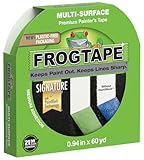
I remember the first time I ran out of proper packing tape. Facing a mountain of boxes for a move, I stared at the rolls of blue painter’s tape sitting on my workbench. Could this stuff, designed for delicate paint lines, actually hold a box together through the rigors of shipping? It felt like a desperate gamble, but necessity shoved me forward. So, can I use painters tape as shipping tape? The short answer is… it’s complicated, and usually a bad idea.
Look, I’ve spent more on flimsy, overpriced shipping tape that ripped halfway through the box than I care to admit. And I’ve learned a thing or two about what actually works and what’s just… tape.
Why Painter’s Tape Isn’t Built for the Shipping Gauntlet
Let’s get one thing straight from the jump: painter’s tape and shipping tape are fundamentally different beasts, designed for entirely different jobs. Think of painter’s tape as a delicate artist’s brush, meant for precision and minimal residue.
Shipping tape, on the other hand, is your heavy-duty power washer, meant to blast away any chance of a box falling apart. The adhesive on painter’s tape is engineered to stick well enough to hold paper or plastic sheeting without damaging surfaces, but it’s not designed for shear strength or long-term adhesion under stress. It’s often water-based and can degrade or lose its tackiness when exposed to temperature fluctuations or moisture, which are pretty common in the shipping world.
I once tried using it on a medium-sized box containing some books, and by the time it got to its destination a few states away, the tape had peeled away from the cardboard in several places, leaving the flaps barely clinging on. The contents were thankfully fine, but the whole experience screamed ‘amateur hour’.
The backing material is another huge factor. Painter’s tape is typically made from thin, crinkly paper.
It tears easily, which sounds like it might be useful for quick application, but it also means it has very little structural integrity. If you’re sealing a box that’s even moderately full or heavy, that paper backing will just rip under the tension. Shipping tape, conversely, is usually a thick, durable plastic film, often polypropylene or similar, that’s reinforced to resist tearing and stretching. This difference in material means painter’s tape simply doesn’t have the tensile strength to keep a box securely sealed, especially if it’s going to be handled roughly by carriers or exposed to the elements.
It’s like trying to build a house with tissue paper instead of brick.
The adhesive formulation is the real killer, though. Shipping tape adhesives are designed to bond aggressively with cardboard, creating a strong, lasting seal. They’re often solvent-based or hot-melt adhesives that cure to a very solid bond. Painter’s tape adhesives are usually acrylic-based and are formulated for repositionability and clean removal. This means they don’t form the same kind of deep, permanent bond with corrugated cardboard. You might get it to stick initially, but under pressure, vibration, or temperature changes, that bond will fail. This isn’t a minor detail; it’s the core reason why the answer to ‘can I use painters tape as shipping tape’ is almost always a resounding no if you value the integrity of your shipment.
The Real Test: What Happens When You Try It?
So, I’ve already shared a story about painter’s tape failing on me, but let’s break down the typical results you’ll see if you actually attempt to ship something with it. Firstly, the adhesion.
Even on a perfectly clean, dry cardboard surface, painter’s tape just doesn’t grab like proper packing tape. You’ll press it down, and it seems to stick, but if you run your fingernail along the edge, you can often feel a slight lift. This is because the adhesive isn’t designed to penetrate the porous surface of the cardboard and create that inter-molecular bond.
It sits more on the surface. This means any slight bump, jolt, or shear force can start to peel it back. I’ve seen it happen within hours of sealing a box, let alone days in transit.
Then there’s the durability of the tape itself. Because it’s paper-based, painter’s tape is susceptible to tearing. (See Also: Does Painters Tape Pull Off Paint )
If the box gets snagged on something, or if a seam starts to pull apart slightly under weight, the tape will rip. This is the opposite of what you want. You need tape that’s strong enough to hold the box together even if the box itself is stressed. I once saw a UPS driver accidentally drop a package from about waist height.
The cardboard on the corner took a pretty good hit, and while a box sealed with good packing tape might have survived with a dent, the painter’s tape on that same box would have instantly ripped open, spilling the contents everywhere. It’s just not built to withstand that kind of shock or stress.
Moisture is another enemy. If your package encounters any humidity or even condensation inside a truck or warehouse, painter’s tape can start to lose its adhesion.
The water-based adhesives can swell or break down, turning gummy or simply letting go. I’ve had packages arrive slightly damp on the outside, and the painter’s tape, if I had foolishly used it, would have been a sticky, peeling mess. Proper shipping tape, especially plastic-based varieties, is much more resistant to moisture and temperature swings. It’s a real gamble, and one you don’t want to take with someone else’s belongings or your business reputation.
My own haphazard experiments have consistently shown that the tape will likely fail at multiple points, leaving your package vulnerable. It’s not a question of if it will fail, but when and how badly.
Common Mistakes and Why They Happen
The biggest mistake people make when considering using painter’s tape for shipping is treating all tape as if it’s the same. They see a roll of tape, it sticks things together, therefore it must be suitable for shipping, right? Wrong. This is where people get burned.
They think, ‘It’s just one small package, it’ll probably be fine.’ Or maybe they’re in a pinch and think it’s a temporary fix.
The problem is, the ‘temporary fix’ can lead to permanent problems like lost merchandise, damaged goods, or a very unhappy recipient. I learned this the hard way when I tried to save a few bucks on a small shipment of handmade crafts.
I figured the box wasn’t heavy, and it was going just across town. Big mistake. The tape started peeling off before it even reached the post office. That’s how quickly it can go wrong.
Another common error is underestimating the forces involved in shipping. Packages get stacked, thrown, bounced around, and exposed to varying temperatures and humidity levels. Standard painter’s tape is not designed for any of that. Its adhesive is designed for clean removal from delicate surfaces, not for creating a tenacious bond that can withstand shear, tension, and environmental changes. People often think, ‘It held my poster on the wall, so it should hold a box shut.’ That’s like saying because a Band-Aid can stick to skin, it can hold two pieces of wood together. The adhesion requirements are vastly different. You’re not just battling gravity; you’re battling friction, impact, and the structural integrity of the cardboard itself.
A related mistake is assuming that any kind of tape will do if you just use enough of it. While layering painter’s tape might seem like a way to compensate for its weakness, it rarely works effectively. You end up with multiple layers of weak tape that can peel off in sheets or tear unevenly.
It also makes for a messy, unprofessional-looking package. Furthermore, some types of painter’s tape have very low tack, meaning they don’t grab strongly even initially. Others might leave a sticky residue behind, which is a nuisance for the recipient and can even attract dirt and grime, further compromising the seal. The common advice that you can just use painter’s tape in a pinch is, in my experience, often wrong and leads to more trouble than it’s worth. (See Also: Does Painters Tape Rip Paint Off Walls )
You need tape designed for the job.
When might You Get Away with It (and When to Absolutely Not)
Okay, let’s be brutally honest. Are there situations where you might get away with using painter’s tape for shipping? Maybe. If you are shipping a very small, very lightweight item (think a single piece of paper or a small, empty envelope) that is going to be hand-delivered directly to the recipient, and you’re just using it to seal the flap temporarily, it might hold.
It’s the equivalent of using a paperclip to hold a few sheets of paper together instead of stapling them. It’s not ideal, but it might suffice for that extremely low-stakes scenario. I’ve used it myself to temporarily seal a very light product box that was going to a friend who lived just a mile away, and I handed it to them personally.
It held for that short, controlled journey. But that’s about the extent of its usefulness.
Now, when should you absolutely, unequivocally NOT use painter’s tape for shipping? Anytime the package will be handled by a third-party carrier (USPS, FedEx, UPS, etc.), anytime the contents have any significant weight or value, anytime the package will be traveling a long distance, or anytime it might be exposed to the elements.
This includes sending anything through the mail, shipping online sales, sending gifts to distant relatives, or even just moving boxes across the country. The risk of the tape failing is simply too high. I’ve seen packages arrive with seams bursting open, contents spilled out, and the original tape hanging off in tatters. This almost always happens because the wrong type of tape was used, and painter’s tape is a prime offender.
Don’t use it for anything you can’t afford to lose or have arrive damaged. It’s not worth the gamble, and the potential cost of a failed shipment—replacement items, shipping costs, and lost customer trust—far outweighs the minimal savings of using the wrong tape.
Think about it this way: the cost of a roll of proper packing tape is usually a few dollars. A roll of painter’s tape might be similar. But a single lost or damaged shipment can cost you hundreds or even thousands of dollars, not to mention the damage to your reputation. There are specific types of tape designed for specific jobs, and shipping tape is one of them for a reason. It’s engineered to handle the stresses of transit. Painter’s tape is engineered to be removed cleanly from painted surfaces. They are not interchangeable. Stick to the right tool for the job, and save yourself a massive headache.
What to Look for in actual Shipping Tape
Alright, so we’ve established that painter’s tape is a terrible idea for shipping. So what should you be looking for? When you’re heading to the store or browsing online, you want tape that’s explicitly labeled as ‘shipping tape,’ ‘packing tape,’ or ‘heavy-duty tape.’
These labels indicate that the product is designed for the stresses of transit. The most common material you’ll find is polypropylene, often referred to as ‘plastic packing tape.’ This stuff is generally strong, durable, and resistant to tearing.
It comes in various thicknesses, often measured in mils (thousandths of an inch). For most household or small business shipping needs, a tape in the 1.5 to 2.5 mil thickness range is usually sufficient.
Anything thicker might be overkill unless you’re shipping extremely heavy items. (See Also: Does Masking Tape Work The Same As Painters Tape )
The adhesive is just as important as the backing. You’ll typically encounter two main types of adhesives on shipping tape: acrylic and hot melt. Acrylic adhesives are generally good all-around performers, offering good adhesion across a range of temperatures and humidity levels.
They are often a bit clearer than hot melt tapes and maintain their tackiness for a long time, making them great for long-term storage. Hot melt adhesives, on the other hand, create a very aggressive, instant bond. They are fantastic for immediate sealing and are often used in high-volume shipping operations.
However, they can sometimes lose their tackiness in extreme cold. For most people, a good quality acrylic shipping tape will be your best bet. It’s reliable and performs well in most conditions. When I’m packing up items for sale, I always opt for a thick acrylic tape; I’ve had too many nightmares with cheaper, thinner tapes failing me.
Here’s a quick rundown of what makes good shipping tape, and a contrast to its flimsy cousin:
| Feature | Good Shipping Tape | Painter’s Tape (for Shipping) | Verdict |
|---|---|---|---|
| Material | Durable plastic film (polypropylene, polyester) | Thin paper | Plastic film wins, hands down. Paper tears. |
| Adhesive | Aggressive, long-lasting bond (acrylic or hot melt) | Low-tack, repositionable (acrylic-based, water-based) | Shipping tape’s aggressive bond is a must. |
| Tensile Strength | High; resists stretching and tearing | Low; tears easily | Shipping tape needs strength. Painter’s tape has none. |
| Moisture Resistance | Generally good to excellent | Poor; can degrade | If it gets damp, painter’s tape is toast. |
| Application | Sticks firmly, requires dispenser or effort | Sticks easily, peels off easily | Easy stick is a trap. You need a permanent bond. |
| Cost per Roll | $3-$10 (approx.) | $3-$8 (approx.) | Price is too similar to justify the risk. |
When selecting, don’t be afraid to spend a little extra for a reputable brand. I’ve found that paying about $5-$7 for a multi-roll pack of decent shipping tape is a solid investment. It’s not about fancy features; it’s about reliability. A tape dispenser makes application much smoother and more efficient, cutting down on waste and frustration. Investing in a good dispenser along with quality tape will save you time and hassle in the long run, and importantly, will keep your packages sealed.
Common Shipping Tape Questions
What Is the Best Tape for Shipping Boxes?
The best tape for shipping boxes is a heavy-duty packing tape, typically made from polypropylene film with an aggressive acrylic or hot melt adhesive. Look for tapes labeled ‘shipping tape’ or ‘heavy-duty packing tape.’ These are designed to create a strong, durable seal that can withstand the rigors of transit, including stacking, vibration, and temperature changes. Avoid anything labeled for crafting, masking, or painting.
Will Packing Tape Hold Up If a Box Gets Wet?
Good quality shipping tape, especially plastic-based varieties, will generally hold up well even if a box gets wet on the outside. The plastic film backing is water-resistant, and strong adhesives like acrylic or hot melt are formulated to maintain their bond even in humid conditions or light moisture. However, prolonged submersion or very heavy saturation can eventually compromise even the strongest tape and the cardboard itself.
How Much Tape Do I Need to Use Per Box?
For a standard medium-sized box, you should use enough tape to create a secure seal. Typically, this means running a strip of tape along the center seam of the box, extending a few inches down each side. Then, seal the two side seams with tape as well, again extending a few inches down each end. For heavier boxes, you might want to add an extra strip of tape along the main seam or even tape all four seams. The goal is to prevent the box from opening from any angle.
Is Clear Packing Tape Strong Enough for Shipping?
Yes, clear packing tape can be strong enough for shipping, provided it is specifically designed for that purpose. ‘Clear packing tape’ often refers to clear polypropylene tape with a strong acrylic or hot melt adhesive, which is excellent for shipping. Avoid clear tapes that are very thin or flimsy, as they might be intended for lighter-duty applications like sealing bags or gift wrapping.
Can I Reuse Packing Tape?
No, you cannot effectively reuse packing tape for shipping. Once packing tape has been applied and removed from a surface, its adhesive properties are significantly diminished. Attempting to reuse it will result in a weak, unreliable seal that is almost guaranteed to fail during transit. Always use fresh tape for each shipment to make sure security.
Verdict
So, to circle back to the big question: can I use painters tape as shipping tape? My honest, no-bones-about-it answer is: don’t. I’ve wasted my time and money on less-than-ideal solutions, and this is one area where cutting corners just doesn’t pay off. The few dollars you might save on a roll of painter’s tape is insignificant compared to the potential cost of a lost or damaged shipment, or the headache of dealing with a failed seal.
Stick to tape that’s actually designed for shipping. It’s not that much more expensive, and the peace of mind knowing your package is secure is worth every penny. Invest in a good dispenser and some reliable packing tape, and your future self (and your recipients) will thank you. Save the painter’s tape for what it’s good at: keeping paint off your trim.
Next time you’re packing a box, take an extra minute to grab the right tape. Your shipment’s journey depends on it.