
There I was, staring at my iPhone 8 Plus, a tiny Pentalobe screw stubbornly refusing to budge. It was the start of what I thought would be a simple battery swap, a quick $30 fix to get another year out of a perfectly good phone. Hours later, I had a tiny, mangled screw head, a bruised thumb, and a newfound respect for the engineering that goes into making these things so darn hard to open. If you’ve ever found yourself wrestling with your phone and thinking, ‘I can’t unscrew iPhone screws,’ trust me, you’re not alone.
It’s frustrating, right? You see YouTube videos of people zipping through repairs like they’re buttering toast, and then you try it yourself and it feels like you’re trying to turn a brick with a toothpick. That initial screw is often the gatekeeper, and if it fights back, the whole DIY repair dream goes down the drain.
That First Stubborn Pentalobe Screw: Why It’s a Beast
Let’s get real. The reason you might think you ‘can t unscrew iPhone screws’ isn’t because you’re weak or inept. Apple deliberately makes those Pentalobe screws a pain in the rear to access. It’s a security measure, plain and simple.
They don’t want just anyone poking around inside their meticulously designed devices. This isn’t just about keeping the tinkerers out; it’s also to prevent accidental damage that could lead to costly repairs or push you towards an official (and expensive) service.
The Pentalobe screw, with its five-pointed star shape, is unique and requires a very specific, often small, Pentalobe screwdriver bit. Trying to force it with a Phillips or flathead will only strip the head, turning a manageable fix into a nightmare.
I learned this the hard way trying to replace the battery on my old iPhone 6s. I’d bought a cheap toolkit online, the kind that looks like it came from a dollar store but promises the world. The Pentalobe bit in that kit was made of what felt like soft cheese. After about two rotations, the edges were completely rounded. I spent the next hour trying to grip it with pliers, praying I wouldn’t damage the phone’s casing. Spoiler alert: I didn’t win that battle. The screw stayed put, mocking me. It taught me a vital lesson: investing in decent tools isn’t just recommended; it’s absolutely necessary if you want to avoid more problems than you solve.
The tightness of these screws is also a factor. They’re often installed with a bit of threadlocker compound, which adds extra resistance. This compound is designed to prevent screws from vibrating loose, but it also means you need more torque to get them moving initially. Apple’s manufacturing process is precise, and these screws are seated firmly. So, when you encounter one that feels welded in place, it’s likely a combination of the screw type, threadlocker, and just how snug it was originally installed.
The Pentalobe Problem Explained
These Pentalobe screws are proprietary to Apple. You won’t find them on Android phones or other gadgets. They come in different sizes, with the most common for iPhones being P2 (0.8mm) for the bottom screws and P1 (1.2mm) for some older models. The P2 is the one that usually gives people fits. Its shallow, star-shaped recess is designed to mate specifically with a Pentalobe driver. If your driver bit isn’t perfectly matched in size and shape, or if it’s made of low-quality metal, it will cam out – meaning it will slip out of the screw head under pressure, leading to stripping.
When the head gets stripped, you’ve got a much bigger problem. You can’t get a good grip with the correct driver anymore. You’re then looking at specialized screw extractors, super glue tricks (which are incredibly risky and rarely work well), or even drilling out the screw – all of which can permanently damage your device. So, the initial fight with that first Pentalobe screw is the most important part of the process. Get it wrong, and your DIY repair is over before it truly began.
What You actually Need (and Why Cheap Kits Fail)
Look, I’ve bought my fair share of cheap toolkits over the years. For things like furniture assembly or basic electronics, they might cut it. But when it comes to delicate electronics like an iPhone, a bargain-basement toolkit is a recipe for disaster. The bits are often made from weak alloys that deform or break easily. The plastic pry tools are brittle and can snap, potentially scratching your phone. And the magnetic tips? Sometimes they’re barely magnetic, making it impossible to pick up tiny screws. (See Also: How To Fix Eyeglasses Arm Without Screw )
My turning point came when I was trying to fix a friend’s Nintendo Switch. The joy-con screws were minuscule Phillips heads. My cheap kit’s bits were just slightly off, and I ended up stripping two of them. I had to order a higher-quality set, and the difference was night and day. The bits were precisely machined, made of hardened steel, and fit perfectly into the screw heads. The pry tools were made of a more flexible, yet durable, composite material. It was like going from a butter knife to a surgeon’s scalpel. The entire repair took half the time and felt significantly less stressful.
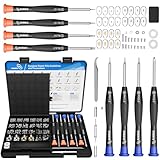
For iPhones, you need a kit that specifically mentions Pentalobe bits. Don’t just assume a generic ‘iPhone repair kit’ will have the right ones. Look for brands that specialize in electronics repair tools. iFixit is often cited as the gold standard, and for good reason. Their tools are designed for durability and precision. While they might cost more upfront, they save you money and headaches in the long run. A good kit will include a variety of driver bits (Phillips, Pentalobe, Tri-point Y000, etc.), spudgers, opening picks, tweezers, and a suction cup. The magnetic mat or tray to hold screws is also a lifesaver. Trust me, losing a tiny screw inside your phone is a special kind of agony.
Key Tool Components to Prioritize
When evaluating a toolkit, pay attention to the material of the bits. Hardened steel (like S2 steel) is what you want. This offers the best combination of strength and durability, meaning the bit won’t easily round off. The handle should also offer a good grip; a non-slip surface is a bonus, especially when dealing with those slippery Pentalobe screws. For opening the phone, you’ll typically need a suction cup to lift the screen slightly and then thin plastic opening picks or a spudger to carefully separate the adhesive holding the screen in place. These need to be thin enough to slide between the screen and the frame without damaging the seal or the screen itself.
The tweezers in a good kit should be fine-tipped and offer good precision. You’ll be manipulating tiny screws and connectors, and flimsy tweezers will make this task much harder. Some kits even include magnetic driver handles, which is a nice touch for extra control and to prevent dropping screws. However, the core of the problem often lies with the Pentalobe bit itself. If that bit is not perfectly manufactured to spec for the Pentalobe screw you’re trying to turn, you’re going to struggle.
When the Screw Head Is Already Stripped: The Panic Sets In
So, you tried. You really did. But that Pentalobe screw is now a mangled mess, and your specific Pentalobe driver just spins uselessly. This is where most DIYers throw in the towel and consider it a lost cause. And honestly, it’s a valid reaction. A stripped screw head on a smartphone is one of the most frustrating hardware issues you can face. It’s not just about being unable to get the screw out; it’s about the potential for collateral damage. If you apply too much force with the wrong tool, you can easily damage the surrounding components, the motherboard, or the screen.
I once had to help a buddy who’d tried to replace his iPhone 7 battery. He’d used a screwdriver that was almost the right size, and the Pentalobe screw head looked like it had been attacked by a tiny, angry badger.
We tried everything: rubber band trick (where you put a thick rubber band over the stripped head and try to get the driver to grip it – sometimes works, but not on severely stripped heads), super glue (which made it worse by gluing the screwdriver to the screw, and almost to the phone), and even a tiny file to try and create new edges. Nothing worked. We ended up having to buy a specialized screw extractor kit designed for small electronics. It was a tense, nerve-wracking process, and it took ages.
Eventually, we got it out, but it was a stark reminder that prevention is infinitely better than cure.
The common advice online for stripped iPhone screws often ranges from ‘use a bit of super glue’ to ‘drill it out.’ I’d steer clear of both unless you have a very steady hand and are prepared for the worst. The super glue method risks permanently bonding your screwdriver (or worse, parts of your phone) to the screw. Drilling it out is even riskier; tiny metal shavings can short-circuit your logic board, and it requires extreme precision to avoid damaging anything underneath. (See Also: How Measure Metric Computer Screws )
Practical Fixes for Stripped iPhone Screws
If you’re in this unfortunate situation, here are a few things you can try, in order of least to most risky:
- The Rubber Band Trick: Place a wide, strong rubber band over the stripped screw head. Insert your Pentalobe driver (or even a flathead if it fits slightly better) and apply firm downward pressure while slowly turning counter-clockwise. The rubber band can fill the gaps and provide extra grip.
- Super Glue (Use with Extreme Caution): Apply a tiny drop of super glue to the tip of your Pentalobe driver (or a matching hex driver if you can find one that fits the stripped recess). Carefully align the driver with the screw head and hold it steady for a minute or two until the glue sets. Then, try to unscrew it. Be incredibly careful not to get glue anywhere else.
- Specialized Screw Extractors: These are small, cone-shaped tools with reverse threads. You drill a small pilot hole into the center of the stripped screw head (if possible and safe to do so) and then insert the extractor, which bites into the metal as you turn it counter-clockwise. This is a more advanced technique.
- Dremel/Rotary Tool (Last Resort): If all else fails and you’re willing to risk it, you can use a Dremel with a cutting wheel to carefully cut a new slot into the screw head, turning it into a flathead screw. This requires a very steady hand and extreme precision to avoid damaging the phone.
The Truth About DIY iPhone Repairs: Is It Worth It?
This whole debacle brings me to a bigger question: is it really worth trying to fix your iPhone yourself? For some people, the answer is a resounding yes. If you’re tech-savvy, enjoy tinkering, and have the right tools, it can be a rewarding experience. You save money, and you learn something. But for the average person who just wants their phone fixed, the answer is often a hesitant ‘maybe not.’ The complexity of modern smartphones, especially Apple’s, has increased dramatically. The adhesive seals, the tiny screws, the delicate ribbon cables, the risk of static discharge – it all adds up.
I remember replacing the screen on my old Samsung Galaxy S7. It was nowhere near as fiddly as an iPhone. The screws were standard Phillips, and the screen popped off with a bit of heat and a plastic card.
I managed it in about 45 minutes with a basic toolkit. Then I tried replacing the battery on my partner’s iPhone 11. It took me almost three hours, involved prying open a waterproof seal that felt like I was trying to break into Fort Knox, and I was terrified I was going to rip a cable.
The final verdict? It worked, but the stress wasn’t worth the $80 I saved compared to a professional repair. For me, the cost of professional repair is often worth the peace of mind and the warranty they might offer.
The common advice you’ll find is ‘just buy a kit and do it yourself!’ and while that’s true for some tasks, it glosses over the reality of how tightly packed and how precisely engineered iPhones are. You’re not just dealing with screws; you’re dealing with delicate flex cables that control everything from your touchscreen to your Face ID sensors. A single slip of the wrist can render those components useless. And when you factor in the cost of a good toolkit (which can easily be $50-$100 if you go for quality), the savings over a professional repair shrink considerably, especially for simpler fixes like battery replacement.
When to Call a Professional
There are certain situations where you should absolutely avoid DIY and seek professional help. If your phone is still under warranty, attempting a repair yourself will void it immediately. If the damage is significant – like a severely bent frame, water damage, or a shattered logic board – it’s likely beyond the scope of a typical DIY repair and requires specialized equipment and expertise. For tasks involving important components like the Face ID module or the home button (on older models), unless you’re experienced, it’s best left to the pros. They have the jigs, the software calibration tools, and the knowledge to get it right the first time, preventing further damage or loss of functionality.
Ultimately, the decision depends on your comfort level, the specific repair needed, and your tolerance for risk. For something as fundamental as getting that first screw out, if you’re struggling to the point of thinking you ‘can t unscrew iPhone screws,’ it’s a sign that maybe this particular repair isn’t for you. Better to stop, reassess, and consider other options before you turn a minor issue into a major, expensive problem.
The Right Tools for the Job: A Comparative Look
When you’re trying to unscrew iPhone screws, the tool is everything. Forget the generic, multi-tool kits you see advertised everywhere. They might have a Pentalobe bit, but it’s often made of inferior metal that strips easily. You need specialized bits designed for the exact screw head. For iPhones, the Pentalobe P2 (0.8mm) bit is your primary enemy, and your best friend. A high-quality Pentalobe bit will be made of hardened steel, precisely machined to fit snugly into the screw’s recess. This minimizes the chance of slipping and stripping the head. (See Also: How To Adjust Eyeglass Screw )
I’ve used a few different brands over the years. My current go-to is a set from a reputable electronics repair supplier. The difference in feel is immediate. The bit bites into the screw head with confidence, and there’s a satisfying ‘give’ as the screw breaks free from its initial torque. Compare that to a cheap kit where the bit feels loose, wobbles, and you’re constantly worried it’s going to slip. The magnetic tip is also important; it holds the tiny screws securely, preventing them from falling into the abyss of your phone’s internals.
Here’s a quick breakdown of what to look for, with my personal take:
| Tool Component | What to Look For | My Verdict |
|---|---|---|
| Pentalobe Driver Bit | Hardened S2 steel, precise fit, magnetic tip. Look for P2 (0.8mm) for most modern iPhones. | This is a must. A cheap bit will strip the screw. Spend the extra cash here. |
| Spudger/Pry Tools | Durable plastic or composite material, thin edges, not too flexible. | Good for separating adhesive and prying open components without scratching. |
| Tweezers | Fine-tipped, anti-static, good grip. | Key for handling tiny screws and delicate connectors. |
| Suction Cup | Strong suction, stable grip. | Helps lift the screen enough to get your pry tool in. |
| Screw Organizer | Magnetic mat or tray with labeled compartments. | A sanity saver. Keeps track of where each tiny screw goes. |
When it comes to the actual torque, it’s about feel. You want to apply steady, consistent pressure. If you feel excessive resistance, stop. Back out slightly, then try again. Sometimes a slight wiggle can help. The key is controlled force, not brute strength. The right tool, combined with patience, is the winning formula.
People Also Ask:
Why Won’t My iPhone Pentalobe Screw Turn?
The most common reason is that the Pentalobe driver bit isn’t the correct size or quality, leading to it camming out and stripping the screw head. Additionally, screws can be installed with threadlocker, making them harder to turn initially, or they might simply be overtightened. If you’re using a low-quality tool, the metal of the bit might be too soft and deform, failing to grip the screw properly.
How Do I Get a Stripped iPhone Screw Out?
For a slightly stripped screw, try the rubber band trick: place a wide rubber band over the screw head, then insert the Pentalobe driver and apply firm downward pressure while turning slowly. If that fails, and with extreme caution, a tiny drop of super glue on the driver tip can sometimes bond it enough to turn the screw. For severely stripped screws, specialized electronic screw extractors or carefully cutting a new slot with a Dremel are last resorts, carrying significant risk.
What Screwdriver Is Used for the Bottom of an iPhone?
The bottom screws on most modern iPhones are Pentalobe screws, specifically requiring a Pentalobe P2 (0.8mm) driver. Older iPhone models might use different screw types, but the Pentalobe is the most distinctive and often the most problematic for DIY repairs. It’s important to use a high-quality, correctly sized Pentalobe driver to avoid stripping the screw head.
Can You Use a Regular Screwdriver on an iPhone?
No, you generally cannot use a regular Phillips or flathead screwdriver on the Pentalobe screws found on the bottom of most iPhones. These screws have a unique five-pointed star shape that requires a specialized Pentalobe screwdriver. Using a regular screwdriver will almost certainly strip the screw head, making it very difficult or impossible to remove without damaging the phone.
Can You Force an iPhone Screw?
You should absolutely NOT force an iPhone screw. Forcing it with the wrong tool or excessive pressure is the fastest way to strip the screw head, damage the surrounding components, or even crack the screen or casing. The screws are designed to be removed with specific tools and a controlled amount of force. If a screw feels exceptionally tight or won’t turn easily, stop, reassess your tool, and try again with more patience.
Final Thoughts
So, you can’t unscrew iPhone screws? It’s a common frustration, and often the culprit is a combination of the proprietary screw type and a cheap, poorly made tool. Don’t let that first stubborn Pentalobe screw be the end of your repair attempt. Invest in a quality toolkit specifically designed for electronics; it’s not a luxury, it’s a necessity. If you’ve already stripped the head, take a deep breath. There are methods to try, but proceed with extreme caution and be prepared for the possibility that it might be time to call in a professional. Sometimes, saving a few bucks isn’t worth the risk of turning a minor inconvenience into a costly mistake.
My advice? For anything beyond a simple accessory swap, if you find yourself sweating over a tiny screw or contemplating using super glue, just stop. Take your device to a reputable repair shop. They have the right tools, the expertise, and the warranty to back up their work. It might cost a bit more upfront, but the peace of mind and the assurance that your device won’t end up in a worse state are usually well worth it.
Next time you see a DIY repair video, watch it closely. Notice the tools they use. If it looks like they’re using a precision instrument, that’s because they are. Don’t skimp on the tools – your iPhone will thank you for it.
![AXTH 25-in-1 Small Precision Screwdriver Set, Professional Magnetic Mini Repair Tool Kit for Phone, Computer, Watch, Laptop, Macbook, Ring Doorbell, Eyeglass, Electronic, [Bearing Steel] Screw Driver](https://m.media-amazon.com/images/I/518YlLmPTcL._SL160_.jpg)
