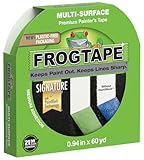
I’ve seen some weird stuff on job sites. People eating raw eggs for energy, using duct tape for everything from patching holes to holding their pants up. So, it’s not entirely surprising that the question pops up: can you eat painters tape?
Honestly, when I first heard it, I laughed. Then I thought, maybe someone’s in a bind. Or maybe they’re just really, really curious about what happens when you try to ingest something designed to stick to walls, not your stomach lining.
Let me save you the trouble and the potential stomach ache. The short answer is a resounding, unequivocal no. And I’m going to tell you why, based on years of wrestling with this stuff on walls and in my own occasional moments of questionable judgment.
Why Swallowing That Blue Roll Is a Terrible Idea
Look, I’m all for resourcefulness. I’ve used painters tape to seal up a leaky cooler in a pinch, to create temporary repairs on gear, and even, in a moment of sheer panic, to fashion a makeshift bandage (don’t ask). But even then, the thought of putting it anywhere near my mouth felt wrong.
And it is. The primary reason you absolutely, under no circumstances, should consider eating painters tape is because it’s not food.
That sounds obvious, right? But we’re talking about a product engineered for adhesion and clean removal from surfaces, not for consumption. The materials used are industrial-grade adhesives and paper or plastic backing.
These are not designed to be broken down by your digestive system, and they certainly aren’t providing any nutritional value. Ingesting them can lead to a whole host of problems, from mild discomfort to serious medical emergencies. Think about it: the adhesive is sticky for a reason. It’s meant to cling.
You don’t want anything clinging inside your intestines.
The adhesive itself is typically an acrylic-based formulation. While many are non-toxic in the sense that they won’t instantly poison you if you accidentally touch them, they are not meant for ingestion.
They can cause irritation to the mouth, throat, and stomach. If you manage to swallow a significant amount, it could potentially lead to blockages. Imagine a sticky wad of paper and goo getting lodged somewhere it shouldn’t be.
That’s not a fun scenario. I once saw a guy in construction try to use a strip of industrial-strength adhesive tape to hold a ripped seam on his work pants together for a full shift. By the end of the day, the tape had become so embedded in the fabric, and he was so uncomfortable, that he had to get a friend to help cut it out with a utility knife.
That was fabric, not my internal organs. The risk of causing damage or obstruction is real.
Furthermore, the backing material, whether it’s paper or a thin plastic, isn’t digestible either. It can contribute to blockages and may contain chemicals or dyes that aren’t intended for your body. We spend a lot of time trying to eat foods that are good for us, that provide vitamins and fiber. Painters tape offers none of that. It’s the antithesis of nutrition. The common advice you’ll find online, if you even find it, is always along the lines of ‘don’t do it.’ And for good reason. There are no health benefits. There’s no culinary application. There’s just a risk of harm.
What’s Actually in That Roll, Anyway?
Let’s get down to brass tacks. What exactly are you putting in your mouth if you decide to ignore all common sense and try to eat painters tape? It’s not exactly a gourmet ingredient. The core components are the backing and the adhesive. The backing is usually some sort of paper, designed to be creased, torn, and applied to surfaces without disintegrating immediately. Some higher-end tapes might use a thin plastic film, but again, not something your stomach is equipped to handle. This backing paper can be treated with various chemicals to give it certain properties, like water resistance or improved adhesion. Those are chemicals designed for industrial use, not for your digestive tract.
The real star of the show, for better or worse, is the adhesive. This is what makes painters tape ‘painters tape.’ It’s designed to stick, but also to release cleanly. This balance is achieved through carefully formulated adhesives, often acrylic-based. (See Also: Does Painters Tape Pull Off Paint )
These adhesives are engineered to bond to a variety of surfaces at room temperature and to be removable without leaving excessive residue or damaging the underlying material. While most modern painters tape adhesives are considered relatively safe to touch and handle, they are not tested or approved for ingestion. Imagine the lawsuits if they were! The adhesive can contain plasticizers, tackifiers, and other chemical compounds that are necessary for its performance.
When you try to ingest it, these compounds interact with your body in ways they were never intended to. They can cause irritation, allergic reactions, or contribute to the aforementioned blockages.
I remember a friend who, after a particularly rough DIY project involving a lot of spilled paint and frustration, idly chewed on a corner of tape that had fallen on the floor. He spent the next day with a gnawing stomach ache and a really unpleasant metallic taste in his mouth.
He swore off touching the stuff with his mouth ever again.
It’s also worth noting that not all painters tape is created equal. You have your standard blue tape, often referred to as general-purpose. Then there’s delicate surface tape, designed for super sensitive walls, which uses a gentler adhesive. And then there’s the heavy-duty stuff, meant for rough surfaces or prolonged exposure to paint, which has an even stronger grip. While the differences are in adhesive strength and backing material, the fundamental principle remains: none of it is food. The idea that you might be able to eat painters tape is, frankly, absurd from a chemical and practical standpoint. It’s a tool, not a snack.
The Truth About ‘edible’ Adhesives (spoiler: It’s Not Painters Tape)
This is where people get confused. You see edible glues and adhesives used in baking, for example. These are specifically formulated with food-grade ingredients like sugar, corn syrup, gum arabic, or even edible starches. They are designed to be safe for consumption and to hold together cookies, cakes, and other edible creations. They are a world away from what’s in your roll of blue tape. Painters tape adhesives are designed for surface adhesion, not food adhesion. Their chemical makeup is entirely different. They are not made from ingredients that your body can process or benefit from. In fact, they can be quite the opposite.
The common advice you’ll find if you search for ‘can you eat painters tape’ from any remotely credible source will be a firm ‘no.’ This isn’t just corporate caution; it’s basic common sense based on the product’s intended use. I’ve seen people try to use all sorts of non-food items in desperation or through misguided curiosity.
I recall a time, years ago, when a fellow DIYer swore up and down that a tiny piece of tape wouldn’t hurt him if he accidentally swallowed it while working. He was trying to seal a tiny hole in a plastic bag with it and ended up with a piece stuck to his finger, which then somehow found its way into his mouth. He was fine, thankfully, but he looked pretty green around the gills and spent the next few hours nervously drinking water, convinced he’d ingested industrial chemicals.
It’s that kind of anxiety and potential for real physical harm that makes the answer so absolute.
Let’s look at the difference in practical terms. Edible glue might be clear and have a slightly sweet or neutral taste.
It dissolves easily. Painters tape adhesive is tacky, often has a faint chemical smell, and is designed to resist moisture, not break down in it.
Trying to eat it is like trying to eat the label off a soda bottle – the glue might be non-toxic if you lick it, but you wouldn’t chew it up and swallow it. The ingredients are simply not meant for internal consumption.
There’s no upside, only potential downside. The LSI keyword ‘non-toxic adhesive’ is relevant here, but it’s important to understand that ‘non-toxic’ in this context means safe to touch and handle, not safe to eat.
| Characteristic | Painters Tape Adhesive | Edible Glue (Baking) | Verdict |
|---|---|---|---|
| Primary Purpose | Surface adhesion; clean removal | Food adhesion; bonding edibles | Completely different functions |
| Key Ingredients | Acrylic-based polymers, tackifiers | Sugar, corn syrup, gum arabic, starches | Not for human consumption |
| Digestibility | Non-digestible; can cause blockages | Digestible; made of food components | One is a choking hazard, the other isn’t |
| Safety | Non-toxic for handling; NOT for ingestion | Food-grade; safe for consumption | Massive difference in intended use |
Common Mistakes When Dealing with Tape (and Why You Shouldn’t Eat It)
One of the biggest mistakes people make with any kind of tape, including painters tape, is assuming that because it’s common in household or DIY projects, it’s somehow benign to ingest. It’s a product designed for external use on inanimate objects. (See Also: Does Painters Tape Rip Paint Off Walls )
This is a fundamental misunderstanding of its purpose and composition. Another mistake is thinking that a small amount won’t matter.
While a minuscule piece accidentally ingested might pass through without immediate, catastrophic effects, it’s still a foreign object that your body has to deal with. Your digestive system is a marvel, but it’s not designed to break down synthetic adhesives and paper products. I’ve heard of people accidentally swallowing small bits of tape when they’re ripping it off quickly and a corner gets loose. They usually spit it out or feel a bit queasy, but they don’t actively try to eat it.
The danger lies in the intent to consume it, which is where the real problems start.
People also sometimes get confused by the term ‘non-toxic.’ Many craft glues and even some adhesives used in packaging are labeled non-toxic.
This label usually means that if a child ingests a small amount, or if you get it on your skin and it’s there for a while, it’s unlikely to cause immediate poisoning. However, it does NOT mean it’s safe to eat in any quantity. Painters tape falls into this category. It’s not going to kill you instantly like cyanide, but it’s certainly not something you should be consuming.
The common advice I see on forums is universally against it, but you get the odd outlier who asks ‘what if?’ My take? Don’t be the ‘what if’ person when it comes to your own insides.
Perhaps the most dangerous mistake is a lack of understanding regarding potential contaminants. While the tape itself might be considered relatively inert if ingested in tiny amounts, who knows what else has touched it? It’s been on your floor, on a dusty workbench, or maybe even stuck to a paint can that’s been sitting around for a while. You’re not just ingesting tape; you’re potentially ingesting whatever microscopic nasties have adhered to its sticky surface. This is why sticking to food-grade items for consumption is most important. If you’re painting a room and get hungry, for goodness sake, step away and make a sandwich. Don’t eye the roll of tape.
Real-World Use Cases (and Why Eating Isn’t One)
Let’s talk about what painters tape is actually good for. It’s fantastic for masking off trim before you paint. It creates a crisp, clean line. It’s brilliant for holding stencils in place, making sure your design doesn’t shift.
I’ve used it to temporarily secure a loose wire in my car, to label boxes during a move, and even to protect a delicate surface from scratches during transport. Its versatility in these practical, non-ingestible applications is why it’s a staple in toolboxes and craft rooms everywhere. One time, I was trying to repair a small tear in a canvas drop cloth.
I needed something that would stick well but wouldn’t leave a residue when I eventually cleaned up. Painters tape was perfect. It held the tear together long enough for me to finish painting, and then peeled off clean.
Imagine trying to do that with something you were considering eating – it just doesn’t compute.
The idea of ‘eating’ painters tape seems to stem from a misunderstanding of ‘non-toxic’ or perhaps a bizarre form of experimentation. I’ve encountered many online discussions where people ask if it’s edible, often with a humorous or sarcastic tone, but sometimes with genuine curiosity. The consensus, thankfully, is always that it’s a bad idea.
If you’re looking for something to chew on, get some gum. If you’re hungry, make food. There are so many readily available and safe options for oral stimulation or sustenance. Trying to find them in a roll of tape is a sign that something is very wrong.
I’ve spent hours trying to remove stubborn tape residue from surfaces, and that sticky, gummy feeling isn’t pleasant on my fingers, let alone my insides. The only thing you should be doing with painters tape is applying it to surfaces and then removing it cleanly. (See Also: Does Masking Tape Work The Same As Painters Tape )
There’s a reason professional painters and DIYers alike swear by good quality painters tape. It performs a specific job, and it performs it well. It’s a tool. Treating it as anything else, especially something for consumption, is not only dangerous but also fundamentally misunderstands its entire purpose. The LSI keyword ‘industrial adhesive’ is a good descriptor for what it is, and it reinforces why it’s not meant for your digestive system.
Practical Tips and When to Seek Help
If you’ve accidentally ingested painters tape, or a small piece of it, don’t panic. Your body is usually pretty good at handling minor foreign objects. Try to drink plenty of water to help it move through your system. Monitor yourself for any signs of discomfort, pain, nausea, or difficulty passing stool over the next few days. If you experience any severe symptoms, or if you know you swallowed a significant amount, it’s important to seek medical attention immediately. Go to an urgent care clinic or the emergency room. Don’t wait to see if it gets better. Blockages can become serious very quickly.
The best practical tip is simple: keep painters tape away from your mouth. Store it properly, use it for its intended purpose, and if you get hungry or need to chew on something, find an appropriate alternative. This advice applies to almost any household or industrial product that isn’t explicitly labeled as food. I once had a coworker who, in a moment of extreme fatigue, started absentmindedly chewing on the end of a wooden ruler.
He realized what he was doing and spat it out immediately, looking horrified. It’s a good reminder that when you’re tired or distracted, your judgment can falter, so being mindful of what’s in your hands is important.
The LSI keyword ‘digestive system’ highlights the complexity of what happens when something non-food enters it.
If you have children who might be curious, store all tapes and adhesives out of reach. Children are naturally inquisitive and explore the world with their mouths. If you or someone you know is struggling with pica, the compulsive eating of non-food items, it’s key to seek professional help from a doctor or mental health professional. This isn’t something to be treated lightly, and medical intervention is often necessary to address the underlying causes and make sure safety.
Frequently Asked Questions About Eating Painters Tape
Is Painters Tape Toxic?
Painters tape is generally considered non-toxic for skin contact and handling. However, this does not mean it is safe to eat. The adhesives and backing materials are not designed for ingestion and can cause digestive upset or blockages.
What Happens If I Eat a Small Piece of Painters Tape?
If you accidentally swallow a very small piece, it will likely pass through your digestive system without causing major issues, especially if you drink plenty of water. However, it can still cause mild stomach discomfort, and it’s not advisable to do so intentionally.
Can Painters Tape Cause a Blockage?
Yes, particularly if a significant amount is ingested. The adhesive and backing materials are not digestible and can clump together, creating a physical obstruction in the intestines that requires medical attention.
What Should I Do If I Ate a Large Amount of Painters Tape?
If you have eaten a large quantity of painters tape, you should seek immediate medical attention. Contact your doctor, go to an urgent care facility, or head to the nearest emergency room. Do not attempt to induce vomiting unless instructed by a medical professional.
Are There Any Edible Tapes?
There are edible glues and tapes designed for baking and cake decorating, made from food-grade ingredients. These are completely different from industrial painters tape and are safe for consumption within the context of food preparation.
Final Thoughts
So, to be absolutely, crystal-clear: no, you cannot and should not eat painters tape. It’s a tool for painting, for crafts, for temporary fixes – but it is never, ever food. The adhesives are designed to stick to walls, not to be digested. The backing is paper or plastic, not nutrients.
I’ve been around enough messy jobs and seen enough questionable decisions to know that sometimes people get curious or find themselves in weird situations. But when it comes to your own body, especially your insides, it’s always better to err on the side of caution. Stick to what’s meant for consumption. Your stomach will thank you.
If you’re ever in a situation where you’re considering eating something that isn’t food, please, please step back and re-evaluate. There are resources available if you’re struggling with urges to eat non-food items. Your health is far more valuable than satisfying a fleeting curiosity about whether you can eat painters tape.