I’ve seen it done. I’ve tried it myself. And honestly? Spray painting over masking tape is one of those things people do that makes me scratch my head and wonder why they’re making life harder than it needs to be.
You’ve got this idea in your head – clean lines, sharp edges, professional finish. You grab your can of spray paint and your roll of masking tape, convinced it’s the simplest way to get there. But can you spray paint masking tape and actually get good results? The short answer is yes, but the real question is, should you?
Let’s cut to the chase. If you’re asking ‘can you spray paint masking tape,’ you’re probably hoping for an easy win. I’m here to tell you it’s rarely that simple, and often, it’s a recipe for disappointment.
Why I Stopped Trusting Masking Tape with Spray Paint
Look, I love a good DIY project. I’ve spent countless hours in my garage, covered in paint fumes, wrestling with projects that promised the world and delivered… well, sometimes less. Masking tape. It’s everywhere.
It’s cheap. It’s seemingly the go-to for any situation requiring a temporary barrier.
So naturally, when I first started messing around with spray paint, masking tape was my first port of call for creating sharp lines. I was painting some old wooden crates for a garden project, wanting a crisp, two-tone look. I carefully applied strips of masking tape, convinced I’d achieved painter’s perfection.
Then came the spray paint. I did a light coat, then another.
When I peeled the tape off, expecting those beautiful, clean lines, I was met with fuzzy, bleeding edges. Paint had seeped underneath in a dozen places. It looked… amateur. That’s when I learned that masking tape, especially the cheap stuff, is not your friend when it comes to spray paint.
It’s designed to hold paper down, not to create a watertight seal against atomized paint.
People will tell you, ‘Just press it down really hard!’ or ‘Use the expensive blue tape!’
And yeah, the blue tape is better. It’s designed with a lower tack and a more rigid backing that can resist some overspray. But even the best masking tape has microscopic gaps.
Spray paint, particularly aerosols, is a fine mist. That mist finds every single one of those microscopic gaps.
It’s like trying to build a dam with a sieve. I once spent two hours meticulously masking off a bookshelf.
I used the good stuff – the painter’s tape that costs an arm and a leg. I ran my fingernail along every edge until my finger was sore.
But a couple of thin coats of spray paint later, and I had a subtle but undeniable fuzzy halo around every single masked-off area. It wasn’t a disaster, but it wasn’t the sharp, professional finish I was aiming for. So, I had to go back and do a tedious touch-up with a tiny brush.
That’s when I started looking for better ways.
The problem is, masking tape is porous. Even when pressed down firmly, the adhesive isn’t designed to create an impermeable seal against a fine mist of paint. The spray finds its way through the fibers of the tape and under the edges, especially if you apply too much paint too quickly or if the tape isn’t perfectly flat. (See Also: Does Painters Tape Pull Off Paint )
This leads to what we call ‘bleed-through,’ which ruins the crisp lines you were trying to achieve. For most spray painting tasks where sharp lines are important, masking tape is simply the wrong tool for the job. You’re fighting an uphill battle from the start.
I’ve seen people try to counter this by applying multiple layers of tape, or by using caulk along the edge of the tape. Honestly, by the time you’ve done all that, you could have used a better masking product or technique and saved yourself the headache.
So, if you’re asking ‘can you spray paint masking tape,’ the answer is yes, you can. But you’re going to get fuzzy lines unless you take extraordinary measures, and even then, it’s a gamble. It’s like asking if you can hammer a nail with a shoe. Sure, you might get it in eventually, but it’s not the right tool, and you’re going to make a mess and probably hurt yourself. For creating clean lines and professional-looking finishes with spray paint, there are far superior options that don’t involve the frustration of masking tape bleed.
The Real Deal: Better Tape and Techniques for Sharp Lines
If you’re aiming for those razor-sharp edges that make a spray-painted project look professionally done, you need to ditch the standard masking tape for anything more than basic overspray protection. For creating clean lines, there are tapes specifically designed for this purpose, and they make a world of difference. The first step up is what’s commonly known as ‘painter’s tape.’ This isn’t your run-of-the-mill brown paper masking tape.
Painter’s tape, especially the blue or green varieties from reputable brands like 3M, FrogTape, or ScotchBlue, are engineered with a low-tack adhesive and a denser backing material. This denser material is less permeable to paint, and the lower tack means it’s less likely to leave residue or pull off paint from the surface you’re trying to protect.
Even with these tapes, however, technique is king. You can’t just slap it on and expect miracles.
The key with any tape you use for creating lines is to make sure a perfect seal. This means pressing down the edges meticulously.
I use a plastic putty knife or even an old credit card to burnish the edge of the tape down onto the surface. You want to force the adhesive into every tiny crevice. Think of it like sealing an envelope – you want it to be absolutely airtight.
Another trick I learned the hard way? Apply your paint in light, even coats.
Heavy coats are more likely to pool and seep under the tape, even with the best tape. Let each coat dry to the touch before applying the next.
This is where patience comes in, and it’s a virtue I often have to remind myself of.
Beyond painter’s tape, there are even more specialized options. For extremely important lines, like on cars or high-end furniture, people use vinyl tape. This stuff is incredibly thin, flexible, and has a strong adhesive that forms a near-perfect seal. It’s overkill for most DIY projects, but it demonstrates the level of precision available. Another technique that bypasses tape entirely for some situations is using a spray shield or a shield board. This is just a piece of rigid material (cardboard, thin plywood, plastic) that you hold against the edge you want to keep clean, and spray up to it. It’s great for straight lines on larger surfaces.
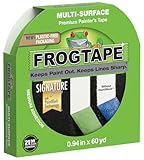
My personal go-to for projects where clean lines are absolutely most important is FrogTape. It’s a bit pricier than standard painter’s tape, but it has a chemical-release liner that reacts with latex paint, creating a micro-barrier that stops bleed-through. While it’s designed for latex, I’ve found it performs remarkably well with spray paints too, especially if you use lighter coats and still burnish the edges. The difference it makes in the sharpness of the lines is night and day compared to basic masking tape.
So, to answer the question ‘can you spray paint masking tape’ again with more nuance: yes, but you shouldn’t if you want good results. Invest in the right tape and learn the proper technique; it’s a small investment that pays off big time in the quality of your finish.
The Undercover Agent: What to Look for in Proper Masking Tape
Alright, let’s talk about the tape. If you’re going to insist on using something tape-like when you spray paint, or if you’re masking off areas you don’t want painted at all (like window frames), you need to be smart about it. Not all tapes are created equal, and this is especially true when spray paint is involved.
My first big mistake, like I mentioned, was grabbing the cheapest roll of brown masking tape I could find. It felt sticky, so I thought it would do the job. (See Also: Does Painters Tape Rip Paint Off Walls )
Wrong. For spray painting, you need a tape that’s designed to create a sharp line and resist overspray.
The most common and effective solution for this is painter’s tape. But even within the world of painter’s tape, there are differences.
Here’s a quick rundown of what to look for:
- Adhesive Level: You want a low-tack or medium-tack adhesive. Too sticky, and it’ll pull off the underlying paint or finish when you remove it. Not sticky enough, and it won’t create a seal. Painter’s tapes are generally balanced for this.
- Backing Material: Look for a denser, less porous backing. Standard masking tape is fibrous and open, allowing paint mist to seep through. Blue or green painter’s tapes have a more solid backing that’s harder for paint to penetrate.
- Flexibility vs. Rigidity: For straight lines on flat surfaces, a slightly more rigid tape is good. For curves or irregular surfaces, you need something more flexible. Some specialty tapes offer a good balance.
- Edge Sealant Technology: Some high-end painter’s tapes (like FrogTape) have built-in technologies that react with certain paints to create a micro-barrier, further preventing bleed.
When I’m faced with a project that requires really crisp lines, I usually reach for FrogTape or ScotchBlue Multi-Surface Painter’s Tape. FrogTape is my go-to for interior walls with latex paint because of its seal. For general spray painting projects, like furniture or decorative items, ScotchBlue is excellent.
It’s widely available, reasonably priced, and performs reliably. I’ve also experimented with automotive masking tape, which is designed for curves and high-heat automotive paint, and it’s fantastic for spray paint work due to its excellent adhesion and resistance to solvents, but it’s often more expensive and overkill for most home projects. The most important thing is to avoid the cheap, generic brown masking tape.
It’s a false economy. You’ll spend more time fixing the bleed-through than you would have spent buying the right tape in the first place. So, when you’re at the hardware store, don’t just grab the cheapest roll.
Read the label. Look for ‘painter’s tape’ and consider the project you’re tackling.
Your future self, admiring those clean lines, will thank you.
A little-known trick is to ‘seal’ your tape edge with a very light mist of a color that matches your base coat. This sounds counterintuitive, but if you spray a super thin layer of the color that’s already on the surface right over the edge of your tape, it fills any tiny gaps with that color. Then, when you spray your new color, any minor bleed-through will be the same color as the base coat, making it virtually invisible. I’ve used this trick on metal furniture with great success, and it really amps up the professionalism of the finish. It’s a bit of an extra step, but it’s far less work than trying to meticulously clean up bleed-through with a tiny brush.
Common Mistakes When Spray Painting Masking Tape (and How to Avoid Them)
So, you’ve decided to go ahead and try spraying over masking tape anyway, or you’re using it for general overspray protection. Fine. I won’t judge. But if you’re going to do it, at least do it right. I’ve made all the mistakes so you don’t have to. The biggest one, and I’ve already hammered this home, is using the wrong type of tape. Using generic brown masking tape for creating lines is a guaranteed recipe for fuzzy, bleeding edges. If you must use tape for creating lines, at least upgrade to a quality painter’s tape. Even then, there are pitfalls.
Another massive mistake is not pressing the tape down firmly enough. I’ve seen people lay tape down like they’re putting on a Band-Aid. You need to burnish the edges. Run your fingernail, a credit card, a putty knife, or even a specialized tape tool along the entire length of the tape edge. You need to physically press that adhesive into every nook and cranny of the surface. If there’s any gap, the spray paint will find it. I’ve learned to be almost aggressive with this step, making sure there’s no possible entry point for the paint mist. Remember, spray paint is atomized; it’s a fine mist. It will go anywhere there’s a path.
Applying the paint too heavily is another common blunder. When you’re spray painting, especially over tape, you need to think in terms of light, even coats. Build up the color gradually. If you blast on a thick, wet coat, the paint will pool. This pooling increases the likelihood of it seeping under the tape, even if the seal was good. It’s better to do three or four thin coats, allowing each to dry to the touch, than one heavy coat that ruins your lines. Patience is key here. Resist the urge to rush.
Here’s a mistake I made when I was younger and more impatient: peeling the tape off too soon. You’re excited to see your work, right? You pull that tape off while the paint is still wet. Big mistake.
The wet paint can cling to the tape, and as you pull it away, it can lift or create jagged lines. Sometimes it’s okay, but often it’s not. The safest bet is to wait until the final coat of paint is dry to the touch, but not fully cured.
Then, when you pull the tape, do it slowly and at an angle away from the painted line. Some people even recommend scoring the edge of the tape with a craft knife right before you peel it – this can help make sure a clean break.
I don’t always do this, as it adds time and risk of cutting myself, but it’s a valid technique for absolute perfection. (See Also: Does Masking Tape Work The Same As Painters Tape )
Finally, using the wrong tape for the job. If you’re painting a delicate surface, like a freshly painted wall with latex paint, you need a tape specifically designed for that. Using a heavy-duty tape might hold well, but it could rip the paint off when you remove it. Conversely, if you’re painting something that requires a really strong bond and resistance to solvents, like automotive parts, you need a tape designed for that. Always consider the surface and the type of paint you’re using. My rule of thumb: if in doubt, check the tape manufacturer’s recommendations. They usually have charts or advice on which tape is best for which application.
Real-World Use Cases: When Masking Tape might Be Okay
Look, I’m not saying masking tape is entirely useless when it comes to spray painting. There are specific scenarios where it can serve a purpose, even if it’s not for creating those iconic crisp lines. Think of it as a blunt instrument rather than a precision tool. The primary use case where standard masking tape can actually be helpful is for general overspray protection. If you’re spray painting a small object on a workbench, and you just want to prevent stray paint from getting all over your tools or the immediate surface, you can lay down some masking tape around the object.
For example, I was painting some small metal brackets for a shelf. The brackets were mounted on a piece of scrap wood for ease of handling. I didn’t need super-sharp lines on the brackets themselves, but I wanted to avoid getting overspray on the wood. So, I just put a few strips of regular masking tape down on the wood around the brackets. It worked fine for that. It caught the stray mist and kept the wood relatively clean. When I was done, I peeled it off, and the wood was mostly clean, with just a few tiny spots I easily wiped away.
Another situation is when you’re painting something where bleed-through isn’t a dealbreaker, or where you expect to do touch-ups. Maybe you’re painting a rustic sign, or a piece of garden art where a slightly imperfect edge adds to the charm. In those cases, the fuzziness from masking tape might not even be noticeable, or it might be something you can easily sand down or paint over. I’ve used it on birdhouses and planter boxes where the finish doesn’t need to be museum-quality.
It’s also sometimes used as a base layer. For instance, if you’re trying to create a specific texture, you might mask off an area with masking tape, spray paint over it, and then remove the tape to reveal a textured shape. But even then, the edges will likely be soft. If you want a defined edge with texture, you’d still be better off using a more rigid stencil or a specialized tape that can handle texture. My opinion? For any project where you value clean, sharp lines, avoid masking tape for the important masking. Use it for protecting larger areas from overspray, or for masking off components that will be completely painted over and where edge precision isn’t the goal.
Consider the context. If you are spray painting a car, using masking tape for panel separation is a big NO. You’ll end up with thousands of dollars in repair work. If you’re painting a kids’ toy, and you’re just trying to keep some parts from getting a different color, and a slightly fuzzy edge is acceptable, then maybe. But even then, a bit of extra effort with the right tape will give you a result you’re much happier with. The key takeaway is to understand the limitations of masking tape: it’s not designed to be an impermeable barrier against fine mist spray paint. It’s more of a gentle suggestion to the paint, not a strict order.
A Quick Comparison: Tape Types for Spray Paint Projects
When you’re deciding what to use for masking when spray painting, it’s not just about picking up any old roll of tape. Different tapes have different jobs, and using the wrong one can lead to a lot of frustration. Here’s a little table I put together to give you a rough idea of what’s out there and where I stand on them for spray paint applications. Remember, my verdict is based on experience and prioritizing clean, sharp lines and easy removal without damaging the underlying surface.
| Tape Type | Primary Use | Pros for Spray Paint | Cons for Spray Paint | My Verdict |
|---|---|---|---|---|
| Standard Masking Tape (Brown Paper) | General purpose, holding paper, light-duty tasks | Cheap, widely available, good for basic overspray protection on non-important surfaces. | Highly porous, poor bleed resistance, can leave residue or tear paint. | Avoid for creating lines. Use only for broad overspray protection where edge precision isn’t needed. |
| Blue Painter’s Tape (e.g., ScotchBlue) | Painting walls, trim, general DIY masking | Good balance of adhesion and ease of removal, decent bleed resistance on flat surfaces. | Can still bleed with heavy coats or porous surfaces, might not be flexible enough for tight curves. | Good all-around for many spray paint jobs, especially furniture. Burnish edges well. |
| Green/Specialty Painter’s Tape (e.g., FrogTape) | Delicate surfaces, sharp lines, interior walls | Excellent bleed resistance (especially with latex), adheres well, generally removes cleanly. | More expensive, might be overkill for simple tasks, still requires careful application. | My top pick for important lines on most surfaces. The premium price is worth the results. |
| Gaffer’s Tape/Duct Tape | Temporary repairs, securing cables, bundling | Very strong adhesive, durable. | Extremely aggressive adhesive, will almost certainly damage underlying paint or finishes, difficult to remove cleanly, not designed for sharp lines. | Never use for masking spray paint unless you want to damage the surface or create extremely rough lines. |
| Automotive Masking Tape (Vinyl) | Auto body masking, high-temp applications, curves | Excellent adhesion and seal, very flexible for curves, solvent resistant, designed for sharp lines. | Expensive, often overkill for DIY projects, can be very strong adhesive. | The gold standard for automotive spray work and very high-stakes DIY projects requiring absolute perfection. |
This table is a bit simplified, of course. There are a million variations out there. But the core principle remains: if you want clean lines when you spray paint, you need a tape that’s designed for the job. Standard brown masking tape is just not going to cut it for anything requiring precision. It’s like using a butter knife to carve a statue – you can technically do something, but the results will be messy and disappointing. Always opt for a quality painter’s tape, and for the best results, consider specialty tapes like FrogTape. It’s an investment in a professional finish.
What Is the Best Tape for Spray Painting?
The best tape for spray painting, especially when you need sharp lines, is a high-quality painter’s tape like FrogTape or ScotchBlue Multi-Surface Painter’s Tape. These tapes have a denser backing that resists paint penetration and a more controlled adhesive that helps prevent bleed-through while still removing cleanly. For absolute perfection on complex shapes or when dealing with solvents, automotive vinyl tape is superior but considerably more expensive.
How Do You Prevent Spray Paint From Bleeding Under Tape?
To prevent spray paint from bleeding under tape, first make sure you’re using a high-quality painter’s tape designed for clean lines, not standard masking tape. Meticulously burnish the edges of the tape down to the surface using your fingernail, a credit card, or a putty knife to create a tight seal. Apply spray paint in light, even coats, allowing each layer to dry to the touch before applying the next. Avoid heavy, wet coats. As an advanced technique, you can ‘seal’ the tape edge with a very thin mist of the base coat color before applying your new color.
Can You Use Masking Tape on Wet Paint?
It’s generally not recommended to use masking tape on wet paint, especially if you’re trying to create a clean line. The wet paint can adhere to the tape, and when you remove the tape, it can pull the underlying paint, causing jagged edges and ruining your lines. If you need to mask over painted surfaces, make sure the paint is at least dry to the touch, and ideally, has cured for a period recommended by the paint manufacturer before applying tape.
Can You Spray Paint Over Masking Tape?
Yes, you can spray paint over masking tape, but it’s usually a bad idea if you’re aiming for sharp, clean lines. Masking tape is porous and the fine mist of spray paint will inevitably seep under the edges, creating fuzzy or bleeding lines. While it can be used for basic overspray protection on areas where edge precision isn’t important, for defined lines, you should use specialized painter’s tapes and proper application techniques.
Is Painter’s Tape the Same as Masking Tape?
No, painter’s tape is not the same as standard masking tape, although they might look similar at first glance. Painter’s tape, typically blue or green, is formulated with a lower-tack adhesive and a denser backing material to create sharper lines and remove cleanly without damaging paint. Standard masking tape (usually brown) is more porous, has a stronger adhesive that can leave residue, and is prone to significant bleed-through with spray paints, making it unsuitable for creating defined edges.
Final Thoughts
So, can you spray paint masking tape? Technically, yes. Will you get the results you’re probably hoping for, especially if you’re trying to create sharp, professional-looking lines? Almost certainly not, unless you’re using it for simple overspray protection where the edges don’t matter.
My advice, born from years of my own messy experiments, is to save your time and frustration. Invest in a good quality painter’s tape. The little bit extra you spend on a roll of FrogTape or ScotchBlue will save you hours of meticulous touch-up work and deliver a finish that actually looks like you know what you’re doing. Don’t make the mistake of thinking cheap tape will suffice for a precise job.
If you’re still tempted to use masking tape for lines, just remember that fuzzy edges are practically guaranteed. Consider it a rustic look, or be prepared to put in the extra time with a fine-tip brush. For the clean lines you’re imagining, it’s time to upgrade your tape game. What’s the worst that can happen if you try the right tape for the job? You end up with a fantastic-looking project, that’s what.