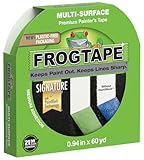
I remember the first time I tried printing ABS on my Ender 3. It was a disaster. Hours of calibration, fiddling with temperatures, and still, my prints would just peel themselves off the bed halfway through. My buddy, Dave, swore by blue painter’s tape. ‘Just slap some of that on,’ he said, ‘works like a charm.’ Yeah, right. I wasted so much money on fancy build surfaces and expensive adhesion promoters before I finally figured out the truth about whether you can use blue painters tape to print ABS.
It’s a question that pops up more often than you’d think, especially when you’re just starting out and every dollar counts. Everyone’s looking for that magic bullet to make their 3D printer play nice with stubborn filaments like ABS.
Why So Many People Swear by Blue Painter’s Tape for Abs
Look, the simple answer is yes, you can use blue painter’s tape to print ABS. For a lot of folks, especially those with printers that don’t have heated beds or just want a quick, cheap solution, it’s their go-to. The idea is pretty straightforward: the slightly textured surface of the tape provides more grip than a bare glass bed. When the ABS cools down, it contracts, and if it doesn’t have enough grip, it’ll just lift right off. Painter’s tape, particularly the blue stuff, has a paper-like texture that, when applied carefully, can create just enough friction to hold that first layer down.
I’ve seen it work wonders for some people printing smaller, less demanding ABS parts. The key is usually good application.
You want to overlap the strips neatly, making sure no air bubbles get trapped underneath. Those bubbles are death for your first layer. I remember one time I was in a hurry, just slapped on a few strips haphazardly, and the print lifted so violently it practically launched itself off the build plate. Lesson learned: patience is a virtue, especially with 3D printing adhesion.
The general consensus is that the slightly porous nature of the tape helps it ‘grab’ the molten plastic as it lays down, and the adhesion is strong enough to hold through the cooling and contraction phase, but not so strong that you can’t remove the print later without too much fuss.
The other big draw is the cost. A roll of decent quality blue painter’s tape, the kind that’s supposed to provide clean lines for painting, is dirt cheap compared to specialized 3D printing build surfaces.
We’re talking a few bucks for a roll that can last you ages, depending on how often you print and how large your build volume is. It’s also readily available.
You can grab it at any hardware store or even a grocery store. So, if you’re in a pinch and need to get a print done without ordering a new build plate or a fancy adhesive, it’s a lifesaver. The real trick, though, is managing your expectations and understanding its limitations. It’s not a perfect, foolproof solution for every ABS print, but for many, it’s a surprisingly effective method.
The Harsh Reality: When Blue Tape Fails Spectacularly
Now, here’s where I go against the grain a bit. While blue tape can work, it’s often touted as this magical fix for ABS adhesion, and honestly, for anything beyond small, simple parts, it’s often a frustrating dead end. I’ve wasted more time and filament trying to get ABS to stick reliably to blue tape than I care to admit. The main culprit? Inconsistent adhesion. ABS is a tricky beast. It has a high glass transition temperature, meaning it needs to stay relatively warm to prevent warping, but it also shrinks a lot as it cools. This constant battle between the tape holding on and the plastic wanting to pull away is where things go south.
My biggest screw-up happened a few years back. I was printing a fairly large enclosure for a project. I’d meticulously applied the blue tape, even used a little bit of hairspray for good measure – which, by the way, often makes the tape too slick. The first layer went down okay, but then the warping started.
I’d be watching it, and a corner would just lift. I’d try to nudge it back down, but it was too late. (See Also: Does Painters Tape Pull Off Paint )
The whole print would end up looking like a warped, sad mess. I ended up going through three attempts, each taking hours, before I finally gave up and ordered a PEI sheet, which solved my problems overnight.
That was a costly lesson in chasing cheap solutions.
The common advice is to crank up your bed temperature. Great, but ABS also needs a good enclosure to keep ambient temperatures stable. If your room is drafty, or your printer isn’t enclosed, that heated bed is fighting a losing battle against convection.
The blue tape might hold for a bit, but as the print cools unevenly, the stresses build up, and the tape just can’t fight it. It’s like trying to hold a giant rubber band stretched to its limit – eventually, it’s going to snap back. So, while it’s a valid option, especially for PLA or PETG, expecting it to be a miracle cure for ABS is where many people, myself included initially, get burned.
It’s often the wrong tool for a demanding job.
What to Look for: Choosing the Right Blue Painter’s Tape
If you’re determined to give blue painter’s tape a shot for your ABS prints, not all tape is created equal. This is where a lot of the confusion and frustration comes from. You can’t just grab the cheapest dollar-store roll. I’ve found that the better quality tapes, usually the ones marketed for more professional painting jobs, tend to perform better. They’re often thicker, have a more consistent adhesive, and the backing material is more uniform. Think brands that painters actually use, not just generic store brands. I spent about $180 over a year trying different tapes before I landed on one that consistently gave me acceptable results, and it wasn’t even specifically for 3D printing.
What you want to avoid are tapes that are too thin or too sticky. Too thin and it tears easily, leaving residue. Too sticky, and you’ll find yourself struggling to get your print off, potentially damaging the tape or even the print itself. The ideal tape has a medium adhesion. It should hold the print down firmly during the printing process but release with reasonable effort once the bed has cooled. I’ve also noticed that some tapes have a ‘clean release’ formulation, which is great for painting but can sometimes mean less grip for 3D printing. It’s a bit of a Goldilocks situation – not too sticky, not too weak.
The material itself matters too. Most blue painter’s tapes are made of paper. This paper is slightly porous, which helps with adhesion. However, the quality of that paper can vary.
Finer, more densely woven paper tends to be more consistent. I’ve found that tapes with a slight textured feel, rather than a super smooth finish, tend to offer better mechanical grip.
Some people even swear by lightly scuffing the tape with fine-grit sandpaper (like 400-grit) to create a more uniform surface. I haven’t gone that far, but it’s an idea if you’re really struggling. Ultimately, you’ll likely need to experiment with a few different brands to find one that works for your specific printer, filament, and environment.
It’s not a one-size-fits-all deal. (See Also: Does Painters Tape Rip Paint Off Walls )
Real-World Abs Printing with Blue Tape: Tips & Tricks
So, you’ve decided to go for it. You’ve got your decent quality blue painter’s tape and you’re ready to try printing ABS. Here are a few things that’ll drastically improve your chances of success. First and foremost, clean your build plate thoroughly. Even a tiny bit of dust or grease can ruin your adhesion. I use isopropyl alcohol (IPA) for this, wiping it down until it’s spotless. Then, apply the tape. Overlap each strip by about a third to a half of its width. Work from the center outwards to push out any air bubbles. A plastic scraper or an old credit card works wonders here. You want a completely smooth, continuous surface.
Bed temperature is your friend with ABS. Aim for at least 100°C, and if your printer can handle it, even 110°C. This helps keep the plastic from contracting too much. You’ll also want to dial in your first layer speed.
Printing the first layer slowly, say at 15-20 mm/s, gives the plastic more time to bond with the tape. A slightly lower first layer extrusion multiplier (around 95%) can also help prevent the nozzle from dragging and lifting the tape.
Another trick I learned the hard way is to use a brim. A brim adds a few extra layers around the base of your print, increasing the surface area that’s stuck to the tape and providing more stability.
I usually set my brim to 10-15mm wide.
Finally, consider an enclosure. Even a makeshift one out of cardboard boxes can make a huge difference for ABS. It traps the heat from the bed and nozzle, creating a more stable printing environment and reducing warping. I’ve had prints fail spectacularly due to a draft from an open window, only to succeed immediately after I threw a blanket over the printer. The tape itself might not be the sole factor; it’s the entire printing environment. It’s also worth noting that some ABS filaments are much more prone to warping than others. If you’re using a particularly stubborn brand, blue tape might just be fighting a losing battle from the start.
When to Ditch the Tape: Better Alternatives for Abs
Let’s be blunt: if you’re serious about printing ABS regularly, especially for functional parts or anything requiring dimensional accuracy, you need to graduate from blue painter’s tape. It’s a stop-gap, a temporary fix, not a long-term solution. The amount of time and filament I’ve wasted troubleshooting adhesion issues with tape would have easily paid for several high-quality build surfaces. The best alternatives offer far more consistent and reliable adhesion, saving you headaches and material.
My absolute favorite and the one I recommend to everyone is PEI (Polyetherimide). It’s a thermoplastic sheet that provides incredible adhesion for ABS, PETG, and even PLA. Prints stick like glue when hot but pop right off once the bed cools.
It’s durable, easy to clean, and doesn’t require any messy adhesives. You can get it as a flexible sheet that sticks to your magnetic build plate, or as a rigid sheet you can glue or screw onto your existing bed. I’ve had my PEI sheet for over three years, and it’s still going strong.
Another solid option is a glass bed with an ABS slurry. You mix ABS filament scraps with acetone to create a paste – it sounds sketchy, but it works like magic.
You apply a thin layer to the glass, and it creates an incredibly strong bond. Just be careful with acetone; it’s flammable and has strong fumes, so ventilation is key. (See Also: Does Masking Tape Work The Same As Painters Tape )
Kapton tape is another option, often used for higher-temperature filaments. It can work for ABS, but it’s more expensive than painter’s tape and can leave residue if not applied carefully. Some people also use PVA glue sticks (like Elmer’s Purple) applied to glass or even directly to the tape, which can add an extra layer of adhesion. But honestly, the investment in PEI or a good glass bed with an ABS slurry is usually worth it. You’ll spend less time babysitting prints and more time actually using the parts you create. It’s the difference between tinkering with your printer and actually producing useful items.
Common Mistakes & What to Avoid
If you’re going to try blue painter’s tape for ABS, let’s talk about the common pitfalls. The biggest mistake is thinking that more tape equals better adhesion. Sometimes, just slapping on a huge amount of tape without a thought can create more problems than it solves. Overlapping poorly, leaving gaps, or not making sure a perfectly smooth surface are recipes for disaster. You’ve got to treat it like you’re tiling a bathroom floor – precise, careful, and with attention to detail.
Another common error is using tape that’s too old or has been exposed to moisture. This can affect the adhesive’s tackiness and the tape’s structural integrity. I’ve had rolls of tape that felt ‘off’ right out of the packaging. Always check the expiry date if there is one, and store your tape in a dry place. Don’t just leave it in your humid garage. Also, people often forget about cleaning the nozzle. A dirty nozzle can drag molten plastic over the tape unevenly, creating ridges that can snag and lift the print. Clean your nozzle regularly, especially when printing with ABS.
Finally, and this is a big one that ties into my contrarian view: people underestimate the importance of temperature stability and drafts. They’ll blame the tape when, in reality, a rogue draft from an open window or a fluctuating room temperature is the actual killer. ABS is sensitive. Trying to print it on an open-bed printer in a breezy room and expecting blue tape to save the day is like expecting a band-aid to stop a major bleed. You need to create a controlled environment. If your printer isn’t enclosed, consider building a simple enclosure. This one change can make a world of difference, often more than what tape you use.
Frequently Asked Questions About Blue Painter’s Tape for Abs
Can Blue Painter’s Tape Cause Damage to My Print Bed?
Generally, no, good quality blue painter’s tape shouldn’t damage your print bed, especially if it’s glass or a similar hard surface. The adhesive is designed to be removable. However, if you use an excessive amount of adhesive spray on top of the tape, or if the tape itself is very old and degraded, you might encounter some sticky residue that requires a bit of effort to clean off. Always test on a small, inconspicuous area if you have a delicate build surface.
How Do I Remove My Abs Print From Blue Painter’s Tape?
Once the print bed has cooled down completely, you should be able to carefully lift the print off. If it’s still stuck, try gently prying at a corner with a thin, flexible spatula or scraper. Avoid using sharp metal tools that can scratch the tape or the bed. If it’s really stubborn, a little bit of IPA on the edges might help loosen the bond, but be careful not to soak the tape too much. Sometimes, a quick blast from a hairdryer on a low setting can help, but be cautious not to overheat the ABS print itself.
Is Blue Painter’s Tape Suitable for All Types of Abs Filament?
No, it’s not. Different ABS brands and formulations have varying shrinkage rates and adhesion properties. Some ‘easy ABS’ or low-warp ABS variants might perform better on blue tape than traditional ABS. However, for most standard ABS filaments, especially for larger prints, blue tape is often insufficient on its own. It’s best suited for smaller, less complex ABS prints where warping is less of a concern.
What’s the Best Way to Apply Blue Painter’s Tape for 3d Printing?
Clean your build surface first with isopropyl alcohol. Then, apply the tape strips with slight overlap (about 1/3 to 1/2 the width of the tape), working from the center outwards to eliminate air bubbles. Use a plastic scraper or credit card to make sure the tape is smoothed down firmly against the build surface, creating a smooth, bubble-free layer. Consistent application is key for reliable adhesion.
Can I Reuse Blue Painter’s Tape for Multiple Prints?
You might be able to reuse it for a few prints, but the adhesive will weaken over time, and the surface can become damaged or contaminated. For important prints or when you need guaranteed adhesion, it’s always best to apply a fresh layer of tape for each print. Expect to replace the tape after every 1-3 prints for optimal results, depending on the print size and complexity.
Verdict
So, can you use blue painters tape to print ABS? The short answer is a reluctant yes, but it comes with a whole lot of ‘ifs’ and ‘buts.’ For small, simple parts, or when you’re really strapped for cash, it can work in a pinch. But if you’re printing anything substantial, or if you value your time and filament, you’re probably going to end up frustrated. I learned this lesson the hard way, and I’ve seen countless others do the same.
My honest advice? Save yourself the headache. Invest in a good PEI sheet or a reliable ABS slurry setup. The upfront cost might seem higher, but the time saved, the reduction in failed prints, and the sheer reliability are worth every penny. You’ll spend less time battling your printer and more time creating cool stuff.
Don’t get me wrong, blue tape has its place – for painting projects, for marking things, for holding a quick temporary repair. But for the demanding nature of ABS 3D printing, it’s often just not up to the task. Give it a try if you must, but be prepared for the possibility that it won’t be the magic bullet you hoped for.