I remember the first time I tried to mask off a concrete patio for a staining project. Armed with what I thought was the best painter’s tape on the market, I confidently laid down long strips, eager for crisp, clean lines. Fast forward 24 hours, and I was staring at a disaster. The tape had lifted in places, bled underneath in others, and peeling it off felt like a wrestling match with my own driveway.
So, can you use painter’s tape on concrete? The short answer is, sometimes, but it’s a lot more complicated than the packaging lets on.
I’ve wasted enough money and my own time to tell you it’s not as simple as slapping it down and walking away.
This isn’t about fancy, expensive products. This is about getting a job done without cursing the materials you bought. We need to talk about the gritty reality of working with concrete and how tape, specifically painter’s tape, interacts with it. Forget the glossy ads; let’s get down to what actually works and what’s just a waste of your hard-earned cash.
The Concrete Surface: A Rough Customer for Tape
Look, concrete isn’t a smooth, prepared surface like a wall or trim inside your house. It’s porous, it’s rough, and it’s often damp or dusty, even if it looks clean to the naked eye. Think about it: it’s literally made of aggregate (rocks and sand) mixed with cement and water. This means it’s got all sorts of nooks and crannies. When you try to stick tape down on concrete, that adhesive, no matter how good it claims to be, has to contend with this uneven topography. It’s like trying to get a sticker to stick perfectly to a bumpy tree trunk – there are always air pockets and places where it just doesn’t make full contact.
The porosity is another big issue. Concrete can absorb moisture. If there’s any dampness present – whether it’s from recent rain, dew, or even just humidity that’s seeped into the slab – the tape’s adhesive can react poorly. Sometimes it just loses its grip entirely, peeling up like a bad bandage.
Other times, that moisture can migrate under the tape, causing the paint or stain you’re trying to contain to bleed. It’s a frustrating cycle. I once tried to mask off a small section of my garage floor for a quick epoxy touch-up. The concrete looked bone dry.
Within hours, I could see the edges of the tape lifting, and I knew I was in for trouble when it came time to pull it. The surface texture alone means standard painter’s tape, designed for smooth drywall or wood, is going to struggle.
The aggregate size and distribution also play a massive role. A very fine broom finish concrete might be more forgiving than a rougher, more exposed aggregate finish. If you’ve got larger stones or pebbles sticking out, the tape will struggle to form a seal around them, creating obvious gaps.
And let’s not even get started on old, weathered concrete that might be flaking or spalling. The tape will just latch onto the loose bits, and when you pull it, you’ll take chunks of concrete with it. So, before you even think about tape, assessing the concrete’s condition is most important.
Is it smooth or rough? Dry or potentially damp? Is it sealed, painted, or bare?
Each of these factors drastically affects how well any tape will perform. (See Also: Does Painters Tape Rip Paint Off Walls )
What Kind of Tape might Work (and Why It’s Still a Gamble)
Alright, let’s talk tape. When most people ask ‘can you use painters tape on concrete?’, they’re usually thinking of the blue stuff, maybe the green stuff, or even the purple stuff. These are the common household heroes for masking. Generally, these tapes are designed for interior painting on walls, trim, and even some delicate surfaces. Their adhesives are formulated to stick well enough for a few days but to remove cleanly without damaging the underlying paint or finish. This is precisely where they fall short on concrete.
The adhesives on standard painter’s tapes are often water-based acrylics. They’re great for smooth, non-porous surfaces. On concrete, however, they can struggle to get a good bond due to the surface texture and porosity. Some brands offer ‘exterior’ or ‘heavy-duty’ versions of their painter’s tapes. These might have a slightly stronger adhesive and a thicker backing that could potentially handle the rougher conditions better. I’ve experimented with a few of these, like some of the orange or yellow tapes that claim to be good for rough surfaces. They offer a marginally better performance than the standard blue tape, but they are still far from foolproof.
The real kicker is that even these ‘tougher’ tapes can leave residue or, worse, pull up coatings if the concrete has been sealed or painted. The adhesive might be strong enough to grab onto a sealant layer, and then when you pull the tape, you’re not just pulling tape; you’re potentially pulling up your coating too. I learned this the hard way when I used a yellow ‘rough surface’ tape on a slightly aged concrete patio that had a clear sealant on it. The tape stuck pretty well, and I was feeling smug.
Then, when I went to peel it, I saw little flecks of the sealant coming up with the tape. Annoying doesn’t even begin to cover it. So, while some tapes might work better than others, it’s still a gamble.
You’re looking for a tape that has a strong enough adhesive to grip the concrete but is also formulated to remove cleanly, which is a tricky balance to strike.
The Real Deal: When Painter’s Tape Fails and What to Use Instead
Let’s be blunt: for most serious concrete projects where you need a clean, sharp line, standard painter’s tape is a mistake. It’s like bringing a butter knife to a sword fight. It might make an attempt, but it’s going to end in frustration and a mess. I’ve seen people recommend it for everything, and honestly, it drives me nuts. It leads to bleeding, ripped-up paint, and hours of scraping and touch-up work that you could have avoided.
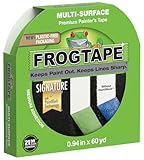
So, what should you use? For concrete, you need something that is designed to stick to rough, porous, and potentially outdoor surfaces. My go-to for anything involving concrete edges that need masking is a heavy-duty tape specifically made for construction or outdoor use. Think of tapes like 3M’s Performance Masking Tape or FrogTape for Rough Surfaces and Multi-Surface. The FrogTape, in particular, uses a micro-barrier technology that’s supposed to react with water-based paints to form a micro-seal, which helps prevent bleeding. I’ve found it to be significantly better than regular painter’s tape on concrete, though it’s not perfect and can still be pricey.
Another option, especially for longer-term projects or more aggressive coatings, is a vinyl tape. These are often used for high-performance masking in automotive or aerospace, and they have a much stronger adhesive that can hold up to tougher conditions. However, they can also be overkill and leave a very strong residue if left on too long, so you have to be careful. For a quick stencil on a driveway, I’ve even resorted to using good old masking tape, but then I backfill the edge with a thin bead of caulk before painting.
It’s a bit more work upfront, but it guarantees a super sharp line. The key takeaway is to ditch the idea that your indoor painter’s tape will magically work on concrete.
You need specialized products for specialized jobs. The cost difference is usually negligible compared to the time and materials you’ll waste fixing mistakes. I spent about $15 on a roll of ‘exterior’ painter’s tape for a small patio project once, and it was a complete waste.
I ended up buying a dedicated concrete masking tape for $25 and it did the job perfectly. (See Also: Does Masking Tape Work The Same As Painters Tape )
Common Mistakes and How to Avoid Them
The biggest mistake people make, myself included early on, is thinking ‘painter’s tape is painter’s tape.’ They grab the familiar blue roll from their garage and assume it’ll work on concrete just like it does on drywall. This is fundamentally flawed because concrete is a completely different beast. It’s rough, porous, and can hold moisture. Standard painter’s tape adhesives aren’t designed for this level of aggression. You need tape formulated for ‘multi-surface’ or specifically ‘rough surfaces’ if you’re attempting this at all.
Another common error is not preparing the concrete surface properly. Before you even think about applying tape, the concrete needs to be clean, dry, and free of loose debris, dust, or old coatings that are flaking. A good power washing and thorough drying period are often necessary. If there’s any residual moisture trapped in the pores of the concrete, it can compromise the tape’s adhesion or cause bleed-through when you paint. I learned this the hard way when I taped off a section of my basement floor on a humid day. Even though the surface looked dry, the tape failed because of the moisture trapped within the concrete itself.
Overlapping tape incorrectly is another trap. If you’re using multiple strips of tape, make sure the overlaps are smooth and that the seam is well-sealed.
Sometimes, paint can seep into the gap between two overlapping strips. Applying a thin bead of clear caulk or a specialized edge sealant along the tape line after application can create a more solid barrier against bleed-through.
Finally, and this is a big one, don’t leave the tape on for too long. Most painter’s tapes are designed for a few days, maybe a week at most, on interior surfaces.
On exterior concrete, prolonged exposure to sun, rain, and temperature fluctuations can degrade the adhesive and the tape itself, making it harder to remove cleanly and increasing the risk of residue. Always check the manufacturer’s recommendations for outdoor use and removal times.
Real-World Applications: Where Tape on Concrete Actually Works (sort Of)
So, where does tape on concrete actually make sense? It’s not usually for creating perfect, razor-sharp lines for a detailed paint job. It’s more for general demarcation or protecting larger areas. For instance, if you’re applying a concrete sealer to your driveway and you want to keep it off a section of your house’s foundation wall or a nearby wooden deck, you might use painter’s tape. In these cases, the stakes are lower. A little bleed onto the foundation isn’t usually a catastrophe, and the tape is primarily there to prevent large spills or overspray. Here, a good quality exterior painter’s tape might suffice, especially if you’re diligent about pressing it down and monitoring it.
Another scenario is creating temporary stencils. If you’re doing a simple pattern on a patio, like dividing it into sections for different colored stains, you might use tape to create the initial boundaries. Even then, I’d strongly recommend a tape designed for rough surfaces.
The tape acts more as a guide for where to place a more solid masking material or as a barrier against heavy-handed application of stain. It’s not about the tape holding a perfect seal; it’s about guiding the overall process.
I once used painter’s tape to mask off a brick wall adjacent to my concrete walkway while I was power washing the walkway. The goal was just to prevent the worst of the grit from blasting the brick. The blue tape held up okay for a few hours, but I had to keep an eye on it and press it down frequently.
The key is managing expectations. If you’re aiming for a professional finish with crisp lines on concrete, relying solely on painter’s tape is a recipe for disappointment. It’s far better suited for less important applications or as a component in a multi-step masking process. For example, you might use a special concrete tape to define the line, then press down the edges with a flexible putty knife or even a thin bead of caulk. This combination provides a better seal than tape alone. I’ve also seen people use wider construction tapes or even thin sheets of plastic secured with heavy-duty tape for larger area protection, which is often more practical than relying on narrow painter’s tape. (See Also: Does Painters Tape Peel Paint )
Practical Tips for Using Tape on Concrete (if You Must)
If you absolutely have to use painter’s tape on concrete, here are a few things I’ve learned that can help mitigate disaster. First, always, always, always test the tape on an inconspicuous area of your concrete. Let it sit for the duration you plan to have it on for your actual project, then pull it off. See how it adheres and, more importantly, if it leaves any residue or pulls up any coatings. This might sound tedious, but it will save you immense heartache later. I once skipped this step on a sealed concrete pool deck and ended up with sticky tape remnants all over the place that took hours to remove with solvent.
Second, make sure the concrete is as clean and dry as humanly possible. Use a stiff brush or broom to remove all loose dirt and debris. If you’ve power-washed, give it at least 24-48 hours to dry thoroughly, especially in humid conditions. Even then, I’d recommend pressing the tape down firmly to push out any trapped air or residual moisture. A putty knife or a roller can help get a good seal. Avoid applying tape if there’s any chance of rain or dew soon after application, as moisture is your enemy.
Third, consider the type of tape. While standard blue painter’s tape is often not up to the task, there are better options. Look for tapes specifically labeled for exterior use, multi-surfaces, or rough surfaces.
Brands like FrogTape for Rough Surfaces or 3M’s Performance Masking Tape are generally better investments. They have stronger adhesives and more durable backing. For really important lines, I’ve found that using a tape designed for concrete edging or even vinyl tape can be more effective, although they are typically more expensive and require careful removal to avoid residue. Fourth, when it’s time to remove the tape, do it slowly and at an angle, pulling it back on itself.
If it feels like it’s sticking too hard or pulling up the concrete, stop. You might need to gently score the edge with a utility knife or use a heat gun on a low setting to soften the adhesive. Patience is key; rushing the removal process is a surefire way to mess up your lines.
Here’s a quick rundown of tape types and their suitability for concrete:
| Tape Type | Adhesive Strength | Surface Suitability | Residue Risk | Verdict for Concrete |
|---|---|---|---|---|
| Standard Blue Painter’s Tape | Low | Smooth, interior surfaces | Low | Generally NOT Recommended |
| Green/Yellow ‘Outdoor’ Painter’s Tape | Medium | Rougher surfaces, short-term exterior | Medium | Marginal; test first. Better than blue. |
| Specialty ‘Rough Surface’ Tape (e.g., FrogTape) | Medium-High | Textured walls, concrete, brick | Low-Medium | BEST Painter’s Tape Option. Still requires prep. |
| Heavy-Duty Construction Tape | High | Various rough surfaces | Medium-High | Can work, but residue is a major concern. Not ideal for fine lines. |
| Vinyl Tape | Very High | Demanding applications, outdoors | High | Effective for strong bond, but difficult removal and residue risk. Use with caution. |
The concrete surface presents unique challenges that standard painter’s tape often can’t overcome. Its porous nature, rough texture, and potential for moisture mean that the adhesive on your average blue tape will likely fail to create a proper seal, leading to bleeding paint or stain. While some ‘exterior’ or ‘rough surface’ tapes offer a better chance, they are still a gamble.
Preparing the concrete properly by making sure it’s completely clean and dry is most important. Testing any tape you plan to use in an inconspicuous spot is a a must step to avoid costly mistakes and hours of frustrating cleanup. Ultimately, for projects demanding crisp, clean lines on concrete, specialized tapes or alternative masking methods are generally more reliable than relying on your standard roll of painter’s tape.
Final Verdict
So, can you use painter’s tape on concrete? Yes, you technically can, but whether you should depends entirely on your expectations and the project’s demands. For simple demarcation where a little bleed isn’t the end of the world, a decent exterior-grade tape, applied with care to a perfectly prepped surface, might get you by. But if you’re chasing those laser-straight lines for a stained patio or a painted garage floor, you’re probably setting yourself up for a headache. I’ve learned that sometimes, spending a few extra bucks on tape specifically designed for rough, porous surfaces, or even using a thin bead of caulk along the edge, is far cheaper than the time spent fixing mistakes.
My advice? If it’s a important line, don’t mess around with standard painter’s tape. Invest in something that’s built for the job, or employ a technique that guarantees a better seal. The frustration of peeling up tape only to find paint has bled underneath, or worse, that the tape has pulled up coatings, is a feeling I wouldn’t wish on anyone. It’s a tough lesson, but one worth learning for anyone tackling concrete projects. Always check the tape’s suitability for your specific concrete condition and project type.