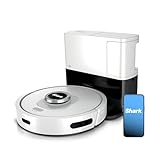
Honestly, I bought the wrong ones the first time. Spent a solid chunk of change on some fancy-looking magnetic strips that promised to keep my Shark robot vacuum from eating the cat’s food bowls. Guess what? The robot just bulldozed right through them like they were made of tissue paper.
So, do magnetic strips work with Shark robot vacuum models? It’s not a simple yes or no, and frankly, most of the glowing reviews online are just people trying to sell you something. I’ve been there, done that, and now I’ve got a drawer full of magnetic strips that are about as useful as a screen door on a submarine.
After countless hours and more than a few frustrated sighs, I think I’ve finally cracked the code on what actually stops these things in their tracks without you having to build a fortress around your house.
The Magnetic Strip Myth: What They Don’t Tell You
Let’s get this out of the way: the idea of magnetic strips creating an invisible force field for your robot vacuum sounds like science fiction, right? And for some models, especially older ones or those with less sophisticated navigation, they might have had a chance. But for most modern Shark robot vacuums, especially the ones with smart mapping and lidar, those flimsy magnetic strips are basically just suggestions.
I remember one particularly infuriating Saturday morning. My brand-new Shark IQ Robot was supposed to be doing its thing while I enjoyed a rare cup of coffee. Instead, I heard that familiar grinding noise. It had decided the area around my dog’s water bowl was its personal obstacle course. I’d spent about $40 on a set of these supposed ‘no-go zone’ magnetic strips. They looked professional, came with a little cutting tool, and the website swore they were ‘robot vacuum proof.’ My dog, bless his furry heart, just looked at me with his big eyes, as if to say, ‘You paid money for *this*?’ The strips lay there, mocking me, while the robot enthusiastically churned up spilled kibble.
This is where the marketing gets tricky. What they *don’t* always highlight is that these strips rely on the vacuum *recognizing* a magnetic field and *choosing* to stop. Many Shark robots, particularly the higher-end ones, use cameras and lidar to map your home and create virtual boundaries. They see the physical world, not necessarily a magnetic one. Think of it like trying to tell a race car driver to stop by whispering through a tin can; the message just doesn’t get through effectively.
When Magnetic Strips *might* Work (but Don’t Hold Your Breath)
So, are they *completely* useless? Not entirely. If you have a very basic robot vacuum that relies solely on bump sensors and simple navigation – the kind that just wanders around until it hits something – then yes, a physical barrier like a magnetic strip *might* deter it, at least temporarily. It acts more like a physical obstacle than a technological one in those cases.
However, for the vast majority of Shark robot vacuums sold in the last few years, especially those with ‘smart’ capabilities, you’re better off looking at other solutions. These robots are designed to understand your home’s layout. They’re building a digital map. A magnetic strip is like drawing a line in the sand for a toddler who can’t see it; it has no real impact on their intended path.
The most common mistake people make is assuming all robot vacuums are created equal. They’re not. Some are like simple Roombas from a decade ago, others are practically autonomous little housekeepers. For the latter, magnetic strips are usually a futile effort. (See Also: Should I Turning My Shark Robot Vacuum Off )
Shark’s robot vacuums, especially their IQ and AI models, use a combination of sensors. LiDAR (Light Detection and Ranging) is a big one. It spins around, bouncing lasers off surfaces to create a detailed 3D map of your room. This map tells the vacuum where walls are, where furniture is, and how to get from point A to point B efficiently without constantly bumping into things.
Then there are optical sensors, sometimes called vSLAM (Visual Simultaneous Localization and Mapping). These cameras help the robot see and understand its environment, reinforcing the map created by LiDAR and identifying obstacles it might not have seen otherwise, like a dropped sock or, in my case, a tempting water bowl. It’s like a human driver using both GPS and their eyes. They’re not relying on a magnetic signal from the road to tell them where to turn; they’re seeing the actual road signs and the world around them.
Because of this sophisticated navigation, a magnetic strip is often ignored. The robot’s internal logic says, ‘There is a clear path through this area according to my map.’ The magnetic strip, which doesn’t register on its LiDAR or optical sensors as a wall or a forbidden zone, becomes invisible. It’s like trying to stop a drone pilot by telling them the wind is blowing from the north. They’re looking at their radar and their visual feed, not the compass.
| Method | Shark Robot Compatibility | Effectiveness (My Experience) | Notes |
|---|---|---|---|
| Magnetic Strips | Low to Medium (older/basic models) | Rarely effective on smart models. Sometimes works on basic bump-and-go vacuums. | Often ignored by LiDAR/camera-based navigation. Can be a tripping hazard. |
| Virtual No-Go Zones (App-based) | High (IQ, AI, and other smart models) | Excellent. Precise control over forbidden areas. | Requires a Wi-Fi connection and app setup. Most reliable method. |
| Physical Barriers (e.g., baby gates, sturdy cardboard) | High (all models) | Very effective. Creates a concrete obstacle. | Can be cumbersome, requires manual setup and removal. |
| “Cliff Sensors” / Drop Sensors | High (all models) | Effective for preventing falls down stairs. | Do not prevent entry into rooms or areas. |
The Real Solution: Virtual Boundaries (and Why They Rock)
Forget the magnetic strips. If you have a Shark robot vacuum that connects to Wi-Fi and has an app, the real magic happens there. Shark, like most major brands, allows you to set up ‘No-Go Zones’ or ‘Virtual Walls’ directly within the app. This is their intended, and most effective, method for keeping your robot out of certain areas.
How it works is simple. Once your robot has mapped your home (which usually takes a few cleaning cycles), you can access that map in the app. You can then draw lines or boxes on the map, telling the vacuum, ‘Do NOT go here.’ This is a command the robot’s sophisticated navigation system understands and respects. It’s like telling your GPS, ‘Avoid this entire neighborhood,’ and it reroutes you. The robot sees that designated area as a barrier on its digital map and simply won’t enter.
I switched to using the app-based virtual boundaries about two years ago after my magnetic strip debacle. It was a revelation. Suddenly, the cat’s food bowls were safe, the tangled mess of cables behind my TV was protected, and I didn’t have to worry about the robot attempting a daring escape through the doggy door. The setup took maybe five minutes the first time, and now it’s just part of the routine. I probably spent around $100 on various magnetic strips and other failed attempts before I finally embraced the app. The virtual boundaries are built into the vacuum and app, so there’s no extra cost beyond the initial purchase of the smart vacuum itself.
What About Other ‘robot Deterrents’?
You might see other suggestions online. Some people talk about using strips of tape, or even specialized ‘robot deterrent’ stickers. Honestly, most of these fall into the same category as magnetic strips – they’re physical objects that a smart robot vacuum will likely ignore because they don’t register as a significant obstacle on its mapping sensors.
Consider how these vacuums work. They’re programmed to glide over small bumps, around furniture legs, and under very low clearance items. A thin strip of tape or a sticker is unlikely to present a formidable enough challenge to trigger its ‘obstacle avoidance’ protocols if its primary navigation is based on LiDAR and cameras. It’s like trying to stop a professional athlete with a piece of thread. They’ll just step over it. (See Also: Is It Best Robot Vacuum With Self Emptying Bin )
The only time these low-tech solutions might work is if the robot is *very* basic, relying almost entirely on bumper sensors. If it bumps into something, it turns. If the bumper sensor hits the tape, it *might* turn. But again, for most Shark models with mapping, this is a losing battle.
I tried using some heavy-duty painter’s tape once, thinking the slight texture might confuse the sensors. Nope. The robot just went right over it, leaving a faint sticky residue that took me another ten minutes to clean off. That was after my fourth attempt to find a DIY solution. Truly, the simplest solutions are often the most effective, and for Shark robots, that means the app.
The Faq You’re Probably Asking
Do Magnetic Strips Actually Keep Robot Vacuums Out of Areas?
For very basic robot vacuums that rely solely on bump sensors, they might create a physical deterrent. However, for most modern Shark robot vacuums equipped with LiDAR and camera navigation, magnetic strips are largely ineffective as they do not register as a significant obstacle in the robot’s digital map. They’re treated more like a suggestion than a command.
Can I Use Virtual No-Go Zones with My Shark Robot Vacuum?
Yes, if your Shark robot vacuum model is Wi-Fi enabled and connects to the SharkClean app. This is the primary and most effective method recommended by Shark for creating restricted areas. You can draw these zones directly on the map generated by your robot.
How Do I Set Up Virtual Boundaries on My Shark Robot?
First, ensure your robot has completed at least one full mapping run. Then, open the SharkClean app on your smartphone, select your robot, and find the ‘Map’ or ‘Smart Map’ section. You should see an option to add ‘No-Go Zones’ or ‘Virtual Walls.’ Tap this, and then draw the desired boundaries on the map where you don’t want the robot to go.
Are There Any Downsides to Using Virtual No-Go Zones?
The main ‘downside’ is that it requires a smart, Wi-Fi-enabled Shark robot vacuum. If you have a very basic model without app connectivity, this feature won’t be available. Also, you need to ensure your home Wi-Fi is stable for the app to communicate with the robot and for the zones to be recognized consistently.
What If My Shark Robot Vacuum Doesn’t Have App Features?
If your Shark robot vacuum model doesn’t support app connectivity or virtual boundaries, your best bet for creating restricted areas is using physical barriers. This could include sturdy baby gates, custom-made barriers, or even strategically placed furniture. Some older models might respond to physical magnetic strips, but it’s a gamble and generally less reliable than app-based solutions.
The Takeaway: Ditch the Magnets, Embrace the App
Look, I’m not here to sell you anything. I’m just here to save you the headache and the money I wasted. Those magnetic strips? They’re mostly a relic of an earlier era in robot vacuum technology. For the smart, connected Shark robot vacuums of today, they’re about as useful as a screen door on a submarine. (See Also: Is It Best Robot Vacuum For Cleaning Large Homes )
If you’ve got a Shark robot that can connect to your phone, lean into the app. Set up those virtual boundaries. It’s clean, it’s effective, and it actually works the way the engineers intended. Trying to trick a sophisticated mapping system with a piece of magnet strip is like trying to outsmart a supercomputer by hiding under your desk.
So, to answer the question directly: do magnetic strips work with Shark robot vacuum models? For the smart ones, it’s a resounding ‘meh,’ leaning heavily towards ‘no.’ Save your cash and your sanity, and use the technology that’s already built into your machine.
Conclusion
Honestly, I’ve seen people try everything from magnets to elaborate physical barriers. The reality is, for most Shark robot vacuums that use LiDAR or cameras, those magnetic strips are just not going to cut it. They’re a holdover from simpler times, and modern robots have moved on.
My biggest regret isn’t the money spent, but the sheer frustration of trying to make something work that was fundamentally designed for a different era of technology. It felt like trying to teach an old dog new tricks, except the dog was a sophisticated piece of AI hardware.
If you want to keep your Shark robot vacuum out of specific areas, the simplest, most effective, and frankly, the only method that consistently works for models with app connectivity is using the virtual no-go zones within the SharkClean app. It’s built-in, it’s precise, and it actually respects the robot’s advanced navigation.
So, when you’re wondering about magnetic strips and whether they do magnetic strips work with Shark robot vacuum units, remember this: the future is virtual, not magnetic. Stick to the app. It’s the friendliest path forward.
Recommended Products