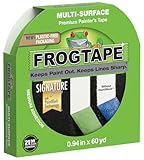
I remember the first time I tried to paint a sharp, clean line around a tricky trim piece. I grabbed the nearest roll of blue tape, slapped it on, and figured I was golden. Big mistake. The tape was too wide, bunching up in the curves, and the paint bled underneath like a toddler with a permanent marker. It looked like a kindergartner had attacked the wall. That’s when I learned the hard way that, yes, indeed, does painters tape come in different widths, and it’s not just a cosmetic choice – it’s fundamental to a decent paint job.
It’s like choosing the right tool for the job. You wouldn’t use a sledgehammer to hang a picture frame, and you shouldn’t use a 2-inch wide tape on a delicate 1/2-inch molding. This seemingly simple variation in width makes a world of difference.
Look, I’ve spent way too much time and money on DIY projects that went south because I skimped on the details or, worse, used the wrong darn materials. Painter’s tape is one of those things people tend to overlook. They grab a roll, slap it on, and think their job is done. But the truth is, the width of that tape is a major player in whether you end up with crisp lines or a muddy mess. So, does painters tape come in different widths? Absolutely. And understanding why and when to use each is key to not hating yourself halfway through your next painting endeavor.
The Subtle Art of Tape Width Selection
When I first got into painting my own place, I figured all painter’s tape was basically the same. Blue, green, purple – different brands, same function.
I was wrong. The most obvious, and frankly most effective, difference is the width.
You’ll find painter’s tape in sizes ranging from a dainty 1/4 inch all the way up to a beefy 2 inches, and sometimes even wider. It’s not just about covering more surface area; it’s about control and precision.
Trying to tape off a narrow windowsill with 2-inch tape is like trying to thread a needle with a garden hose. It’s unwieldy, it’s awkward, and you’re going to end up with tape sticking where it shouldn’t be, or not adhering properly where it needs to.
For really fine details, like masking off the edge of a picture frame or the thin metal trim on a piece of furniture, you need something slender. That’s where the 1/4-inch or 1/2-inch rolls come into play. They allow you to follow intricate patterns or create very fine lines.
I once tried to paint a faux wood grain effect on some cheap shelving, and I needed to mask off these tiny, irregular lines. Using standard 1-inch tape was a disaster; I ended up with paint in places I absolutely didn’t want it. I had to go back and painstakingly pick up a tiny roll of 1/4-inch tape from a specialty art supply store, and it made all the difference.
It felt absurd to be spending $8 on a tiny roll of tape, but it saved the entire project. You learn these things through trial and, often, painful error.
The wider tapes, like 1.5-inch or 2-inch, are fantastic for masking off larger, simpler areas, like the edge of a wall where it meets a ceiling, or protecting baseboards along a long stretch of wall. They cover more ground quickly, which is a godsend when you’ve got miles of trim to protect.
Here’s a quick breakdown of what I’ve found works best:
| Tape Width | Best For | My Verdict |
|---|---|---|
| 1/4 inch | Intricate details, fine lines, models, tiny trim | A must-have for detail work, but pricey and tedious for large areas. |
| 1/2 inch | Small trim, window mullions, detailed masking | My go-to for most window and door trim. Good balance of precision and coverage. |
| 1 inch | General wall-to-trim, moderate-sized areas | The everyday hero. Works for most common masking tasks. |
| 1.5 inch | Longer baseboards, larger wall sections | When you need to cover a bit more ground without going overboard. |
| 2 inch | Protecting large floor areas, covering substantial trim quickly | Great for big, flat surfaces or very wide trim. Can be overkill for smaller jobs. |
When Size Isn’t Everything (but It Kinda Is)
Everyone talks about the color of painter’s tape – blue, green, purple – and the supposed differences in adhesion and paint bleed. And yeah, that stuff matters. But honestly, I’ve found that the width often dictates the success or failure of a masking job more than whether it’s blue or green. (See Also: Does Painters Tape Rip Paint Off Walls )
I’ve had cheap, no-name 1-inch tape perform better than some fancy 1.5-inch tape from a big box store, just because it was the right size for the job. The common advice is to use the narrowest tape that will do the job effectively, and I wholeheartedly agree.
Trying to force a wide tape into a narrow space is a recipe for frustration and messy paint lines. It creates more work in the long run because you’ll be spending ages trying to clean up bleeds that wouldn’t have happened with the correct width.
Think about it: if you have a very thin piece of molding, say half an inch wide, and you use a 1-inch tape, half of that tape is going to be overhanging the molding and onto the wall. This makes it really hard to get a good seal along the edge of the molding itself.
The tape can easily lift or wrinkle where it’s trying to bend around the corner, leaving tiny gaps for paint to seep through. On the flip side, if you’re trying to protect a wide, uninterrupted stretch of baseboard, using a 1/4-inch tape would be agonizingly slow and inefficient. You’d be laying down strip after strip, and the chance of missing a spot or having the tape overlap inconsistently increases dramatically.
The 1.5-inch or 2-inch tapes are built for that kind of coverage, offering a quicker, more reliable barrier.
I’ve had this happen more times than I care to admit: I’m rushing a job, I’m low on the specific narrow tape I need, and I think, “Ah, I can just use this wider stuff and trim it back later.” Famous last words. “Trimming it back” inevitably means nicking the wall, leaving a ragged edge, or not getting it perfectly flush. It’s a pain. So, while the color and formulation of the tape are important for adhesion and ease of removal, the width is often the primary factor determining how well it will actually mask the area you intend to protect. It’s about having the right tool that fits the geometry of the surface you’re working with.
The surface you’re taping onto also plays a role in how you might choose your tape width, though it’s less about the width itself and more about how the tape conforms. A super-smooth, glossy surface might require a slightly wider tape to make sure a good seal, just because there are fewer imperfections for a narrow tape to cling to. Conversely, a slightly textured surface might grip a narrower tape better, as the tape can conform into the minor bumps and valleys. However, the bigger consideration with textures is usually the tape’s adhesion properties, not its width.
What I’ve noticed is that when you’re dealing with something like a heavily textured wallpaper or a rough plaster wall, a wider tape can sometimes be more forgiving. If you have a 1-inch tape and you apply it to a very bumpy surface, you might find that the tape doesn’t lay perfectly flat.
You’ll have tiny air pockets or areas where the tape isn’t making full contact. This increases the risk of paint bleed. A 1.5-inch or 2-inch tape, because it’s wider, might have a better chance of bridging over some of those minor imperfections and maintaining a more consistent contact with the overall surface.
It’s not a hard and fast rule, though. The quality of the tape and how carefully you apply it are still most important.
There’s also the case of masking off delicate items. For example, if you’re painting a room with intricate built-in shelving that has a lot of small ledges and decorative elements, you’ll likely need a combination of widths. You might use a 1-inch tape for the main flat surfaces and then switch to a 1/2-inch or even 1/4-inch tape to mask off the very edges of those decorative pieces. Trying to bend a wide tape around a tight curve or a sharp internal corner is a recipe for lifting and bleeding.
The flexibility and size of the tape need to match the geometry of the object being masked. I’ve learned to keep a variety pack of widths on hand because I never know what unexpected challenge my walls will throw at me. (See Also: Does Masking Tape Work The Same As Painters Tape )
Common Mistakes and How to Avoid Them
The most glaring mistake related to tape width is, of course, using the wrong size for the job. But beyond that, people often overlook how applying the tape can be affected by its width. For instance, when using wider tapes (1.5-inch and up), it’s tempting to just slap them down quickly. This can lead to unintended creases, bubbles, or areas where the tape isn’t fully adhered to the surface. For wider tapes, I find it’s often better to apply them in shorter, overlapping sections rather than trying to lay down one long, continuous strip. This gives you more control and allows you to smooth out any imperfections as you go.
Another common mistake is not leaving enough tape overhang. Whether you’re using a narrow or wide tape, you need a good, solid edge to peel from later. If you apply the tape right up to the edge of the trim you’re protecting, you’ll have nothing to grab onto when you want to remove it. This can lead to the tape tearing or leaving behind little strips.
Always extend the tape a little beyond the edge of the surface you’re trying to protect. For instance, if you’re masking off a baseboard, make sure the tape extends onto the wall a good inch or so. This gives you a clean, easy edge to pull from and reduces the chance of pulling up old paint or damaging the surface underneath. The width of the tape plays into this; a wider tape naturally provides a larger overhang area, which can be beneficial for larger surfaces.
I once saw a friend try to paint a ceiling. He used 2-inch tape to mask off the very edge where the ceiling met the wall. Sounds logical, right? But he didn’t press it down hard enough, and he didn’t have much overhang.
When he pulled it off, there was a visible line of paint where it had seeped underneath. He then tried to “fix” it with a tiny paintbrush, which looked worse than the original bleed. If he’d used a slightly narrower tape, maybe 1.5-inch, and been more meticulous about pressing it down, or even used a bit of caulk along the edge before taping, the whole thing would have gone smoother.
It’s about thinking ahead and understanding how the tape’s dimensions will interact with the surfaces and the painting process itself. Here’s a table of common errors:
| Mistake | Related to Tape Width? | How to Avoid |
|---|---|---|
| Paint bleeds under tape | Often, yes (too wide for detail, too narrow for large areas) | Choose the correct width for the specific surface. Make sure full adhesion. |
| Tape tears when removed | Sometimes (difficult to grip wide tape edges or too much overhang with narrow) | Leave adequate overhang. Press tape down firmly initially to create a clean edge. |
| Tape won’t stick properly | Less so, more adhesion issue, but width can affect conformity | Make sure surface is clean and dry. Use tape designed for the surface. |
| Awkward application, creasing | Yes, especially when forcing wide tape into tight spaces | Use the narrowest tape that effectively covers the area. Apply with care, smoothing as you go. |
When to Go Wide and When to Go Narrow
So, when exactly should you reach for the wider rolls, and when is it key to grab the skinny ones? It all boils down to the geometry of the masking job. If you’re protecting a broad, flat surface that doesn’t have many intricate details – think along the lines of masking off baseboards on a long, straight wall, or covering a large section of cabinetry you don’t want to get splashed – then a wider tape (1.5-inch or 2-inch) is your friend.
It covers ground faster, which means less time spent taping and more time painting. I’ve used 2-inch tape to protect hardwood floors along a wall being painted, and it made short work of it. The key is that the surface itself is simple and largely uninterrupted.
On the other hand, the narrow tapes (1/4-inch, 1/2-inch, and sometimes 3/4-inch) are your precision instruments. They are indispensable when you need to mask off very thin trim, delicate architectural details, hardware, or create very fine, sharp lines between two different colors. I’ve used 1/2-inch tape to mask off the delicate metal window frames in my kitchen, and it was perfect.
A wider tape would have been impossible to apply neatly. Similarly, if you’re doing something like painting stripes on a wall, you’ll often use a narrower tape to define the edges of those stripes after the initial color has dried.
This allows for incredibly sharp, clean lines. It’s about matching the tape’s width to the feature you are trying to isolate or protect.
Don’t fight the tape; let its dimensions work for you. (See Also: Does Painters Tape Peel Paint )
There’s also the element of overlap. When you’re masking off a significant area, like the transition from a wall to a ceiling, you might use a 1-inch tape and overlap it with the ceiling paint. The wider the tape, the more substantial that overlap can be, offering a more solid barrier against errant drips. However, this assumes you’re not trying to tape around a very tight corner or a complex shape. For those, the narrow tapes are king. They can bend and conform more easily to curves and angles without buckling or lifting. It’s a constant balancing act of coverage speed versus precision. My personal collection now includes at least four different widths, and I don’t regret a single one.
Where to Find Different Widths and What to Expect
You might be surprised at how readily available different widths of painter’s tape are. Your average big-box hardware store will typically carry the most common sizes: 1-inch, 1.5-inch, and 2-inch. These are the workhorses for most DIY painting jobs. You’ll find them in the paint aisle, usually alongside the rollers, brushes, and drop cloths. Brands like ScotchBlue, FrogTape, and even store-brand options will offer these standard widths.
However, if you need those narrower widths – the 1/4-inch, 1/2-inch, or even 3/4-inch tapes – you might have to do a little more digging. These are often found in specialty painting supply stores, art supply stores (where they’re used for things like canvas masking or model painting), or online retailers like Amazon. Online is usually your best bet for finding the widest selection of widths and brands, especially if you’re looking for something less common or higher-quality. Be prepared for the narrower tapes to cost more per linear foot.
That tiny roll of 1/4-inch tape I mentioned earlier wasn’t cheap, but it was worth it for the specific job. Expect to pay anywhere from $5 for a basic 1-inch roll to $10 or more for a small roll of the ultra-narrow stuff. It’s a trade-off between accessibility and specialized need.
When you’re shopping, pay attention to the tape’s intended use. Some tapes are marketed for delicate surfaces, some for multi-surface use, and some for rough surfaces. While width is a physical dimension, the adhesion and removal properties are just as important.
You don’t want a tape that’s so wide it’s hard to handle, but also has such aggressive adhesion that it rips off your paint when you try to remove it. Conversely, a narrow tape that doesn’t stick well is useless.
Always read the packaging to understand what kind of surface it’s designed for and how long it can be left on. For example, some tapes are only meant to be left on for 24 hours, while others can stay for up to 14 days. This is irrespective of width, but it’s a vital piece of information to avoid paint damage.
Does Painter’s Tape Come in Different Widths?
Yes, painter’s tape definitely comes in a variety of widths. You can commonly find it ranging from as narrow as 1/4 inch to as wide as 2 inches, with many sizes in between like 1/2 inch, 1 inch, and 1.5 inches. The width you choose depends on the specific task and the size of the area you need to mask off, affecting precision and coverage speed.
What Is the Most Common Width of Painter’s Tape?
The most common and widely available widths for painter’s tape are 1 inch and 1.5 inches. These sizes are versatile and suitable for a broad range of everyday masking tasks, such as protecting trim and baseboards when painting walls. Larger hardware stores will almost always stock these widths from various brands.
When Should I Use Narrow Painter’s Tape?
Narrow painter’s tape, typically 1/4 inch or 1/2 inch wide, is ideal for detailed work. This includes masking off very thin trim, intricate architectural features, hardware, or when creating fine lines for decorative effects like stripes. It allows for greater precision and conformity to complex shapes where wider tapes would be unwieldy and prone to error.
When Should I Use Wide Painter’s Tape?
Wide painter’s tape, usually 1.5 inches or 2 inches, is best for covering larger, less detailed areas quickly. This is useful for masking off substantial sections of baseboards, protecting floors, or covering wide trim where speed and broad coverage are more important than intricate detail. It can offer a more solid barrier against paint drips on simpler surfaces.
Final Thoughts
So, yeah, does painters tape come in different widths? The answer is a resounding yes, and it’s a detail that can save you a ton of headaches and touch-ups. Don’t just grab the first roll you see; think about the job at hand. A narrow tape for delicate work, a wider one for broad strokes. It’s a simple concept, but overlooking it is a classic DIY pitfall.
Next time you’re staring down a painting project, take a second to consider the tape’s width. It might seem like a small thing, but it can be the difference between a professional-looking finish and something that screams ‘amateur hour.’ I learned this the hard way, and I’m telling you now so you don’t have to.
Next time you head to the store, grab a couple of different widths. You’ll thank yourself when you’re faced with that tricky window frame or that mile-long baseboard.