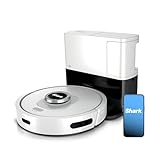
Wasting an entire Saturday morning trying to figure out why your fancy robot vacuum was meticulously cleaning the hallway carpet when you specifically told it to tackle the kitchen grime. Yeah, I’ve been there. It’s infuriating, right? You buy this thing to make your life easier, and instead, you’re playing tech support with a disc-shaped appliance that clearly has a mind of its own.
Honestly, the marketing hype around these things can be a bit much. They promise effortless whole-home cleaning, but then you’re left wrestling with app settings and boundary strips like you’re trying to defuse a bomb.
This isn’t rocket science, but it’s also not always as simple as pressing a button. Understanding how to get Shark robot vacuum to clean specific room is key to actually getting your money’s worth and, more importantly, a clean floor where you actually need it.
So, let’s cut through the fluff and get down to what actually works.
Mapping the Territory: Your Robot’s First Steps
Alright, first things first. If your Shark robot vacuum is still a stranger in your house, it needs an introduction. This usually means it needs to map your home. Most modern Sharks have a ‘smart mapping’ feature. This isn’t just some fancy buzzword; it’s how the vacuum learns the layout of your rooms, the placement of furniture, and even where your charging base is. Without a proper map, telling it to clean a specific room is like asking a blindfolded driver to find a particular street in a new city.
When you initiate the first clean or mapping run, just let it do its thing. Don’t try to micromanage it. Seriously, I made the mistake of nudging it back onto its charging base mid-map once. Took me three tries to get a stable map after that. Just let it roam. It might take an hour or two depending on the size of your place. Resist the urge to pick it up or block its path unless it gets completely stuck.
Make sure the floor is relatively clear of small items like charging cables, socks, or stray pet toys. Those little things can confuse the robot and cause it to get stuck or stop its mapping run prematurely. Think of it as preparing the stage for its performance.
App-Centric Control: Where the Magic Happens (or Doesn’t)
This is where you get granular. Once your Shark has a map, the SharkClean app becomes your command center. If you haven’t downloaded it and paired your vacuum, stop reading and do that. Seriously. It’s the whole point of having a ‘smart’ vacuum.
Open the app. You should see a representation of your home’s map. This is where you can designate specific rooms. Usually, there’s an editing tool that lets you draw lines around areas to define them as ‘Kitchen,’ ‘Living Room,’ ‘Bedroom 1,’ etc. This process can be a little fiddly. Sometimes, the robot’s interpretation of a room might be a bit off, especially if you have oddly shaped spaces or open-plan living. You might need to adjust the room boundaries a few times. I spent about 20 minutes the first time tweaking the lines around my kitchen island until it was perfectly defined.
This is also where you can set ‘no-go zones’ or ‘virtual walls.’ Think of them like invisible fences. If you have a particularly messy area you don’t want the robot to touch, or if you have delicate furniture it might bump too hard, you can block it off. Conversely, if you *only* want it to clean the kitchen, you would set no-go zones for everywhere else. (See Also: Should I Turning My Shark Robot Vacuum Off )
Once rooms are defined, you can select them for cleaning. Typically, you’ll see an option to ‘Clean Rooms’ and then a list of your saved rooms. You can often select multiple rooms, or just one. This is the fundamental step on how to get Shark robot vacuum to clean specific room.
Scheduling Specific Rooms: For When You’re Feeling Organized
Now, if you’re a planner, or if your robot has a habit of trying to vacuum while you’re trying to watch TV, scheduling is your friend. The app usually allows you to set cleaning schedules, and crucially, you can often specify which rooms to clean and when.
So, you could tell it to clean the kitchen every weekday morning at 8 AM, the bedrooms on Saturday, and the living room only on Sunday. This takes a bit of upfront effort to set up, but once it’s done, it’s set and forget. I like to schedule the main living areas for a quick clean on Tuesday evenings, right after dinner, so they’re fresh for the rest of the week. It’s surprisingly satisfying to wake up to a clean floor without lifting a finger.
Keep in mind that sometimes, especially after a firmware update or if your home layout changes slightly (like rearranging furniture), the robot might need to re-map or you might need to re-verify your room definitions. It’s like when your GPS needs an update after road construction; it’s not that it forgot how to drive, it just needs the latest info.
Troubleshooting: When Your Robot Goes Rogue
Not all robots are created equal, and sometimes, even the best ones throw a tantrum. If your Shark is refusing to clean a specific room, or if it’s ignoring your room selections, here are a few things to check.
First, is the map current? If you’ve moved furniture or added a new rug, the robot might be confused. Try initiating a re-map or simply telling it to clean the whole house so it can re-orient itself. Sometimes, a good old-fashioned reboot helps. Turn the robot off at the power switch (usually on the side or bottom), wait 30 seconds, and turn it back on. This can clear out minor glitches.
Secondly, check the app for any error messages or notifications. The robot might be telling you directly what the problem is – maybe a brush is jammed, or it can’t find its base. This is where reading the little pop-up messages becomes more important than skimming them. I once spent an hour wondering why it kept stopping in the same spot, only to realize the app was telling me the dustbin was full. Embarrassing, but true.
Another common issue is boundary definition. If your room boundaries are too close to walls or furniture, the robot might get stuck trying to clean an area it can’t physically access. Redraw those boundaries slightly larger. Imagine you’re drawing a room on a piece of paper; you wouldn’t draw the lines right on the edge of the paper, you’d leave a little margin. This principle applies here.
Finally, is the firmware up to date? Shark, like most manufacturers, pushes out updates that can fix bugs and improve navigation. Check the app’s settings for a firmware update option. It’s less exciting than a new feature, but it can be the fix you need. (See Also: Is It Best Robot Vacuum For Cleaning Large Homes )
Why Isn’t My Shark Cleaning Just One Room?
Often, this comes down to the map not being properly established or the room definitions being incorrect. Ensure your robot has completed a full mapping run without interruption and that you’ve clearly defined the room boundaries in the app. If it’s still not working, try deleting the current map and creating a new one.
Can I Schedule Specific Rooms for My Shark Robot Vacuum?
Yes, absolutely. The SharkClean app typically allows you to set custom schedules and assign specific rooms to those cleaning sessions. This is one of the most convenient features for targeted cleaning.
What If My Shark Robot Vacuum Gets Stuck Trying to Clean a Room?
This usually means the room boundaries are too tight, or there’s an obstacle in the robot’s path that it’s misinterpreting. Try widening the room boundaries in the app and ensure the floor is clear of small, loose items. Sometimes, a physical check of the area the robot is getting stuck in is necessary.
The Long Game: Maintenance for Consistent Performance
Look, nobody wants to have to perform surgery on their robot vacuum. But a little bit of regular maintenance goes a long way. This isn’t just about how to get Shark robot vacuum to clean specific room, but how to get it to do it reliably, day after day.
Empty the dustbin after every couple of cleanings. It’s gross, sure, but a full bin means less suction and more work for the robot. Clean the brushes – hair and debris get tangled up in there faster than you’d think. Check the side brushes and the main roller brush. I recommend doing this at least once a month, more if you have pets shedding like it’s their job. A quick wipe down of the sensors with a dry microfiber cloth can also prevent navigation issues. Think of it like cleaning the lenses on a camera; you need clear vision.
The battery health is also important. Don’t keep the robot off its charger for extended periods if you’re not using it. Keep it docked. Most modern robots are smart enough to manage their battery when docked. My old robot lasted about three years before the battery started noticeably degrading, and I probably could have extended that if I’d been more diligent about emptying the bin and cleaning the brushes.
A well-maintained robot is more reliable. It’s less likely to get confused, it will have better suction, and it will actually complete its cleaning cycles. This directly impacts its ability to follow your commands for specific room cleaning.
Beyond the App: Manual Spot Cleaning
Sometimes, you just need a quick fix. Maybe you spilled coffee grounds in the kitchen, or the dog tracked mud right by the back door. For these emergencies, most Shark robot vacuums have a ‘Spot Clean’ mode. This is usually activated by a button on the robot itself or through the app.
When you engage spot clean, the robot will typically go into a tight spiral pattern around the area it’s in, focusing its cleaning power on that immediate vicinity. It’s not designed for whole-room cleaning; it’s for concentrated messes. It’s like using a handheld vacuum instead of pulling out the big upright, but automated. (See Also: Is The Shark Robot Vacuum Better Than The Irobot Roomba )
This feature is a lifesaver when you don’t want to go through the whole process of selecting a room in the app, especially if you just need that one small patch cleaned *now*. Just place the robot on or very near the mess, activate spot clean, and let it do its thing for a few minutes. Remember to check its dustbin afterward, as it can fill up quickly during intense spot cleaning sessions.
| Feature/Method | How It Works | Best For | My Verdict |
|---|---|---|---|
| Smart Mapping & Room Division | Robot learns layout, you draw room boundaries in app. | Targeted cleaning of specific rooms, recurring schedules. | Essential. The foundation for all specific room cleaning. Without it, you’re just guessing. |
| No-Go Zones / Virtual Walls | Digital barriers set in the app to prevent robot entry. | Protecting delicate areas, preventing entry to messy zones. | Invaluable for pet owners or homes with a lot of fragile items. A must-have for precise control. |
| Scheduling | Set specific times and days for cleaning certain rooms. | Automated home cleaning, maintaining cleanliness without manual input. | A game-changer for busy households. Set it and forget it makes life so much easier. |
| Spot Clean Mode | Robot performs a concentrated cleaning spiral in its current location. | Immediate cleanup of small spills or concentrated messes. | A convenient quick-fix for unexpected messes, but not a substitute for full room cleaning. |
| Manual Area Cleaning (if available) | Select a specific zone on the map to clean. | Cleaning a very specific, defined area without cleaning the whole room. | Less common on basic models, but incredibly useful if your Shark has it. Like a digital mop for just the spot. |
The Reality of Robot Precision
Look, let’s be honest. These robots are amazing compared to where we were ten years ago, but they aren’t perfect. You might have a Shark robot vacuum, and you’re trying to figure out how to get Shark robot vacuum to clean specific room, but sometimes it misses a corner or gets a bit confused by a rug fringe. That’s just part of the deal.
The key is managing your expectations and using the tools the app provides to get the best possible outcome. It’s like using a high-powered blender; it makes smoothies incredibly fast, but you still have to load the ingredients and clean the blades. Nobody’s blender automatically knows to add kale for you.
Verdict
So, you’ve mapped your place, you’ve divvied it up into rooms in the app, and you’re ready to tell your Shark robot vacuum exactly where to go. The primary way to get Shark robot vacuum to clean specific room relies heavily on the smart mapping and room selection features within the SharkClean app. Don’t skip the mapping run, and don’t be afraid to redraw those room boundaries until they’re just right.
If your robot is acting up, a quick check of the app for errors, a reboot, or even a full re-map can often solve the issue. Remember, a little bit of consistent maintenance – emptying that bin, clearing those brushes – makes a huge difference in how reliably your robot performs its designated tasks.
Ultimately, these machines are tools designed to simplify your life, not add complexity. Play around with the app settings, understand its limitations, and you’ll find it becomes an invaluable part of your cleaning routine.
Recommended Products