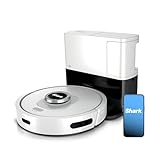
Scraping dried oatmeal off the floor with a paper towel is a special kind of hell. You know, the kind where you’re already late, coffee’s gone cold, and the little robot you paid good money for is just… sitting there, oblivious to the sticky brown disaster zone.
Honestly, I used to think these things were supposed to handle *everything*. Then I realized my Shark robot vacuum, while generally a champ at daily dust bunnies, has its limits. And knowing those limits is half the battle.
This isn’t about magic buttons or some secret software update. It’s about understanding what your Shark can actually do when you need it to tackle a specific mess, not just the general floor funk. Figuring out how to spot clean with Shark robot vacuum without it just smearing the problem everywhere took me a solid six months and a few spectacularly failed attempts.
Let’s be real: the manual glosses over the messy bits.
When a Quick Sweep Isn’t Enough
Sometimes, you don’t have time to wait for the full scheduled clean. Maybe the dog had an explosive moment, or the toddler decided the pasta sauce belonged on the entire kitchen floor. That’s when you need to think about spot cleaning. It’s different from just sending the robot to a specific room; it’s about telling it, “Hey, deal with *this* mess, right here, right now.”
For me, this became painfully clear after I spent around $150 on a fancy spray mop that promised to be the ‘ultimate spot cleaning solution’ for pet messes. Turns out, it just spread the pee smell further, and my Shark robot was left trying to clean up the *mop’s* mess. That’s when I decided to get serious about using the robot itself, the way it was actually designed.
The key is understanding your Shark model’s capabilities. Most newer models have a feature that allows you to select a specific area for cleaning. You’re essentially creating a tiny, targeted cleaning zone. It’s not just sending it to a room; it’s like pointing a laser pointer at the problem. The robot uses its sensors and mapping data to understand precisely where that ‘spot’ is and focuses its suction and brush roll power there. You’ll often see the bot doing a more intense, circular or rectangular pattern in that defined area, trying its best to lift whatever you’ve pointed it at.
Choosing the Right Spot, Avoiding the Wrong Mess
So, how do you actually *do* this spot cleaning? It boils down to how you tell your Shark what needs attention. For most Shark models with smart mapping, you’ll use the companion app. You’ll usually see an option like ‘Spot Clean’ or ‘Targeted Cleaning’. Tapping this brings up a map of your home. You then draw a box or a circle around the offending area. Think of it like drawing a target on the floor for your robot to aim for. This is a crucial step; simply telling it to go to a room when you have a sticky spill might just result in the robot running over it, smearing it further, and potentially clogging its brushes with something truly vile. (See Also: Should I Turning My Shark Robot Vacuum Off )
Frankly, I’ve seen people just hit the ‘clean’ button and hope for the best when a small mess appears. That’s a rookie mistake. The robot, bless its little algorithmic heart, doesn’t *see* the specific spill like you do. It just knows it’s supposed to be cleaning that general vicinity. If it’s a crumb or a bit of dry dirt, it’s fine. But a dollop of yogurt? That’s a recipe for a robotic smear campaign across your pristine floor.
The actual physical action is surprisingly simple once you’ve drawn your target. You confirm the area in the app, and the robot will navigate to it. You’ll hear its motors spin up a little higher, and the brushes might spin with more intensity. It’ll typically move in a concentrated pattern over the marked zone, going back and forth or in circles until it believes the job is done. The noise level during spot cleaning is often slightly higher than a regular clean because it’s working harder to suck up that localized debris. Visually, you’ll see it moving deliberately within that confined space.
What Not to Expect (and Why)
Everyone says these robots are meant to make life easier, and for daily maintenance, they absolutely do. But spot cleaning isn’t a magic wand for every single mess. For instance, if you have a large, wet spill – think an entire knocked-over carton of milk – your Shark robot vacuum isn’t designed to soak it up. It’s a vacuum, not a mop (though some have mopping attachments, and that’s a different beast entirely). Sending it into a liquid disaster area will likely just flood its intake, potentially damage the motor, and create a much larger, more complex cleaning job than you started with. My neighbor once tried to spot clean a spilled smoothie, and let’s just say his robot ended up looking like a Jackson Pollock painting and never worked the same again.
The official advice from Shark, and frankly, from my own hard-won experience, is to always tackle wet spills with towels or a mop first. Blot, don’t rub. Get as much of the liquid up as possible before you even *think* about sending the robot in. Dry debris is its bread and butter. Think spilled sugar, breadcrumbs, pet kibble, or that fine dust that settles in corners. For these types of messes, spot cleaning is perfect. For anything that requires absorption or heavy scrubbing, you’re still the primary cleaning crew.
It’s also worth noting that some very fine, sticky substances, like melted chocolate or dried glue, can be a real challenge even for spot cleaning. The robot’s brushes might just push it around or coat themselves in the goo. In these situations, you might need to pre-treat the spot with a cleaning solution and a cloth before the robot can effectively tackle the residue. You’re aiming for the robot to pick up what’s *loose*, not to dissolve what’s *stuck*.
Maintenance Is the Real Hero
Honestly, the best way to deal with those dreaded spot-cleaning emergencies is to prevent them from becoming emergencies in the first place. Keeping up with regular maintenance on your Shark robot vacuum is probably more important than knowing every single feature. This means emptying the dustbin after every couple of cleans, cleaning the brushes – especially if you have pets – and wiping down the sensors. A clogged brush roll or dirty sensors will make *any* cleaning attempt, spot or otherwise, far less effective. I noticed a huge difference in my robot’s ability to pick up small messes after I started spending an extra five minutes each week just cleaning the brush head. It looks like a tangled mess of hair and dust bunnies, but a quick snip with scissors and a wipe-down makes it perform like new. The whirring sound it makes changes too, becoming a more confident hum rather than a strained groan. The little side brushes need attention too; they can get tangled with threads and hairs, preventing them from sweeping debris into the main path.
Think of your robot’s maintenance like sharpening your knives in the kitchen. A dull knife is frustrating and dangerous. A poorly maintained robot is just… well, a sad, inefficient disc on your floor. The American Cleaning Institute recommends regular emptying of vacuum bins to maintain suction power, a principle that applies just as much to these little automatons. (See Also: Is It Best Robot Vacuum With Self Emptying Bin )
There’s also the filter. These get clogged with fine dust, and if you don’t clean or replace them, your robot’s suction power will plummet. You might think your robot is just getting old or your floors are dirtier than you thought, but really, it’s just struggling to breathe through a choked filter. A clean filter means more dust in the bin, less dust in the air, and a robot that actually sucks things up properly.
When to Call in the Cavalry (or Just a Towel)
Not every mess is created equal, and knowing when to let your Shark robot vacuum do its thing and when to grab a rag is key. For dry spills – think cereal, coffee grounds, pet hair, or stray craft supplies – the spot clean feature is fantastic. You define the area, and the robot will usually do a commendable job of sucking it all up. It focuses its efforts, making it more efficient than a general clean when you just need that one spot gone.
However, anything liquid, sticky, or greasy is a no-go for the robot itself. I learned this the hard way when my toddler decided to ‘paint’ the floor with yogurt. I thought, “Maybe the spot clean can handle this.” Big mistake. Huge. It smeared the yogurt into a thin, sticky film that took me 30 minutes to clean with a sponge and degreaser. The robot just spun its wheels, coated in white goo.
So, what constitutes ‘liquid, sticky, or greasy’? Spilled drinks (soda, juice, milk, water), sauces, melted butter, oil, paint, mud (unless it’s already dried and crumbly), food purees, and anything else that doesn’t immediately crumble or blow away. If you wouldn’t comfortably step on it barefoot without wincing, it’s probably best to handle it manually first. A damp cloth, paper towels, or a dedicated mop are your best friends here. Once the area is dry or mostly dry, *then* you can send your Shark robot in to pick up any lingering dry particles or dust.
What If My Shark Robot Vacuum Just Smears the Mess?
This usually happens when you try to spot clean a wet or sticky substance. The robot’s brushes and suction are designed for dry debris. If it smears, it means the liquid or sticky material is coating the brushes and floor, making it harder for the vacuum to actually pick anything up. Always blot up wet messes thoroughly with towels first, and let the area dry before spot cleaning with the robot.
Can I Spot Clean Pet Accidents with My Shark Robot Vacuum?
For *dried* pet accidents, yes, the spot clean feature can work well to pick up the residue. However, for fresh, wet pet accidents, it’s a firm no. You need to absorb as much liquid as possible with paper towels or absorbent pads first. Sending a robot over a fresh liquid mess will likely just spread it and create a much worse problem. Some higher-end models with mopping capabilities might handle it better, but standard vacuum-only robots are not equipped for liquid cleanup.
How Do I Tell My Shark Robot Vacuum to Clean a Specific Spot?
Most Shark robot vacuums with smart mapping capabilities allow you to do this through their companion mobile app. You’ll typically find a ‘Spot Clean’ or ‘Targeted Cleaning’ option on the map view. You then draw a rectangle or circle around the area you want it to clean. Confirm your selection, and the robot will navigate to and clean within that designated zone. (See Also: Is It Best Robot Vacuum For Cleaning Large Homes )
What Kind of Messes Is Spot Cleaning Best for?
Spot cleaning is ideal for localized dry debris like spilled cereal, crumbs, coffee grounds, pet hair that’s accumulated in one area, or dirt tracked in from outside. It’s a way to efficiently deal with small, contained messes without running a full cleaning cycle for your entire home.
Will My Shark Robot Vacuum Detect a Spill on Its Own?
No, your Shark robot vacuum will not inherently detect a liquid or sticky spill on its own and know to avoid it. It relies on its sensors for navigation and obstacle avoidance. If a spill is on the floor, it will attempt to drive over it like any other floor surface unless you specifically direct it elsewhere or use a virtual barrier in the app. Always pre-treat wet or sticky messes manually.
Final Thoughts
Look, figuring out how to spot clean with Shark robot vacuum isn’t rocket science, but it does require a bit of common sense you won’t always find in the manual. It’s about treating it like a tool in your arsenal, not a miracle worker.
Remember that yogurt incident? Yeah, don’t do that. Stick to dry messes, and if you absolutely must tackle something wet or sticky, do the bulk of the work yourself first. Your robot’s brushes will thank you, and so will your nose.
Keeping the machine clean itself—emptying the bin, clearing the brushes—is the unsung hero of effective spot cleaning. It’s the difference between a quick fix and a frustrating smear job.
So next time you see a small mess, don’t just hit ‘clean.’ Open the app, draw your target, and let your Shark robot vacuum do what it does best: tackle those localized dry spills. And if all else fails, a good old-fashioned paper towel and a bit of elbow grease still work wonders.
Recommended Products