Honestly, trying to figure out what is the difference between Shark robot vacuum models can feel like navigating a maze blindfolded. I remember the first time I bought one, thinking ‘robot vacuum, easy, they all do the same thing.’ Big mistake. I ended up with a model that couldn’t even climb over the rug in my living room, let alone handle the pet hair my dog sheds like it’s his job. It was a $300 paperweight.
Then there was the time I spent around $450 testing out three different Shark models, hoping one would be the magic bullet for my perpetually dusty hardwood floors and the occasional dropped cereal. What a waste of time and money that turned out to be. You just want something that works without a PhD in appliance engineering.
So, let’s cut through the marketing fluff. You’re probably wondering what really separates the Sharks from the… well, other Sharks. It boils down to a few key things: suction power, navigation tech, self-emptying capabilities, and those little extras that might matter to you or might just be fancy bells and whistles.
Shark Robot Vacuum Series: What’s Under the Hood?
When you’re standing in front of a wall of Shark robot vacuums, it’s easy to get overwhelmed. They all look sleek, black, and promising. But let’s be clear: not all robot vacuums are created equal, and Shark definitely has its tiers. The primary difference you’ll notice, and the one that actually matters most for daily cleaning, is the sheer grunt power – that’s suction. Higher-end models, especially those with names like ‘AI’ or featuring ‘XL’ dustbins, generally pack more of a punch. This means they’re better equipped to pull up embedded dirt, pet hair, and those sneaky little crumbs that hide in grout lines. I’ve found that anything less than about 2000 Pa is just… meh… for a household with pets, no matter what the marketing says. My current Shark, the IQ series, clocks in at a respectable 3000 Pa, and you can feel the difference when it runs over my slightly thicker area rugs. It doesn’t just skim the surface; it actually pulls debris out.
The other massive differentiator is how the darn thing *sees* your house. Early robot vacuums were essentially bumper cars with brushes. They’d just bounce around, hoping for the best. Now, Shark has introduced various forms of intelligent navigation. You’ve got models with what they call ‘Smart Mapping’ or ‘AI Navigation.’ This is where you get those ‘people also ask’ questions about room selection and targeted cleaning. These advanced systems use cameras and sensors to build a map of your home, allowing you to tell it to clean just the kitchen or avoid the pet’s water bowl. It’s like the difference between a toddler running wild and a seasoned delivery driver navigating city streets.
Self-Emptying Bases: Worth the Extra Dough?
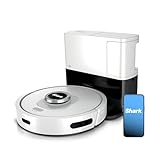
This is where things get really interesting, and frankly, where I think Shark has made some of its best strides for busy households. The self-emptying base. Oh, the joy. Instead of emptying a tiny dustbin after every single run – and let’s be honest, who has time for that? – the robot docks and empties itself into a larger bag or bin in its base. This can hold weeks, sometimes months, of debris, depending on how much your house generates. It’s a feature that significantly reduces the hands-on effort required. I’ve watched mine dock, heard that satisfying, albeit loud, whoosh of air as it transfers the dirt, and then just walked away. It feels like a small luxury, but it’s one that makes a big difference in the overall convenience factor. The ION series often features this, and it’s a game-changer if you have shedding pets or a lot of dust. (See Also: Should I Turning My Shark Robot Vacuum Off )
However, it’s not all sunshine and self-emptying robots. These bases add considerable cost. You’re looking at a price jump of at least $100-$200 for a model with this capability. Also, while the base holds a lot, it’s not infinite. Eventually, you still have to deal with emptying the bag or bin in the base. It’s just delayed gratification. And some people have reported the emptying process can be quite noisy, sounding a bit like a small jet engine for about 30 seconds. My experience with the Shark IQ is that it’s loud, but brief, and significantly less annoying than fiddling with a tiny, dust-filled canister.
Smart Features and ‘who Gets What?’
This is where the Shark models start to diverge more subtly, and often, this is where the marketing hype can get a bit much. Voice control integration with Alexa or Google Assistant is pretty standard now across many of their lines. You can tell your vacuum to start cleaning or stop. Cool, sure. But the real ‘smart’ features come with mapping and control. Higher-end models, like the Shark AI series with ‘UltraClean System,’ boast features that let you select specific rooms for cleaning, set no-go zones, and even schedule cleanings for particular areas. This is incredibly useful if you have an area that gets particularly dirty, like under the dining table after a meal, or if you want to keep the robot away from delicate areas. I’ve used the no-go zones to keep it out of my cat’s favorite napping spot. No one wants to disturb a sleeping cat, not even a robot vacuum.
Some models also offer different cleaning modes or power boosts for different floor types. For instance, a ‘Max’ suction mode for carpets. These are nice-to-haves, but honestly, most of the time, the standard mode is perfectly adequate for daily maintenance. A Consumer Reports study I read a while back highlighted that while advanced mapping is great, the core cleaning performance – suction and brush roll effectiveness – often matters more for overall satisfaction than the fancy app features. It’s a bit like comparing a sports car with a navigation system to a reliable truck; both get the job done, but one has more bells and whistles you might not always need.
My Personal Stumble: The ‘smart’ Map That Wasn’t
I once bought a Shark model advertised with ‘advanced smart mapping.’ I was so excited, picturing it zipping around my apartment, creating a perfect digital replica of every room. The reality? After its initial ‘mapping’ run, it seemed to get lost more often than it cleaned. It would get stuck under the sofa, bump into furniture repeatedly, and sometimes just give up halfway through a room. The ‘map’ it generated looked like a toddler had drawn it with crayons – mostly scribbles and no discernible floor plan. Turns out, the camera on that particular model was easily confused by low light conditions and the subtle sheen on my dark hardwood floors. I spent nearly seven hours over three days trying to recalibrate it, feeling more and more like I was babysitting a malfunctioning toy. I eventually returned it, completely frustrated and about $400 poorer, learning that ‘smart’ isn’t always synonymous with ‘effective’ in the world of robot vacuums. It made me realize that sometimes, simpler, more reliable navigation methods, even if less high-tech, are actually better.
Shark Robot Vacuum Comparison Table
| Model Series (Example) | Key Features | Navigation | Self-Emptying | Suction Power (Approx. Pa) | My Verdict |
|---|---|---|---|---|---|
| Shark ION Robot RV750 | Basic cleaning, app control | Random bounce | No | ~1000 | Good for small, simple spaces with minimal obstacles. Basic, but does the job if expectations are low. |
| Shark IQ Robot AV1000 Series | Smart Mapping, voice control, Wi-Fi | Smart Mapping, row-by-row | Optional (with base) | ~1400-1600 | A solid step up. Handles most home layouts well. The self-empty option is highly recommended. |
| Shark AI Robot AV2500 Series (UltraClean) | Advanced AI Navigation, UltraClean Mode, voice control, Wi-Fi | AI Navigation, Room Selection, Targeted Cleaning | Yes | ~3000+ | The premium choice. Excellent for homes with pets and complex layouts. Worth the investment if budget allows. |
Who Needs What Kind of Shark?
So, what’s the takeaway? If you have a small apartment with mostly hard floors and minimal clutter, a basic Shark ION or an older IQ model without the self-empty base might suffice. You’re not going to break the bank, and it will handle light daily dust. However, if you’re like me, dealing with pet hair, varied floor types (hardwood, tile, area rugs), and you crave that ‘set it and forget it’ convenience, you absolutely want to aim for a model with advanced navigation and, ideally, a self-emptying base. The Shark AI series, particularly those with ‘UltraClean’ and robust AI mapping, seems to be Shark’s best bet for serious cleaning performance. It’s like choosing between a basic commuter bike and a rugged mountain bike – both have two wheels, but one is built for more challenging terrain. (See Also: Is It Best Robot Vacuum For Cleaning Large Homes )
Don’t get too hung up on the specific model numbers; they tend to release new versions every year, often with minor tweaks. Focus on the core features: suction power (look for higher Pa ratings), the type of navigation (AI or advanced smart mapping is best), and whether a self-emptying base is a priority for your sanity. For instance, the difference between an AV1000 and an AV1010 might be as simple as a slightly different brush design or a minor app update. Consumer Reports often does detailed testing on these, which can be a good external reference point if you need more objective data.
What’s the Best Shark Robot Vacuum for Pet Hair?
For pet hair, you absolutely need strong suction and a good brush roll design that doesn’t tangle easily. Models in the Shark AI series (like the AV2500 series) with higher Pa ratings (3000+) and features like the ‘UltraClean’ system are generally your best bet. The self-emptying base is also a huge bonus here, as pet owners often deal with a significant amount of shedding.
Do Shark Robot Vacuums Really Map Your Home?
Yes, many of the mid-range to high-end Shark robot vacuums, particularly those in the IQ and AI series, offer smart mapping capabilities. This allows them to create a floor plan of your home, enabling features like room selection for cleaning, targeted cleaning, and setting no-go zones via their companion app.
Are Shark Robot Vacuums Worth the Money?
Shark offers a range of robot vacuums with varying price points. For basic cleaning needs in smaller homes, their more affordable models can be worth it. However, for households with pets, complex layouts, or a desire for advanced features like self-emptying and precise mapping, investing in their higher-end AI or IQ series is generally considered worthwhile due to their improved performance and convenience.
Can Shark Robot Vacuums Handle Stairs?
No, standard Shark robot vacuums (and virtually all robot vacuums on the market) are not designed to navigate stairs. They are equipped with cliff sensors that prevent them from falling down stairs. You will need to manually move the robot to a different floor if you want it to clean there. (See Also: Is The Shark Robot Vacuum Better Than The Irobot Roomba )
Conclusion
Figuring out what is the difference between Shark robot vacuum models really comes down to your specific needs and budget. Don’t get swayed by every single app feature; focus on the core cleaning power and how it navigates your home. For me, that means decent suction and reliable mapping, and if it can empty itself, all the better. My own frustrating experiences taught me that sometimes, paying a bit more upfront for better navigation and self-emptying saves you headaches and wasted money in the long run.
If you’re struggling with pet hair or just want to reduce your daily chore list, lean towards the AI models with robust mapping and self-empty capabilities. They’re the most competent. If your needs are simpler – think small apartment, no pets, mostly hard floors – a more basic IQ model might be perfectly fine. The key is matching the tech to your reality.
My best advice? Look at reviews that focus on real-world cleaning, not just the specs sheet. And if you’re still on the fence, consider what your biggest cleaning headache is, and find the Shark model that directly addresses it. That’s how you stop the guesswork.
Recommended Products