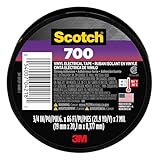
I once saw a fuse box that looked like it had been attacked by a rabid squirrel. Wires were exposed, connections were loose, and someone, in a moment of desperation or pure idiocy, had wrapped a bunch of them in black electrical tape. It was a disaster waiting to happen, and it got me thinking: can black electrical tape catch fire? It seems like the kind of thing you’d use to prevent fires, not start them.
But then again, it’s plastic. And plastic melts. And melts can lead to fires. So, what’s the real deal here? Let’s cut through the noise.
Why We Reach for the Black Roll (and When We Shouldn’t)
Look, we’ve all been there. A wire starts to fray, a connection feels a bit dodgy, or maybe you just need to keep two things from touching until you can do it the right way. Black electrical tape is the go-to for so many of us because it’s cheap, it’s readily available, and it feels… well, electrical. It’s got that rubbery texture, it stretches, and it sticks like a startled octopus.
My first encounter with needing a quick fix involved a garden hose that sprung a leak right before a big barbecue. I didn’t have any proper hose repair stuff, but I did have a roll of black electrical tape in my shed. I wrapped it on thick, thinking it would hold. It held for about ten minutes, then sprayed water all over my guests. Lesson learned the hard way: some fixes are more temporary than they feel.
The problem is, our brains associate ‘electrical tape’ with ‘electrical work’. This leads to a dangerous assumption that it’s somehow rated for, or even safe around, electrical current. And here’s the blunt truth: most standard black electrical tape is NOT designed to handle significant heat or direct electrical current over time. Its primary job is insulation, yes, but more for preventing shorts and minor shocks from incidental contact, not for being a permanent or high-load conductor protector.
Think about it. It’s made of PVC (polyvinyl chloride) and an adhesive. PVC is a plastic. When plastic gets hot enough, it melts. If it gets hot enough for long enough, it can combust. So, the simple answer to ‘can black electrical tape catch fire’ is a resounding ‘yes, under the right (or wrong) circumstances.’ The real question is what those circumstances are, and how likely you are to encounter them. For 99% of everyday, light-duty household fixes, it’ll probably be fine. But when you start pushing its limits, you’re playing with fire. Literally. And that’s not a game I’m willing to play, especially when my house is on the line.
The Science of Sticky: What’s Actually in Electrical Tape?
So, you grab a roll of black electrical tape. It feels like rubber, it stretches, and it sticks. What’s really going on in that little roll? It’s not magic, though sometimes it feels like it when you’re in a pinch. The main components are usually a flexible vinyl backing, which is PVC, and a pressure-sensitive adhesive. The PVC provides the primary insulation, and the adhesive keeps it stuck.
Now, the quality of that PVC and the adhesive can vary wildly. You’ve got your super cheap, no-name brands that feel a bit thin and sticky-gooey, and then you have the stuff from reputable brands like 3M or Scotch that feels more solid. The better quality tapes will generally have a higher dielectric strength, which is a fancy way of saying how much voltage they can withstand before breaking down. This is measured in volts per mil (a mil is one-thousandth of an inch).
For example, a good quality electrical tape might have a dielectric strength of around 10,000 volts. That sounds like a lot, right? And it is, for short-term insulation on wires that aren’t carrying a massive current or generating a lot of heat. But that’s just the voltage rating. It doesn’t tell you much about its heat resistance or its ability to withstand continuous current flow. Most standard electrical tapes are rated for temperatures up to about 176°F (80°C).
What happens when you exceed that? The PVC can start to soften, lose its adhesive properties, and become brittle. If it’s subjected to heat from a faulty connection, an overloaded circuit, or even direct sunlight in a hot car, it can degrade. And degraded plastic is far more likely to melt, smoke, and, yes, ignite. I once tried to tape up a frayed extension cord that was running near a sun-baked patio heater. Within an hour, the tape was warped, gooey, and I could smell that plasticky burning smell. Thankfully, it didn’t catch fire, but it was a stark reminder that this isn’t industrial-grade fire-retardant material. (See Also: Can I Use Electrical Tape To Connect Wires )
There are specialized tapes out there – like high-temperature vinyl tapes or even fiberglass tapes – that are designed for more demanding applications. But your average black electrical tape from the hardware store? It’s for light-duty, low-voltage, temporary fixes, not for permanently encasing a potentially hot wire. Thinking it can handle anything electrical is a pretty common, and dangerous, misconception. Always check the specs, if they’re even available for the cheap stuff you bought.
When Does Cheap Tape Become a Fire Hazard?
This is where things get dicey, and where people often get themselves into trouble. The allure of a quick, cheap fix is strong. You’ve got a wire that needs some covering, and a roll of black electrical tape is sitting right there. What could go wrong?
Well, a lot, if you’re not careful. The main culprit is heat. Electrical connections, especially if they’re not perfectly clean or tight, can generate heat. Overloaded circuits push too much current through wires, causing them to heat up. Components in appliances or electronics can overheat. If this heat is close to standard electrical tape, it can start to degrade. The plastic softens, the adhesive can melt, and the tape can start to ooze or even drip.
I had a friend whose toaster oven started acting up. The heating element wires were looking a bit sad, so he grabbed some black electrical tape and wrapped it around a couple of connections near the element. He figured it was just a bit of insulation. The next morning, he smelled smoke. The tape had melted and dripped onto the heating element, smoldering and creating a nasty plume of black smoke. The toaster oven was toast, and his kitchen smelled like burnt plastic for days. Thankfully, it didn’t ignite into a full-blown fire, but it was a close call.
Another common mistake is using it as a permanent fix. Electrical tape is meant to be a temporary solution. It’s not designed to withstand the long-term stresses of vibration, temperature fluctuations, or continuous electrical load. Over time, the adhesive can dry out, the plastic can become brittle, and the insulation properties diminish. This degradation makes it much more susceptible to failure, and failure in an electrical context often means heat, sparks, and fire.
So, when does it become a hazard? Anytime it’s used on a wire that is carrying significant current, is in close proximity to a heat source, or is intended to be a permanent fix. If the tape feels soft, sticky, or brittle, it’s already on its way out and could be a fire risk. It’s not about if it can catch fire, but rather under what conditions it’s most likely to. And those conditions are far more common than many people realize.
Real-World Use: Where Electrical Tape Actually Shines
Okay, I’ve been pretty down on the common uses of black electrical tape, but let’s be fair. It’s not entirely useless. There are legitimate, effective ways to use it that don’t involve playing fire roulette. The key is understanding its limitations and using it for what it’s actually good at.
For low-voltage applications, like around audio cables, speaker wire, or simple LED strip lighting, it’s perfectly fine. If a wire on your headphones starts to fray, wrapping it with a few layers of good quality electrical tape will likely stop it from getting worse and prevent a short. For organizing bundles of wires behind your TV or computer, it’s great. It keeps them tidy and prevents them from tangling.
I’ve used it to temporarily secure a loose wire on a bicycle brake cable, just to keep it from snagging. It held up fine for weeks until I could get it properly repaired. Another time, a small plastic clip on a car dashboard broke off, and I used electrical tape to hold it in place while I waited for a replacement part. It looked a bit janky, but it did the job and didn’t cause any issues. (See Also: Can Electrica Tape Catch On Fire )
Here’s a simple table of common uses and my verdict:
| Application | Verdict | Why |
|---|---|---|
| Bundling small, low-voltage wires (e.g., computer cables) | ✅ Good | Keeps things tidy, no significant heat or voltage risk. |
| Temporarily insulating frayed headphone or audio cables | ✅ Good | Low voltage, protects from further damage and minor shorts. |
| Securing loose non-electrical components (e.g., bike parts, plastic trim) | ✅ Good | As long as there’s no heat or electrical current involved. |
| Taping exposed wires in a fuse box or outlet | ❌ Bad | High voltage, risk of overheating, melting, and fire. Use proper connectors or insulation. |
| Repairing damaged appliance cords (e.g., toaster, lamp) | ❌ Bad | Cord carries significant current, risk of heat buildup and fire. Replace cord. |
| Taping wires near a heat source (e.g., engine bay, heater) | ❌ Bad | Tape will degrade, melt, and can ignite. Use high-temp rated materials. |
The takeaway here is that electrical tape excels at light-duty tasks where there’s minimal heat and low voltage. Think of it as a sophisticated band-aid for wires, not a cast. When you’re dealing with anything that carries more than a trickle of power or gets even slightly warm, you need to look at proper connectors, heat-shrink tubing, or even replacing the damaged component entirely.
Common Mistakes and How to Avoid Them
Let’s be blunt: the biggest mistake people make with black electrical tape is assuming it’s a universal fix for all electrical problems. It’s not. It’s a specialized tool, and like any tool, using it incorrectly can lead to disaster. I’ve seen enough shoddy DIY jobs to fill a small landfill, and electrical tape is often a star player in those sad sagas.
One of the most frequent errors is using it as a permanent insulation for damaged appliance cords. That cord on your toaster, blender, or lamp? It’s designed to handle a specific amount of current and heat. If it gets nicked or frayed, wrapping it with electrical tape might seem like a quick save. But that tape isn’t designed for the continuous flexing, heat, and potential abrasion that a power cord endures. The adhesive can break down, the plastic can degrade, and you’re left with a potentially live wire exposed, with only melting plastic between it and your carpet. The right thing to do is replace the cord, or the appliance if the cord is integrated.
Another trap is using it in hot environments. We touched on this, but it bears repeating. Cars in the summer, attics, areas near engines or furnaces – these places get hot. Standard electrical tape will warp, lose its stickiness, and become a gooey mess. If it gets hot enough, it can actually ignite. For high-heat applications, you need specialized tape like high-temperature vinyl tape or even fiberglass tape. Don’t skimp here.
People also tend to over-rely on it for any loose connection. If you have a wire nut that feels loose, or a terminal that’s slightly wobbly, wrapping it with electrical tape is NOT the solution. It’s like trying to fix a leaky faucet by wrapping it in cling film. You need to properly secure the connection with the right hardware – be it a new wire nut, tightening a screw terminal, or using crimp connectors. Electrical tape can’t magically create a good electrical connection; it can only cover an existing one.
Finally, there’s the “more is better” fallacy. Some folks will wrap a wire so thickly in electrical tape that it looks like a marshmallow. While you might think this adds extra insulation, it can actually trap heat. A thick layer of tape can prevent heat from dissipating, potentially causing the wire underneath to get hotter than it would with a single, properly applied layer. This can accelerate the tape’s degradation and increase the risk of failure. Remember, a good wrap should be snug and overlap itself, but it doesn’t need to be a half-inch thick monster.
The Unpopular Opinion: When to Just Say No
Here’s the contrarian take. Everyone says, “Oh, electrical tape is great for quick fixes!” And yeah, sometimes it is. But I think we, as a society, have glorified electrical tape into being some kind of magical electrical band-aid for everything. It’s not. It’s a specific tool for a specific, low-demand job.
My unpopular opinion is that for anything beyond bundling wires or a super temporary fix on a headphone cord, you should probably find a better solution. Everyone’s used it to wrap a frayed extension cord or a loose wire in their car, and most of the time, nothing bad happens. But that’s pure luck, not good practice. The odds are in their favor, until they’re not. And when they’re not, you’re looking at melted plastic, smoke, and potentially a fire. Is saving a few bucks on a proper connector or a new cord worth that risk? (See Also: Can I Substitute Duct Tape For Electrical Tape )
I remember a guy on a forum bragging about how he used electrical tape to fix a dodgy connection on his lawnmower’s starter motor. He said it worked great for months. A week later, he posted asking for advice on how to put out a fire in his shed. Coincidence? I doubt it. The heat and vibration in that environment would have been hell for standard electrical tape.
The common advice is often “use electrical tape.” I disagree. The common advice should be “use the right tool for the job.” That might sometimes be electrical tape, but more often than not, it’s heat-shrink tubing, proper crimp connectors, wire nuts, or even replacing the entire component. Electrical tape is cheap, but the cost of a house fire is immeasurable. So, while I keep a roll in my toolbox for genuine emergencies, I’m incredibly hesitant to use it for anything that could realistically become a hazard. It’s better to be safe than sorry, and with electrical tape, the ‘sorry’ can be pretty damn destructive.
Faq: Your Burning Questions Answered
Can Black Electrical Tape Melt?
Yes, absolutely. Black electrical tape is typically made from PVC, which is a type of plastic. Like most plastics, it has a melting point. If it’s exposed to sufficient heat, either from ambient temperature or from an electrical current, it will soften, melt, and can eventually become gooey or drip.
Is Black Electrical Tape Waterproof?
Most standard black electrical tapes offer a degree of water resistance, which is helpful for insulating connections from moisture. However, they are not fully waterproof. Prolonged submersion or exposure to high-pressure water can eventually compromise the adhesive and the tape’s integrity, allowing moisture to penetrate.
How Much Heat Can Electrical Tape Withstand?
Standard black electrical tapes are generally rated for temperatures up to around 176°F (80°C). Exceeding this temperature can cause the PVC to degrade, soften, and lose its adhesive properties. Some specialized electrical tapes are designed for higher temperatures, but your everyday roll is not suited for hot environments.
Can Electrical Tape Short Circuit?
If electrical tape is damaged, degraded, or applied incorrectly, it can potentially lead to a short circuit. For instance, if the insulation breaks down due to heat or age, the exposed wires could touch, causing a short. Also, if the adhesive fails and the tape unravels, it can expose conductors that shouldn’t be touching.
Is It Safe to Use Electrical Tape on Appliance Cords?
No, it is generally not safe to use standard black electrical tape as a permanent repair for damaged appliance cords. Appliance cords carry significant current and can generate heat. Electrical tape is not designed for this level of stress and can degrade, melt, or fail, leading to potential electrical hazards like shocks or fires. It’s best to replace the damaged cord or the appliance.
Conclusion
So, can black electrical tape catch fire? The short, blunt answer is yes. It’s a plastic, and plastics can burn. While it’s designed for electrical insulation in low-voltage, low-heat scenarios, it’s not a magic bullet for all wiring woes. Pushing it beyond its intended use, especially near heat sources or on high-current lines, is asking for trouble.
My advice? Treat that roll of black tape like a very specific, very temporary bandage. Use it for what it’s good at – tidying wires, offering a bit of extra insulation on audio cables, or for a quick fix that you’ll replace with something proper ASAP. Don’t rely on it for important repairs, especially on anything that gets warm or carries a decent amount of juice.
If you’re ever in doubt about a wiring situation, or if a cord looks frayed, assume the worst and get it fixed correctly. Your wallet might take a hit now, but it’s a lot cheaper than dealing with a fire later. Always opt for the right tool, not just the easiest one.