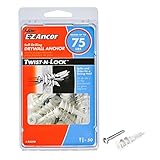
You’re staring at a wall, a pile of plastic anchors, and a drill. You’ve got that shelf, that bracket, that thing you need to hang. Then you notice it – the plastic anchors come in different colors. Red, blue, yellow, white. What gives? Are the color codes for plastic concrete anchors universal? I remember the first time I ran into this, staring at a hardware store bin overflowing with them. I just grabbed a handful of red ones, figuring they were all the same, and spent the next hour picking them out of the drywall after my shelf came crashing down.
It’s enough to make you question everything you thought you knew about DIY. Do these colors mean something, or are they just there to make the bins look prettier? Let’s cut through the noise.
The Truth About Anchor Colors: More Than Just Pretty
Look, if you’re asking if are the color codes for plastic concrete anchors universal, the short answer is a resounding NO. Anyone who tells you otherwise is either misinformed or trying to sell you something. These colors are not some international standard dictating load capacity or material type. They are, for the most part, manufacturer-specific identifiers. Think of it like car manufacturers using different colors for their logos – they look different, but the color itself doesn’t magically make the car go faster or slower.
I’ve wasted plenty of time and money on this exact issue. I bought a big box of what I thought were heavy-duty anchors because they were a nice, sturdy-looking grey. Turns out, that was just the brand’s ‘signature’ color for their standard anchor. They were useless for the concrete block wall I was trying to secure a heavy cabinet to. The cabinet is still sitting on the floor, by the way. The most frustrating part is that sometimes, within the same brand, different colors can indicate different sizes or load ratings, but this is entirely at their discretion. It’s not a system you can rely on across different brands. You have to read the damn package, every single time.
The real indicators of an anchor’s strength and application aren’t in the color, but in the engineering and the accompanying information. You’re looking at the physical dimensions – the length and diameter – and, more importantly, the manufacturer’s recommended load limits for specific materials like drywall, concrete, brick, or plaster. These are usually printed right on the packaging or in the product’s technical data sheet. Ignoring this and relying on color is like guessing your tire pressure based on how black the rubber looks.
For example, a common scenario is seeing ‘red’ anchors and ‘blue’ anchors from the same company. Often, the red ones are for lighter-duty applications, maybe hanging a small picture frame in drywall. The blue ones might be designed for slightly heavier loads or a different substrate. But again, this is brand-specific. Another brand might use green for light-duty and orange for heavy-duty, or they might just use one color for everything and rely entirely on printed specifications. It’s a mess, and it forces you to be a detective with every purchase.
The confusion is understandable, though. When you’re standing there, needing to get a job done, and you see a bin of anchors that look identical except for their color, your brain defaults to looking for patterns.
It’s human nature to seek order. But in the world of plastic concrete anchors, that order isn’t baked into the color. It’s buried in the fine print. My first real lesson in this came when I tried to hang a rather substantial mirror in my hallway.
I grabbed what I thought were beefy yellow anchors. They looked and felt solid. Within a week, the mirror was listing like the Titanic. The ‘beefy’ yellow anchors were, in fact, designed for plaster walls, not the hollow-core door I’d mistakenly drilled into.
Lesson learned the hard way: color is a distraction, not a specification.
What to Actually Look for (besides the Rainbow)
Forget the colors. Seriously. They’re a red herring, a visual distraction from what truly matters. When you’re standing in the aisle, trying to figure out which plastic anchor is going to hold your stuff without a spectacular failure, you need to focus on three things: the material you’re drilling into, the weight of the object you’re hanging, and the anchor’s physical characteristics and specifications. These are the real soldiers in the fight against gravity.
First, the substrate. Are you drilling into drywall? That crumbly stuff needs a different kind of anchor than solid concrete, brick, or plaster. Drywall anchors are often designed to spread out behind the wall, like a butterfly or a toggle. (See Also: Can Concrete Anchors Be Used In Brick )
Concrete anchors, on the other hand, are usually designed to expand and wedge themselves into the drilled hole. You can’t just use any anchor in any material and expect it to hold. I once tried to use a standard plastic anchor in a concrete garage floor to mount a workbench.
It looked fine initially, but any significant load and it just spun loose. I ended up having to drill out the hole and use a proper concrete wedge anchor. That was a few hours of work I’ll never get back.
Second, weight. How much does the item you’re hanging weigh, and what’s its distribution? A light picture frame is one thing; a heavy TV mount or a loaded bookshelf is another. Manufacturers usually provide a ‘shear’ and ‘tension’ load rating. Shear is when the weight pulls down, and tension is when it pulls away from the wall. You need to make sure your anchor’s rating is well above the actual weight of your item. It’s always better to overkill than to underestimate. I tend to add a safety margin of at least 50% to the anchor’s stated capacity, especially if it’s a load that could cause damage or injury if it falls.
Third, the anchor itself. Look at its dimensions. Is it long enough to get a good grip in the substrate? Is it wide enough to provide sufficient surface area? Most importantly, read the packaging. It will tell you the recommended drill bit size (this is HUGE – use the right size bit!), the material it’s designed for, and its load capacity. Some anchors are designed for specific purposes, like hollow walls or masonry. Others are general-purpose. If a package doesn’t clearly state its intended use and load rating, I wouldn’t trust it for anything important.
| Anchor Feature | What to Look For | Why It Matters | Verdict (My Opinion) |
|---|---|---|---|
| Color | Anything (it’s a distraction) | Nothing reliable | Ignore it. Seriously. It’s the least useful spec. |
| Material Suitability | Clearly stated: Drywall, Concrete, Brick, Plaster, etc. | Makes sure anchor grips properly and doesn’t fail. | Important. Get this wrong, and you’re doing it again. |
| Dimensions (Length/Diameter) | Adequate for substrate depth and load. | Determines holding power and stability. | Longer and wider often means better grip, but check specs. |
| Load Rating (Shear/Tension) | Exceeds item weight by a good margin. | Prevents the anchor from pulling out or breaking. | The most important number. Don’t be cheap here. |
| Drill Bit Size | Precisely the size recommended. | Too small = won’t fit. Too large = loose hole. | A must. Get this right. |
Common Mistakes That Lead to Disaster
You’d think hanging something on a wall would be straightforward, but I’ve seen and done enough wrong things to fill a book. The biggest mistake, hands down, is the belief that color codes for plastic concrete anchors are universal or even mean anything consistently. This is where people, myself included early on, get burned. You see a colorful bin, grab what looks right, and assume it’ll work. When it doesn’t, you blame the product, the wall, or your luck, instead of your own flawed assumption.
Another massive blunder is not using the correct drill bit size. The packaging will specify it – usually in millimeters or fractions of an inch.
Using a bit that’s too small means you can’t get the anchor in without forcing it, potentially cracking the wall material or damaging the anchor itself. Using a bit that’s too large is even worse; the anchor will be loose in the hole, and no amount of tightening will make it secure. I learned this the hard way when mounting a heavy mirror. The instructions said a 6mm bit.
I grabbed what I thought was close enough, probably a 1/4 inch (which is larger). The anchor went in easy, but the mirror ended up tilted. Took it all down, re-drilled with the correct bit, and it held perfectly. That 2mm difference was everything.
Forcing anchors is another classic error. If an anchor isn’t going in smoothly, don’t just whale on it with a hammer. Something is wrong. Either the hole isn’t the right size, the material is too hard, or you’re trying to use the wrong anchor for the job. Forcing it can damage the anchor, strip the threads in a toggle bolt, or even compromise the structural integrity of your wall. Sometimes, a gentle tap is needed to get it seated, but significant force is a warning sign.
People also frequently overestimate the strength of plastic anchors, especially in older or softer materials. A plastic anchor is great for lightweight tasks like hanging a small clock or a lightweight shelf.
For anything substantial – a TV, heavy cabinets, or anything that could cause injury if it fell – you should be looking at more solid options like sleeve anchors, wedge anchors, or toggle bolts, depending on the substrate. Relying on a small plastic anchor for a 50-pound TV is just asking for trouble. I had a buddy who tried to mount a large soundbar using what he called ‘those plastic plugs.’ (See Also: Can Cords Be Used To Make Anchors Climbing )
It lasted about three weeks before one side gave out, and the soundbar ended up dangling by one screw.
Finally, not considering the material’s condition is a big mistake. Is the drywall damaged or crumbly around the area you want to drill? Is the concrete chipped or actively deteriorating? These conditions will significantly reduce the holding power of any anchor. You might need to use a larger anchor, a different type, or even repair the substrate first. I’ve seen people try to anchor into plaster that’s practically falling off the lath behind it. It’s a recipe for disaster, no matter what color anchor you choose.
Real-World Use: When Colors might Hint (but Don’t Rely on It)
Okay, so I’ve beaten the ‘colors don’t matter’ drum pretty hard. But let’s be honest, sometimes you’re in a bind, and you see a sea of anchors, and maybe, just maybe, the colors offer a slight hint if you’re absolutely desperate and have no other information. This is where my lived-in experience comes in, but I’ll preface this by saying do not rely on this as your primary method. It’s a last resort, a whisper of a clue, not a spec sheet.
In many common DIY anchor lines, you’ll see a recurring pattern, though it’s far from universal. Red, yellow, and blue are frequently used. Often, red is associated with lighter-duty anchors, suitable for drywall or lighter loads. These are usually smaller, more basic expansion anchors. I’ve used red ones for hanging small, lightweight decorative items or cable management clips. They feel flimsy, and that’s because they are. They’re for tasks where failure isn’t a big deal.
Yellow anchors are sometimes positioned as medium-duty. They might be a bit longer, a bit thicker, and designed for slightly heavier items or more solid materials like plaster or softer concrete. I’ve used yellow anchors for mounting lightweight shelving or electrical boxes. They feel sturdier than the red ones, but I’d still hesitate to put anything truly heavy on them without seeing the manufacturer’s specs.
Blue anchors, in many brands, are often designated for heavier-duty applications. They might be longer, wider, or feature a more solid expansion mechanism. These might be suitable for things like wall-mounted coat racks or slightly heavier fixtures in brick or concrete. I tend to be more trusting of blue anchors if the packaging confirms their rating, but again, color alone isn’t enough.
Then you have white or sometimes grey anchors. These can be anything. Sometimes they are standard, general-purpose anchors. Other times, they might be specific types, like friction anchors or anchors for very specific applications. I had a box of white anchors once that were incredibly solid, clearly meant for concrete, and they held a significant load. The next box of white anchors I bought were tiny, flimsy things for drywall. See the problem? It’s a gamble.
The key takeaway here is that if you must use color as a rudimentary guide, understand it’s a weak signal. Always, always, always look for the printed specifications on the packaging. Check the material it’s designed for, the recommended drill bit size, and the load capacity. If the packaging is missing, torn, or unclear, put the anchor back and find a different one. I’ve learned that the few cents you might save by guessing based on color are dwarfed by the cost of repair, replacement, or just plain frustration when your anchor fails. The manufacturers are legally required to provide this information; they’re just making it harder to find sometimes with these color schemes.
When to Ditch Plastic for Something Tougher
Plastic anchors, those colorful little doodads, are fantastic for what they are: cheap, easy-to-use fasteners for light-duty applications. But there’s a point where their limitations become glaringly obvious, and you absolutely need to step up your game. If you’re hanging anything that weighs more than a few pounds, or if the item falling could cause significant damage or injury, plastic anchors are probably not your best bet. This is where the real satisfaction of a solid installation comes from – knowing it’s not going to budge.
Let’s talk about weight. While some larger plastic anchors might claim to hold 50 pounds or more in ideal conditions, I’m skeptical. For anything consistently carrying that kind of load, or anything that experiences vibration or dynamic stress, I reach for metal anchors. Sleeve anchors are a go-to for concrete or brick when you need something solid and reliable. You drill a hole, insert the sleeve anchor, and tighten a nut, which pulls a threaded bolt through the sleeve, expanding it tightly against the hole. They provide a very secure hold.
Wedge anchors are another excellent choice for concrete and solid masonry. These are one-piece units with a threaded stud and an expansion clip. As you tighten the nut, the clip is forced down the stud, expanding it firmly within the drilled hole. They’re incredibly strong and are often used for structural attachments like mounting ledger boards for decks or securing heavy machinery. I used wedge anchors to mount a massive, custom-built workbench in my garage, and it’s as solid as the foundation itself. No amount of hammering or leaning has even threatened to loosen it. (See Also: Can Anchors In Your Shoulder Break )
For hollow walls like drywall or hollow-core concrete blocks, if you need more than a plastic anchor can provide, toggle bolts are the king. They have two ‘wings’ that fold down to pass through the drilled hole and then spring open behind the wall, creating a wide bearing surface. You can get heavy-duty toggle bolts that can support hundreds of pounds. The only downside is they require a larger hole and can be a bit fiddly to install, but the holding power is immense. I’ve used them to mount heavy antique cabinets on plaster walls, and they’ve held beautifully for years.
What about specific situations? If you’re mounting a TV to a wall, especially a large flat-screen, you need a dedicated TV mount designed for that purpose, and it will almost certainly require heavy-duty lag bolts or specialized mounting hardware that goes into the wall studs (for drywall) or uses solid concrete anchors (for masonry). Don’t even think about using plastic anchors for a TV mount. The risk of it falling and destroying your expensive television (not to mention causing injury) is far too high.
Another area where plastic anchors fail is in applications with constant vibration or potential for movement. Think about mounting a heavy piece of equipment that runs, like a compressor or a large fan. The vibrations can gradually loosen plastic anchors over time. For these applications, you want something that mechanically locks into the substrate, like a wedge anchor or a solid sleeve anchor. When in doubt, always err on the side of caution and choose a fastener rated for significantly more than you think you’ll need. It’s a small price to pay for peace of mind and structural integrity.
Faq: Your Burning Questions About Plastic Anchors Answered
Can I Use Plastic Anchors in Brick?
You can, but it’s generally not recommended for anything heavier than a very light item. Brick can be porous and brittle. Standard plastic anchors might not expand properly or could crumble the brick. For brick, it’s far better to use anchors specifically designed for masonry, like sleeve anchors or lag shields, which provide a more secure and durable hold.
Do Different Colors of Plastic Anchors Mean Different Sizes?
Not reliably. While some manufacturers might use color to differentiate sizes within their own product line, there is no universal standard. A red anchor from one brand could be the same size as a blue anchor from another, or they could be completely different. Always check the dimensions and specifications printed on the packaging, not just the color.
What Is the Strongest Type of Plastic Anchor?
The “strongest” plastic anchor depends heavily on the substrate and the specific design. Anchors that spread out behind hollow walls (like toggle bolts or some toggle-style plastic anchors) can offer high load capacities for drywall. For solid walls, a longer, wider expansion anchor designed for concrete or masonry might be considered stronger. However, for true heavy-duty applications, metal anchors like wedge anchors or sleeve anchors will always outperform plastic ones.
How Do I Know What Size Drill Bit to Use for a Plastic Anchor?
The correct drill bit size is almost always specified on the anchor’s packaging. It’s important to use the exact size recommended. Using a bit that is too small will make it difficult or impossible to insert the anchor, and using one that is too large will result in a hole that is too big, leading to a loose anchor and a failed installation. Always check the packaging.
Can I Reuse Plastic Anchors?
It’s generally not recommended. When a plastic anchor is installed, it expands and often deforms to grip the material. Trying to remove and reuse it means it may not seat properly or provide the same holding power. For important applications, always use a new anchor. For very light-duty, non-important items, you might get away with it once, but it’s a gamble.
Verdict
So, to circle back to the big question: are the color codes for plastic concrete anchors universal? No. They’re a visual cue that’s entirely dependent on the manufacturer, and often, a distraction from the real specs you need to check. My advice? Forget the colors exist. Focus on the substrate, the weight, and the printed load ratings. It’s the only way to guarantee your shelf doesn’t end up on the floor.
If you’re dealing with anything substantial, or anything that could cause harm if it fails, don’t hesitate to step up to metal anchors. The extra effort and cost are well worth the peace of mind. I learned that lesson a long time ago, and I’m still occasionally reminding myself of it.
Next time you’re at the hardware store, take a moment to read those tiny numbers on the packaging. Your future self, and whatever you’re hanging, will thank you.