I stood there, staring at the mounting bracket for my new shelving unit. The instructions clearly said ‘use the provided anchors.’ The problem was, the wall felt… well, like actual rock behind the thin plaster. My first thought was, ‘These plastic doohickies must work in anything, right?’ Spoiler alert: they absolutely do not. So, let’s get this straight: are concrete anchors the same as drywall anchors? The short answer is a resounding hell no, and thinking they are is how you end up with your prized possessions on the floor.
I’ve been there. I’ve bought the wrong anchors, I’ve hammered the wrong anchors, and I’ve watched in horror as the wrong anchors failed spectacularly. It’s not about being a DIY expert; it’s about knowing what holds up what, and why. This isn’t some abstract concept; it’s the difference between a securely mounted shelf and a trip to the emergency room.
Why You Can’t Just Jam Any Anchor in Any Wall
Look, the world of fasteners can seem like a confusing mess of plastic, metal, and jargon. But the fundamental difference between anchoring something to drywall versus concrete isn’t subtle; it’s a chasm. Drywall is basically compressed gypsum powder sandwiched between paper. It’s brittle, it’s hollow behind the face, and it crumbles if you look at it too sternly. Concrete, on the other hand, is… well, concrete. It’s dense, hard, and can take a serious beating. Trying to use a drywall anchor in concrete is like trying to hammer a thumbtack into a brick wall – it’s just not going to do anything but leave you frustrated and with a damaged wall.
I remember this one time, I was trying to hang a heavy mirror in my hallway. The wall looked like solid plaster, and I figured the little expanding plastic anchors that came with the mirror would be fine. I twisted them in, felt a bit of resistance, and thought, ‘Great, solid!’ I hung the mirror, stepped back to admire my work, and about five minutes later, I heard this sickening crunch followed by a loud thud.
The mirror had ripped right out of the plaster. Turns out, it was old plaster over lath, and the ‘solid’ feel was just the lath. The plastic anchor did absolutely nothing to grip the lath or the plaster.
It was a mess, and I was lucky the mirror didn’t shatter and injure anyone. That’s when I learned the hard way that wall composition is king.
The common advice you’ll hear is to ‘just get the right anchor for your wall type.’ That sounds simple, but when you’re staring at a wall, how do you know what type it is? Most people just see ‘wall.’ The reality is, the interior surface you see might just be the tip of the iceberg. Is it drywall? Is it plaster and lath? Is it a solid brick wall? Or is it concrete block, or poured concrete? Each material requires a completely different anchoring strategy. Trying to use a drywall anchor in concrete is the equivalent of wearing flip-flops to go ice climbing. It’s fundamentally the wrong tool for the job, and it’s dangerous.
Let’s talk about what these anchors are actually designed to do. Drywall anchors work by expanding behind the drywall, creating a larger surface area for the screw to grip onto in the hollow space. Think of them like a little parachute opening up behind your wall. Concrete anchors, conversely, are designed to be driven into a pre-drilled hole in solid, dense material. They either expand mechanically against the sides of the hole, or they rely on a chemical bond (like epoxy anchors) to hold fast. There’s no hollow space to exploit in concrete; you’re fighting against the sheer strength of the material itself. So, no, they are not the same. Not even close.
People Also Ask: Can I Use a Concrete Anchor in Drywall?
Generally, no, you should not use a concrete anchor in drywall. Concrete anchors are designed for dense, solid materials like concrete or brick. If you were to drill a hole in drywall and try to insert a concrete anchor, it would likely just crumble the drywall around the hole, offering no secure grip. Some very small concrete anchors might physically fit into a hole made for them, but they aren’t designed to grip drywall and will fail under even minimal load, potentially causing damage and a falling object.
The Drywall Deception: How Those Little Plastic Guys Work (and Don’t)
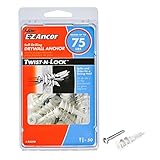
So, you’ve got your standard plastic expansion anchors. You know, the ones that come in a little plastic bag with almost every piece of flat-pack furniture or wall-mounted doodad. They’re cheap, they’re everywhere, and they’re the source of a lot of DIY frustration. These are your quintessential drywall anchors.
Their whole schtick is that they exploit the hollow space behind the drywall. You drill a hole – usually a specific size dictated by the anchor – then you hammer or screw the anchor into that hole.
As you drive the screw in, the plastic body of the anchor flares out or expands on the back side of the drywall. This creates a wide surface area that presses against the backside of the wallboard, preventing the screw from pulling through.
There are a few main types of these plastic wonders. The most basic is the ‘butterfly’ or ‘molly bolt’ style, which has wings that spring open behind the wall.
Then you have the ribbed ones that just expand as you screw them in. Some are designed to be hammered in, others to be screwed in. Each has its own way of creating that friction and surface area on the unseen side of your wall. The key is that they need that void. (See Also: Can Concrete Anchors Be Used In Brick )
If you’re drilling into a stud (the wooden or metal frame behind the drywall), you don’t need an anchor at all; you screw directly into the stud. If you’re drilling into solid plaster over lath, you might get some minimal grip from the plaster itself, but the lath is often the only thing providing any real backing, and the plastic anchor won’t engage it effectively.
This is where the confusion often starts. People see a wall, they drill a hole, they insert an anchor, and they screw something in.
The feel of resistance when you first put the anchor in can be deceiving. You feel it bite into the drywall, and you think, ‘Yep, that’s in there.’ But that initial bite is often just the anchor deforming the relatively soft drywall.
The real strength comes from what happens behind it. And if there’s no void, or if the material behind it is too crumbly or too solid, the anchor’s expansion mechanism is useless. I once tried to hang a very lightweight decorative shelf, and the wall was a weird, crumbly plaster with no lath behind it in that spot. The plastic anchor just spun and spun, never biting, never expanding properly.
It was like trying to get a grip on powdered sugar.
The weight limit on these things is also wildly optimistic. Manufacturers will give you a number – ‘holds up to 20 lbs!’ – but that’s usually under ideal conditions, with a brand-new, perfectly installed anchor in pristine drywall, and often for sheer downward pull. If there’s any sideways force, vibration, or if the drywall is old or damaged, that number plummets. I would never trust a standard plastic anchor for anything I can’t afford to have fall on my head, or my pet, or my expensive electronics. Think of them for things like small picture frames, lightweight curtains, or things you’re not terribly worried about.
People Also Ask: What Is the Strongest Type of Drywall Anchor?
The strongest types of drywall anchors are typically self-drilling anchors (often metal, some plastic variants exist) and toggle bolts. Self-drilling anchors screw directly into the drywall, creating their own threads and offering better holding power than basic expansion anchors. Toggle bolts have a spring-loaded wing that opens up behind the drywall, distributing the weight over a larger area and providing significantly higher weight capacities, though they require a larger hole and are more complex to install.
The Concrete Conquest: What Makes Those Heavy-Duty Anchors Different
Now, let’s talk about the other side of the coin: concrete anchors. These are the heavy hitters. They’re designed for walls that are literally made of stone, or a man-made equivalent. When you’re dealing with concrete, brick, or cinder block, you’re not looking for a hollow space to expand into. You’re looking for a way to physically embed yourself into a solid, unyielding material. This usually involves drilling a precisely sized hole (often with a hammer drill for efficiency) and then inserting the anchor, which then grips the material through mechanical force or chemical adhesion.
The most common types you’ll encounter for DIY projects are expansion anchors and wedge anchors. Expansion anchors for concrete are similar in principle to some drywall ones, but they are far more solid. You drill a hole, insert the anchor body, and then drive a bolt into it. The bolt expands a sleeve or nut at the end of the anchor, forcing it outward against the sides of the drilled hole. This creates a very strong mechanical lock. Wedge anchors are similar but typically consist of a bolt threaded through a wedge-shaped piece of metal. As you tighten the nut on the bolt, the wedge is pulled up, expanding and jamming itself into the concrete.
Then there are screw anchors, often called concrete screws or concrete thread screws. These are fantastic for many applications because they don’t require a separate bolt. You drill a pilot hole, and then you just screw the specialized threaded fastener directly into the concrete. The threads bite into the material, creating a strong hold. These are often my go-to for mounting brackets, conduit, or anything that doesn’t need a thick bolt sticking out.
The absolute workhorses, though, are epoxy or chemical anchors. These are for when you need serious, serious holding power, like for attaching structural elements or heavy machinery. You drill a hole, clean it out meticulously, and then inject a two-part epoxy resin into the hole. Then you insert a threaded rod or anchor bolt. The epoxy cures, creating a solid, monolithic bond between the anchor and the concrete. It’s like the anchor becomes part of the wall. These are overkill for most home projects but are the gold standard for demanding applications.
The key difference across the board is that concrete anchors rely on the inherent strength of the material they’re going into. They don’t need a void; they need dense, solid resistance. The hole you drill is important – too small and you can’t get the anchor in, too big and it won’t have enough material to grip. This is why you’ll often see specific drill bit sizes recommended for concrete anchors. They’re not just placeholders; they’re integral to the anchoring system’s success. And let me tell you, trying to drill into concrete without a hammer drill feels like trying to carve granite with a butter knife. It’s a whole different ballgame from a standard drill bit on drywall.
People Also Ask: Can I Use a Concrete Anchor in Brick?
Yes, many concrete anchors can be used in brick, especially solid brick. The principle is the same: you need to drill a hole into the dense material. However, porous or hollow bricks might behave differently, so it’s always best to check the anchor manufacturer’s specifications for suitability on brick. For very heavy loads or uncertain brick conditions, a chemical anchor is often a very secure choice. (See Also: Can Cords Be Used To Make Anchors Climbing )
When Worlds Collide (and Why They Shouldn’t): Misconceptions and Mistakes
The biggest misconception is that a wall is just a wall. People see a flat surface and assume the anchoring method is universal. This leads to the classic mistake: using drywall anchors where they absolutely don’t belong. I’ve seen people try to hang heavy shelves on cinder block walls with plastic anchors, or mount TVs on brick with flimsy toggle bolts meant for hollow walls. It’s a recipe for disaster. The anchor might go in, it might even feel somewhat secure for a short time, but the fundamental physics of how it’s supposed to work are violated.
Another common error is using the wrong size drill bit. For drywall anchors, the hole size is often forgiving, and you can sometimes get away with a slightly too-large hole if you hammer the anchor in firmly.
But for concrete anchors, this is fatal. If the hole is too big, the anchor has nothing to grip. It’ll just spin or pull out.
Conversely, if the hole is too small, you might not be able to get the anchor in at all, or you’ll damage the anchor or the wall trying. I learned this when I tried to install some concrete screws without a hammer drill and the correct masonry bit. I ended up stripping the threads on several screws and creating enlarged, useless holes in the concrete.
It cost me time, money, and a good chunk of my patience.
Then there’s the issue of load ratings. People see a plastic anchor with a 50lb rating and think they’re golden for mounting a 40lb TV. What they often don’t realize is that these ratings are usually for shear loads (pulling straight down) under ideal conditions. Any lateral force, vibration, or uneven installation can drastically reduce that capacity. For important items like TVs, heavy machinery, or anything that could cause serious injury if it fell, you need to over-engineer your anchoring. Use anchors rated significantly higher than the item’s weight, and always, always use the correct type for the wall material.
I’ve also seen people try to use ‘all-purpose’ anchors and believe they are a magic bullet. While some anchors are designed to work in a variety of materials, they are almost always a compromise.
They won’t be as strong as a purpose-built anchor for a specific material. If you’re mounting something light and non-important, an all-purpose anchor might be fine. But for anything substantial, stick to the anchors designed for your specific wall type.
It’s not about being a perfectionist; it’s about not having your stuff fall off the wall when you least expect it. My rule of thumb: if it’s heavy, important, or expensive, use a concrete anchor in concrete and a heavy-duty drywall anchor (like a toggle bolt) in drywall.
Never the other way around.
| Anchor Type | Wall Type | Holding Power (General Opinion) | Best For | Verdict |
|---|---|---|---|---|
| Plastic Expansion (Ribbed/Butterfly) | Drywall (Hollow) | Low | Lightweight decor, small pictures | Avoid for anything substantial. Overrated for most tasks. |
| Self-Drilling/Threaded (Metal) | Drywall (Hollow/Stud) | Medium-High | Shelves, curtain rods, light cabinets | Good all-rounder for drywall, better than plastic. |
| Toggle Bolts | Drywall (Hollow) | High | Heavier shelves, cabinets, TVs (if rated) | Excellent for drywall, provides wide surface grip. |
| Concrete Screws | Concrete, Brick, Block | High | Brackets, conduit, light fixtures | My personal favorite for many concrete tasks. Quick and strong. |
| Wedge Anchors | Concrete, Brick, Block | Very High | Heavy machinery mounts, structural elements | Dependable, but requires precise hole. |
| Chemical/Epoxy Anchors | Concrete, Brick, Block | Extremely High | Important structural attachments, very heavy loads | The ultimate for extreme holding power, but requires careful application. |
People Also Ask: Can I Use a Concrete Anchor in a Hollow Wall?
No, you should not use a concrete anchor in a hollow wall (like drywall). Concrete anchors are designed to grip solid material. In a hollow wall, they will likely just spin, crumble the material around the hole, or fail to engage, providing no secure hold. They are fundamentally incompatible with the structure of hollow walls.
Real-World Applications: When to Grab What
Let’s cut to the chase: when do you actually need which type of anchor? If you’re hanging a small, lightweight picture frame on a plaster wall in your apartment, a standard plastic expansion anchor might hold it. But even then, I’d probably opt for a small screw-in anchor or a nail if it’s just a frame. For anything heavier, like mounting a TV, a substantial bookshelf, or even just a heavy mirror, you’re going to need solid anchoring. If your wall is drywall, you want something like a toggle bolt or a heavy-duty metal self-drilling anchor. These spread the load behind the wall, giving you a much greater chance of success.
On the flip side, if you’re drilling into the foundation of your house, a brick wall on an old building, or a concrete garage wall, you need concrete anchors. Mounting a heavy workbench? Concrete screws or wedge anchors. Attaching a large storage rack to a concrete basement wall? Again, concrete screws are often perfect. For anything that truly needs to withstand significant force – like anchoring a large generator, a heavy safe, or even just a really overloaded cabinet filled with books – chemical anchors are the way to go. They create a bond that’s often stronger than the concrete itself. (See Also: Can Anchors In Your Shoulder Break )
I learned this distinction quite vividly when I decided to install some heavy-duty shelving in my garage. The walls were unfinished concrete block.
My first thought was to grab some of those ubiquitous plastic anchors. I drilled holes, hammered them in, and started attaching the brackets.
They felt okay, but I had a nagging feeling. I decided to test one by pulling on it as hard as I could. It ripped out with surprising ease. That was a wake-up call.
I went to the hardware store, bought proper concrete screws, drilled the correct pilot holes with a masonry bit, and screwed them in. The difference was night and day.
Those concrete screws held like they were part of the wall. It was a lesson in respecting the material you’re working with.
My contrarian take? Don’t rely on ‘all-purpose’ anchors for anything important. They’re a marketing gimmick for light-duty tasks. Yes, they might work in a pinch for a very light load, but the peace of mind you get from using a fastener specifically designed for concrete when you’re in concrete, or for drywall when you’re in drywall, is worth the extra few dollars and the correct installation. It saves you the headache of repairs and the embarrassment of whatever you were trying to hang ending up on the floor. Think about the weight, the material, and the forces involved before you even pick up a drill.
People Also Ask: What Is the Difference Between a Lag Bolt and a Concrete Anchor?
A lag bolt (or lag screw) is a heavy-duty wood screw designed for fastening wood to wood, or wood to solid materials like studs. It requires a pilot hole and directly threads into the material. A concrete anchor, on the other hand, is designed specifically to grip into concrete, brick, or block. While a lag bolt might bite into a very soft concrete block, it’s not designed for the density and hardness of concrete, and will likely fail. Concrete anchors either expand mechanically within a pre-drilled hole or use chemical bonding to secure themselves, providing vastly superior holding power in masonry than a lag bolt.
Practical Tips for Anchor Success (or Avoiding Failure)
Here’s the drill – pun intended. First, always identify your wall material. Tap on it. Does it sound hollow (drywall)? Does it sound solid and dense (concrete, brick)? If you’re unsure, especially with older homes, it might be plaster and lath. Knowing this is half the battle. For drywall, if you can find a stud, screw directly into it. That’s always the strongest option. Stud finders are your friend here, though sometimes a small nail or awl can help you locate one too.
If you can’t find a stud in drywall, choose your anchor wisely. For lighter items, self-drilling metal anchors are a good step up from plastic. For anything heavier, toggle bolts are your go-to. Make sure you get the right size drill bit for the anchor you’re using. A hole that’s too big renders the anchor useless. For concrete, always use a masonry bit and, ideally, a hammer drill. Clean the hole thoroughly before inserting the anchor, especially for chemical anchors. Dust is the enemy of a good bond. Follow the manufacturer’s instructions to the letter; they’re usually written based on extensive testing.
One final, important tip: test your anchor before you put the full load on it. For something like a shelf, put some weight on it, then give it a good tug. Don’t be shy. If it feels loose, if you hear any creaking or shifting, take it out and try a different anchor or a different location. I once mounted a bracket for a bicycle rack in my garage using what I thought were strong concrete anchors. After I hung the bike, I noticed the anchors were starting to pull out slightly. I had to take the bike down, remove the anchors, fill the holes, and re-anchor with a heavier-duty system. Better safe than sorry.
Conclusion
So, to be crystal clear: are concrete anchors the same as drywall anchors? Absolutely not. They are engineered for fundamentally different materials and load-bearing principles. Using the wrong one isn’t just a minor mistake; it’s a potential safety hazard and a surefire way to damage your walls or your belongings.
My advice? Get familiar with the types of walls you have in your home. Spend a few extra bucks on the right anchors, and take the time to install them correctly. It’s the difference between a secure mount and a preventable disaster. Don’t be that person who learns the hard way.