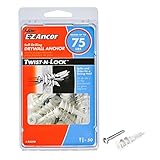
I remember the first time I hung a heavy mirror. It was one of those “industrial chic” pieces, all reclaimed wood and thick glass. My husband, bless his heart, swore by those little plastic anchors that came with the mirror. He hammered them in with such confidence. Then, the sickening crunch. The anchor didn’t just fail; it shattered like a cheap cookie. The mirror tilted, and my stomach dropped. It made me wonder: are drywall anchors suppose to break when you really need them to hold?
The truth is, most people think of drywall anchors as these invincible little gadgets. They’re not. And when they break, it’s usually because we’re asking them to do something they’re not designed for, or we’re using the wrong kind for the job. It’s a frustrating, sometimes costly, lesson.
Why Your Drywall Anchor Might Be Snapping
Let’s cut to the chase. If your drywall anchor is breaking when you’re trying to install it, or worse, when you put weight on it, something is fundamentally wrong. It’s not just a minor inconvenience; it’s a sign that your hanging job is about to go south. Think about what these little guys are supposed to do. They’re the bridge between your flimsy drywall and whatever heavy item you’re trying to secure – a shelf, a TV mount, a cabinet. They work by expanding behind the drywall, creating a sort of a wedge or a toggle, to distribute the load over a larger area than a simple screw into bare drywall could ever manage.
When you hammer in a cheap plastic anchor and it crumbles, it’s usually because the plastic is brittle, or the hole you drilled is too big, or you’re just muscling it in way too hard. The plastic is designed to deform and expand, not to explode. If it shatters, it means it couldn’t handle the pressure of expansion or the shear force you applied. This is particularly true for those cone-shaped plastic anchors that you just screw into a pre-drilled hole. They rely entirely on friction and the expansion of the plastic itself. If the plastic quality is poor, or the hole is slightly off, they can fracture.
Then there are the times the anchor breaks after it’s in, when you’re hanging something. This is usually down to two things: exceeding the weight limit, or the anchor not being seated properly in the first place. Even the best anchors have weight ratings, and these aren’t suggestions; they’re limits.
Pushing past them means you’re basically asking the anchor and the drywall to hold more than they physically can. I learned this the hard way with a set of floating shelves. I loaded them up with books, feeling pretty smug about my DIY skills, only to hear a horrible creak followed by a shower of plaster dust. The anchors, which were the basic plastic kind, had given up the ghost.
The weight was just too much for the small surface area they were gripping behind the wall.
It’s also about the drywall itself. Is it old and crumbly? Has it been damaged by moisture? Even the strongest anchor in the world is only as good as the material it’s holding onto. If the drywall is weak, it’ll just tear away, taking the anchor with it. So, when asking ‘are drywall anchors suppose to break when,’ the answer is a resounding ‘no, not under normal, intended use.’ If it’s breaking, you’re either using the wrong tool for the job, pushing it beyond its limits, or the material you’re working with is compromised.
The Big Lie About ‘one Size Fits All’ Anchors
This is where most people, myself included for way too long, get it wrong. There’s this pervasive idea that you can grab any little plastic anchor, shove it in a hole, and it’ll hold your TV. Hogwash. The anchor aisle in any hardware store is a minefield of overpromising and underdelivering if you don’t know what you’re looking for. That innocent-looking little white or blue plastic cone? It’s fine for a lightweight picture frame, maybe. A 10-pound mirror? You’re pushing it. A 50-pound shelf? Forget about it.
The common advice is often to just use the anchors that come with the product. That’s usually the absolute worst advice you can get.
Manufacturers often include the cheapest, most basic anchors because they have to include something, and they want to keep their costs down. They’re not designing for your peace of mind; they’re designing for compliance.
I once bought a fancy bathroom vanity light fixture. It came with these tiny plastic plugs. I installed them, hung the light, and a week later, one side of the fixture was dangling.
It turned out the fixture itself weighed a good 15 pounds. Those little plastic doodads were good for maybe 5 pounds each, tops. I ended up having to patch the drywall and install proper toggle bolts.
The key is matching the anchor to the weight and the type of wall you have. Drywall is basically paper and gypsum. It’s not concrete.
It’s not wood. It needs specialized help. For heavier items, you need anchors that expand more significantly or create a larger surface area of support behind the wall. Think about toggle bolts, molly bolts, or screw-in anchors that have a wider flange.
These distribute the weight much better. For example, a toggle bolt has two “wings” that open up on the other side of the drywall, creating a broad support base. Molly bolts have a sleeve that expands. (See Also: Can Concrete Anchors Be Used In Brick )
Screw-in anchors, the metal ones with sharp threads, often have a wider spread or a mechanism that grips the back of the drywall more effectively than a simple plastic cone.
Don’t be afraid of metal. Many cheap plastic anchors are brittle and can crack under stress, especially in fluctuating temperatures. Metal anchors, while sometimes more expensive, are often more durable and offer better load-bearing capacity. The ‘self-drilling’ screw-in anchors, which are often metal, are a good middle ground for moderately heavy items. They create their own threads in the drywall, offering a secure grip. But even then, check the weight rating. It’s not just about the anchor; it’s about the system – the anchor, the screw, and the wall it’s going into. If any part of that system is weak, the whole thing fails. So, no, there isn’t one anchor for all jobs. That’s a myth.
The Wrong Way to Install: Common Mistakes That Lead to Failure
You’ve got the right anchor, great! Now, let’s talk about how you can mess it up during installation. This is where a lot of frustration happens, and where you’ll find yourself asking, ‘are drywall anchors suppose to break when installed incorrectly?’ Absolutely.
It’s not just about brute force; it’s about precision. The most common mistake I see is drilling the wrong size hole. Most anchors come with recommended drill bit sizes printed right on the package. Ignore this at your peril.
Too small a hole, and you’ll struggle to get the anchor in, potentially cracking it or deforming it before it’s even seated properly. Too large a hole, and the anchor won’t have enough to grip onto, making it loose and ineffective, or it might just spin in the hole.
I remember trying to hang a particularly heavy piece of artwork. The anchor kit said to use a 1/4-inch drill bit. I was impatient, grabbed what I thought was a 1/4-inch bit, and went to town. It felt a bit loose going in, but I figured I’d just screw it in tight. Big mistake. When I hung the artwork, the whole thing sagged within minutes. Turns out, I’d accidentally grabbed a 5/16-inch bit. The anchor had way too much play. I had to take it all down, patch the hole, and start over with the correct bit. Lesson learned: always double-check your drill bit size, and if it feels loose, it probably is.
Another classic blunder is not driving the anchor in straight. If you angle it, it won’t expand or toggle properly behind the wall. It’ll be off-kilter, and the screw won’t engage it correctly. This is especially true for those conical plastic anchors; they need to go in perfectly perpendicular to the wall to seat evenly. For toggle bolts and molly bolts, making sure the mechanism on the back can open freely and engage the wall is most important. If the anchor is angled, the toggle might snag or not deploy correctly.
Over-tightening is another killer. Yes, you want things to be snug, but you’re not trying to crush the anchor or the drywall. For plastic anchors, over-tightening can strip the plastic threads or crack the anchor itself. For metal anchors like molly bolts, you can sometimes strip the threads of the bolt if you keep turning after it’s snugged up against the wall.
This is a particular issue with self-drilling anchors; they grip the drywall aggressively, and if you keep going past the point where the flange is flush with the wall, you can actually start to tear out the drywall around the hole. Always stop when the anchor is firmly seated and flush with the wall surface. If a screw feels like it’s just spinning without biting, stop. You’ve likely stripped the anchor or the hole.
Finally, and this is a big one, not identifying your wall material. Are you drilling into solid wood studs, plaster, or drywall? Different materials require different fasteners. While this article is about drywall anchors, it’s worth noting that attempting to use a drywall anchor in a stud is often a recipe for disaster. A screw directly into a stud is almost always stronger. If you’re unsure, a stud finder is your friend. Sometimes, people try to use drywall anchors on plaster walls, which can be tricky because plaster can be brittle. You might need specialized plaster anchors or a different approach altogether.
Real-World Use: When Anchors Save the Day (and When They Don’t)
Let’s talk about what these things are actually good for. When used correctly, drywall anchors are little heroes. Think about hanging that framed family photo that’s not too heavy, or a small mirror in the hallway, or even a lightweight curtain rod. For items under, say, 15-20 pounds, and distributed across two or more anchors, a good quality screw-in metal anchor or even a heavy-duty plastic anchor can do the job perfectly well. These are the everyday heroes of home decorating. I’ve got a bunch of shelves holding small decorative items and books using these types of anchors, and they’ve been up for years without issue. They’re easy to install, relatively cheap, and sufficient for many common tasks.
However, there’s a line. Once you start talking about significant weight, things change.
Heavy TVs, large wall-mounted cabinets, substantial shelving units loaded with books, or even heavy bathroom accessories like towel bars and toilet paper holders that will see constant use – these are where basic anchors will fail. This is where you absolutely need to step up to something more solid. Toggle bolts, snap toggles (a modern, easier-to-use version of toggle bolts), or strap toggles are your best bet for heavy loads.
These spread the weight across a much larger area of the drywall. For instance, a strap toggle anchor can often support 50-100 pounds or more, depending on the specific product and how many you use. The key is the large surface area of the strap or toggle wings behind the wall.
My first real success story with anchors was hanging a large, framed mirror in my entryway. It probably weighed around 30 pounds. I decided against the cheap plastic ones that came with it and opted for a set of metal molly bolts. The installation was straightforward: drill a hole, insert the molly bolt, and tighten the screw until the sleeve expanded behind the wall. It felt incredibly solid. That mirror has been there for five years, seen a few bumps from moving furniture, and it hasn’t budged. It was a moment of triumph, realizing that the right anchor, installed correctly, can handle significant weight. (See Also: Can Cords Be Used To Make Anchors Climbing )
On the flip side, I’ve seen (and experienced) the failures. The dreaded sagging shelf is a common one. Another is when a heavy picture frame suddenly drops, potentially damaging the wall or the item itself.
I once witnessed a friend’s entire entertainment center, mounted on the wall with what they thought were appropriate anchors, detach and crash to the floor. Thankfully, no one was hurt, but the TV was destroyed, and the wall looked like a war zone. This was a clear case of underestimating the weight and the forces involved.
They had used standard plastic anchors for something that weighed well over 100 pounds, spread across just a few points. It was a disaster waiting to happen. So, while anchors are great for many things, knowing their limits and the limits of your wall is the real skill.
The Humble Shelf: A Case Study in Anchor Selection
Let’s dive into a practical example that trips a lot of people up: hanging shelves. Specifically, shelves that you actually want to use for storing things, not just decorative ones. This is where the anchor choice becomes important, and where you’ll really understand why ‘are drywall anchors suppose to break when’ is a relevant question for many homeowners. Imagine you’ve bought a set of nice floating shelves or a simple plank shelf with brackets. You want to put books, maybe some plants, or even kitchenware on it. This isn’t a job for those flimsy plastic cones.
For a standard plank shelf supported by two or three brackets, where the total load might reasonably be expected to reach 20-40 pounds (depending on what you put on it), you need anchors that can handle that. If you’re lucky and hit a stud with one or two of your bracket screws, you might be okay for the rest with a good drywall anchor. But relying solely on drywall anchors for a heavily loaded shelf is risky business. The best approach is to try and hit as many studs as possible with your bracket screws.
Use a good stud finder, mark your locations, and drill pilot holes into the studs. These screws driven into solid wood will carry the bulk of the load.
However, you can’t always hit studs in the exact locations needed for your shelf. This is where drywall anchors come in. For this scenario, I’d recommend a heavy-duty screw-in anchor made of metal. These look like coarse screws with a wide flange. When you screw them into a pre-drilled hole, the flange sits flush against the wall, and the deep, aggressive threads bite into the drywall, offering a much stronger grip than plastic. Another excellent option is a self-drilling metal anchor, which creates its own pilot hole and threads. These are incredibly convenient and strong for moderate loads.
Here’s a comparison of some common anchor types for shelving:
| Anchor Type | Typical Use | Load Capacity (approximate, per anchor) | Ease of Installation | Verdict |
|---|---|---|---|---|
| Plastic Cone Anchor (e.g., Ribbed) | Lightweight items (pictures, small decor) | 5-15 lbs | Easy | Okay for very light loads, but prone to failure with moderate weight or vibration. Often included with cheap items. |
| Screw-in Metal Anchor (e.g., with wide flange) | Medium-duty shelves, mirrors, light cabinets | 20-50 lbs | Moderate (requires pre-drilled hole) | A solid choice for most home shelves and medium-weight items. Reliable if installed correctly. |
| Self-Drilling Metal Anchor | Medium-duty shelves, wall-mounted TVs (lighter ones) | 30-60 lbs | Easy (drills own hole) | Very convenient and strong for moderate loads. Can sometimes strip drywall if over-tightened. |
| Toggle Bolt (Traditional or Strap) | Heavy shelves, cabinets, TV mounts, anything substantial | 50-100+ lbs | More involved (requires larger hole, spring mechanism) | The go-to for serious weight. Provides maximum security by distributing load behind the wall. Worth the extra effort. |
So, for that shelf you want to load up, if you can’t hit studs everywhere, I’d be looking at self-drilling metal anchors or, for maximum peace of mind, toggle bolts. Never underestimate the weight of books; they’re deceptively heavy. And always, always err on the side of caution. It’s better to use an anchor that’s rated for more weight than you think you need than to have your shelf come crashing down.
What’s the Weight Limit for Drywall Anchors?
The weight limit for drywall anchors varies wildly depending on the type of anchor, the material it’s made from, and the quality of the installation. Basic plastic anchors might only hold 5-15 pounds, while heavy-duty toggle bolts can support well over 100 pounds. Always check the manufacturer’s packaging for the specific weight rating, and remember that these are usually tested under ideal conditions. For safety, it’s wise to use anchors rated for at least twice the expected load.
Can You Use Drywall Anchors in Plaster?
Yes, but it’s often trickier than with drywall. Plaster can be brittle and prone to cracking or crumbling, especially if it’s old. You might need to drill a slightly larger hole than recommended for a drywall anchor to avoid cracking the plaster as you insert it. Specialized plaster anchors are also available, or you might consider using a toggle bolt, as their wings distribute the force more broadly behind the plaster, reducing the risk of cracking.
Do Drywall Anchors Actually Work?
When used correctly and for appropriate loads, drywall anchors absolutely work. They are designed to create a secure attachment point in walls that lack solid backing like studs. They function by expanding behind the drywall or by using a toggle mechanism to distribute weight over a larger surface area, preventing the fastener from pulling out. However, they have limitations, and using them for loads far exceeding their rating or in compromised drywall will lead to failure.
How Do You Know If You Need a Drywall Anchor?
You need a drywall anchor when you want to attach something to a wall and you cannot locate a wall stud behind the desired mounting point. If you’re hanging something light like a small picture frame, a screw directly into drywall might suffice, but for anything with more than a couple of pounds of weight, or items that could be a hazard if they fall (like shelves or heavy mirrors), a drywall anchor is generally necessary to provide sufficient support and prevent the screw from pulling out.
Why Do Anchors Break When You Hammer Them?
Drywall anchors, particularly the plastic cone-type, are not typically designed to be hammered. They are meant to be screwed into a pre-drilled hole. Hammering can easily crack or shatter them because the force is concentrated and uncontrolled, leading to uneven pressure and breakage. If an anchor needs to be tapped in gently to seat it, that’s one thing, but forceful hammering is a common cause of breakage and improper installation.
Myths and Old Wives’ Tales About Drywall Anchors
Alright, let’s debunk some stuff you hear floating around. One of the biggest myths is that you always need a stud finder. While stud finders are incredibly useful and I highly recommend having one, they aren’t the be-all and end-all. For many lighter-duty tasks, a good drywall anchor is perfectly sufficient, even if you could have hit a stud. (See Also: Can Anchors In Your Shoulder Break )
The myth here is that any hanging job requires a stud. This is simply not true.
If I’m hanging a light bulletin board in my office, and the studs are in inconvenient spots, I’m reaching for some heavy-duty screw-in anchors and calling it a day. Studs are great for maximum strength, but drywall anchors offer a practical solution when studs aren’t an option or aren’t precisely where you need them.
Another piece of common, but often wrong, advice is to just “drill a hole big enough for the anchor.” This sounds logical, right? But it’s a generalization. As we’ve discussed, too big a hole is catastrophic for an anchor’s grip.
The key isn’t just ‘big enough,’ it’s the correct size as specified by the anchor manufacturer. This is especially true for plastic anchors. They rely on a snug fit to expand properly without collapsing.
For toggle bolts, the hole needs to be large enough for the toggle mechanism to pass through, but not so large that the toggle can’t rest flush against the back of the wall. So, the advice should be ‘drill the manufacturer-specified hole size.’ Anything else is just guessing.
Then there’s the idea that all anchors are basically the same, and the cheap plastic ones are just as good as the metal ones. This is pure folly. It’s like saying all screws are the same. They are not.
The material (plastic vs. metal), the design (cone, toggle, expansion sleeve), and the quality of manufacturing make a huge difference. Plastic anchors are often brittle and can degrade over time, especially with temperature fluctuations. Metal anchors, while sometimes requiring a slightly more involved installation, offer significantly more strength and durability.
I’ve seen cheap plastic anchors shear off under the weight of a towel, while a well-installed toggle bolt has held up a heavy TV for years. Don’t fall for the “they’re all the same” trap; it’s a costly mistake in the long run.
Finally, the myth that if an anchor feels “tight,” it’s good. Tightness is good, but too tight can be bad.
Over-tightening can strip the threads of the anchor or the screw, or worse, it can tear out the drywall around the anchor, creating a much larger, harder-to-fix problem. The goal is a secure, flush fit, not a crushed one.
When you’re screwing in a self-drilling anchor, for example, you stop when the flange is firmly against the wall. If you keep going, you’re not making it stronger; you’re weakening the wall material around it. Always pay attention to how the anchor is seating itself.
If it feels like you’re using excessive force or the wall material is starting to deform excessively, stop and reassess. The goal is a strong connection, not a destructive one. These myths often lead to the very situations where you find yourself asking, ‘are drywall anchors suppose to break when’ you’re just trying to hang a picture.
Conclusion
So, to circle back to the original question: are drywall anchors suppose to break when? No. If they’re breaking during installation or under load, it’s a sign of misuse, poor quality, or exceeding their designed capacity. It’s not rocket science, but it does require a bit of understanding about what you’re trying to hang and what kind of wall you’re hanging it on. Don’t just grab the cheapest thing or the one that comes with your product.
Take a moment to consider the weight and the type of item. Invest in good quality anchors, especially for anything heavier than a framed photo. Read the packaging, use the right drill bit, and install them straight and snug, but not so tight you’re crushing the wall. A little bit of knowledge and the right anchor can save you a lot of headaches, patching, and potentially damaged items.
Next time you’re at the hardware store, don’t just skim the anchor aisle. Look at the different types, read the weight ratings, and think about your project. It might save you from that sickening crunch and a wobbly shelf.