I remember the first time I tried to hang a heavy mirror. The wall seemed solid enough, but the cheap plastic anchors I shoved in there lasted about as long as a snowball in July. The mirror, thankfully, didn’t shatter, but it sure did a number on my confidence. So, let’s cut to the chase: are drywall anchors reliable? The honest answer is complicated, and depends on what you’re trying to hang and which anchor you’re using.
They
can
be reliable, but expecting them to hold up a piano is just asking for trouble. I’ve learned a lot over the years, mostly the hard way. If you’re wondering if they’re a magic bullet for every wall-mounting need, prepare for some blunt truths.
So, What’s the Deal with Drywall Anchors Anyway?
Look, drywall itself isn’t exactly structural concrete. It’s basically compressed gypsum sandwiched between paper. Push too hard, and it crumbles. That’s where anchors come in.
Their job is to spread the load over a larger area of that flimsy drywall, preventing it from tearing out. Think of it like giving your screw a wider base to stand on. The common plastic ones, the ones that look like little ribbed tubes, are the absolute entry-level stuff.
You jam them into a hole you drilled, and the screw bites into those ribs as you turn it in. They expand or wedge themselves, creating friction against the drywall’s inner surface. For something light, like a small picture frame or a coat hook that won’t be manhandled, they might do the trick. I’ve used them for years on lightweight things and they’ve held.
But for anything with a bit of heft? Forget about it. I once tried to hang a reasonably sized bookshelf with just those plastic anchors, and within a week, I heard this ominous creaking. Thankfully, I caught it before disaster struck, but it was a stark reminder that ‘good enough’ isn’t always good enough.
You need to match the anchor to the weight and the material you’re attaching it to. It’s not just about the anchor; it’s about the science of use and material strength. The more weight you put on a screw in drywall without an anchor, the more force it exerts to pull outwards, and that’s what rips the paper and gypsum.
Anchors help resist that pull by distributing the force.
When Cheap Plastic Just Doesn’t Cut It: Better Anchor Options
This is where things get interesting, and where you actually start to gain some reliability. The absolute cheapest plastic anchors are often not worth the effort. If you’re hanging anything more substantial than a feather, you need to step up your game.
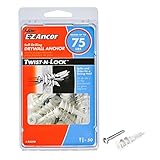
My go-to for a good balance of strength and ease of use are the self-drilling anchors, often called ‘zip-it’ anchors. These metal ones are fantastic. You just screw them directly into the drywall with a screwdriver, no pre-drilling required for most. They have sharp threads that bite into the drywall, and the opening is designed so the screw sits flush.
They can handle a surprising amount of weight, way more than those flimsy plastic cones. I’ve used them for hanging heavier mirrors, small shelves, and even a TV mount on a wall that I knew wouldn’t be supporting anything too massive. (See Also: Can Concrete Anchors Be Used In Brick )
They feel much more secure, and the metal construction just inspires more confidence. Then you have the toggle bolts and molly bolts.
Toggle bolts are those with a spring-loaded wing that folds up to go through a hole, then springs open behind the drywall. They offer serious holding power, often hundreds of pounds, but you need a larger hole, and they can be a bit fiddly to get the screw in just right without the toggle flipping.
Molly bolts are similar but have a metal sleeve that expands behind the drywall as you tighten the screw. These are even more solid and often have a built-in screw or a place to insert your own.
These are the ones you want for heavy, heavy items, like substantial cabinets or large wall-mounted TVs where safety is most important. The key takeaway here is that different anchors are designed for different jobs.
Don’t just grab the first thing you see at the hardware store.
My Own Dumb Mistake: The Time I Ignored the Weight Limit
Let me tell you about the time I tried to hang a rather large, framed piece of art. It wasn’t a masterpiece, but it was bulky and had a thick glass front. The label on the anchor package said ‘supports up to 50 lbs.’ I figured, ‘Perfect!
My art is probably around 30 lbs.’ So, I meticulously followed the instructions, drilled the hole, hammered in the plastic anchor, and screwed it in tight. It looked great.
For about a week. Then, one afternoon, I heard a sickening crack. The anchor had started to pull out, leaving a jagged tear in the drywall.
The art was leaning precariously. My heart was in my throat.
I scrambled to take it down, realizing I’d completely misjudged the real weight, the dynamic weight, the stress of hanging something that large. Turns out, even though the anchor might hold 50 lbs statically, the sheer surface area of the art, combined with the slight sway it might experience, was too much for that cheap plastic.
That day, I learned that those weight limits are not suggestions; they are absolute boundaries. And for anything even close to the limit, you’d be wise to use a more solid anchor, or better yet, find a stud. I ended up patching the hole, using a heavy-duty toggle bolt for a different project, and vowing to always be more conservative with my anchor choices. It was a humbling, and frankly, embarrassing experience, but a vital lesson learned.
The ‘stud or Bust’ Mentality: When Anchors Aren’t Enough
Okay, let’s be brutally honest. While we’re talking about how reliable drywall anchors are, there’s a bigger truth: the most reliable thing you can attach something to in a wall is a wooden or metal stud. (See Also: Can Cords Be Used To Make Anchors Climbing )
Anchors are a workaround, a clever way to make drywall hold things it wasn’t inherently designed to hold. If you are mounting something heavy – and I mean really heavy, like a TV mount for a large flat-screen, a substantial cabinet, or even a heavily loaded bookshelf – you absolutely should be aiming for studs.
Finding studs isn’t rocket science. You can use a stud finder (the electronic kind works pretty well, though sometimes they get confused by pipes or wires), or you can do the old-fashioned tap-and-listen method.
A solid thud means you’ve hit a stud; a hollow sound means you’re in the void of the wall cavity. Once you locate a stud, you drill a pilot hole directly into the wood or metal, and then drive a long screw directly into it.
That screw is going to have a direct line to structural support, and you’re not relying on friction or expansion within the gypsum. It’s a fundamentally stronger connection. I’ve seen too many shelves sag and too many pictures fall because people relied solely on anchors for loads that studs were meant for.
My advice? If the item you’re hanging weighs more than, say, 15-20 pounds, and you plan on putting a lot of stuff on it, try to hit a stud.
If you absolutely can’t hit a stud for some reason (like the placement is important and there are no studs there), then you absolutely must use a heavy-duty anchor, like a toggle bolt or a molly bolt, and be very sure about its weight rating. But studs are king.
Common Drywall Anchor Mistakes and How to Avoid Them
People mess up drywall anchors constantly. It’s not always the anchor’s fault.
One of the biggest blunders is using the wrong size anchor for the screw, or vice-versa. The screw needs to be the right diameter and thread to engage properly with the anchor.
If the screw is too thin, it won’t expand the anchor sufficiently. If it’s too thick, you might split the anchor or not be able to drive it in. Always check the packaging for the recommended screw size. Another common error is drilling the hole too big.
If the hole is too large, the anchor won’t have enough drywall to grip onto, and it’ll just spin loosely or fall out. It’s better to start with a slightly smaller drill bit and, if needed, gradually go up in size.
Many anchor packages will specify the exact drill bit size to use – use it! Over-tightening is also a problem. You want the anchor snug and secure, but cranking on it with all your might can strip the threads of the anchor itself or damage the surrounding drywall.
It’s a delicate balance. And then there’s the sheer ignorance of weight limits. People see ‘holds 50 lbs’ and think that means they can hang 45 lbs of books without a second thought. Remember that weight limits are usually for static loads, meaning the item is just hanging there. (See Also: Can Anchors In Your Shoulder Break )
If it’s something that will be bumped, moved, or have things added to it, you need a significant buffer. I’ve seen people try to hang ceiling fans with basic plastic anchors – that’s just asking for a ceiling fan to become a floor fan. Always err on the side of caution. Finally, not considering the type of drywall is a mistake too.
Older, crumbly drywall is much less forgiving than newer, denser types. If you’re unsure, test an anchor in an inconspicuous spot first, or just go straight for the heavy-duty options.
A Quick Cheat Sheet for Anchor Reliability
When you’re staring at that wall and trying to figure out what to use, this little table might help. It’s not exhaustive, but it covers the most common scenarios I deal with. Remember, these are general guidelines, and always consider the specific product you’re hanging and the condition of your drywall.
| Item to Hang | Approximate Weight | Recommended Anchor Type | My Verdict |
|---|---|---|---|
| Small Picture Frame (under 5 lbs) | < 5 lbs | Plastic Expansion Anchor (small) | Okay for the lightest stuff, but I still prefer self-drilling. |
| Medium Mirror, Wall Clock | 5-15 lbs | Self-Drilling Metal Anchor (e.g., Zip-It) | My go-to for most everyday items. Reliable and easy. |
| Large Mirror, Small Shelf (light items) | 15-30 lbs | Heavy-Duty Self-Drilling Metal Anchor OR Toggle Bolt (small) | Getting into serious territory. Toggle bolts offer more peace of mind. |
| TV Mount (small/medium TV) | 30-60 lbs | Toggle Bolt OR Molly Bolt (make sure it’s rated for TV weight) | STUDS ARE STRONGLY RECOMMENDED HERE. If not possible, get the best anchors. |
| Heavy Shelf, Cabinet, Large TV Mount | > 60 lbs | Heavy-Duty Toggle Bolt OR Molly Bolt (multiple, well-placed) | Seriously, find studs. If you MUST use anchors, over-engineer it. |
Faq: Are Drywall Anchors Reliable?
Can You Hang a TV with Drywall Anchors?
Yes, but only if you use heavy-duty toggle bolts or molly bolts specifically rated for the TV’s weight, and you’ve carefully assessed your drywall. For most TVs, especially larger ones, finding and screwing directly into wall studs is the only truly reliable method. Anchors are a riskier workaround.
What Is the Strongest Type of Drywall Anchor?
Generally, toggle bolts and molly bolts are considered the strongest types of drywall anchors. They work by expanding or creating a brace behind the drywall, offering significant holding power. However, they require larger holes and can be trickier to install than simpler anchors.
Do Self-Drilling Drywall Anchors Work?
Yes, self-drilling metal drywall anchors are quite effective and reliable for many common household items. They are easy to install without pre-drilling and offer a good balance of strength and convenience for loads up to around 25-35 lbs, depending on the specific anchor and drywall condition.
Can You Reuse Drywall Anchors?
It’s generally not recommended to reuse plastic drywall anchors, as they can lose their shape and holding power after being installed and removed. Some heavy-duty metal anchors, like toggle bolts or molly bolts, might be reusable if they remain intact after removal, but their reliability can be compromised.
When Should You Not Use Drywall Anchors?
You should avoid drywall anchors when hanging extremely heavy items (like large cabinets or very heavy shelves), anything that experiences significant dynamic loads (like a swing), or when the integrity of the drywall is questionable (e.g., it’s old, crumbly, or water-damaged). In these situations, finding wall studs is the safest and most reliable option.
Final Verdict
So, to circle back to the big question: are drywall anchors reliable? They are reliable for specific tasks and when chosen correctly. They are not a universal solution for every hanging job. For lightweight decor, a decent self-drilling anchor will serve you well. For heavier items, you’re entering the territory where your wall’s structural integrity becomes the main concern, and finding studs is always the best bet. Don’t be like me and learn the hard way; respect the weight limits and the material you’re working with.
My advice is simple: If in doubt, go for the stronger anchor or find a stud. It’s better to spend an extra dollar or two on a better anchor, or a few extra minutes finding a stud, than to deal with the mess and damage of a failed hanging job. Always weigh your options, literally.
What are you planning to hang next? Think carefully about the weight, the anchor type, and where you’re placing it. That’s the real secret to getting it right.