I remember staring at that perfectly blank wall in my first rental apartment, itching to hang that massive framed print I’d splurged on. The landlord said ‘no nails,’ so naturally, my brain went straight to ‘drywall anchors.’ I figured they were the magic bullet for renters wanting to make a place feel like home without getting the security deposit trashed. Turns out, it’s not quite that simple. The question of are drywall anchors renter friendly is a bit of a minefield, and I learned that the hard way, nearly taking a chunk of plaster with me when I moved out. Let’s cut through the noise.
The Real Deal with Renters and Drywall Anchors
Look, let’s get this straight from the jump: hanging things on walls in a rental property is a delicate dance. You want to personalize your space, but you also don’t want to end up in a heated argument with your landlord over a dozen tiny holes that look like a microscopic shotgun blast.
So, are drywall anchors renter friendly? The honest answer is: it depends heavily on the type of anchor, how you use it, and, importantly, what your lease agreement says.
Most landlords are fine with small holes from nails or screws, especially if they’re in reasonable places and you patch them up before you leave. But when you start thinking about heavier items, or just wanting that extra bit of security, anchors become tempting. The trick is knowing which ones are least likely to cause permanent damage and are easy to remove without a trace.
My first rental disaster involved one of those aggressive-looking plastic anchors you twist into the wall. I was hanging a shelf for my books – maybe 15 pounds total. It seemed solid. Fast forward six months, and I decided to move.
I unscrewed the shelf, and then I tried to pull out the anchor. It would not budge. I tugged, I wiggled, I even tried prying it with a butter knife (don’t ask).
Eventually, I had to jam a screwdriver behind it, and that, my friends, resulted in a gouge in the drywall that was bigger than the original anchor hole. My landlord was not thrilled, and I learned a very expensive lesson about ‘renter-friendly’ not always meaning ‘damage-free upon removal.’ That experience alone taught me that not all anchors are created equal, and the common advice to just ‘use anchors’ needs a serious asterisk.
What Even are Drywall Anchors and Why Use Them?
Okay, so you’ve got something to hang. It’s too heavy for just a nail. Maybe it’s a mirror, a TV mount, a cabinet, or just a really substantial piece of art. Drywall itself, that papery-plaster stuff, is surprisingly weak.
It can hold a few pounds, sure, but anything more and you risk the screw just pulling right out, taking a chunk of your wall with it. That’s where anchors come in. Their job is to spread the load over a larger area of the drywall, or to bite into the studs behind the drywall for maximum strength. Think of it like this: a screw into a stud is like drilling into a solid beam.
A screw directly into drywall is like drilling into a styrofoam cup – it’s going to rip easily.
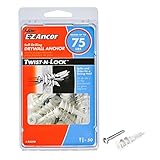
There are a few main types you’ll encounter. The most basic are the plastic expansion anchors, often called ‘Con-Certs’ or ‘wingits.’ You drill a hole, hammer or screw the plastic sleeve in, and then drive a screw into it. The plastic expands, creating a tighter fit.
They’re cheap and readily available. Then you have self-drilling anchors, which are often metal or a tougher plastic. These have a screw-like tip that you can spin directly into the drywall – they’re supposed to be easier and leave a smaller hole. For heavier loads, you get into toggle bolts and molly bolts.
These have wings or arms that spring open behind the drywall, giving you a much stronger hold. The problem for renters is that while they hold well, they often require a larger hole to install, and removing them cleanly can be a challenge. Some of these, particularly the molly bolts with their metal sleeves, can be a real pain to extract without causing damage. (See Also: Can Concrete Anchors Be Used In Brick )
The core principle is load distribution. A screw alone has a very small contact area. An anchor increases that surface area, either by expanding within the drywall or by bridging across a void to anchor into something more substantial. It’s about preventing shear and pull-out forces from concentrating on too small a point. For someone in a rental, the key is finding an anchor that offers adequate holding power for your needs without requiring a hole so large or a removal process so destructive that it voids your security deposit. It’s a trade-off between strength and discretion.
The Big Question: Are Drywall Anchors Renter Friendly?
Let’s tackle this head-on. The short, blunt answer is: sometimes, but you need to be smart about it. The common advice you’ll find everywhere, especially on DIY blogs and forums, is that yes, drywall anchors are the solution for renters. I’m here to tell you that’s overly simplistic and often wrong. A cheap, flimsy plastic anchor might leave a small hole that’s easy to patch. But the heavy-duty ones, the ones you really need for anything substantial, are often the ones that cause the most grief when it’s time to move out. Many of them are designed to be permanent or semi-permanent, and their removal can leave significant damage that’s hard to disguise.
My personal contrarian opinion? For most renters, standard nails and screws into studs are the true renter-friendly solution.
If you can locate a stud (and there are tools for this, like stud finders, or you can just tap and listen), a screw directly into the stud is incredibly strong, leaves a tiny hole, and is virtually undetectable when patched and painted. Most landlords are perfectly happy with a few small nail holes. The vast majority of things you’d hang in a rental don’t require the industrial-strength grip of a toggle bolt.
I’ve hung mirrors, pictures, and even small shelves using just screws into studs, and the removal process was a breeze – a little spackle, a bit of paint, and you’d never know.
However, there are situations where anchors are necessary. If you’re mounting a TV, or a heavy piece of furniture that needs to be secured to the wall (think tip-over prevention for kids), you will need anchors. In these cases, the key is choosing anchors that are specifically designed for easy removal or that minimize damage.
Some newer types of anchors are engineered with this in mind. It’s about understanding the trade-offs.
A molly bolt might hold 50 pounds, but removing it often means you’re dealing with a hole the size of a quarter, plus any collateral damage from wrestling it out. That’s not renter-friendly in my book.
The goal is to leave the wall looking as close to how you found it as possible, and that often means avoiding the ‘heavy-duty’ anchor solutions that are tough to extract.
What to Look for (and Avoid) in Renter-Friendly Anchors
So, you’ve assessed your needs, and you do need an anchor. What should you be looking for? First, consider the weight. If it’s under 10-15 pounds, a simple plastic anchor or even just a screw into a stud (if you can find one) is usually sufficient.
For anything heavier, you need to be more strategic. I’ve found that some of the self-drilling anchors, particularly the ones made of reinforced nylon or a softer metal that’s easier to cut or bend, can be a decent compromise. They create a screw hole that’s a bit larger than a nail, but often smaller than what you’d need for a toggle bolt.
The trick is to practice removing one first, if possible, or to be prepared with good patching materials. (See Also: Can Cords Be Used To Make Anchors Climbing )
Avoid the old-school, rigid plastic anchors that require a pilot hole you then hammer the anchor into. These tend to expand unevenly and are notorious for being difficult to remove without cracking the surrounding drywall. Also, steer clear of any anchor that requires a hole larger than, say, a quarter inch, unless you are absolutely certain you can repair it perfectly. Molly bolts, while strong, are often overkill and a nightmare to remove. I had a landlord once who specifically mentioned ‘no molly bolts’ in the lease, and I understood why after my previous experience.
Here’s a quick rundown of what to consider, with my personal verdict:
| Anchor Type | Holding Power | Ease of Removal (Renter Verdict) | Typical Hole Size |
|---|---|---|---|
| Plastic Expansion Anchors (Hammer-in) | Low to Medium | Poor – often tears drywall on removal | Small to Medium |
| Self-Drilling Anchors (Screw-in) | Medium | Fair – depends on material, can leave a clean hole if removed carefully | Small |
| Toggle Bolts | High | Poor – large hole, difficult to extract without damage | Large |
| Molly Bolts | High | Very Poor – requires large hole, metal sleeve is stubborn | Large |
| Picture Hanging Hooks (with small nails) | Low | Excellent – minimal damage, easy to patch | Tiny nail holes |
The best ‘renter-friendly’ anchor is arguably one that barely needs to be an anchor at all – meaning you’ve found a stud. If you must use an anchor, prioritize ease of removal and minimal damage over sheer holding power, unless the item’s safety depends on it. Some specialized picture-hanging systems use a series of tiny, fine nails that distribute weight effectively and leave almost no trace when removed.
My Own Screw-Ups and How to Avoid Them
I’ve made my share of mistakes. Once, I tried to hang a tall, narrow bookshelf in a bedroom. I couldn’t find a stud for the life of me. So, I grabbed a pack of those beefy, screw-in plastic anchors that promised to hold ‘up to 30 pounds.’
I installed them, screwed in the bookshelf, and it felt rock solid. About a week later, I noticed a slight sag. Then a crack started to form around one of the anchors. The weight was just too much for the drywall, and even the anchor couldn’t distribute the load effectively enough over time.
It was a slow, embarrassing failure. The anchor eventually ripped out, taking a chunk of my carefully chosen accent wall with it. It looked like a tiny, angry monster had taken a bite out of the plaster.
The lesson? Always overestimate the weight and underestimate the strength of drywall alone. If you can’t find a stud, and the item is heavy, you might need to rethink where you’re placing it or consider a different solution altogether. Maybe a leaning bookshelf or a freestanding unit is a better option for a rental.
My other big screw-up was assuming all ‘easy-out’ anchors were actually easy to get out. I bought a pack of supposed ‘removable’ anchors. They screwed in easily enough, but when it was time to leave, they felt like they were welded in place.
It took me nearly an hour and a much larger patch job than I anticipated to get them out without leaving visible damage. They were ‘easy-out’ in the sense that you could unscrew them, but the hole they left behind was a different story.
To avoid these pitfalls:
- Always check your lease. Some explicitly forbid any drilling or anchoring. Others are more lenient. Better to know upfront.
- Use a stud finder. Seriously, they’re cheap and save you so much grief. If you can hit a stud, do it.
- Don’t overbuy for the job. If a simple picture hook will do, use it. Don’t put in a toggle bolt for a 2-pound frame.
- Test the anchor (if possible). If you can, try installing and removing one in an inconspicuous spot (like inside a closet) to see how it behaves.
- Have patching supplies ready. Spackle, a putty knife, sandpaper, and paint that matches your wall are your best friends.
The goal is to be invisible. You want to leave the wall looking like you were never there. This means choosing the least destructive method that still gets the job done safely.
Practical Tips for Hanging in Rentals
Beyond anchors, there are other methods and considerations for renters. Command strips are a renter’s best friend for lightweight items. They come in various strengths, from holding small pictures to larger mirrors. The key is to follow the instructions exactly – clean the wall surface properly, apply firm pressure, and wait the recommended time before hanging anything. (See Also: Can Anchors In Your Shoulder Break )
When it’s time to remove them, you pull the strip straight down along the wall, not out. This releases the adhesive without damaging the paint.
I’ve used them for years and have rarely had an issue, provided I’m not trying to hang something ridiculously heavy. They’re not for every situation, but for frames, calendars, and small decorative items, they’re usually the way to go.
For slightly heavier items where Command strips might not be rated, consider specialized picture-hanging hardware. Brands like OOK make hooks that use multiple tiny nails. These nails are thin and angled, creating a surprisingly strong hold without leaving gaping holes. When you remove them, you’re left with multiple tiny pinpricks that are incredibly easy to spackle and sand smooth. I used a system like this to hang a fairly heavy antique mirror, and the removal was a non-event. It’s a good middle ground between a simple nail and a destructive anchor.
If you absolutely must use a screw anchor, and you’re dealing with a wall where you anticipate needing to patch, here’s my process for minimizing damage:
- Choose the right anchor. Opt for ones that promise easier removal or have a smaller profile.
- Drill the hole carefully. Use the size drill bit recommended by the anchor manufacturer. Don’t go bigger.
- Install the anchor firmly but don’t overtighten. You want it snug, not buried.
- When removing: If it’s a screw-in type, unscrew it slowly. If it’s a hammer-in type, gently try to pry it out with a putty knife or a flathead screwdriver, protecting the wall with a piece of cardboard. If it’s truly stuck, you might have to sacrifice the anchor and accept a slightly larger hole than you’d like.
- Patching: Fill the hole with spackle, let it dry completely, sand it smooth, and then touch it up with matching paint. For larger holes left by anchors, you might need a patching compound or even a small piece of drywall mesh tape before applying spackle for a stronger repair.
The key is patience. Rushing the removal or patching process is what leads to visible damage that landlords will notice and charge for. Think of it as your landlord’s property, and you’re just borrowing it. Treat it with respect, and you’ll get your full security deposit back.
Frequently Asked Questions About Renter Drywall Anchors
Can I Use Any Drywall Anchor in a Rental?
No, not all drywall anchors are suitable for rentals. While simple plastic anchors might leave small, easily patchable holes, heavier-duty anchors like toggle bolts or molly bolts often require larger holes and can be difficult to remove without causing significant damage to the drywall. Always consider the removal process and potential damage before selecting an anchor.
What Is the Best Renter-Friendly Way to Hang Things?
For lightweight items, renter-friendly options like Command Strips or specialized picture-hanging hooks with multiple small nails are excellent. For heavier items, the ideal method is to locate wall studs and use screws directly into the studs, as this provides a strong hold with minimal damage that is easy to repair.
What If My Lease Agreement Prohibits Drilling Holes?
If your lease strictly prohibits drilling holes, you must adhere to that. In such cases, your options are limited to adhesive solutions like Command Strips, freestanding furniture, or leaning shelves. Any deviation from the lease could result in a loss of your security deposit or further penalties.
How Do I Patch a Hole Left by a Drywall Anchor?
To patch a hole, start by cleaning the area. For small holes, use spackle applied with a putty knife, let it dry, sand it smooth, and touch up with matching paint. For larger or irregular holes left by stubborn anchors, you might need to use a drywall patching compound, possibly with mesh tape for reinforcement, before sanding and painting for a smooth repair.
Are Self-Drilling Anchors Okay for Renters?
Self-drilling anchors can be a decent compromise for renters, as they often create a smaller hole than traditional toggle or molly bolts and can be easier to remove if done carefully. However, their renter-friendliness still depends on the specific anchor’s material and how cleanly it can be extracted. Always test one in an inconspicuous area if possible.
Final Verdict
So, are drywall anchors renter friendly? The answer is a qualified ‘yes,’ but only if you’re armed with the right knowledge and a healthy dose of caution. For most renters, the true renter-friendly approach involves avoiding anchors altogether when possible, leaning on stud-finding and simple screws, or using the multitude of strong adhesive solutions available today. If anchors are unavoidable, choose wisely. Prioritize ease of removal and minimal damage over brute strength. It’s about being smart, not just strong.
Remember the goal: leave the wall looking like you found it. This means a little extra effort in selection, installation, and especially removal and patching. Don’t let a desire to hang a few things compromise your security deposit.
Before you even pick up a drill, take a moment to assess the weight of what you want to hang and, more importantly, the potential consequences of removal. Are you willing to risk that deposit for that shelf? Sometimes, the answer is no, and that’s okay.