I once hung a hefty mirror, the kind that makes you sweat even just looking at it, using what I thought were bomb-proof drywall anchors. Picture this: the mirror’s halfway up, looking sharp, and then… CRUNCH. The whole damn thing ripped free, taking a chunk of my wall with it. That was the moment I stopped believing the hype around every anchor out there and started asking the real questions: are drywall anchors as good as studs? The honest answer is usually a hard no, but the devil is in the details, and sometimes, they’re your only option.
This isn’t some corporate brochure where everything’s a big deal. This is about what actually holds stuff up when you’re not lucky enough to nail it into a solid piece of wood. We’re talking about the difference between a secure shelf and a pile of broken possessions on the floor.
When Anchors Seem Like the Only Path Forward
Look, we’ve all been there. You’ve got this brilliant idea for a floating shelf, a massive TV mount, or maybe just a really heavy picture frame, and you start mapping it out on the wall. You tap around, hoping for that satisfying thud of a stud. Sometimes, you get lucky. More often than not, you get that hollow echo that screams, “Only drywall here, pal!” And that’s where the world of drywall anchors comes in. They’re the unsung heroes for those moments when fate (or lazy builders) hasn’t placed a stud exactly where you need one. But let’s be clear: they’re a compromise, not a perfect replacement.
The basic principle of a drywall anchor is simple: it expands or wedges itself into the back of the drywall, creating a larger surface area for the screw to grip. This spreads the load. Instead of the screw just fighting for purchase in a thin layer of paper and gypsum, it’s now pushing against a wider area of the material. This is what gives them their strength. Think of it like trying to pull a nail out of a thin piece of cardboard versus pulling it out of a thick block of wood. The cardboard will tear much easier. Anchors aim to make that ‘cardboard’ a bit more like ‘wood’ for the screw.
I remember one particularly frustrating afternoon trying to hang a kitchen rack filled with cast iron pans. I missed the studs by about six inches.
My first thought was, “Easy, just grab some heavy-duty anchors.” I bought the most expensive-looking ones I could find at the hardware store, the ones with little wings that spread out. They felt solid going in, and I loaded up the pans.
For about a week, I felt like a genius. Then, one morning, I heard a faint creaking.
I looked over, and the entire rack was starting to sag, pulling away from the wall. Turns out, even those fancy ones had their limits.
The gypsum, bless its powdery heart, had started to crumble around the anchor’s edges under the constant weight. It was a stark reminder that these are fixes, not fundamental structural reinforcements.
The reality is, drywall itself isn’t meant to hold significant weight. It’s a covering, a facade. When you drive a screw directly into drywall without an anchor, you’re relying on the gypsum and the paper facing to hold. Most screws will pull out with very little force, sometimes just a few pounds. Anchors are designed to significantly increase that pull-out strength, but there’s a ceiling. The amount of weight they can hold depends on the type of anchor, the thickness and condition of the drywall, and how evenly the load is distributed. It’s a balancing act, and sometimes, you’re just pushing your luck.
Understanding the Different Types of Anchors (and Why Some Are Better Than Others)
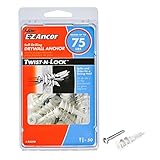
The hardware store aisle for drywall anchors can look like a mad scientist’s experiment gone wrong. You’ve got plastic ones, metal ones, ones that twist in, ones that you hammer in, and ones that look like they belong in a spaceship. They all promise to hold your stuff, but they’re not created equal. My personal rule of thumb? If it’s mostly plastic and feels flimsy, it’s probably only good for a picture frame or two. For anything with a bit of heft – shelves, mirrors, even a decent-sized television – you need to step up your game. My go-to for heavier items are the self-drilling metal anchors, sometimes called E-Z Ancor, or toggle bolts for really heavy stuff.
Let’s break down a few common players:
Plastic Expansion Anchors (the cheap, cone-shaped ones): These are the most basic. You drill a hole, tap the anchor in, and screw into it. They work by expanding as you tighten the screw. They’re okay for very light things – think a small, unframed print or a set of keys. I’ve seen them fail spectacularly with anything more than 10 pounds. They rely on the plastic digging into the drywall, which isn’t exactly a permanent or strong hold. They’re cheap, and you get what you pay for.
Self-Drilling Anchors (often metal or heavy-duty plastic): These are a big step up. They have a screw-like tip that drills directly into the drywall as you twist them in. Once they’re in, you can screw into them. The ones made of metal, especially those with a wider collar, are much more solid. They distribute the weight better and have a stronger grip. I’ve had decent luck with these holding up to 30-50 pounds, depending on the specific model and drywall quality. They’re my go-to for most shelf installations where I can’t hit a stud.
Toggle Bolts: These are the heavyweights of the anchor world. They consist of a bolt and a spring-loaded toggle that flips open behind the drywall once you push it through the hole. You have to drill a larger hole for these, but the trade-off is incredible holding power. They can often hold hundreds of pounds, making them ideal for very heavy items like large TVs, cabinets, or even bunk beds if you’re really committed. The main drawback is that they require a larger hole, and if you ever need to remove them, the toggle can fall into the wall, leaving you with a bigger repair job.
Molly Bolts: Similar to toggle bolts, molly bolts have a sleeve that expands behind the drywall. They’re generally easier to install than toggle bolts and don’t require a separate toggle piece. They offer a good balance of strength and ease of use for medium to heavy items, often rated for 50-100 pounds. They look a bit more refined than toggle bolts when installed.
My Verdict Table:**
| Anchor Type | Typical Use Case | Estimated Weight Capacity (per anchor) | My Opinion/Verdict |
|---|---|---|---|
| Plastic Expansion | Light pictures, small decor | 5-15 lbs | Avoid for anything valuable or heavy. Basic emergency use only. |
| Self-Drilling (Metal) | Shelves, mirrors, medium decor | 20-50 lbs | My workhorse. Good balance of strength and ease of installation. |
| Toggle Bolt | Heavy TVs, large mirrors, cabinets | 100-350+ lbs (depending on size) | The ‘no-compromise’ option for serious weight. Requires a larger hole. |
| Molly Bolt | Medium-heavy shelves, wall-mounted items | 50-100 lbs | Solid choice when you need more than basic, but not full-on toggle. |
When choosing, always check the manufacturer’s weight rating, but take it with a grain of salt. They’re usually tested under ideal conditions. Better to aim lower and be safe. (See Also: Can Concrete Anchors Be Used In Brick )
The Cold, Hard Truth: Why Anchors Can’t Beat Studs
Let’s cut to the chase. Are drywall anchors as good as studs? The answer is a resounding, no. Never. Not even close. A stud is literally a piece of lumber – a 2×4 or 2×6 – nailed directly into the framing of your house. When you drive a screw into a stud, you’re not just gripping drywall; you’re gripping solid wood. This wood is part of the structural integrity of your wall. It’s designed to bear weight, to support the plaster or drywall, and to carry loads from ceilings and roofs.
The sheer density and structural nature of wood mean it can handle immense forces. A screw driven into a stud has a pull-out strength that can be measured in hundreds of pounds, easily. This is why professional installers, builders, and anyone who’s been doing this for a while will always tell you to find a stud. It’s the most reliable, strongest, and safest way to hang anything that isn’t paper-light.
I learned this lesson the hard way, not with a falling mirror, but with a poorly hung closet system. I’d loaded it up with clothes, shoes, and a bunch of other junk. I’d used what I thought were ‘heavy-duty’ anchors, but I’d spread them out a bit too much, and importantly, missed the studs by a good 10 inches on either side. After a few months, I noticed the shelves were bowing significantly.
Then, one morning, I opened the closet door, and the entire bottom shelf had sagged so much it was practically touching the floor, ripping the anchors out of the drywall with a sickening tear. The force had concentrated on those anchor points, and the gypsum, unable to withstand the torque and shear forces, just gave way. If that system had been properly attached to studs, it would have held every pound I threw at it.
The problem with anchors is that they rely on the integrity of the drywall itself. Drywall is brittle. It’s gypsum plaster sandwiched between paper. When you put a load on an anchor, you’re basically creating a lever. The anchor tries to hold firm, but the drywall can flex, crack, or crumble around it, especially over time or with vibrations. Even the best anchors are only as strong as the material they’re embedded in. A stud, on the other hand, is a load-bearing element of the wall’s structure. It’s designed to be stressed and to hold up.
Furthermore, studs provide a consistent, predictable point of attachment. You can usually find them with a stud finder, or by tapping, and once you’ve located one, you know you have a solid anchor point. Anchors, even the best ones, are always a bit of an unknown. You’re hoping the drywall is in good condition, that the anchor is seated correctly, and that the load is distributed as intended. There’s a higher margin for error, and the consequences of that error can be much more severe – damaged walls, broken items, or even injury.
Common Mistakes That Lead to Anchor Failure
You’d think hanging something on a wall is straightforward, right? Drill a hole, stick in an anchor, screw it tight. Boom. Done. But I’ve seen enough poorly hung shelves and wobbly pictures to know that there are a million ways to screw this up. And believe me, I’ve probably made most of them myself. The biggest mistake people make is treating anchors like they’re invincible, or worse, as if they’re as good as studs. They’re not. They have limits, and pushing those limits is a fast track to disaster.
One of the most common blunders is using the wrong type of anchor for the job. Trying to hang a 50-pound TV mount with those little plastic conical anchors is like trying to tow a boat with a bicycle chain. It’s just not going to happen. Always match the anchor’s weight rating to the weight of the item you’re hanging, and then add a generous buffer. I always assume the manufacturer’s rating is for a perfect, static load in brand-new drywall. Real-world use is rarely that perfect.
Another classic error is improper installation. For plastic anchors, not tapping them in flush can cause the screw to go in at an angle, weakening the hold. For self-drilling anchors, not screwing them in deep enough or over-tightening them can strip the hole in the drywall.
With toggle bolts and molly bolts, failing to make sure the toggle or wings are properly seated behind the wall is a recipe for disaster. I once watched a buddy install a large mirror using molly bolts.
He was in a hurry, and didn’t make sure the sleeve behind the wall was flush. When he hung the mirror, it immediately tilted down, and one side ripped out. The molly bolt sleeve had just been hanging loose.
Overloading is another killer. People look at a shelf and think, “That’s not that heavy.” But then they pile on books, decorations, and who knows what else. That static weight is one thing, but dynamic weight – like bumping the shelf, or children climbing on it – can multiply the force dramatically. Always overestimate the weight and underestimate the strength of your anchor, especially if you have kids or pets who might interact with the hung item.
Here’s a mistake I made that cost me a nice set of speakers: I was mounting bookshelf speakers onto a wall. I found what I thought was a stud, but it turned out to be a metal conduit pipe running through the wall. I drilled into it, thinking I had a solid anchor, and then screwed the speaker mount directly in. The mount itself was designed for wood studs.
The metal pipe was too smooth for the screw threads to get a good grip, and the vibrations from the speakers eventually worked the screw loose. The mount, and one of the speakers, ended up on the floor.
It’s a good lesson: sometimes, what feels like a stud isn’t a stud at all, and you need to be absolutely sure. Using a stud finder is great, but a small pilot hole can confirm what you’re drilling into.
Finally, not considering the drywall thickness and condition is a biggie. Old drywall, water-damaged drywall, or thin drywall (like 1/4 inch) simply won’t hold anchors as well as new, 1/2 inch or 5/8 inch drywall. If your drywall is questionable, you might need to reinforce the area with a backing board or opt for a solution that bridges across multiple studs if possible. It’s a lot of little things that add up to a big failure.
Finding Studs: Your Secret Weapon (and Why Anchors Are Plan B)
If you’re still asking are drywall anchors as good as studs, the answer is a definitive no. This is why learning to find studs is arguably the most important skill for anyone who hangs things on walls. Studs are the skeletal structure of your wall, and attaching directly to them is always the superior method. Forget the anchors for a minute; let’s talk about finding the real deal. (See Also: Can Cords Be Used To Make Anchors Climbing )
The most common tool for the job is a stud finder. There are different types: magnetic ones that detect the nails or screws holding your drywall to the studs, and electronic ones that sense density changes in the wall. Electronic stud finders are generally easier to use. You calibrate it on a clear spot of wall, then slide it horizontally.
It will beep or light up when it detects the edge of a stud. Most electronic stud finders will indicate one edge, and you need to find the other edge to determine the center of the stud.
Standard studs are typically spaced 16 or 24 inches apart on center, so once you find one, you can usually estimate where the next one should be.
My personal favorite method, especially when I’m not sure about my stud finder’s accuracy or I just need a quick confirmation, is the ‘tap test’ combined with a small pilot hole. Give the wall a few firm taps. You’ll hear a difference.
A hollow sound means you’re likely tapping over empty space or insulation. A solid, dull thud means you’ve hit a stud. It takes practice, but you can get pretty good at it.
Once I have a suspected stud location, I drill a small pilot hole (maybe 1/16th or 1/8th inch) using a long, thin drill bit. If the bit goes in easily and hits resistance after an inch or so, you’ve probably found a stud. If it keeps going through empty space, you haven’t.
For mounting heavy items like TVs, I always recommend mounting directly to studs. Most TV mounts come with pre-drilled holes designed to align with standard 16-inch on-center stud spacing. If you can’t find studs exactly where you need them, you have a few options. The first is to install blocking – basically adding a horizontal piece of wood between studs to create a solid mounting surface. This is more involved but offers the most secure solution. Another option is to use heavy-duty toggle bolts or molly bolts, but as we’ve discussed, this is Plan B and not ideal for the heaviest loads.
I once had to hang a very large, heavy piece of artwork in a dining room. It was about 5 feet by 4 feet and probably weighed 60 pounds. The spot I wanted to hang it was right in the middle of a wall section, dead center between two studs. My first instinct was to grab some of those beefy toggle bolts.
But then I remembered a trick my dad taught me: furring strips. I bought a couple of inexpensive 1×2 wooden strips, cut them to length, and screwed them directly into the studs on either side, creating a solid horizontal wood surface that spanned the gap.
Then, I mounted my artwork hardware to these furring strips. It looked clean, was incredibly secure, and I didn’t have to worry about anchors failing.
The reality is, when you can use studs, you should. Anchors are for when studs aren’t available or perfectly placed. They are a tool to solve a problem, but they aren’t a structural replacement for the framing of your house. Embrace finding studs; it will save you headaches, money, and potentially, a lot of broken stuff.
When Anchors Are Your Only Option: Tips for Success
So, we’ve established that studs are king. But what happens when they’re just not there? Maybe you’re renting and can’t modify the wall structure significantly, or maybe the builder put studs in places that are completely inconvenient for your needs. In those situations, you’re left with anchors, and the question becomes: how do you make them work as well as they possibly can? It’s about mitigating risk and choosing the right anchor for the job.
First and foremost, know your weight. Don’t guess. If you’re hanging a shelf, weigh the shelf itself, then estimate the maximum weight you’ll ever put on it. Books are heavy. Stacked dishes are heavy. Get a scale. If the total weight is pushing the limits of even heavy-duty anchors, you need to rethink your plan. Sometimes, the smartest move is to split the load across multiple anchor points, or even across two different wall sections if that’s feasible.
Choose the right anchor type. As we covered, plastic cones are for very light things. For anything substantial – shelves, mirrors, wall-mounted anything that isn’t a picture frame – you want self-drilling metal anchors, molly bolts, or toggle bolts. For ultra-heavy items, toggle bolts are your best bet. Always buy anchors rated for significantly more weight than you think you’ll need. A 50-pound anchor might be fine for 20 pounds of static load, but if that shelf gets bumped or a kid pulls on it, that 20 pounds can become 50 or more in an instant.
Proper installation is a must. Read the instructions. Seriously.
Every anchor type has specific installation requirements. For toggle bolts, make sure the wings deploy correctly behind the wall.
For molly bolts, make sure the sleeve sits flush. For self-drilling anchors, don’t strip the hole. (See Also: Can Anchors In Your Shoulder Break )
If an anchor feels loose going in, it’s not going to hold. You might need to patch the hole and try a different anchor type or a larger size if the drywall can take it. I’ve learned to have a small tube of spackle handy for when an anchor just doesn’t bite properly. You can sometimes fill the hole slightly, let it dry, and then re-drill for the anchor.
It’s not ideal, but it’s better than a failed anchor.
Consider the drywall itself. Is it old? Is it crumbly? If it looks suspect, you might need to do some reinforcement. One trick is to install a wooden backing board. You can find studs and screw a nice-looking piece of plywood or a decorative wood plank directly into the studs. Then, you can mount your shelf or item onto this backing board using screws directly into the wood. This gives you the strength of studs without needing to place your item perfectly over them. This is a fantastic solution if aesthetics allow.
Finally, be realistic. Anchors are a compromise. They are a tool for specific situations where studs aren’t available.
They are not a structural equivalent to studs. When you use them, you are accepting a certain level of risk. Always err on the side of caution.
If in doubt, don’t hang it. That $20 shelf holding $200 worth of books is a bad trade if the shelf falls and breaks the books. Prioritize safety and the integrity of your walls.
For items where failure would be catastrophic – a large TV, a medicine cabinet, a heavy mirror above a bed – finding studs is the only sensible option. If you absolutely cannot find studs, consider professional installation or a different mounting location.
Frequently Asked Questions About Drywall Anchors vs. Studs
Can You Hang a TV on Drywall Anchors?
For most smaller TVs and lighter mounts, yes, you might be able to use heavy-duty toggle bolts or molly bolts. However, for larger, heavier TVs, it’s strongly recommended to mount them directly into wall studs. The weight and use involved can easily exceed the capacity of even the strongest drywall anchors, leading to catastrophic failure and damage to your TV and wall.
Are Plastic Drywall Anchors Strong Enough for Shelves?
Generally, no, not for most shelves that will hold anything more than very light decorative items. Plastic expansion anchors are designed for minimal weight, like small pictures or key hooks. For shelves, you should opt for self-drilling metal anchors, molly bolts, or toggle bolts, depending on the expected load.
How Much Weight Can a Drywall Anchor Hold?
The weight capacity of a drywall anchor varies dramatically by type. Basic plastic anchors might hold only 5-15 pounds. Self-drilling metal anchors can often hold 20-50 pounds. Heavy-duty toggle bolts can support hundreds of pounds. Always check the manufacturer’s rating, but use anchors rated for significantly more weight than your item actually weighs.
Is It Safe to Use Drywall Anchors for Medicine Cabinets?
It’s risky. Medicine cabinets often hold a lot of weight, especially when filled with bottles and jars. While heavy-duty anchors like toggle bolts can hold a lot, the long-term integrity against constant use and potential bumping is questionable. It’s always safer to find studs or install a solid wooden backing board securely attached to studs to mount a medicine cabinet.
What’s the Difference Between Drywall Anchors and Studs?
A stud is a structural wooden member within your wall, designed to bear weight. Drywall anchors are inserts that expand or wedge into the drywall itself to provide a stronger screw-holding surface than drywall alone. Studs offer vastly superior holding power and structural integrity compared to any drywall anchor.
Final Verdict
So, to wrap this whole thing up: are drywall anchors as good as studs? The simple, unvarnished truth is no. Studs are the backbone, the structural heroes. Anchors are the handy, sometimes necessary, but always secondary players. They’re a tool to make the best of a situation where studs aren’t cooperating.
If you can find a stud, use it. It’s the safest, most reliable option for anything that matters. If you can’t, choose your anchor wisely, install it perfectly, and always, always respect its weight limits. Don’t be the person who hangs a heavy mirror with flimsy plastic anchors and wakes up to a shattered mess.
My advice? Get yourself a decent stud finder, practice your tapping, and consider adding furring strips or backing boards if you’re feeling ambitious. It’s the DIY equivalent of a long-term investment in wall integrity. Happy (and safe) hanging!