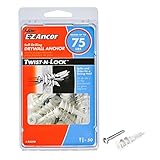
I remember staring at that heavy mirror, the one with the ornate, antique frame. The studs were nowhere near where I needed them to be. Panic set in. I grabbed a handful of those plastic wings, the kind you twist and snap – toggle bolts, right? Slapped that mirror up, and it held. For a while. Then, a year later, I decided to rearrange. I went to pull it down, and those plastic things just spun. Useless. It got me thinking: are drywall toggle anchors reusable? It’s a question that pops up when you’re trying to save a buck or just don’t want to run to the hardware store again.
The honest answer is usually no, but there are nuances you need to know before you trust them with anything valuable. Let’s break down why and what your options really are.
What the Heck Are Toggle Bolts Anyway?
Alright, let’s get down to brass tacks. When we talk about those little plastic wings that spring open behind the drywall, we’re usually talking about plastic molly bolts or, for heavier loads, actual toggle bolts.
They’re designed for those moments when you can’t hit a stud. The basic idea is simple: you drill a hole, push the anchor through, and then it expands or ‘toggles’ behind the drywall, giving you something solid to screw into. The plastic ones are cheap, readily available, and okay for lightweight stuff like a small picture frame or a thin shelf holding paperback books.
The metal ones, the proper toggle bolts with the spring-loaded wings, are a different beast entirely. They can hold serious weight, which is why people often eye them for hanging TVs, heavy mirrors, or substantial shelving.
I’ve used both, and I’ve learned the hard way that while they can work, they aren’t magic. My first encounter with a genuine toggle bolt was when I was helping a buddy hang a massive, solid wood headboard. The wall was pure drywall, no studs in sight. We prepped the wall, drilled the holes, and inserted those metal toggle anchors.
You screw them in until the wings pop out behind the drywall, then you often have to break off the plastic screw guide or pull out the rod. The headboard felt rock solid. We were impressed.
But what happens when you need to take it down and put it back up? That’s where the question of whether are drywall toggle anchors reusable really matters.
The design itself is the biggest clue. These anchors rely on friction and the integrity of the drywall to hold. The wings are meant to spread out and create pressure.
When you remove the screw, that pressure is released. For plastic molly bolts, once that plastic is compressed and then released, it often loses its shape and grip.
It’s like trying to re-inflate a balloon that’s been stretched too thin; it just doesn’t hold its form. For metal toggle bolts, the wings are designed to remain open, but the act of inserting and removing them, especially if you have to force them, can damage the drywall around the hole. The more you wiggle or force it, the more you chew up that drywall, making the next insertion less secure.
It’s a one-shot deal for maximum holding power in most cases. If you’re lucky, and the drywall is thick and undamaged, you might get a second use out of a metal toggle, but I wouldn’t bet my heavy items on it.
I’ve seen people try to reuse them, and often, the result is the anchor just spinning in the hole, or the screw not biting into anything substantial. It’s a gamble, and for anything more than a few pounds, it’s a gamble I’m not willing to take anymore. The cost of a new anchor is pennies compared to a damaged wall or a fallen item.
The Real Deal: Why Reusing Is Usually a Bad Idea
Let’s be blunt. The common advice is that toggle bolts, especially the cheap plastic ones, are single-use.
And for good reason. When you install a toggle anchor, you’re basically creating a mechanical grip behind the drywall. For plastic molly bolts, this grip is often achieved by the plastic deforming.
Once that plastic has been compressed and then released, it rarely springs back to its original shape with the same rigidity. Think of it like trying to bend a paperclip back and forth; each bend weakens it. The same principle applies here.
You force it in, it deforms to grip, you take it out, and it’s a bit looser, a bit more worn. The next time you try to install it, that slightly deformed plastic might not expand as fully, or it might not have enough friction against the back of the drywall to hold securely.
With metal toggle bolts, the situation is a bit different but still leans towards ‘don’t reuse’. These have spring-loaded wings that open up behind the drywall.
When you remove the screw, the wings stay open, and you can pull the anchor out. The theory is you can then reinsert it.
However, and this is where my own experience kicked in hard, the hole in the drywall itself becomes the weak link. The initial installation, especially if the hole was a perfect fit, can sometimes slightly enlarge the opening. When you try to reinsert the toggle, those wings might not have enough drywall material to bite into effectively. (See Also: Can Concrete Anchors Be Used In Brick )
Worse, if you had to force the bolt in, or if you needed to wiggle it to get it aligned, you can shred the back of the drywall. That shredded drywall offers very little resistance, and the toggle’s wings will just spin ineffectively.
I once tried to reuse a metal toggle for a slightly lighter shelf after removing a heavier one, and the whole thing just ripped out with a disheartening crunch. Lesson learned: the drywall’s structural integrity is the real limit.
Another factor is the screw itself. Often, the screw that comes with the toggle anchor is matched specifically for that anchor’s depth and holding capacity. If you reuse an anchor, you might be tempted to use a different screw, which could be too long, too short, or have a different thread pitch. This can prevent the toggle from engaging correctly, or it can strip the threads within the anchor itself, rendering it useless even if the drywall were perfect.
It’s a cascade of potential failures. The manufacturers design these things for one optimal installation.
Trying to get more out of them is often just asking for trouble down the line. The cost of a new pack of anchors is usually minimal, and it’s a small price to pay for the peace of mind knowing your items are securely mounted.
I’ve spent more time and money fixing drywall damage from failed reused anchors than a fresh pack would have cost initially.
So, to directly answer the question: are drywall toggle anchors reusable? Generally, no, not reliably. For anything you care about, or anything that could cause damage if it falls, buy new ones. It’s not worth the risk.
| Anchor Type | Reusability Verdict | Why? |
|---|---|---|
| Plastic Molly Bolt | No | Plastic deforms permanently, loses grip. |
| Metal Toggle Bolt (Standard Wing) | Rarely, and not recommended | Drywall hole integrity degrades, wings may spin, metal can bend. |
| Heavy-Duty Metal Toggle Bolt | Almost Never | Designed for maximum load on first install; drywall damage is significant on removal. |
When Might You actually Get Away with It?
Okay, I’ve been hammering home the ‘don’t reuse’ message, and for good reason. But are there any situations where you might get away with it, especially when asking if are drywall toggle anchors reusable?
There are a couple of fringe cases, but you need to go into them with your eyes wide open and a healthy dose of skepticism. First, consider the type of drywall itself.
If you’re working with thick, solid drywall (like half-inch or thicker, and of good quality), the hole you create might be less prone to immediate degradation. The thicker material provides more substance for the toggle’s wings to grip, even after a previous engagement. This is more applicable to the metal toggle bolts than the plastic ones, which are generally less solid to begin with.
Second, the stress the anchor was under previously matters. If you used a heavy-duty metal toggle bolt to hang something incredibly heavy, and then you remove it, the drywall around the hole has likely been stressed and potentially slightly deformed. Reusing it in that same stressed hole is a recipe for disaster. However, if you used a toggle bolt for something relatively light, say, a small coat hook that didn’t experience much lateral force, and the removal was gentle, you might have a slightly better chance of reinserting it successfully. But even then, the original installation was optimal. Any subsequent installation is a compromise.
I recall a situation where I had to temporarily remove a lightweight bracket that was held by a metal toggle bolt. I needed to patch a tiny hole behind it, and I knew I’d be reattaching the bracket within an hour. I was careful, very careful, not to enlarge the hole.
When I reinserted the toggle, it felt… okay. It held the bracket, which was only holding a small planter. But I was constantly second-guessing it.
Every time the wind blew and the planter swayed, I’d flinch. That’s not the kind of confidence you want in your wall anchors. For me, the peace of mind of a fresh anchor is worth the extra dollar or two.
It’s a psychological thing, too. Once you’ve seen a reused anchor fail, you’re forever wary. It becomes a weak point in your mental load for that particular hanging job.
The absolute best-case scenario for reuse involves a metal toggle bolt where the wings are still in perfect condition, the screw thread is pristine, and the drywall hole hasn’t been significantly enlarged or torn. This typically happens only with the first removal, if done with extreme care and if the anchor wasn’t subjected to significant shear or tensile load. Even then, you’re really just hoping for the best. It’s the DIY equivalent of gambling.
You might win, but the stakes are usually your stuff, or worse, potential damage to your wall. My advice? If you’re in doubt, or if the item is expensive, heavy, or valuable, just buy new ones. It’s the safe bet.
Trying to save a few cents here often costs you much more in the long run, either in replacement parts, repair materials, or the sheer aggravation of a failed job.
Common Mistakes People Make with Toggle Anchors
You’d think putting a bolt into a wall would be straightforward, but I’ve seen (and made) my fair share of mistakes with toggle anchors. One of the biggest blunders is using the wrong size anchor for the job. People see a heavy item and grab the biggest toggle bolt they can find, without considering the thickness of their drywall. A toggle bolt needs enough drywall to grip. (See Also: Can Cords Be Used To Make Anchors Climbing )
If your drywall is too thin, the wings might not deploy properly, or they might not have enough material to hold. Conversely, using a tiny anchor for something heavy is just asking for it to pull out.
Always check the weight rating on the packaging and match it to your item, but also consider your wall thickness. This is where those handy cheat sheets that come with some anchors are actually useful.
Another common pitfall is not drilling the correct size hole. The package will tell you exactly what drill bit size to use.
If you drill too small, you’ll struggle to get the anchor through, and you risk damaging the anchor or the drywall during insertion. If you drill too large, you’ve basically created a giant void where the toggle’s wings have nothing to grip. I learned this the hard way when hanging a set of kitchen cabinets. I rushed, used a bit that looked about right, and the toggle just spun uselessly.
Had to patch the wall and start over with the correct bit. It added about an hour to the job, plus the frustration. Don’t eyeball it; use a ruler or the actual drill bit size specified.
Forgetting to engage the toggle is another classic. With metal toggle bolts, after you’ve pushed them through the hole and they’ve sprung open, you usually need to pull the screw back slightly or break off a plastic guide to make sure the wings are fully deployed and seated against the back of the drywall. If you just screw into them without this step, they won’t hold properly. I’ve seen people just screw into them and wonder why it felt loose. It’s like trying to start a car without putting it in gear. It might make noise, but it’s not going anywhere. Read the instructions, people! They’re there for a reason.
And then there’s the over-tightening trap. With any screw, but especially with drywall anchors, there’s a point where ‘snug’ becomes ‘too much’. If you crank down on a toggle anchor, you can strip the threads inside the anchor itself, or you can further damage the drywall around the hole, compromising its integrity.
You want it snug and secure, not warped. The goal is to have the anchor sit flush against the wall surface without crushing the drywall. Once it’s snug, stop. I’ve seen people use power tools on these things and just obliterate the anchor or the wall.
A little finesse goes a long way. So, while the question is are drywall toggle anchors reusable, the more pressing issue for most DIYers is getting them installed correctly the first time.
The Weight Rating Game: What Can They Really Hold?
This is where a lot of confusion and disappointment happens. The weight ratings on toggle anchor packaging are often very optimistic, and they need to be taken with a grain of salt – a pretty big grain, actually.
These ratings are usually based on ideal conditions: perfectly installed anchors in thick, solid drywall, with no shear or lateral forces applied. In the real world, things are rarely that perfect. The actual weight an anchor can hold is almost always less than what’s printed on the box.
I’ve seen manufacturers claim their plastic molly bolts can hold 50 pounds. Fifty pounds? I wouldn’t trust one with a pound of ham, let alone 50. My rule of thumb is to cut those ratings in half, and then maybe cut them in half again if I’m feeling cautious.
For metal toggle bolts, the ratings are more realistic, but still, you have to be smart about them. A good, heavy-duty metal toggle bolt can indeed hold 100 pounds or more under ideal circumstances. But what are those circumstances?
They mean the anchor is installed perfectly, the drywall is solid, and the weight is purely vertical. If you’re hanging a TV, for example, there’s not just downward force; there are also moments and potential for sideways movement, especially if the TV is bumped or during an earthquake.
That’s where things can go wrong very quickly. I once installed a heavy artwork using what I thought were beefy metal toggles. It looked secure, but the frame had some ‘play’ in it.
A slight nudge, and I heard a sickening creak. I took it down immediately, realizing the shear force was too much for the anchor’s grip on the drywall. I ended up having to find studs, which is always the best option if available.
The material of the drywall is also a huge factor. Older drywall, or drywall that has been exposed to moisture, can be crumbly and weak. Anchors installed in these walls will fail at much lower weights. Similarly, if you’re hanging something on a ceiling, gravity is working directly against you, and you need even more solid anchoring. Many people ask if are drywall toggle anchors reusable because they want to save money, but they often underestimate the real-world stresses involved. It’s better to spend a few extra dollars on new, appropriate anchors, or even better, find studs, than to risk damage to your property or injury.
I’ve learned to be extremely conservative with weight ratings. For anything I can’t afford to fall, I assume the anchor can hold about 25% of its rated capacity.
That means if a metal toggle is rated for 100 pounds, I’m only comfortable putting about 25 pounds on it. It sounds drastic, but I’ve had enough close calls and seen enough failures to be wary. When in doubt, always over-anchor. (See Also: Can Anchors In Your Shoulder Break )
Use multiple anchors if needed, or better yet, look for structural elements like studs or joists. Drywall itself is not a structural material; it’s a covering.
Anchors are bridges between that covering and the structural elements behind it. Don’t expect the bridge to hold more than it’s designed for, and certainly don’t expect it to hold up after you’ve already crossed it once.
Faq: Your Burning Questions Answered
Can I Reuse a Plastic Drywall Anchor?
Generally, no. Plastic drywall anchors, often called molly bolts, are typically designed for single use. When you install them, the plastic deforms to create a grip behind the drywall. Once removed, the plastic often doesn’t return to its original shape, and its holding power is significantly reduced, making reuse unreliable and risky.
Will a Metal Toggle Bolt Anchor Hold If Reused?
It’s not recommended, though it’s sometimes possible with metal toggle bolts. The main issue is that the hole in the drywall may be slightly enlarged or damaged after the first use. This can prevent the toggle’s wings from gripping effectively the second time, leading to a loose or failed installation. Extreme care during removal and reinsertion might yield a temporary success, but it’s not a reliable long-term solution.
What Happens If I Reuse a Toggle Anchor and It Fails?
If a reused toggle anchor fails, the item you’ve mounted will likely fall. This can cause damage to the item itself, to your wall, or even lead to personal injury if the falling object is heavy or sharp. You’ll also be left with a damaged hole in your drywall that may need patching and repairing before you can mount anything in that spot again.
Is It Better to Use a Toggle Anchor or a Screw Directly Into Drywall?
A screw directly into drywall alone will hold very little weight, maybe a few ounces for a very lightweight picture. Toggle anchors, whether plastic or metal, are designed to provide much greater holding power by expanding or toggling behind the drywall. Therefore, for anything more than the lightest items, a toggle anchor is far superior to a screw directly into drywall.
When Should I Absolutely Avoid Reusing Any Drywall Anchor?
You should absolutely avoid reusing any drywall anchor when mounting heavy items (like TVs, large mirrors, shelves with books), items that could cause significant damage if they fall, or anything where safety is a primary concern (like safety equipment or handrails). Always opt for a new anchor or a stud when mounting such items to make sure maximum security and reliability.
Alternatives When Reusing Isn’t an Option
So, we’ve established that reusing toggle anchors is a sketchy proposition at best. What do you do when you need to hang something, but you don’t want to buy new anchors, or you’ve already used up your stash?
The first and best alternative, hands down, is to find a stud. Seriously. If there’s a stud available where you need to hang your item, use a wood screw or a lag screw directly into it.
Studs are the framing members of your wall and can hold hundreds of pounds. I’ve spent hours hunting for studs with a stud finder, tapping on walls, and sometimes even drilling tiny pilot holes to confirm, but it’s always worth it. It gives you a sense of security that no drywall anchor can match.
For heavy items like TVs, shelves full of books, or large cabinets, finding studs is a must for me.
If studs aren’t an option, and you’re looking for something more solid than a single-use toggle, consider heavier-duty drywall anchors. There are screw-in anchors made of metal or heavy-duty plastic that offer better holding power and, in some cases, can be removed and reinstalled more reliably than traditional toggles. Brands like Toggler (which are different from the toggle bolts we’ve been discussing, often using a plastic strap that cinches behind the wall) or E-Z Ancor’s self-drilling anchors are good options. These often have a higher weight rating and can be a bit more forgiving if you need to remove and reinstall them, though I still wouldn’t call them truly reusable for every scenario. The key is that they often create a more stable anchor point within the drywall itself.
Another approach, especially for lighter items where you might be tempted to reuse a toggle, is to use a simple, solid screw-in anchor. These are usually made of metal or a very hard plastic and have coarse threads that bite directly into the drywall. They don’t ‘toggle’ or expand, but their design allows them to be screwed in and out multiple times with minimal damage to the drywall, provided you don’t overtighten. They are fantastic for things like hanging small pictures, clocks, or lightweight decorative items.
I keep a stash of these for those quick jobs where a stud isn’t handy and I don’t want to deal with the fuss of toggles. They are often more forgiving and can be reused more than once without significant loss of holding power.
Finally, for really heavy items where studs are impossible and even heavy-duty anchors give you pause, you might need to consider toggle bolts that are designed for thicker drywall or plaster, or even specific solutions for hollow doors or ceilings. Some heavier-duty metal toggle bolts are designed to be reinserted, provided the drywall remains intact. However, if you’re in doubt, or if the item is important, the safest bet is always to buy new anchors or find structural support. The question of whether are drywall toggle anchors reusable is often a sign that you’re trying to make do, and sometimes, making do just isn’t safe or effective. Invest in the right hardware for the job, and you’ll save yourself headaches and potential damage down the line.
Final Thoughts
So, to put it plainly, are drywall toggle anchors reusable? For the most part, no. Especially the cheap plastic ones are designed for a single, secure installation. Metal toggle bolts offer a bit more hope, but the integrity of the drywall hole is often compromised after the first use, making subsequent installations unreliable and risky. My experience has taught me that the cost of a new anchor is negligible compared to the potential damage or frustration of a failed mount.
If you absolutely must try to reuse a metal toggle, do it with extreme caution, understand the risks, and only for lighter items. For anything valuable, heavy, or safety-related, always opt for new anchors, or better yet, find a stud. Don’t gamble with your walls or your belongings; a little bit of foresight and a few extra dollars will save you a lot of trouble.
Next time you’re hanging something, take a moment to assess your needs and the wall material. It’s a small step that can prevent a big headache. And if you’re ever in doubt, remember: studs are your best friends.