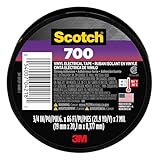
I remember a job years ago, patching up some wiring in an old engine bay. The sun was beating down, the engine was still radiating heat like a furnace, and I grabbed the first roll of tape I found. Big mistake. I thought, ‘It’s tape, it’ll hold.’ Yeah, right. That gooey mess dripping down was a stark reminder that not all tapes are created equal, especially when things get hot.
So, the question on your mind is likely: can electrical tape withstand high heat? The short answer is: it depends. And that’s where things get messy, much like my engine bay incident.
We’re going to cut through the marketing hype and talk about what actually works, what doesn’t, and where you might be wasting your time and money.
What’s Really Happening When Tape Gets Hot
You see those rolls of black tape in every hardware store, and they all look pretty much the same. But underneath that stretchy exterior is a whole world of chemical compounds and engineering that dictates how it behaves, especially under thermal stress. Standard electrical tape, the kind you probably have in your junk drawer, is typically made from PVC (polyvinyl chloride) as the backing and a rubber-based adhesive. PVC itself has a decent melting point, but the adhesive is the real weak link when the temperature climbs. As it gets hot, the adhesive softens, loses its tack, and can even liquefy. This is what causes that terrifying sag and eventual peel-off you see in hot environments.
Think about it like trying to hold two pieces of hot metal together with a candle. The wax might stick for a bit, but as soon as it melts, you’ve got nothing. Electrical tape’s adhesive works similarly. It relies on a specific viscosity to bond effectively.
When that viscosity drops too low due to heat, the bond fails. This isn’t just about aesthetics; it’s about functionality.
If you’re trying to insulate a wire that’s generating heat, or protect it in a hot environment, and the tape starts to fail, you’ve just created a potential fire hazard or an electrical short. I learned this the hard way when a poorly chosen tape job in a car’s exhaust vicinity started to smoke. Not ideal.
The common advice often glosses over this. People say ‘use electrical tape for insulation,’ but rarely do they specify what kind of electrical tape or how much heat it can handle.
It’s like saying ‘use a tool’ without saying which one. For basic, low-voltage, ambient-temperature applications, standard tape is fine.
But the moment you introduce significant heat – like under the hood of a car, near a motor, or in a hot attic during summer – you’re entering a different ballgame entirely. The vinyl backing might stay intact for a while, but the glue is the first thing to surrender.
This is why understanding the composition and the operating temperature range is so important. It’s not just about resisting heat; it’s about maintaining its adhesive properties and structural integrity. (See Also: Can I Use Electrical Tape To Connect Wires )
When Standard Tape Fails: The High-Heat Contenders
Okay, so if your average black electrical tape is going to melt into a sticky mess, what are you supposed to use? This is where specialized tapes come into play. For anything remotely high-heat, you need to look beyond the bargain bin. The real heroes in this arena are often silicone-based or specialized vinyl tapes. Silicone tapes, for instance, are designed to withstand extreme temperatures, often going up to 500°F (260°C) or even higher, depending on the product. They also have self-fusing properties, meaning they bond to themselves without an adhesive, creating a solid, waterproof, and heat-resistant seal. This is a huge advantage because you don’t have a weak adhesive layer to worry about.
Then there are high-temperature vinyl tapes. These aren’t your standard PVC tapes. They’re formulated with additives that increase their thermal stability. Think of them as the beefed-up cousins of regular electrical tape. They can often handle continuous operating temperatures in the range of 175-220°F (80-105°C), with some specialized versions pushing even higher for short durations. They maintain flexibility and adhesion at these lifted temperatures, which is key. I’ve used these on wiring harnesses that run close to an exhaust manifold, and while they get warm, they don’t turn into goo. It’s a night-and-day difference from the cheap stuff.
When I first got into auto repair, I made the mistake of using standard tape on exhaust-related wiring. Within a week, it had melted and fused onto the pipes, creating a sticky, burnt-smelling mess that was a nightmare to clean. That experience taught me to always check the specs. A good high-temperature tape will clearly state its operating temperature range and often its dielectric strength, which is its ability to resist electrical breakdown. Don’t just assume. Look for labels that explicitly mention ‘high temperature,’ ‘automotive,’ or specific temperature ratings like ‘150°C’ or ‘300°F.’ It’s worth the extra few bucks to avoid a much bigger headache later.
What to Look for: Specs That Actually Matter
Picking the right tape isn’t rocket science, but it does require paying attention to details that most casual DIYers skip. The first thing you absolutely need to check is the temperature rating. This is usually expressed as a maximum continuous operating temperature. Standard electrical tape might be rated for something like 176°F (80°C), which sounds okay until you realize that engine compartments or attics can easily exceed that. High-temperature tapes will often list ratings of 200°F (93°C), 300°F (150°C), or even higher. If your application involves any significant heat source, you need to aim for a tape rated well above the expected ambient temperature.
Next up is the adhesive type. As I’ve hammered home, the adhesive is often the first thing to fail. For high-heat applications, you want adhesives that remain stable and tacky at lifted temperatures. Rubber-based adhesives are common but can soften. Acrylic-based adhesives often offer better heat resistance. And then there are self-fusing tapes, which, as mentioned, use vulcanization or cross-linking to bond to themselves, eliminating the adhesive altogether. These are fantastic for extreme heat and harsh environments.
You should also consider the dielectric strength, measured in volts per mil (VPM). This tells you how much voltage the tape can withstand before breaking down. While this might not be directly related to heat, it’s fundamental for any electrical insulation job. A tape that fails due to heat might also lose its dielectric strength, compounding the problem. Finally, look at flexibility and conformability. A good tape needs to wrap around wires and awkward shapes without cracking or lifting. Some high-temperature tapes can be a bit stiff, so test how well it conforms to your specific application. Here’s a quick rundown of what I look for:
| Feature | Standard Tape (Opinion) | High-Temp Tape (Opinion) |
|---|---|---|
| Temperature Rating | Barely adequate for most hot spots. Fine for household switches. | Your best bet for engine bays, appliances, hot wiring. |
| Adhesive | Softens quickly, loses tack. Sticky mess waiting to happen. | Stays tacky, resists softening. Important for long-term hold. |
| Flexibility | Generally good, stretchy. | Varies; some can be stiff, need careful application. |
| Durability | Poor under heat and UV. | Much better resistance to heat, chemicals, and UV. |
| Price | Cheap, readily available. | More expensive, but worth every penny for reliability. |
Common Mistakes and What to Avoid
The biggest blunder I see people make is assuming all electrical tape is the same. They grab the cheapest roll without reading the specs. This leads to the gooey, failed insulation scenarios I’ve already described. Another common mistake is using electrical tape for applications where it’s not designed. For instance, using it as a primary structural fastener or for sealing against harsh chemicals. Electrical tape is for electrical insulation and bundling wires, not for holding your car’s bumper on or sealing a leaky pipe.
Overlapping is another area where people go wrong. When you’re wrapping a wire, you need to overlap each layer by at least half the tape’s width. This creates a smooth barrier and makes sure there are no gaps for heat or electricity to escape. Rushing the job and just doing a few sloppy wraps is a recipe for failure. I once saw a DIY repair on a toaster oven where the tape was just loosely spiraled around a wire that got hot during operation. It started to smoke within minutes. The user clearly didn’t overlap properly, and probably used the wrong kind of tape, to begin with.
A related error is applying tape too loosely. While you want it to conform, it also needs to be snug.
A loose wrap can shift, allowing heat to build up in the gap, or it might not provide adequate insulation. Think of it like wrapping a gift – you want it tight and neat, not baggy. (See Also: Can Electrica Tape Catch On Fire )
Also, be mindful of the environment where you’re applying the tape. Applying regular tape in sub-freezing temperatures can make the adhesive brittle and prone to cracking, while applying it on a scorching hot surface might pre-soften the adhesive, reducing its initial bond strength. Always make sure the surface is clean and within the tape’s recommended application temperature range.
Many tapes have an application temperature range, not just an operating temperature range.
Real-World Scenarios: Where Heat Is the Enemy
Let’s talk turkey. Where does heat really mess with electrical tape? Auto repair is a big one. Engine compartments are infernos. Wires run close to exhaust manifolds, turbochargers, radiators, and the engine block itself. Standard tape will simply bake and melt. I’ve had to re-tape wiring harnesses on cars multiple times because the original tape (usually done by a previous owner or a less-than-stellar mechanic) just couldn’t handle the sustained heat. You need tapes specifically rated for those high under-hood temperatures, often exceeding 250°F (120°C) intermittently.
Appliance repair is another common battlefield. Think about the wiring inside a toaster oven, a hair dryer, or even a washing machine motor. These components generate significant heat during operation. A cheap tape job can lead to melted insulation, short circuits, and, in the worst-case scenario, a fire. I had an old microwave where the internal wiring insulation started to degrade. I used a high-temperature, self-fusing silicone tape to re-insulate a section. It’s still holding up perfectly, no signs of melting or degradation even after years of use. The key is that the tape needs to maintain its integrity and insulation properties under prolonged thermal stress.
Other areas include industrial machinery, high-power lighting systems, and even home wiring in attics or crawl spaces that get incredibly hot in the summer. For example, if you’re working on floodlights that get very hot, or wiring near a furnace or water heater, you absolutely must use a tape designed for that heat. Don’t be tempted by the low price of standard tape; the potential for failure and damage is far too high. I learned this lesson when a cheap tape job on a wiring loom near a heat lamp in a workshop started to sag and eventually shorted out a piece of equipment. It cost me way more in repairs than a few rolls of proper high-temp tape ever would have.
Practical Tips for Success
First off, clean the surface. Seriously. Whether it’s a wire, a connector, or a pipe, grease, dust, or grime will prevent any tape from sticking properly, especially when heated. Wipe it down with a solvent like isopropyl alcohol and let it dry completely. This simple step makes a massive difference. When applying, start wrapping about an inch away from the point where the heat is most intense, and extend the wrap an inch or two beyond it. This creates a buffer zone.
Always overlap. I can’t stress this enough. Aim for at least 50% overlap with each turn. This makes sure a continuous, unbroken layer of insulation. For important applications, or if you’re using a tape that’s not self-fusing, I recommend doing at least two layers. The first layer provides the primary insulation, and the second adds an extra barrier against heat and mechanical damage.
If you’re using self-fusing silicone tape, stretch it as you wrap. This is what activates its fusing properties.
You want it to bond tightly to itself, creating a monolithic, smooth seal. For vinyl tapes, apply them with moderate tension to make sure good adhesion without stretching them so much that they lose their backing strength.
Lastly, always test your work if possible. After the tape has had a chance to cure (some adhesives need a little time), gently tug on it. (See Also: Can I Substitute Duct Tape For Electrical Tape )
Then, if it’s a powered circuit, carefully power it up and check for any signs of overheating or melting. If it’s a non-electrical application, expose it to the expected temperature for a while and check for any degradation.
Better to find a problem now than later.
Faq: Your Burning Questions Answered
Can Electrical Tape Melt?
Yes, standard electrical tape made from PVC with a rubber-based adhesive can absolutely melt or soften significantly when exposed to high heat. The adhesive is typically the first component to fail, losing its tack and turning into a gooey mess. Specialized high-temperature tapes are designed to resist melting or degrading at much higher temperatures.
What Is the Maximum Temperature for Electrical Tape?
This varies greatly. Standard electrical tape is usually rated for around 176°F (80°C). High-temperature electrical tapes can be rated for continuous operation from 200°F (93°C) up to 500°F (260°C) or more, depending on the specific formulation and material (like silicone or specialized vinyl).
What Tape Can Withstand Extreme Heat?
For extreme heat, look for specialized tapes such as self-fusing silicone tape, fiberglass tape with a high-temperature adhesive, or certain high-performance polyimide tapes (like Kapton tape, though this is usually for electronics and very high temps).
Is Gorilla Tape Good for High Heat?
Gorilla Tape is known for its strength and adhesion, but it’s generally not designed for extreme high-heat applications. Its adhesive can soften and fail in temperatures much above standard room conditions. For sustained high heat, you’ll need tapes specifically formulated for thermal resistance, not general-purpose strength.
Verdict
So, to circle back to the main question: can electrical tape withstand high heat? The answer is a resounding ‘sometimes, but usually not the kind you have lying around.’ Standard tapes are for standard conditions. When things get hot, you need to step up your game with specialized materials.
Don’t let a cheap roll of tape be the weak link in your project. Always check the temperature ratings, understand the adhesive, and choose a tape that’s actually designed for the environment it’s going into. A little bit of research upfront saves a whole lot of trouble, melted messes, and potential hazards down the line.
Next time you’re facing a hot wiring job, take a moment. Grab the right tool for the job, and you won’t regret it.