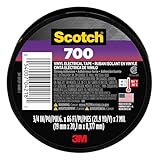
I remember staring at a mess of wires in my garage, a half-finished project mocking me. My buddy, Dave, a self-proclaimed DIY king, casually tossed me a roll of black tape. “Just wrap it tight,” he said, “that’s what electrical tape is for, right?” Well, Dave, bless his heart, was dead wrong. So, let’s cut to the chase: can I use electrical tape to connect two wires? The honest answer is a resounding, frustrating NO, at least not for any connection that’s supposed to last or be safe.
This isn’t some corporate-speak or a made-up rule. It’s about physics, safety, and not having your house smell like burnt plastic. We’ve all seen it in movies or maybe even on a quick fix job – wires wrapped in black tape. But reality is a lot less forgiving than Hollywood. Stick around, and I’ll tell you why that quick fix is a recipe for disaster and what you should be doing instead.
Why That Black Tape Isn’t Your Wire’s Best Friend
Look, I’m not here to bash electrical tape. It’s a fantastic product for what it’s actually designed for.
It’s stretchy, it’s got good adhesion when it’s clean and dry, and it’s insulated. That’s why it’s called “electrical tape,” right?
It feels like it should be the go-to for any wire connection. I’ve certainly been tempted more times than I care to admit. Back in my early tinkering days, I once tried to splice a speaker wire on an old stereo with it. Sounded okay for about an hour, then crackle, pop, and a faint smell of ozone.
Lesson learned the hard way. The problem is, electrical tape is a temporary, low-voltage, low-current insulation for already made connections, not a primary connector itself.
It’s like using a band-aid to hold a broken bone together – it might cover it up for a bit, but it’s not doing the real work of structural repair. When you stretch electrical tape, especially over time or under stress, it can lose its grip. Heat from the current, vibration, or just the natural aging process of the adhesive can cause it to unwrap, exposing the bare wires. And exposed wires are a one-way ticket to shorts, sparks, and a fire hazard.
Think about the tiny vibrations in your car, the temperature swings in an attic, or even just the slight flexing a wire might undergo. Electrical tape isn’t engineered to withstand that kind of abuse long-term for a direct wire splice. It’s designed to wrap around existing, secure connections to add a layer of insulation and protection against abrasion or incidental contact.
So, when someone asks if they can use electrical tape to connect two wires, the short, blunt answer is no, not if you want it to be safe and reliable.
The Real Way to Join Wires: Connectors You Can Trust
If electrical tape isn’t the answer, then what is? This is where people get confused because there are so many options out there. It’s not just one thing.
For low-voltage stuff, like speaker wire or small electronics, you might get away with twisting the wires together and then shoving a wire nut over them. Wire nuts are those little plastic caps that screw onto the twisted wires.
They’re cheap, they’re common, and they do a decent job of holding the wires together while insulating the connection. Just make sure you get the right size for the number and gauge of wires you’re joining. (See Also: Can I Use Electrical Tape To Connect Wires )
You want it snug, not so loose the wires can pull out, and not so tight you’re struggling to get it on. I’ve seen folks try to cram too many wires into one nut, and that’s a recipe for disaster too.
They get loose, or worse, overheat.
For anything more permanent, reliable, or higher voltage/current, you’re looking at crimp connectors or terminal blocks. Crimp connectors are little metal sleeves that you slide over the ends of your wires, then use a special tool (a crimper) to squeeze the sleeve down, permanently joining the two wires. They’re super secure. You then usually insulate these with heat-shrink tubing, which you slide over the wire before crimping, then shrink it down with a heat gun over the crimped connector.
It’s a clean, professional look and a rock-solid connection. Terminal blocks are like little bars with screws or clamps that you feed your wires into. They’re great for organizing multiple connections in one place, like in control panels or junction boxes.
You’re basically using screws to clamp down on the wire ends, making a very secure mechanical and electrical connection. These are what you’ll find inside appliances and in professional electrical installations for a reason. They’re built for the job.
| Connection Method | Pros | Cons | My Verdict |
|---|---|---|---|
| Electrical Tape (alone) | Cheap, readily available | Unreliable, unsafe, temporary, degrades, fire hazard | Absolutely Not |
| Wire Nuts | Inexpensive, easy for low-voltage DIY | Can loosen, not for high-vibration or high-temp areas, requires proper sizing | Okay for simple, stationary low-voltage |
| Crimp Connectors + Heat Shrink | Very secure, professional look, good insulation | Requires specific tools (crimper, heat gun), can be fiddly | Highly Recommended for permanent/reliable connections |
| Terminal Blocks | Organized, secure for multiple wires, easy to disconnect/reconnect | Can be bulky, requires mounting space | Excellent for distribution points and control panels |
Common Mistakes That Land You in Hot Water (literally)
The biggest mistake, obviously, is thinking electrical tape is a permanent splicing solution. But there are other traps people fall into. One is using the wrong gauge wire for the job.
If you’re connecting wires for a high-draw appliance, and you use thin wires that aren’t rated for that current, they’ll overheat even if the connection itself is perfect. It’s like trying to pour a gallon of water through a coffee stirrer – it’s going to back up and get messy. Always check the wire gauge recommendations for the device or circuit you’re working on. Another common goof is not stripping enough insulation off the wire, or stripping too much.
You need enough bare wire exposed to make a good electrical contact with the connector, but not so much that you have a long section of bare wire sticking out beyond the connector. That’s just asking for trouble. I once saw a splice where the guy stripped about an inch and a half of insulation, twisted the wires, and then put a tiny wire nut on.
Half the bare wire was sticking out, just begging to touch something it shouldn’t. Amateur hour, and dangerous.
Then there’s the issue of environmental factors. Electrical tape is not waterproof, nor is it resistant to UV light or extreme temperatures. If your connection is going to be exposed to moisture, sunlight, or significant temperature fluctuations, that tape is going to fail, and fast.
You need connectors and insulation specifically rated for those conditions. Think about outdoor lighting or wiring in an unconditioned garage. (See Also: Can Electrica Tape Catch On Fire )
Regular electrical tape will turn brittle and gummy. Also, and this is a big one that trips up even experienced folks: vibration.
If the wires are in an area that shakes or vibrates – like in a vehicle, a washing machine, or even just near a motor – the constant movement can stress even a well-applied tape job, eventually causing it to loosen or tear. You need a mechanically solid connection that won’t be compromised by movement. That means crimps or screw-down terminals, not tape.
When Electrical Tape might Be Okay (and When It’s Still a Bad Idea)
Okay, so I’ve hammered home the point that using electrical tape to connect two wires is a no-go. But are there any scenarios where it’s even remotely acceptable? Barely.
If you are in an absolute emergency, and I mean life-or-death, need-to-stop-a-short-circuit-right-now emergency, and the only thing you have is electrical tape, you could use it to temporarily insulate a connection that’s already securely made by twisting the wires tightly together. But this is the caveat: it’s a temporary, emergency measure, and you need to replace it with a proper connector the absolute second you can.
I’m talking about the kind of situation where a frayed wire is arcing and you need to prevent an immediate fire or electrocution risk until you can get to the fuse box or properly fix it. Even then, it’s a gamble. The tape can slip, the adhesive can fail, and you’re back to square one.
Another situation, and this is a bit more nuanced, is using it as a secondary insulation or protection layer over a properly made connection. For instance, if you’ve used a wire nut or a crimp connector, and you want to add an extra layer of protection against abrasion or minor moisture, you could wrap electrical tape over it. However, even in this case, heat-shrink tubing is a far superior and more durable option. It creates a watertight, mechanically strong seal that tape just can’t match.
The key here is that the tape is not doing the connecting; it’s just adding a bit of superficial protection to an already secure joint. So, while there are edge cases where it might be used in conjunction with a real connection, using it as the connection itself is always a bad idea. Think of it like this: electrical tape is a bodyguard for a secure handshake; it’s not the handshake itself.
A Few Practical Tips for Better Connections
Beyond just avoiding tape for splices, here are a few things I’ve learned over the years that make electrical work less of a headache. First, invest in decent tools. A cheap wire stripper can mangle wires, making them harder to connect reliably.
A good quality stripper makes clean cuts and removes insulation without nicking the wire strands. A proper crimping tool is also a must if you’re going the crimp connector route. Trying to use pliers to crimp will result in a weak, unreliable connection. Second, always, always, always turn off the power at the breaker before you start any electrical work.
I can’t stress this enough. It sounds obvious, but in the heat of a project, it’s easy to get tunnel vision and forget. Double-check that the power is off by trying to turn on the device you’re working on.
Third, when in doubt, err on the side of over-insulating. It’s better to have a slightly bulkier connection that’s completely protected than a slim one that leaves wires exposed. Heat shrink tubing is your friend here. You can buy it in various sizes and even colors, which can be handy for identifying different circuits. (See Also: Can I Substitute Duct Tape For Electrical Tape )
Fourth, practice makes perfect. If you’re new to this, grab some scrap wire and practice making connections. Try wire nuts, try crimping, try using terminal blocks.
Get a feel for how much pressure is needed, how to strip wires properly, and how to make sure a solid contact. It doesn’t take long to develop a feel for it. Finally, if you’re working on anything that’s going to be exposed to the elements – outdoors, in a damp basement, or in a vehicle – use connectors and sealing methods that are specifically designed for those environments.
Standard wire nuts and tape won’t cut it. Look for waterproof connectors or use marine-grade heat shrink. The few extra bucks spent on the right materials will save you a massive headache (and potential danger) down the road.
For example, I learned this the hard way when I wired some outdoor landscape lights with standard connectors. A couple of rainy seasons later, I was back digging them up because of corrosion.
The People Also Ask (paa) Faqs on Wire Connections
Can You Connect Wires with Just Twisting Them?
Twisting wires together without a connector is generally not a safe or reliable method for any permanent electrical connection. While it might provide a very temporary contact, the twist can loosen over time due to vibration or thermal expansion and contraction. This leads to intermittent connections, arcing, increased resistance, and potentially overheating or fire hazards. It’s only acceptable for very low-voltage, non-important applications where the wires are unlikely to be disturbed and can be easily re-tensioned or redone.
Is It Okay to Join Wires with Tape?
No, it is not okay to join wires with tape, especially not electrical tape, as the primary connection method. Electrical tape is designed to insulate existing, secure connections, not to create them. It lacks the mechanical strength to hold wires together reliably, and its adhesive properties degrade over time, especially with temperature changes and vibration. Exposed wires are a serious fire and shock hazard.
What Is the Best Way to Connect Two Electrical Wires?
The best way to connect two electrical wires depends on the application, but generally involves using appropriate connectors for a secure mechanical and electrical bond. For most household wiring, this includes wire nuts (for low-voltage, stationary applications), crimp connectors (often with heat shrink tubing for insulation), or terminal blocks. These methods make sure a durable, safe, and reliable connection that maintains electrical integrity.
How Do You Insulate a Wire Connection?
Insulating a wire connection involves covering the bare conductive parts to prevent electrical contact with other conductors or the environment. Common insulation methods include using wire nuts, which are pre-insulated plastic caps, or employing heat-shrink tubing that is heated to form a tight, protective sleeve over the connection. Electrical tape can be used as a secondary layer of insulation over a properly made connection, but it is not sufficient on its own.
Is Electrical Tape Waterproof?
Standard electrical tape is not waterproof. While it may offer some resistance to moisture for a short period, it is not designed for submersion or prolonged exposure to water. Water ingress can compromise the adhesive, degrade the tape’s insulating properties, and lead to corrosion of the wires or short circuits. For wet environments, specialized waterproof connectors and sealants are necessary.
Final Verdict
So, to circle back to the original question: can I use electrical tape to connect two wires? The answer is a definitive no. It’s a tempting shortcut, I get it, especially when you’re in the middle of a project and realize you’re missing the right part. But that temporary fix will almost certainly come back to bite you, often with sparks or worse. Your electrical connections need to be solid, secure, and properly insulated with materials designed for the job. Don’t rely on tape; use wire nuts for simple low-voltage tasks, or opt for crimp connectors or terminal blocks for anything more substantial. Your future self, and your home’s safety, will thank you.
Look, I’m not saying you need to be a certified electrician for every little task, but understanding the fundamental differences between a connector and an insulator is key. Electrical tape has its place, but it’s for wrapping around a solid connection to protect it, not for making the connection itself. If you’re ever unsure about a wiring job, it’s always better to consult with someone experienced or just buy the right connectors. It’s a small investment for peace of mind and to avoid turning a simple fix into a costly, potentially dangerous problem.