I remember staring at a scuffed-up motherboard after a botched attempt to swap a CPU cooler. Thermal paste had gone everywhere, and a tiny bit of it looked suspiciously like it had seeped under a tiny resistor. Panic set in. My first thought, like probably yours right now, was: can I use electrical tape on motherboard components to just… insulate it and call it a day?
We’ve all been there, right? You’re trying to fix or upgrade something, and you’re out of the exact right thing. So, you start looking around for alternatives. Electrical tape is everywhere, it’s cheap, and it’s supposed to be an insulator. It seems like a no-brainer. But when it comes to something as sensitive and expensive as a motherboard, ‘seems like’ isn’t good enough.
Let’s cut to the chase: using electrical tape on your motherboard is a gamble I wouldn’t recommend, but I’m going to tell you why and what you should do instead.
Why Your First Instinct Might Be Wrong
Look, I get it. Electrical tape. It’s in every toolbox, it’s cheap, and its name implies it’s for electronics. It’s a black, stretchy, vaguely rubbery strip that keeps wires from shorting out. So, when you’ve got a stray component, a tiny scratch, or you’re just trying to hold something delicate in place on your motherboard, electrical tape seems like the logical, quick fix. You might even think, ‘It’s just a thin layer, it’s insulating, what could go wrong?’ I’ve certainly thought that before I learned the hard way.
I once tried to insulate a couple of tiny surface-mount components that looked a bit exposed after a careless spill. I figured a small piece of black tape would block any errant conductivity. I carefully cut a tiny square, applied it, and felt pretty smug.
Booted up the PC… and nothing. Dead. Absolutely dead.
Turns out, that ‘thin layer’ of tape, while an insulator in a broad sense, isn’t designed for the microscopic precision and heat tolerances of a motherboard. The adhesive, the thickness, the way it degrades – it all adds up to a potential disaster. It wasn’t just about conductivity; it was about pressure, heat dissipation, and the sheer delicacy of the components involved.
That expensive motherboard became a very expensive paperweight.
The common advice you’ll find online, often from people who have never actually tried this on a high-end board, is that if you’re super careful, it might work for a temporary fix. I disagree. It’s like saying you might be able to fix a leaky roof with chewing gum.
Sure, it might hold for a bit, but you’re just delaying a much bigger, more expensive problem. The risk-reward ratio is just terrible. The cost of a new motherboard, or worse, a whole new system, far outweighs the few bucks you save by using the wrong material.
Motherboards are intricate ecosystems where every tiny part plays a role. You wouldn’t use duct tape to hold together the delicate workings of a Swiss watch, and you shouldn’t use electrical tape on your PC’s brain. (See Also: Can I Use Electrical Tape To Connect Wires )
What Electrical Tape actually Is (and Why It’s Not for Mobos)
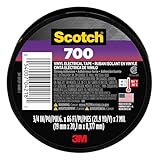
Let’s break down what electrical tape actually is, because the name is a bit misleading when it comes to the super-fine details of motherboard repair. Most standard electrical tape, the kind you buy at any hardware store for a couple of bucks a roll, is made of PVC (polyvinyl chloride) with a rubber-based adhesive. Now, PVC itself is a decent insulator, and that’s its primary job – preventing accidental contact with live wires in everyday household or automotive wiring. It’s designed for thicker gauge wires, larger clearances, and environments that aren’t subjected to the same thermal stresses or microscopic precision as a motherboard.
The problem isn’t just conductivity. Electrical tape has a relatively low-temperature rating. Many components on a motherboard, especially around the CPU, VRMs, and chipset, can get quite warm during operation. Standard electrical tape can soften, melt, or degrade under sustained heat, which can cause the adhesive to ooze or the tape itself to warp. This oozing adhesive can then conduct electricity or contaminate other components, creating a short circuit or a sticky mess that’s even harder to clean than thermal paste. Think about it: you’re putting a material designed for room temperature onto a component that can hit 60-80°C (140-176°F) or more.
Furthermore, the adhesive on electrical tape, while usually strong enough for wires, can be aggressive. When you try to remove it from a delicate PCB surface, it can pull off solder mask, damage tiny traces, or even lift surface-mount components. This is the opposite of what you want in a repair. Instead of fixing a problem, you’re creating new ones. It’s a real gamble, and the stakes are high. People often talk about the adhesive being a major issue. I’ve seen instances where the adhesive has become brittle and cracked over time, losing its insulating properties and turning into a crumbly mess that gets into everything. This is a far cry from the clean, stable insulation needed on a motherboard.
The Risks of DIY Motherboard “fixes”
So, you’ve got a situation on your motherboard that makes you think, ‘Hey, maybe a little tape would fix this.’ You’re probably looking at minor cosmetic damage, a slightly exposed trace, or maybe a tiny component that’s come loose. The temptation to grab the nearest roll of tape, be it electrical or even masking tape (please don’t!), is strong. But let’s talk about the real risks involved, beyond just the tape itself. Motherboard repair is not like fixing a frayed lamp cord. It’s a precision operation.
One of the biggest risks is thermal runaway. As I mentioned, components heat up. If you’ve covered something with tape that’s supposed to dissipate heat, or if the tape itself starts to degrade and insulate poorly when hot, you can create hot spots.
These hot spots can damage adjacent components, cause solder joints to fail, or even lead to catastrophic failure of the chip itself. I remember trying to ‘reinforce’ a slightly wobbly capacitor on an old graphics card with a tiny bit of tape once. It seemed fine for a while, but then it started artifacting. Turned out the heat buildup under the tape had warped the PCB near the capacitor, affecting the GPU core’s stability.
A $300 card turned into a paperweight because I tried a ‘quick fix.’
Then there’s the issue of static discharge. Motherboards are incredibly sensitive to Electrostatic Discharge (ESD). While electrical tape is generally considered an insulator and thus a barrier against direct discharge, the process of applying it can be risky. If you’re not using proper ESD precautions – an anti-static wrist strap, an anti-static mat, and working in an ESD-safe environment – you can easily zap sensitive components while trying to apply the tape.
The tape itself can also build up a static charge. It’s a dangerous game of whack-a-mole. The common advice is to work on an ESD mat and wear a wrist strap, which is good advice, but it doesn’t negate the inherent risks of using the wrong materials. It’s like saying you can safely juggle chainsaws if you wear thick gloves – it might reduce the risk, but it’s still a terrible idea.
What to Use Instead: The Right Tools for the Job
Okay, so electrical tape is a big no-no. What’s the actual solution when you encounter a problem on your motherboard that makes you reach for the tape? The honest answer is: usually, nothing you can fix with tape. Motherboard issues are rarely about needing a patch. They are often about component failure, solder joint issues, or physical damage that requires specialized tools and expertise. (See Also: Can Electrica Tape Catch On Fire )
If you have a component that’s physically damaged – like a cracked capacitor or a burnt resistor – you need to replace that specific component. This requires desoldering the old one and soldering in a new one of the exact same specification. This is micro-soldering, and it’s not a job for a beginner with a roll of tape. You need a good soldering iron with a fine tip, flux, solder wick, magnification, and a steady hand. For very fine-pitch components, you might even need a hot air rework station. If you’re not already experienced in electronics repair, this is a job for a professional repair service.
If you’re dealing with a very minor issue, like a slightly loose jumper or a scratch on the PCB that doesn’t look like it’s cut through traces, there are specialized materials. For minor trace repair, there are conductive pens or tapes designed for PCB repair. These are much finer, more precise, and formulated for the specific electrical and thermal properties of a PCB.
For insulating small areas that might be exposed after a spill, a thin layer of UV-curable solder mask or a specialized electronic conformal coating (applied very carefully and sparingly) is a far better, though still advanced, option than electrical tape. For example, MG Chemicals makes a UV Curable Solder Mask that comes in a pen, which is precise and cures quickly under UV light. It’s not cheap, but it’s designed for the job.
For temporary, non-conductive physical support of something very minor and non-important, like holding a loose heat spreader in place before you can reapply thermal paste and a heatsink, a tiny dab of high-temperature epoxy designed for electronics might be considered, but this is extremely situational and risky. However, these are niche solutions for experienced users. For 99% of users, if you’re thinking of using tape, the answer is to stop, assess if the problem is truly fixable by you, and if not, seek professional help or consider component replacement if you have the skills.
A Practical Comparison of “solutions”
Let’s lay out some common DIY “solutions” for minor motherboard issues and compare them to what you should be doing, or what the professional approach is. This isn’t about every possible problem, but the kinds of things that might lead someone to think about tape.
| Scenario/Problem | “Tape” Solution (BAD IDEA) | Why It’s Bad | Proper Solution | Why It’s Good |
|---|---|---|---|---|
| Exposed trace after a scratch | Wrap with electrical tape | Degrades with heat, adhesive oozes, can damage PCB upon removal, poor conductivity correction. | Repair with conductive pen/tape, UV solder mask | Designed for PCB conductivity/insulation, precise application, durable. |
| Loose jumper cap | Tape it down | Adhesive can get into contacts, tape can peel off, not secure. | Make sure it’s seated properly, or use a tiny drop of non-conductive glue (e.g., non-permanent hobby glue) if it absolutely won’t stay. | Jumper caps are designed to stay put. Professional connectors are used. |
| Slightly lifted component (e.g., small resistor) | Tape it down | Adhesive can fail, can’t handle heat, poor electrical connection, damages component pads. | Re-solder the component with proper equipment. | Restores original, reliable electrical connection and structural integrity. |
| Minor spill residue near components | Cover with electrical tape | Residue can seep under tape, tape traps heat, adhesive can react with residue. | Thoroughly clean with 90%+ Isopropyl Alcohol and a soft brush. | Removes contaminants without damaging components or PCB. |
| Holding a heat spreader in place temporarily | Tape it | Doesn’t conduct heat, can melt, adhesive failure. | Re-apply thermal paste and secure with its intended heatsink/mounting mechanism. | Makes sure proper thermal transfer and secure physical mounting. |
As you can see, the “tape solution” often creates more problems than it solves, or it’s a very temporary, unreliable fix. The proper solutions, while often requiring more skill or specific tools, actually address the root cause and restore the motherboard’s functionality and longevity. When you’re looking at a motherboard, you’re dealing with a complex piece of technology, not a garden hose. The materials and methods need to be equally precise.
When All Else Fails: The Professional Opinion
Let’s talk about what the actual pros do. When a motherboard comes into a professional repair shop with damage that might make someone think of electrical tape, they aren’t reaching for the tape. They’re reaching for microscopes, hot air stations, specialized solder, flux, and diagnostic tools. The closest analogy you might find to “tape” in a professional repair might be a very thin layer of conformal coating or UV-curable solder mask to protect a repaired trace. This is applied with extreme precision using specialized applicators, not just slapped on with scissors.
The common advice from these professionals is stark: if you’re asking if you can use electrical tape on a motherboard, the answer is almost certainly no. The damage or issue you’re trying to fix is likely beyond the scope of a DIY electrical tape fix. They’ll tell you that the materials in electrical tape – the PVC, the adhesive – are not designed for the operating temperatures, the microscopic tolerances, or the longevity required for a motherboard. They also emphasize that attempting such a fix can easily lead to further, more permanent damage, making professional repair impossible or significantly more expensive.
According to manufacturers and reputable repair guides for electronics, the goal is always to restore the original functionality and integrity of the board. This means using materials that are electrically inert, thermally stable, and non-corrosive. Electrical tape fails on all these counts when used in this context. It’s a tool for its intended purpose: insulating wire splices in environments where heat and precision aren’t the primary concerns. For motherboards, you need precision-engineered solutions, not household quick fixes.
Can Electrical Tape Damage a Motherboard?
Yes, electrical tape can absolutely damage a motherboard. The adhesive can leave residue, degrade over time, and attract dust. The tape itself can soften or melt under the heat generated by the motherboard, potentially causing short circuits. Furthermore, removing the tape can peel off solder mask or damage delicate components and traces. (See Also: Can I Substitute Duct Tape For Electrical Tape )
Is Electrical Tape Conductive?
Standard electrical tape is generally considered non-conductive, acting as an insulator. However, this insulation can break down under certain conditions, such as extreme heat or chemical exposure. More importantly, the adhesive used in electrical tape can become conductive or attract conductive dust, creating unintended pathways for electricity.
What Should I Use to Insulate a Motherboard If Not Electrical Tape?
For actual insulation needs on a motherboard, you should use specialized electronic materials like UV-curable solder mask, conformal coating, or purpose-built insulating tapes designed for PCB applications. These materials offer better thermal stability, precise application, and are engineered for the sensitive environment of a motherboard.
Can I Use Electrical Tape for a Temporary Fix on a Motherboard?
While it might seem like a quick fix, using electrical tape for any temporary repair on a motherboard is highly discouraged. The risks of causing permanent damage or introducing new problems due to heat, adhesive breakdown, or static discharge far outweigh any perceived benefit of a temporary solution.
Can I Use Electrical Tape on Motherboard: A Final Word
So, to circle back to the question: can I use electrical tape on motherboard components? My straightforward, no-nonsense answer, based on years of tinkering and regrettably learning some lessons the hard way, is a resounding no. It’s not designed for the job, and the potential for disaster is far too high. You’re not just risking a minor inconvenience; you’re risking the entire motherboard, which is the brain of your computer and often the most expensive component. Think of it this way: would you use a band-aid to fix a cracked engine block? Probably not. It’s the same principle here.
The allure of a quick, cheap fix with electrical tape is understandable, especially when faced with an expensive piece of hardware. However, the reality is that motherboards demand precision and specialized materials. Using electrical tape is like trying to perform delicate surgery with a butter knife – it’s the wrong tool, and the outcome is likely to be grim. Save yourself the headache, the potential for catastrophic failure, and the cost of a replacement motherboard.
If you find yourself in a situation where you’re contemplating using electrical tape on your motherboard, take a deep breath. Step back. Assess the problem honestly. If it’s a minor scratch that doesn’t seem to have damaged any traces, leave it alone. If it’s a spill, clean it thoroughly with isopropyl alcohol. If a component is loose or damaged, your best bet is to either seek professional repair or replace the motherboard. Don’t gamble with your PC’s core component using a material that’s fundamentally unsuited for the task.
Conclusion
The short, blunt truth is that using electrical tape on your motherboard is a bad idea. Period. While it insulates wires in a pinch, it’s not built for the specific thermal demands, microscopic tolerances, and long-term stability required by the sensitive components on your PC’s main board. The adhesive can degrade, ooze, and attract conductive dust, and the tape itself can fail under heat, leading to shorts or further damage.
If you’ve encountered a situation that makes you wonder if electrical tape is a viable solution, it’s a strong indicator that the problem is likely beyond a simple tape job. Instead of risking more damage, consider your options carefully. For most users, this means either seeking professional repair services or, more often than not, preparing to replace the motherboard entirely.
So, before you reach for that roll of electrical tape, remember this: the potential cost of failure is incredibly high. For delicate electronics like motherboards, always opt for specialized repair materials or professional expertise. The question of can I use electrical tape on motherboard should be answered with a firm ‘no’ if you want your system to live another day.