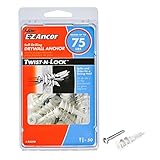
I remember staring at that heavy antique mirror, the one my grandmother gave me. The wall in my hallway felt… questionable. I’d already learned the hard way that those flimsy plastic anchors you get with most shelves are basically a prayer in plastic form. They’d held up my spice rack for about six months before it decided to make a dramatic exit, scattering cumin and paprika across my kitchen floor. So, when it came to that mirror, I knew I needed something more substantial. This brings me to the age-old question: are toggle bolts better than drywall anchors? Let me tell you, after years of trial and error, I have some strong opinions.
It’s not just about holding things up; it’s about holding them up safely and reliably. We’ve all seen those DIY disasters where something looks okay for a bit, then BAM! It pulls away from the wall, taking a chunk of drywall with it. That’s where the real difference lies, and frankly, it’s why I’ve mostly ditched the standard plastic anchors for heavier jobs.
The Dreaded Plastic Anchor: A False Sense of Security
Look, those little ribbed plastic cones are everywhere for a reason: they’re cheap and they can work. But let’s be brutally honest, they’re designed for light-duty stuff. Think small picture frames, lightweight decorations, maybe a tiny shelf for a single paperback. You drill a hole, hammer in the plastic anchor, and then screw your screw into the anchor. Simple enough. The plastic expands slightly, creating a bit of friction against the drywall.
The problem is, drywall isn’t exactly structural. It’s basically gypsum plaster sandwiched between paper.
So, those plastic anchors rely entirely on the integrity of that paper and the plaster itself to hold. If you’ve got slightly crumbly drywall, or you’ve drilled a hole that’s a hair too big, you’re asking for trouble. I’ve had them simply spin in the hole, meaning they’ve lost all grip. It’s like trying to grip a greased watermelon.
You just feel it loosening, and then it’s game over. Trying to hang my son’s heavy bookshelf with them was a mistake I only made once. The whole thing sagged precariously within a week, and I swear I heard the plastic groaning under the strain.
That’s when I started looking for alternatives, real solutions for when you need something to stay put.
The main selling point of these anchors is their ease of use and low cost. You can buy a massive pack for a few bucks. But if you’re hanging anything with even a moderate amount of weight, or anything that might get bumped or jostled, you’re basically gambling. I’ve learned that investing a little more upfront saves you the headache, and potential damage, down the line. The common advice is to use them for “most home applications,” which I think is wildly misleading for anything beyond a framed photo.
Enter the Mighty Toggle Bolt: Spreading the Love
Toggle bolts are a different breed entirely. They operate on a principle that’s far more solid. Think of it as a parachute for your screw. Most common toggle bolts consist of a screw and a spring-loaded metal wing that folds flat to go through a drilled hole, then springs open behind the drywall. Once the wing is open, it sits flat against the back of the drywall, distributing the weight over a much larger surface area. This is the key difference. Instead of relying on the drywall’s integrity in a single spot, the load is spread across a much wider plane.
My first experience with a true toggle bolt was when I was mounting a rather heavy, old cast iron radiator cover. The instructions explicitly called for them. (See Also: Can Concrete Anchors Be Used In Brick )
I was skeptical, but wow. You drill a hole – often a bit larger than for a plastic anchor. Then, you thread the bolt through the item you’re mounting, and push the toggle mechanism through the hole.
When it pops open behind the wall, you tighten it down. It felt solid. There was no wobbling, no flexing. It was like the wall had grown a second, stronger layer just for that bolt.
I remember giving the radiator cover a good tug, just to test it, and it didn’t budge an inch. It felt completely secure, like it was bolted directly into a stud, even though there wasn’t one anywhere near.
The sheer mechanical advantage of a toggle bolt is what makes them superior for heavier items. That metal wing, spread out behind the wall, can handle significantly more weight than a plastic anchor ever could. It’s not just about shear strength; it’s about preventing pull-out. For things like heavy mirrors, large shelves holding books, or even wall-mounted TVs (though dedicated TV mounts are usually best here), a toggle bolt offers a level of confidence that plastic anchors just can’t match. The peace of mind alone is worth the slightly higher cost and effort.
When to Use What: A Practical Breakdown
This isn’t a black-and-white situation, but the lines become pretty clear when you’re dealing with actual weight. For anything that feels like it could reasonably pull out of the wall if you gave it a firm yank – think anything heavier than a gallon of milk – you should seriously consider toggle bolts. This includes substantial shelving units, large mirrors, wall-mounted cabinets, curtain rods that will hold heavy drapes, or even things like radiators or towel bars that are expected to take a beating.
Here’s a quick cheat sheet I’ve developed over the years:
| Application | Best Choice | Why? |
|---|---|---|
| Light Picture Frames (under 5 lbs) | Plastic Anchor / Small Screw | Easy, cheap, sufficient for minimal weight. |
| Medium Shelves (books, decor, 10-20 lbs) | Toggle Bolt / Snap Toggle | Distributes weight, far more secure than plastic. |
| Heavy Items (mirrors, cabinets, radiators, 20+ lbs) | Heavy-Duty Toggle Bolt / Molly Bolt | Maximum holding power, spreads load across large area. |
| Mounting into Studs | Wood Screw | Always the strongest option if available. |
Common mistakes include using plastic anchors for things they can’t handle (we’ve all been there) or drilling a hole that’s too big for the anchor, which renders it useless. For toggle bolts, the mistake is usually not having enough clearance behind the drywall for the wings to open, or not realizing how much wall space the open wings actually take up. Some newer ‘snap toggles’ are a bit more forgiving in this regard.
My rule of thumb is this: if I have to second-guess whether a plastic anchor will hold, I just go straight for a toggle bolt. It costs maybe a dollar or two more per anchor, but the added security is immense. You’re not just buying an anchor; you’re buying peace of mind.
The ‘snap Toggle’ and Other Variations: Modern Improvements
While the classic toggle bolt with the loose wings is fantastic, newer designs offer even more convenience. The ‘snap toggle’ is a prime example. These have the toggle mechanism attached to a threaded bolt, but it’s designed to ‘snap’ into place once it’s through the hole. You then screw the bolt into the toggle head. This is a huge improvement because you don’t have to hold the bolt while the toggle swings open behind the wall, which can be fiddly. For anyone who’s struggled with that, snap toggles are a revelation. (See Also: Can Cords Be Used To Make Anchors Climbing )
Another variation is the ‘molly bolt’. These look a bit like hollow metal anchors. You drill a hole, insert the molly bolt, and then as you tighten the screw, the metal sleeve expands and curls behind the drywall, creating a very strong mechanical lock. Molly bolts are excellent for heavier loads and are often found in commercial applications. They offer a very clean finish on the wall surface, with the bolt head sitting flush.
I remember trying to install a particularly ornate and heavy mirror once. The wall was older plaster, and I was worried about it crumbling. I used a set of molly bolts, and they were incredibly satisfying to install.
The way the metal sleeve expanded and gripped the back of the plaster felt far more secure than any plastic anchor. It was a slightly larger hole than I’d usually drill for a basic anchor, but the result was a mirror that felt like it was part of the wall itself. These modern iterations of the toggle bolt principle make them more accessible and easier to use for the average DIYer.
They solve some of the minor annoyances of the original toggle bolt design, like needing a third hand.
The ‘stud Finder’ Factor: When You Get Lucky
Of course, no anchor or bolt can beat finding a solid wood stud. If your project allows for it – meaning you can position your item directly over a stud – then a simple wood screw is always the strongest, most reliable option. That’s where the ‘stud finder’ comes in. I’ve got a few different kinds, from the simple magnetic ones that find the nails holding the drywall to the more sophisticated electronic ones that beep and light up. They’re not always 100% accurate, especially on older walls or walls with multiple layers of drywall, but they’re a good starting point.
My personal trick is to use the electronic stud finder, mark potential stud locations, and then gently tap with a small nail or a thin awl where I think the stud is. If you hit solid wood, you’ll feel it immediately. If you hit hollow space, the nail will go in easily. This double-checking method has saved me from many a failed anchor attempt.
I remember once I was convinced I’d found a stud for a heavy coat rack, only to drill in and hit… nothing. Turns out, it was just a particularly thick piece of drywall or maybe some old plumbing pipe. I had to pull the screw out and switch to a heavy-duty toggle bolt.
Lesson learned: always verify your stud location if possible.
When you can hit a stud, the holding power is technically infinite for practical purposes. Drywall itself will fail long before a properly sized wood screw into a solid stud. So, while we’re comparing toggle bolts to drywall anchors, it’s worth remembering that the ultimate goal is often to mimic that stud-like security. Toggle bolts do a damn good job of that when a stud isn’t an option, and they are significantly better than standard plastic anchors for anything that weighs more than a paperback novel. (See Also: Can Anchors In Your Shoulder Break )
Common Mistakes and How to Avoid Them
One of the biggest blunders people make, and I’ve been guilty of this, is not reading the weight rating on the packaging. Those little plastic anchors might say they hold 25 lbs, but that’s often under ideal conditions with brand-new, perfectly installed drywall. Real-world conditions are rarely ideal. I’ve seen plastic anchors fail well below their claimed weight limit because the drywall was a bit soft, or the screw was slightly too large. Always err on the side of caution. If an item is heavy, or important, assume the lowest possible weight rating and then double it for safety.
Another mistake is drilling the hole too large for the anchor or toggle. For plastic anchors, this means they just spin. For toggle bolts, if the hole is too big, the toggle wings might not engage properly or could slip through. Always follow the manufacturer’s recommendation for drill bit size. If you’re unsure, it’s better to start with a slightly smaller bit and gradually enlarge it if needed, rather than making it too big right off the bat. I keep a range of drill bits handy for this very reason. It’s frustrating to have to patch a hole you made too big because the anchor wouldn’t seat correctly.
Over-tightening is another issue. With plastic anchors, you can strip the drywall and make them useless. With toggle bolts, you can sometimes pull the mechanism too hard against the back of the drywall, potentially cracking it if you’re not careful, especially with older plaster. Tighten until you feel firm resistance and the item is snug against the wall, but don’t crank on it like you’re trying to win a strength competition. It should feel secure, not like you’re about to rip the wall apart. When in doubt, a bit less torque is better than too much.
Faqs About Toggle Bolts vs. Drywall Anchors
Are Toggle Bolts Stronger Than Drywall Anchors?
Yes, generally speaking, toggle bolts are significantly stronger than standard plastic drywall anchors. Toggle bolts work by expanding a metal wing behind the drywall, distributing the weight over a much larger surface area. Standard plastic anchors rely on friction and the integrity of the drywall itself in a single point, making them suitable only for very light loads.
Can I Use Toggle Bolts in Plaster Walls?
Yes, toggle bolts can often be used in plaster walls, but with caution. Plaster walls can be more brittle than drywall. Make sure the toggle wings have enough space to open fully behind the plaster. For very old or crumbly plaster, you might consider reinforcing the area or using a toggle bolt specifically designed for plaster, or a molly bolt which expands evenly.
Do I Need a Special Drill Bit for Toggle Bolts?
You typically need a standard drill bit, but the size is important and specified by the toggle bolt manufacturer. Toggle bolts often require a larger hole than plastic anchors. Always check the packaging for the recommended drill bit size to make sure the toggle can pass through and then open properly behind the wall.
When Are Drywall Anchors Sufficient?
Drywall anchors are sufficient for very light items, such as small picture frames, lightweight wall decor, or items that weigh only a few pounds. They are not suitable for anything that could cause damage if it fell, like heavy shelves, mirrors, or anything that might be leaned on or bumped frequently. Their primary advantage is low cost and ease of installation for minimal weight applications.
What Is the Difference Between a Toggle Bolt and a Molly Bolt?
A classic toggle bolt has a separate spring-loaded wing that attaches to the bolt and opens behind the wall. A molly bolt is a one-piece unit where a metal sleeve expands and curls behind the wall as you tighten the screw, creating a very secure mechanical lock. Both offer strong holding power, but molly bolts often provide a flush finish and can be easier to install for some users.
Verdict
So, when it comes down to it, are toggle bolts better than drywall anchors? For anything that carries a significant amount of weight, or anything you don’t want crashing down and potentially causing damage, the answer is a resounding yes. Those little plastic guys have their place, for sure, but they’re for light-duty tasks only. I learned that the hard way with my spice rack, and I’ve never looked back when hanging anything substantial.
Invest in toggle bolts, or the newer snap toggles, when you need real holding power. They might cost a bit more per unit, and the installation can be slightly more involved, but the security you gain is well worth it. It’s about trusting your walls to hold what you put on them, and for that, toggle bolts are often the clear winner over basic drywall anchors.
Next time you’re staring at a heavy item and a blank wall, skip the plastic and reach for the toggle. Your walls (and your belongings) will thank you.