I once hung a ridiculously heavy mirror in my hallway, convinced the drywall anchors I’d bought were the magic bullets. They looked sturdy enough, those little plastic doodads you tap into the wall. What could go wrong? A week later, the whole damn thing was on the floor, mirror intact but the plaster around the anchors looked like a miniature sinkhole. That little disaster taught me a hard lesson: not all wall anchors are created equal, and sometimes, you’re just asking for trouble.
So, if you’re staring at a big ol’ picture frame, a heavy shelf, or even just a curtain rod that’s going to take some abuse, you’re probably wondering, are wall anchors strong enough for close rod? It’s a fair question, and the answer isn’t a simple yes or no. It depends heavily on what you’re hanging, what your walls are made of, and importantly, what kind of anchors you’re using.
The Humble Wall Anchor: What’s Really Going on?
Let’s get one thing straight: drywall itself is not exactly structural. It’s basically gypsum plaster sandwiched between paper. Tap a nail into it, and it’ll hold maybe a few pounds, if you’re lucky. Push it too hard, and you’ll have a hole bigger than you intended, which is exactly what happened with my mirror. This is where wall anchors come in. Their job is to spread the load over a larger area of that flimsy drywall, or better yet, to bite into something more substantial behind it.
There are a few main types you’ll encounter, and they all work differently. The most basic is the plastic expansion anchor. You drill a hole, jam the anchor in, and then screw into it. As the screw tightens, the anchor expands slightly, creating friction against the drywall. It’s cheap and easy, but frankly, for anything with a bit of weight or shear force (like a curtain rod that gets yanked), it’s often not enough. I’ve seen these things pull out with less effort than it takes to open a stubborn jar. They’re okay for tiny, lightweight things – a tiny picture frame, maybe a small coat hook for a single light jacket.
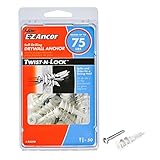
Then you have the self-drilling drywall anchors. These are usually made of metal or a sturdier plastic and have a screw point built-in. You just screw them directly into the drywall without drilling a pilot hole. They create their own threads in the wall. These are generally stronger than the basic expansion anchors because they have a larger surface area gripping the drywall. I’ve used these for shelves that held books, and they held up reasonably well. Still, they’re primarily designed for drywall. If you hit a stud behind the wall, you’re golden. If you don’t, you’re still relying on the strength of the drywall itself, just distributed better.
The real workhorses, in my experience, are the toggle bolts and molly bolts. Toggle bolts have a spring-loaded wing that folds up to go through a drilled hole, then springs open behind the drywall. You tighten the bolt, and that wing presses flat against the back of the wall, creating a strong anchor point. Molly bolts are similar but often have a metal sleeve that expands and clamps down on the wall as you tighten the bolt. These are significantly stronger and are what you want for heavier items or situations where the weight is constantly applied, like a curtain rod that’s going to have curtains pulled on it daily.
When ‘close Rod’ Means ‘trouble Waiting to Happen’
The term ‘close rod’ is a bit vague, but I’m going to assume you mean something like a curtain rod, a towel bar, or maybe a shelf that’s mounted relatively close to a corner or another fixture. This proximity can be a real pain. When you install an anchor close to a corner, you’re limited in the type of anchor you can use and the size of the drill bit. For example, toggle bolts need a pretty substantial hole, and if you’re too close to the edge of the drywall, you might compromise the integrity of the wall itself. You could end up with a larger chunk of drywall breaking away, which is far worse than a simple anchor failure.
Another issue with ‘close rod’ mounting is the use factor. Imagine hanging a curtain rod. The rod itself might not be that heavy, but the curtains can be. When you pull those curtains, you’re not just pulling straight down; you’re pulling outwards. This outward force, or shear force, puts a lot of stress on the anchors. If your anchors are close to each other, say, two curtain rod brackets mounted just 2-3 feet apart, and you’re using weak anchors, that combined outward pull can easily overcome the strength of the anchors and the drywall. It’s like a tug-of-war: the closer your anchor points are, the less use each anchor has individually, but the more combined force they have to withstand.
I had a situation installing a towel bar in a small bathroom. The studs were just not in the right place for the desired location. I ended up using heavy-duty toggle bolts, but I had to get the spacing just right so they weren’t too close to the corner or too close to each other. Even then, I noticed that if you yanked on the towel bar too hard, there was a tiny bit of flex. It held, but it made me realize that proper spacing and anchor selection are most important, especially when you’re working with limited real estate on the wall.
The common advice is always to hit a stud. And yes, that’s the gold standard. But what do you do when the studs aren’t where you need them? This is when you have to rely on anchors. And the question ‘are wall anchors strong enough for close rod’ is particularly relevant here because you often can’t space anchors widely apart when mounting things in tight spots. You’re forced to use anchors in drywall, and you’re forced to put them closer together. This is where you need to stop thinking about the cheapest, easiest anchor and start thinking about the strongest, most appropriate anchor for the job. (See Also: Can Concrete Anchors Be Used In Brick )
What Kind of Wall Are We Dealing with?
This is the million-dollar question. Are you drilling into standard 1/2-inch drywall? Do you have thicker 5/8-inch drywall? Or are you dealing with plaster walls, which are often harder but can be brittle? Or maybe you’re lucky and hitting solid wood studs. The type of wall material dictates the type of anchor you can use and how strong it will be. I’ve had the worst luck with plaster over lath. It looks solid, but it can crumble like a cookie if you don’t drill carefully and use the right anchor. For plaster, you often need specific plaster anchors or, better yet, toggle bolts that can grab behind the lath. Plastic anchors tend to just shatter plaster.
I learned this the hard way installing a heavy medicine cabinet in an old house. The walls were thick plaster. I used what I thought were solid expansion anchors. Within a day, I heard a sickening crack. The anchors had torn through the plaster and lath. It was a much bigger repair job than I anticipated. Since then, I’ve treated plaster walls with extreme caution and have found toggle bolts to be my go-to for anything substantial. They spread the load effectively and can often grip behind the lath, which is key in older homes.
Choosing the Right Anchor: Not All Heroes Wear Capes
Let’s talk about what you should actually be looking for when you need to hang something and studs aren’t an option. Forget those tiny, cheap plastic ones for anything that isn’t a postcard. Seriously. If the item you’re hanging weighs more than a pound or two, you need to step up your game.
Self-Drilling Drywall Anchors (Heavy Duty): For light to medium duty. Look for ones made of metal or a very solid plastic. They have a decent load rating, often cited around 20-50 lbs in shear, but always check the manufacturer’s rating and consider that a conservative estimate. They’re good for shelves holding books, heavy picture frames, or even a sturdy curtain rod if the curtains aren’t too heavy. I’ve used brands like Toggler SNAPs or similar that offer a bit more grip than the basic ones.
Toggle Bolts: These are your best bet for heavier items or when you need real holding power in drywall or plaster. They require a larger hole, and the toggle wing needs clearance behind the wall to open. They can hold anywhere from 50 lbs to over 100 lbs, depending on the size and the wall material. I’ve hung heavy mirrors and large cabinets using these, and they feel incredibly secure. The key is making sure the toggle can fully open and get a good grip. For curtain rods, especially those with heavier drapes, these are often overkill, but they guarantee peace of mind.
Molly Bolts (Metal Expansion Anchors): Similar to toggle bolts in holding power, often rated between 50-100 lbs. They expand against the back of the wall, providing a solid anchor. They’re great for situations where you can’t have a toggle flapping around behind the wall (though that’s rare). They create a very strong, flush mount. I’ve used these for mounting heavy soundbars below TVs, and they’ve held perfectly for years.
Specialty Anchors: For concrete or brick, you’ll need concrete anchors (like wedge anchors or sleeve anchors), which are entirely different. For hollow core doors or very thin paneling, you might need specific anchors designed for those materials. Always read the packaging. It’s not just marketing fluff; the load ratings are important, and so is the intended wall type.
Important Note on Load Ratings: Manufacturer load ratings are usually for ideal conditions and in shear strength (pulling down). You also need to consider tensile strength (pulling straight out from the wall). For a curtain rod, shear strength is usually the primary concern, but any outward pull adds to the stress. Always assume the real-world holding power is less than the stated rating. If something says it holds 50 lbs, assume it’s truly secure up to 25-30 lbs for peace of mind, especially if it’s something that could cause damage if it fell.
| Anchor Type | Best For | Holding Power (Approximate) | Opinion/Verdict |
|---|---|---|---|
| Plastic Expansion | Lightweight decor (small frames, tiny hooks) | 5-15 lbs | Avoid for anything remotely heavy. Easy to pull out. |
| Self-Drilling Drywall (Heavy Duty) | Medium-duty shelves, larger frames, light curtain rods | 20-50 lbs | A good step up from plastic. Decent for many common tasks. |
| Toggle Bolts | Heavy shelves, mirrors, cabinets, solid curtain rods | 50-100+ lbs | The go-to for serious weight and peace of mind in drywall/plaster. |
| Molly Bolts | Heavy items where a flush mount is desired | 50-100 lbs | Similar strength to toggles, creates a very solid connection. |
| Concrete Anchors | Concrete, brick walls | Varies widely (very high) | Absolutely necessary for masonry. Do NOT use in drywall. |
Common Mistakes That Lead to Disaster
I’ve made my fair share of blunders when it comes to hanging things. One of the biggest is the ‘overconfidence’ mistake. You see an anchor that looks beefy, you think, ‘Yeah, that’ll hold my new entertainment center.’ You don’t bother checking the actual weight of the item or the anchor’s rating. The entertainment center stays put for a week, then gravity wins. I’ve seen it happen. Always check the weight of what you’re hanging and compare it to the anchor’s rated holding capacity. And again, factor in a safety margin. Never load an anchor to its maximum rated capacity. (See Also: Can Cords Be Used To Make Anchors Climbing )
Another huge mistake is not using the right drill bit size. If the hole is too small, you’ll struggle to get the anchor in, and you might damage the anchor or the wall. If the hole is too big, the anchor won’t have anything to grip onto, and it’ll just spin freely in the wall. Most anchor packaging will specify the exact drill bit size you need. Follow it religiously. I’ve had anchors that felt loose because I went up a drill bit size, and they just didn’t bite. It’s frustrating and leads to a weak connection.
Improper installation is also a big one. For plastic expansion anchors, you need to tap them in straight and flush. For toggle bolts, you need to make sure the toggle has cleared the hole and is sitting flat against the back of the wall before you start tightening. If you don’t, you’re not getting the full holding power. I remember trying to install a shelf, and the toggle bolt wouldn’t seat properly. I kept tightening, thinking it would eventually pull tight. It just kept spinning. I had to pull it all out, re-drill a slightly larger hole (which I regretted immediately), and try again. Patience is key here.
The ‘all anchors are the same’ mentality is probably the most pervasive. People see a little plastic thing and a metal thing and think, ‘Eh, same difference.’ They are NOT the same. The physics of how they grip the wall are completely different, and their strength varies enormously. Relying on cheap, basic anchors for anything substantial is a gamble you don’t want to lose, especially when the fall could damage expensive items or, worse, injure someone.
DIY Disasters and Lessons Learned
One time, I decided to mount some heavy floating shelves in my living room. The wall was standard drywall, and I was determined to hit studs for at least one mounting point per shelf.
I spent way too long trying to find them with my stud finder, which seemed to be picking up phantom studs. Frustrated, I said, ‘Screw it, I’ll use these fancy self-drilling metal anchors.’ I installed three anchors per shelf, thinking I was being clever. They looked great.
The shelves held the weight for about two weeks. Then, one morning, I heard a distinct ‘crack’ followed by a ‘thud’. One of the shelves had detached, sending a collection of books and a heavy ceramic plant crashing to the floor.
Thankfully, no one was hurt, but the books were scuffed, and the plant was in pieces. The anchors had ripped out of the drywall. It taught me that while self-drilling anchors are better than plastic, they still rely on the integrity of the drywall.
For truly heavy items, you NEED a toggle bolt or a molly bolt, or ideally, a stud.
Real-World Strength: What Can They Actually Hold?
Let’s get down to brass tacks. When you’re talking about ‘are wall anchors strong enough for close rod,’ you’re likely thinking about curtain rods, towel bars, or maybe even wall-mounted TV brackets in tight spots. For a standard curtain rod with light to medium curtains, good quality self-drilling drywall anchors might suffice if properly installed and spaced reasonably well. I’d aim for at least two anchors per bracket, and the brackets themselves should be spaced no more than 3 feet apart, ideally less for heavier curtains. Brands like TOGGLER or ZIP-IT offer solid self-drilling options that are a step up. (See Also: Can Anchors In Your Shoulder Break )
However, for anything heavier – thick blackout curtains, heavier drapes, or if you’re prone to yanking on the curtains – you should absolutely be using toggle bolts or molly bolts. These can handle significantly more weight and outward pull. For a towel bar that will have wet, heavy towels hung on it regularly, toggle bolts are your safest bet. I’ve installed towel bars with toggle bolts in bathrooms where studs were impossible to align, and they’ve held up perfectly for years, even with enthusiastic use. The key is that the toggle can grip firmly behind the drywall or plaster.
Consider a wall-mounted coat rack. Even if the rack itself is light, the weight of multiple coats can add up quickly. If you’re mounting this in a hallway where studs aren’t conveniently located, you’ll want toggle bolts. The ‘close rod’ aspect here might refer to mounting multiple hooks close together on a single bar. Each hook puts stress on the bar, and the bar puts stress on the anchors. If the anchors are too close together, they can fail as a group.
What about a TV mount? Generally, TV mounts require mounting directly into studs. The weight of a TV, combined with the use, is too much for drywall anchors alone. Some mounts have provisions for drywall anchors for lighter TVs, but for anything over 30-40 pounds, it’s a stud-or-bust situation. If you absolutely cannot hit studs, you’re looking at specialized heavy-duty wall anchors designed for this specific purpose, often rated for hundreds of pounds. But again, the safest and most reliable method is always studs. So, for a ‘close rod’ that implies a TV mount, the answer is almost always NO, anchors are not strong enough.
I once had to install a soundbar bracket below a TV. The studs were perfectly spaced for the TV mount, but not for the soundbar bracket. I used heavy-duty molly bolts for the soundbar, as it was a relatively narrow bracket and I could get two strong anchors into the drywall. It’s held up for three years without issue. This reinforces that the shape and size of the item you’re mounting, and how it distributes weight, matters. A long rod with anchors spread out will behave differently than a small bracket with anchors close together.
Practical Tips for Hanging Heavy Stuff
Here’s the bottom line from someone who’s seen things fall off walls: preparation and the right tools are everything. First, always, always try to find studs. Use a good electronic stud finder, and if you’re unsure, tap the wall to listen for the solid thud of a stud versus the hollow sound of empty space. Mark your stud locations clearly. If you can hit studs for even one or two of your mounting points, you significantly increase the strength and safety of your installation.
If studs aren’t an option, understand your wall type. For drywall, toggle bolts are usually your best bet for anything heavier than a picture frame. For plaster, toggles are still great, but be aware that older plaster can be brittle. If you’re unsure about plaster, maybe consider a surface-mount shelf where the weight is more distributed rather than a cantilevered shelf.
Here’s a quick process I follow for important hangs:
- Assess the Item: What’s the weight? Is it static (like a shelf) or dynamic (like a curtain rod that gets pulled)?
- Inspect the Wall: Drywall? Plaster? Studs present? Mark any potential stud locations.
- Choose Anchor Type: Based on weight, wall type, and stud availability. For anything significant without studs, toggle bolts are my default.
- Gather Tools: The correct drill bits (most important!), screwdriver, level, pencil.
- Mark and Drill: Measure carefully, use a level, and drill the pilot hole exactly to the anchor manufacturer’s specification. Clean out the dust.
- Install Anchor: Follow the anchor’s specific instructions. Make sure it’s seated properly and feels snug.
- Mount the Item: Attach your rod, shelf, or bracket. Use a level again.
- Test Gently: Before putting full weight on it, give it a gentle tug to make sure it feels solid.
Don’t be afraid to over-engineer it a little. If a curtain rod package says you can get away with two plastic anchors, but you’re using heavy drapes, use four toggle bolts. It might be more work, but it’s worth it. A good quality anchor costs a few dollars. The cost of a ruined piece of furniture, a damaged wall, or a trip to the emergency room is immeasurable. When in doubt, upgrade your anchors.
Conclusion
So, are wall anchors strong enough for close rod? The short answer is: sometimes, but you absolutely have to choose wisely and install them correctly. For light-duty items, yes, a good quality self-drilling anchor can do the job. But for anything that carries significant weight, is subject to regular pulling or stress, or where safety is a concern, you’re far better off relying on heavy-duty toggle bolts or molly bolts, or ideally, mounting directly into studs. Don’t skimp on anchors; they’re the unsung heroes holding your stuff up, and when they fail, the results can be spectacular in the worst way.
My own disastrous mirror incident taught me that overconfidence and cheap hardware are a recipe for disaster. Pay attention to the weight ratings, understand your wall type, and for goodness sake, use the right drill bit. If you’re hanging something heavy, especially in a tight space where anchors are close together, you’re asking for trouble if you don’t use solid anchors designed for load-bearing. It’s better to spend a few extra bucks on the right anchors than to deal with a repair job later.
Next time you’re staring at a blank wall with something heavy to hang, take a moment, assess the situation, and choose your anchors with care. Your walls (and your belongings) will thank you for it.