I remember the first time I hung a heavy mirror. The box of anchors promised ‘rock-solid support’ for ‘all wall types.’ So, naturally, I jammed them into what I thought was a stud. A week later, the mirror was on the floor, the anchor was still somehow in the wall, and I was $150 poorer in mirror-replacement cost. It’s a classic beginner’s mistake, and it leads to a question that’s probably bouncing around your head right now: Can drywall anchors go into studs?
The short answer is… well, it’s complicated, and frankly, most people get it wrong.
Let’s cut through the marketing jargon and talk about what actually works when you’re trying to hang something more substantial than a picture frame.
So, Can Drywall Anchors Go Into Studs? No, and Here’s Why That’s Good.
Look, the whole point of a drywall anchor is to grip the drywall itself. They’re designed to expand, create a strong purchase, or wedge themselves in a way that uses the material they’re screwed into. If you’re screwing an anchor into a stud, you’re basically defeating its purpose. A stud is solid wood (or sometimes metal). You don’t need an anchor; you need a screw that’s long enough to go through the drywall and deeply into the stud. It’s like wearing a life jacket to go scuba diving – completely unnecessary and kind of missing the point.
Most anchors are made of plastic or metal and have these clever little mechanisms. Plastic ones, like the classic ribbed or molly-bolt type, expand behind the drywall as you screw them in. Metal ones, like toggle bolts, have wings that spring open in the hollow space of the wall. Then there are self-drilling anchors, which are basically a screw with a sharp point and a threaded body that bites directly into the drywall. None of these are designed to work with a stud. They’re designed to work in the absence of a stud, in that lovely hollow void behind your plasterboard.
I learned this the hard way, as my mirror incident proved. I was trying to hang a TV mount, and my stud finder was being… temperamental. I’d find a spot, drill a pilot hole, and then realize I was drilling into air. Frustrated, I grabbed some heavy-duty drywall anchors, hammered them in where I thought the stud should be, and screwed the mount to them. For a while, it held. But any slight tug, any vibration, and you could feel it shifting. It was a disaster waiting to happen. The real trick isn’t forcing an anchor where it doesn’t belong; it’s understanding when you need a stud and when an anchor is your best bet.
The common advice is always ‘find a stud.’ And yes, for really heavy stuff, that’s usually the gold standard. But what happens when you absolutely, positively cannot find a stud where you need one? Or when the only studs are spaced too far apart for the item you’re hanging? That’s where the right drywall anchor, used correctly, shines. You just have to stop thinking of them as a ‘second-best’ option for a stud. They are their own category of fastener, meant for their own specific job.
I’ve spent more money than I care to admit on fancy anchors that turned out to be glorified plastic bits, only to find a simple, cheap metal toggle bolt did a far superior job. It’s all about matching the fastener to the wall material and the weight you’re hanging. So, to reiterate, if you’re asking ‘can drywall anchors go into studs?’, the answer is a resounding ‘no, and you shouldn’t be trying to.’
When You Actually Need a Stud (and How to Find One)
Let’s be blunt: for anything truly heavy, like a substantial shelf loaded with books, a wall-mounted TV, or a large, antique mirror, you want to hit a stud. Period. Drywall, even with the best anchors, has its limits. The material itself is basically compressed gypsum sandwiched between paper.
It’s brittle. Anchors work by distributing the weight over a larger area of drywall or by wedging themselves into the back of the wall cavity. But if you’re hanging something that weighs more than a few pounds, and especially if it might get bumped or jostled, relying solely on drywall is playing with fire. You’re asking for trouble, and usually, trouble comes knocking by way of a fallen object and a hole in your wall.
So, how do you find these magical wooden (or metal) studs? The most common tool is a stud finder. Now, I’ve used a lot of these things, and honestly, they’re not always foolproof. The cheap electronic ones can be finicky, picking up wires or pipes, or just being generally unreliable. I once spent twenty minutes convinced there was a stud right behind my light switch, only to realize I was tracking the metal electrical box. Live and learn, I guess. The better ones use radar or have multiple sensors, and they tend to be more accurate, but they also cost more – we’re talking $30 to $100 for a decent one.
My preferred method, especially for a quick check or if my fancy electronic gizmo is acting up, is the old-fashioned nail-and-listening trick. You need a small finishing nail and a hammer. Tap lightly on the drywall.
Listen for the sound. A dull thud usually means you’re hitting drywall over an open space.
A sharper, more solid thwack often indicates you’re hitting solid material – a stud. To confirm, you can drill a very small pilot hole (like 1/16th inch) and see if you hit resistance. If you do, you’ve found your stud. If you drill about half an inch and hit air, you’ve missed. (See Also: Can Concrete Anchors Be Used In Brick )
You can then try again a little to the left or right. Studs are typically spaced 16 or 24 inches apart on center, so once you find one, you have a good idea of where the next one should be. This method has saved me countless headaches and has proven more reliable for me than some of the cheaper electronic finders.
Another, albeit less precise, method is to look for clues. Sometimes you can see screw dimples or nail pops along a vertical line on the wall, indicating where the drywaller fastened the board to a stud.
Light switches and outlets are almost always attached to a stud, so you can often find a stud just to the left or right of them. Don’t rely on this exclusively, but it can give you a starting point. When you’re confident you’ve found a stud, the best fastener is simply a screw.
For wood studs, a #8 or #10 screw, about 2 to 2.5 inches long, will go through the drywall (which is usually 1/2 inch thick) and get a good 1.5 inches into the stud. That’s solid holding power.
The Different Types of Drywall Anchors: What Actually Works
Okay, so you’ve confirmed there’s no stud where you need it, or the spacing is just too wide. Now what? It’s time to talk anchors, and not all of them are created equal. I’ve wasted enough money on flimsy plastic anchors that crumpled like potato chips under pressure. The key is understanding the different types and knowing which ones are genuinely good for heavier loads, and which ones are best left for your kid’s macaroni art. When you’re trying to hang something that weighs more than a few pounds, you need to step up your game.
Here’s a breakdown of the common types and my honest take:
1. Plastic Expansion Anchors (Ribbed, Conical): These are the cheap, ubiquitous ones you find everywhere. You drill a hole, hammer them in, and screw into them. They rely on the plastic expanding behind the drywall. Verdict: Okay for very light things – maybe a small shelf with nothing on it, or a coat hook for a single light jacket. For anything substantial, they’re a joke. I’ve had these pull out with less than 10 pounds of weight. Total rip-off for anything serious.
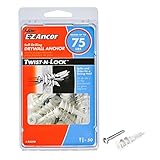
2. Self-Drilling Anchors (E-Z Ancor, Plasplugs): These are the ones that look like a screw with a wide, threaded body. You screw them directly into the drywall. They’re a step up from basic plastic anchors. Verdict: Decent for medium-light loads, like hanging a small cabinet or a mirror that isn’t massive. They create a decent purchase in the drywall. I’ve used these for hanging spice racks and lightweight bathroom organizers, and they’ve held up. They’re easier to install than some other types because you don’t need to pre-drill a huge hole.
3. Molly Bolts (Metal Expansion Anchors): These are usually metal sleeves with a screw that expands a metal flange behind the drywall. You typically need to drill a larger hole for these. They can hold a decent amount of weight. Verdict: Good for medium to moderately heavy loads. They offer a more secure grip than plastic or self-drilling types. I’ve used these for hanging computer monitors on accent walls where stud access was impossible, and they worked fine. The key is making sure you get them installed correctly, with the flange fully expanded behind the wall.
4. Toggle Bolts: These are the kings of the hollow-wall anchor.
They consist of a spring-loaded wing (or sometimes a collapsing mechanism) attached to a bolt. You drill a hole, push the toggle through, and the wings spring open behind the drywall. Then you tighten the bolt.
Verdict: Excellent for heavy loads. These are what you want when you can’t hit a stud but need serious holding power. I used a set of large toggle bolts to hang a radiator shelf, and it’s held up for years with books and plants on it. They require a larger hole, and installation can be a bit fiddly, but the strength is undeniable.
The only downside is that if you ever need to remove them, you’ll have a pretty big hole to patch. (See Also: Can Cords Be Used To Make Anchors Climbing )
5. Specialty Anchors (Molly Houses, Strap Toggles): These are variations on the toggle bolt theme, often with a screw attached to a strap that allows for more flexibility in placement or a larger bearing surface. Verdict: Often overkill for most home DIYers, but they can be useful for very specific, heavy-duty applications where you need maximum load-bearing capacity and can’t hit a stud. I’ve seen these used in commercial settings, but for a typical home, toggle bolts are usually sufficient and more readily available.
Here’s a quick comparison table, because sometimes a visual helps:
| Anchor Type | Typical Load Capacity (Approximate) | Ease of Installation | Best Use Case | My Verdict |
|---|---|---|---|---|
| Plastic Expansion | < 10 lbs | Very Easy | Very Light Items (small decor) | Avoid for anything important. |
| Self-Drilling | 15-30 lbs | Easy | Medium-Light Items (small shelves, organizers) | Good for convenience and light loads. |
| Molly Bolt | 25-75 lbs | Moderate | Medium-Heavy Items (medium shelves, light cabinets) | Reliable for moderate weight. |
| Toggle Bolt | 50-150+ lbs | Moderate/Fiddly | Heavy Items (TV mounts, heavy shelves, large mirrors) | The go-to for stud-free heavy lifting. |
The key takeaway here is that you need to match the anchor to the job. Don’t try to hang a 50-pound TV with plastic anchors, and don’t bother drilling giant holes for a tiny picture frame. It’s all about choosing wisely.
Common Mistakes People Make (including Me)
You’d think hanging a picture would be simple, right? Well, let me tell you, I’ve managed to mess it up in more ways than one. The biggest mistake, as we’ve already discussed, is trying to force drywall anchors into studs. It’s counterproductive and weakens both the anchor and potentially the stud if you’re drilling multiple unnecessary holes. It’s like trying to use a screwdriver as a hammer – it’s the wrong tool for the job, and you’ll likely end up with a bent tool and a damaged surface.
Another common pitfall is not checking the weight rating of an anchor. Manufacturers put those numbers there for a reason, and while they’re often conservative, ignoring them is asking for trouble. I once hung a rather large, heavy mirror with anchors that claimed to hold 50 pounds. The mirror itself was probably closer to 70.
It lasted about three weeks before one side detached, leaving a nasty gouge in the wall and a very expensive, cracked mirror. My fault, entirely.
I was being optimistic and cheap, and it cost me more in the long run. Always overestimate the weight of what you’re hanging – think about the object itself, plus anything that might be placed on it (like books on a shelf) or any potential movement or vibration.
Over-tightening is another issue. With plastic or self-drilling anchors, if you screw them in too hard, you can strip the threads in the drywall or the anchor itself. This means the anchor won’t grip properly, and it will just spin loosely. It’s a similar problem to over-tightening a screw into soft wood – you lose the bite. You want the anchor to be snug and secure, but you don’t need to crank on it with all your might. Feel for resistance and stop when it feels firm.
Under-drilling the hole is also a classic mistake. If the hole for your anchor is too small, you won’t be able to get it in properly. For plastic anchors, you might crack them trying to force them in. For toggle bolts, you might not be able to get the toggle through the hole. Conversely, if the hole is too big, the anchor won’t have anything to grip onto, and it’ll just fall out or spin. Always follow the recommended drill bit size for the specific anchor you’re using. Most anchor packaging will tell you exactly what size drill bit to use. Don’t guess.
Finally, and this is a big one for me, is not accounting for the wall material itself. While we’re talking drywall, remember that older homes might have plaster and lath, which is a very different beast. Plaster can be brittle, and lath (thin wooden strips) can be uneven. Anchors designed for drywall might not perform well in plaster.
Also, consider hollow-core doors or hollow-core cabinets – they’re not the same as a solid wall, and you need fasteners appropriate for that lighter material. My advice? If you’re unsure, err on the side of caution. Use a stronger anchor than you think you need, and always check the manufacturer’s recommendations.
I learned that the hard way with my falling mirror, and I’ve since become a compulsive checker of weight ratings and drill bit sizes.
Practical Tips for Hanging Heavy Items Without Studs
So, you need to hang something heavy, and there’s no stud in sight. It’s not the end of the world, but it requires a bit more thought and the right approach. My biggest tip here is to think in terms of distributing weight. A single anchor, even a strong one, concentrates the load. If you can use multiple anchors, spaced out properly, you’ll significantly increase the holding power and reduce the stress on any one point of the drywall. This is especially true for shelves or anything long and horizontal. Instead of one anchor in the middle, use two or three spread out. (See Also: Can Anchors In Your Shoulder Break )
When using toggle bolts, which are my go-to for heavy, stud-free hanging, pay attention to the installation. Make sure the toggle wings have fully sprung open behind the drywall before you start tightening the bolt. If they haven’t, the anchor won’t sit flush against the wall, and you won’t get a secure fit. Sometimes, you might need to slightly wiggle the bolt or gently pull it forward as you tighten to make sure the toggle is seated correctly. I once had a toggle bolt that seemed loose, only to realize the wings hadn’t deployed properly. A quick adjustment fixed it, but it’s a detail worth watching out for.
For very heavy or awkwardly shaped items, like large TVs or substantial artwork, consider using a mounting bracket specifically designed for drywall. These brackets often have a wider baseplate than a single anchor, distributing the weight across a larger area of the wall. They might still rely on anchors, but the design itself provides better support. Some of these even come with a template to help you mark out your holes precisely. They can be a bit pricier than a handful of toggle bolts, but for peace of mind with expensive or important items, they’re often worth it.
Don’t be afraid to patch and repair. If you end up needing to remove a large toggle bolt, you’ll have a hole. That’s okay. A little drywall compound, some sanding, and a touch of paint, and you’ll never know it was there. I used to dread patching holes, but I’ve gotten pretty good at it over the years, and it’s a necessary part of working with drywall. It’s better to make a repair than to have something fall off the wall.
Finally, and this is more about mindset, don’t be afraid to ask for help or do a little more research if you’re unsure. There are countless YouTube videos showing how to install different types of anchors, and sometimes seeing it done visually makes all the difference. I’ve learned a ton from watching others, and I’ve saved myself from mistakes by looking up specific anchor types before I use them. The goal is a secure, long-lasting installation, not just getting the job done quickly. The phrase ‘measure twice, cut once’ applies heavily here; ‘plan once, install once’ might be more appropriate.
Faq: Answering Your Burning Questions
Can Drywall Anchors Go Into Studs?
No, drywall anchors are specifically designed to be used in the hollow space behind drywall, not in solid wood or metal studs. Screwing an anchor into a stud is counterproductive; you should use a screw that is long enough to penetrate the drywall and go deep into the stud for maximum strength. Anchors rely on expanding or wedging into the drywall itself.
What Is the Strongest Type of Drywall Anchor?
For sheer holding power when you can’t hit a stud, toggle bolts are generally considered the strongest type of drywall anchor. They have wings that deploy behind the drywall, providing a large surface area for support. Molly bolts are also strong, but toggle bolts typically offer higher weight ratings and a more secure grip for very heavy items.
How Much Weight Can Drywall Anchors Hold?
The weight capacity of drywall anchors varies significantly by type, from a few pounds for basic plastic anchors to over 150 pounds for heavy-duty toggle bolts. Always check the manufacturer’s stated weight rating for the specific anchor you are using, and remember that these ratings are usually for ideal conditions in standard 1/2-inch drywall. It’s wise to use an anchor rated for more than the actual weight of the item you’re hanging.
Can I Hang a TV with Drywall Anchors?
Hanging a TV with drywall anchors alone is generally not recommended unless the TV is very small and light, and you are using heavy-duty toggle bolts or a specialized drywall TV mount. Most flat-screen TVs, even smaller ones, are heavy enough that they absolutely require mounting directly into wall studs for safety and stability. If studs are not available, use a mounting system designed specifically for drywall that distributes weight and uses multiple strong anchors.
What’s the Difference Between Anchors and Screws for Drywall?
Screws are used to fasten directly into studs or other solid framing members within the wall. Drywall anchors, on the other hand, are fasteners designed to create a secure point of attachment in drywall where there is no stud. They work by expanding, wedging, or deploying behind the drywall surface to provide holding power that a simple screw into hollow drywall would not offer.
Final Verdict
So, to circle back to the million-dollar question: can drywall anchors go into studs? Absolutely not, and trying to do so is a fool’s errand. They are designed for the voids, the hollow spaces where solid support is lacking.
If you need to hang something substantial, your first and best bet is always to find a stud. If you can’t, then you need to choose your anchor wisely. Toggle bolts are your best friend for heavy loads when studs are out of the picture. Don’t cheap out on anchors, and always double-check those weight ratings.
Ultimately, a little knowledge and the right fastener can save you a lot of hassle, drywall damage, and potentially broken items. Next time you’re hanging something, take a moment to assess the situation. Your wall (and your belongings) will thank you for it.