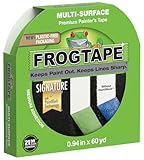
I remember the first time I tried to hang curtains without drilling holes. My apartment landlord was pretty strict, and I was desperate for some privacy and a bit of style. I’d seen a million pins and watched a few DIY videos promising magic solutions. And there I was, staring at a roll of blue painters tape, wondering if I was about to create a disaster or a masterpiece.
Let’s cut to the chase: can you use painters tape to hang curtains? The short answer is a qualified ‘maybe,’ and if you’re expecting a miracle, you might want to look elsewhere. I’ve wasted enough time and money on flimsy solutions to know when something is a dead end.
The Great Painters Tape Curtain Debate: Does It Actually Stick?
Alright, let’s get down to brass tacks. The question on everyone’s mind, especially if you’re renting or just plain hate putting holes in your walls, is: can you use painters tape to hang curtains? My honest, no-holds-barred answer is: it depends. And by ‘depends,’ I mean it depends on the weight of your curtains, the type of tape you’re using, the surface you’re sticking it to, and how long you expect this aerial acrobatics act to last.
Look, I’ve been there. Staring at those bare windows, feeling exposed to the whole neighborhood, and the thought of drilling into perfectly good drywall sends shivers down my spine. So, naturally, my eyes wander to the nearest roll of blue stuff – painters tape. It’s cheap, it’s everywhere, and it’s supposed to be “gentle” on surfaces, right? That’s the marketing spiel, anyway. But when it comes to holding up fabric that’s potentially catching the breeze from an open window, or just has a bit of heft to it, painters tape is often the equivalent of a band-aid on a bullet wound.
The physics of it are simple. Curtains have weight. Gravity is a relentless force. Painters tape, in its most common form, is designed for temporary adhesion. It’s supposed to peel off cleanly without damaging paint. This means its adhesive isn’t exactly formulated for long-term, heavy-duty holding power. I learned this the hard way when I tried to hang some lightweight sheer curtains in my old place. I thought, ‘How much weight can sheers possibly have?’ Apparently, enough to make the tape sag and eventually let go overnight, leaving one side of the curtain dangling like a sad, forgotten party streamer. It wasn’t just an aesthetic nightmare; it was a wake-up call.
Now, before you dismiss this entirely, there are nuances. Some of the more industrial-grade painters tapes, often labeled for trim or longer-term use, have a stronger adhesive. They might hold lighter curtains for a while. But even then, you’re playing a risky game. You’re constantly battling against the pull of the fabric, the temperature changes that affect adhesive stickiness, and the general wear and tear. It’s a constant low-grade anxiety, wondering if your carefully placed drapery will decide to make a dramatic exit at 3 AM.
The real issue isn’t just whether it can stick, but whether it should stick for this purpose. If you’re looking for a temporary solution for a costume party, or to just tack up a sheer panel for an hour or two while you figure out a real plan, then maybe. But for everyday use, for curtains that you actually want to function as curtains – providing light control, privacy, and adding to your room’s decor – painters tape is, in my opinion, a poor choice. It’s like using a sticky note to secure a loose car tire. It might hold for a bit, but you wouldn’t trust it, and you shouldn’t.
When Does Painters Tape Fail the Curtain Test?
So, when exactly does this whole painters tape curtain idea go sideways? It’s usually a combination of factors, and knowing them can save you a lot of frustration.
The most obvious culprit is the weight of the curtains themselves. Those thick, blackout velvet drapes you bought to achieve ultimate darkness and coziness? Forget about it.
Painters tape has absolutely no business trying to support that kind of heft. I once saw a friend try to hang a set of medium-weight linen curtains using just blue tape, and within 24 hours, the tape had stretched and started to peel away from the wall, taking a small chunk of paint with it.
The curtains ended up in a crumpled heap on the floor, and so did my friend’s hopes for an easy DIY solution.
Then there’s the surface. Painters tape is designed to be gentle on most painted surfaces. (See Also: Does Painters Tape Pull Off Paint )
But ‘most’ doesn’t mean ‘all.’ Textured walls, wallpaper, or surfaces that are old, peeling, or have a very matte finish can be tricky.
The tape might adhere well initially, but when you go to remove it, or even just over time, it can pull up paint, tear wallpaper, or leave behind stubborn adhesive residue that’s a nightmare to clean. I tried using it on a slightly textured wall once, and while it held the curtains for a few days, removing it was an exercise in pure aggravation.
It felt like I was peeling a layer of the wall itself, leaving behind a patchy, discolored mess that needed a whole lot of touch-up work. It was far more effort than just hanging a rod.
Humidity and temperature fluctuations are also silent saboteurs. If you live in a place with high humidity, or if your curtains are near a window that gets a lot of direct sunlight (and thus fluctuating temperatures), the adhesive on the tape can weaken. This is especially true for standard blue painters tape. The heat can make it gummy and less sticky, while the moisture can break down the adhesive. I’ve had tapes fail in the summer heat that worked fine in the cooler months. It’s a gamble you’re taking with your decor, and frankly, it’s a gamble that usually doesn’t pay off.
The method of application is another pitfall. People often just slap a few strips on, thinking that’s enough. But for any hope of it working, you’d need to use multiple layers, pressed down firmly and evenly, extending the tape significantly beyond the edge of the curtain’s hanging mechanism. Even then, you’re creating a visual distraction. Those blue lines are not exactly chic. They scream ‘temporary fix’ louder than a siren.
Can You Use Painters Tape to Hang Curtains? The Verdict on Failure Points:
| Curtain Type | Surface Type | Likelihood of Failure (High/Medium/Low) | My Opinion |
|---|---|---|---|
| Heavy Drapes (Blackout, Velvet) | Smooth Painted Wall | High | Absolutely not. You’re asking for a disaster. |
| Medium Weight (Linen, Cotton) | Textured Wall | High | Will likely fail, potentially damaging the wall. |
| Lightweight Sheers | Smooth Painted Wall | Medium | Might hold for a bit, but expect sagging and eventual failure. |
| Lightweight Sheers | Wallpaper | High | High risk of wallpaper damage upon removal. |
Ultimately, if your goal is a secure, long-lasting curtain installation, painters tape is on the ‘bad idea’ list. It’s a product designed for masking paint lines, not for bearing structural load, however minimal it may seem.
Alternatives to Drilling: What Actually Works
Okay, so we’ve established that relying solely on painters tape for hanging curtains is generally a losing battle. But what are the actual, reliable alternatives if you’re trying to avoid drilling holes? This is where I’ve spent some serious cash and learned some valuable lessons. First up, let’s talk about command strips.
Specifically, the heavy-duty picture hanging strips. These things are designed to hold significant weight and, when applied correctly, they do a pretty darn good job. You clean the surface, apply the strips to the curtain rod bracket (or directly to the wall if you have a specific type of rod that allows it), and press firmly.
I’ve used these for medium-weight curtains and they’ve held strong for over a year. The key is to follow the weight limits meticulously. If your curtains are pushing the limit, use more strips. It feels like overkill, but it’s cheaper than buying a new rod and fixing wall damage.
Another solid option is tension rods. These are a godsend for windows where you can place the rod between two opposing walls or surfaces. You just twist them to expand and create tension. They don’t require any screws or adhesive. I’ve used these for lightweight to medium-weight curtains in bathrooms and small kitchens where drilling wasn’t ideal. They’re super easy to install and remove, and you can adjust them as needed. The main limitation is that they’re not suitable for very heavy curtains or very wide windows, as the tension might not be enough to keep them secure.
Then there are adhesive curtain rod brackets. These are specifically designed for hanging curtain rods without drilling. They use a very strong adhesive, often stronger than standard command strips, and are designed to hold the weight of a rod and curtains. You clean the surface, peel the backing, and press the bracket firmly in place. Again, follow the weight limits and make sure the surface is clean and dry. I’ve seen these work well for lighter to medium-weight curtains. The adhesive is usually quite industrial, so while they are designed to be removed, it’s always a good idea to test a small, inconspicuous area first, especially if you have delicate paint. (See Also: Does Painters Tape Rip Paint Off Walls )
For a more temporary, but less visible solution than tape, consider strong double-sided tape specifically designed for fabric or mounting. However, this usually involves attaching the tape to the curtain itself and then adhering it to the wall, which isn’t ideal for curtains you plan to open and close regularly. It’s more for semi-permanent decorative panels. I tried this once for some fabric panels I wanted to hang as a room divider, and while it held, the fabric started to fray where it was constantly being pulled and shifted. It’s not the best for functional curtains.
Here’s a quick rundown of what I’ve found works:
- Command Heavy-Duty Picture Hanging Strips: Great for medium-weight curtains. Just be sure to use enough strips according to the weight rating.
- Tension Rods: Perfect for lightweight to medium-weight curtains in narrow spaces or between two walls. No damage, easy to install.
- Adhesive Curtain Rod Brackets: A good alternative if you need to hang a rod without drilling. Check weight limits.
- Heavy-Duty Double-Sided Tape (for specific applications): Best for decorative panels, not for curtains you use daily.
The key takeaway is to choose a solution that’s designed for the job. Painters tape is for painting. If you want your curtains to stay up, use something that’s built for holding weight.
My Own Mistake: The Overzealous Tape Experiment
I’ll confess, I’m not immune to falling for the allure of a quick, cheap fix. A few years back, I was redecorating my bedroom and wanted to add some flowy, sheer curtains to soften the light. My existing curtain rod had fallen off the wall – surprise, surprise, it was only attached with a couple of flimsy screws that had long since lost their grip. Rather than messing with anchors and potentially larger holes, I had a brilliant (or so I thought) idea: why not just tape the rod directly to the wall? I figured the rod itself would distribute the weight.
I grabbed my trusty roll of standard blue painters tape, the kind I use for, well, painting. I carefully measured and aligned the rod, then proceeded to wrap tape around it and onto the wall, creating a sort of Frankenstein’s monster of adhesion. I doubled up, triple-upped the tape, trying to create a secure bond. It looked… well, it looked like a DIY disaster. Blue tape was crisscrossed all over the wall, holding up a curtain rod that was already listing slightly to one side.
For the first hour, I felt triumphant. I had achieved my goal! Curtains were up, the room felt softer, and no new holes were in the wall. I even smugly told my friend, “See? Sometimes you don’t need all those fancy gadgets. Painters tape is surprisingly strong.” That smugness lasted approximately four hours.
I came back into the room to find one side of the rod had completely detached from the wall, leaving the curtains hanging lopsided. The tape, stretched and distorted, was clinging precariously to the other side. It looked like a sad, deflated balloon. The sheer curtains, now bunched up on one side, were doing more to block light than my old blinds ever did. And the wall? It had faint blue streaks and a few patches where the paint had clearly been compromised by the aggressive taping and peeling.
It was a comical, yet deeply frustrating, moment. I had to scramble to find a more permanent solution – which, of course, involved drilling holes and using proper anchors for the rod. The entire ordeal, from the initial ‘brilliant’ idea to the final, proper installation, took longer and was far more stressful than if I had just done it right the first time. That experience cemented my belief: if you’re hanging curtains, especially anything with more weight than a single sheet of paper, painters tape is a very, very bad idea. It’s designed for temporary masking, not for holding up your window treatments. Save yourself the trouble, the mess, and the potential paint damage.
The Science Behind the Stick (or Lack Thereof)
Let’s get a little nerdy for a second. Why is painters tape so good at its job of masking paint lines but so bad at hanging curtains? It all comes down to the adhesive and the backing material. Standard painters tape, the most common blue kind you see everywhere, uses a low-tack adhesive. This is important because its primary function is to stick to surfaces long enough to prevent paint from bleeding underneath, but then to peel off cleanly without damaging the paint or leaving residue. This low-tack nature means it’s not designed for significant tensile strength or shear strength.
Tensile strength is the force required to pull something apart. Shear strength is the force that causes different parts of a material to slide past each other. When you hang curtains, you’re primarily dealing with shear and tensile forces pulling downwards due to gravity. Painters tape’s adhesive, while sticky enough to hold itself and a thin layer of paint, simply doesn’t have the molecular grip to resist these constant pulling forces over time, especially when the fabric might snag or the weight isn’t perfectly distributed.
The backing material itself, usually a crepe paper, is also not engineered for load-bearing. It’s flexible and conformable, which is great for following curves and edges when painting, but it can stretch and tear under stress. Imagine trying to hold up a heavy object with a piece of tissue paper – it might hold for a second, but it’s not going to last. The tape can stretch, sag, and eventually fail. (See Also: Does Masking Tape Work The Same As Painters Tape )
Compare this to products designed for hanging. Command strips, for example, use a different type of adhesive, often an acrylic-based one, combined with a stretchy elastic backing. This elastic backing allows the strip to stretch and absorb some of the pulling force, distributing it more evenly. They also have a much higher tack and peel strength, meaning they are designed to stick more firmly and resist peeling away.
Double-sided mounting tapes, used for heavier applications, often employ foam cores or thicker adhesive layers that provide more surface area and a stronger bond. These are engineered to resist shear and tensile forces much more effectively than the thin adhesive on painters tape.
So, while painters tape is a marvel of engineering for its intended purpose, that purpose is painting, not curtain hanging. Trying to make it do a job it wasn’t designed for is like asking a chef’s knife to hammer a nail. It might work in a pinch, but you’re likely to damage the knife, the nail, and your own sanity. The science is clear: for reliable curtain hanging, you need a product with a higher-strength adhesive and a backing material engineered to handle sustained weight and tension.
Frequently Asked Questions About Hanging Curtains
Can You Hang Curtains Without Drilling Holes?
Yes, absolutely. There are several effective methods that don’t involve drilling. Tension rods, strong adhesive command strips (like heavy-duty picture hanging strips), and specialized adhesive curtain rod brackets are all excellent alternatives for hanging curtains without damaging your walls. The best option for you will depend on the weight of your curtains and the type of window you have.
Will Painters Tape Damage My Paint When I Remove It?
Standard blue painters tape is generally designed to be removed cleanly from most painted surfaces without damage, especially if it’s left on for only a short period and removed carefully. However, damage can occur if the tape is left on for too long, exposed to heat or humidity, applied to delicate or old paint, or if it’s removed too aggressively. It’s always a good idea to test a small, inconspicuous area first if you’re concerned about your paint.
What Is the Strongest Type of Tape for Hanging Things?
For general hanging purposes, stronger tapes include heavy-duty double-sided mounting tapes (often foam-backed), Gorilla Tape, and specialized industrial tapes. However, these are not always suitable for delicate surfaces or temporary applications, as they can be very difficult to remove and may cause damage. For hanging curtains without drilling, Command strips or specific adhesive curtain rod brackets are usually a better balance of strength and removability.
How Can I Hang Curtains If I Don’t Want to Drill Into the Wall?
You have several good options! Tension rods are fantastic for windows with opposite walls to create tension without screws. Heavy-duty adhesive strips, like those made by Command, can be used to attach curtain rod brackets to the wall. Alternatively, you can find adhesive curtain rod brackets sold specifically for this purpose. For very light fabric panels, you might even consider strong fabric glues or double-sided fabric tape, though these are not ideal for functional curtains.
Final Thoughts
So, to circle back to the original question: can you use painters tape to hang curtains? My honest, lived-in opinion is that while you might get it to hold for a very short time with extremely lightweight curtains on a perfectly smooth, clean surface, it’s a fundamentally flawed approach for anything you want to rely on. It’s a temporary band-aid, not a structural solution.
I’ve learned the hard way that investing a little more in the right product – be it a tension rod, some heavy-duty adhesive strips, or even just proper curtain rod hardware – saves you a world of headaches, potential wall damage, and the embarrassment of waking up to a curtain disaster. Don’t waste your time or risk your paint job on painters tape for this particular task.
My advice? If you’re renting or just want to avoid drilling, explore the tried-and-true alternatives. Your walls, and your curtains, will thank you for it. What’s your biggest DIY curtain fail?