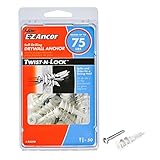
I remember staring at that brand-new, ridiculously heavy mirror I’d just bought, convinced I could just bang a couple of screws into the drywall and call it a day. Big mistake. Huge. It ended up halfway on the floor a week later, thankfully without taking out my cat. So, let’s cut to the chase: are anchors needed for wood? The short answer, as with most things that seem simple, is ‘it depends,’ but leaning heavily towards ‘yes, usually.’ Trying to hang anything substantial on a plain wooden stud without the right hardware is like trying to build a house on a sandcastle. You’re setting yourself up for a fall, literally.
The Illusion of Wood Strength
Look, wood is strong. We all know that.
It’s what houses are built from, right? But when we talk about hanging things on a wall, specifically wood, we’re often talking about wooden studs behind drywall, or maybe directly onto a piece of furniture. The idea that you can just screw something directly into a 2×4 and expect it to hold a fifty-pound TV or a shelf stacked high with books is a common misconception. It’s like thinking a single strand of dental floss can tow a car.
The wood itself might be strong, but the point where you’re inserting a screw has its limits. Think of it like this: a screw going into solid wood provides some grip, sure, but it’s the threads of the screw biting into the wood fibers that are doing the work. If those fibers are too thin, or the screw isn’t long enough to get deep into the dense part of the wood, you’re relying on a relatively small surface area. For lighter items, like a small picture frame or a coat hook that won’t see much abuse, it might be fine.
But anything with significant weight, or anything that might get bumped or tugged, needs more. You’re not just fighting gravity; you’re fighting the sheer force of friction and the integrity of those wood fibers. It’s the difference between a gentle hand holding something and a strong gust of wind trying to rip it away.
Most of the time, you need something that distributes that force better, or provides a much stronger bite, than a simple screw alone can offer when going into something like a hollow wall or a thinner piece of wood.
When Screws Just Won’t Cut It
I learned this the hard way with a floating shelf I was so proud of. I’d bought these beautiful, thick oak planks and decided I was going to mount them directly to the wall studs with heavy-duty lag screws.
I even pre-drilled. Seemed solid. For about three weeks, it was perfect.
Then, I loaded it up with my entire collection of cookbooks – which, let me tell you, are no joke. Within hours, I heard this sickening creak, and one end of the shelf started to sag. I rushed to empty it, terrified the whole thing was going to rip off the wall.
It didn’t, but it was clearly compromised. The lag screws had basically started to strip the wood fibers they were screwed into. They were big screws, but they were still just relying on the wood’s internal strength without any extra support. This is where anchors, even when mounting into wood, become your best friend. (See Also: Can Concrete Anchors Be Used In Brick )
When you’re dealing with wood that isn’t solid, thick lumber, or if you want that extra peace of mind for heavy loads, anchors are the way to go. They basically create a larger surface area for the screw to grip onto, or they expand to create a stronger hold.
It’s like upgrading from a single rope to a network of cables. For anything that isn’t just a lightweight decoration, especially if it’s in a high-traffic area or something that could be a hazard if it falls, you absolutely need to consider anchors. I’ve seen people try to hang heavy planters on wooden porch railings, only for the railing to eventually splinter and fail.
That’s a situation where a proper mounting system, which often includes anchors, would have saved a lot of heartache and potential damage. It’s not about the wood being weak; it’s about maximizing the strength of the connection between the object and the wood for long-term security.
Types of Anchors and What They’re Good For
When people think anchors, they usually picture those flimsy plastic things you shove into drywall. And yeah, those exist. But there’s a whole world beyond that, especially when you’re dealing with wood. The simplest form of an ‘anchor’ when screwing into wood is actually just a longer screw, or a screw with a wider thread pitch that bites better. But if you need more, here’s the lowdown on what I’ve found useful:
| Anchor Type | Best For | My Verdict |
|---|---|---|
| Wood Screws (Longer/Wider Thread) | Light to moderate loads in solid wood, furniture assembly. | Your first line of defense. Always use screws rated for the job. Longer is often better for deeper bite. |
| Lag Screws/Bolts | Heavy loads into thick, solid wood (e.g., framing, deck beams). | The workhorses for serious structural connections. Requires pre-drilling and often a wrench to drive. |
| Threaded Inserts (Wood Inserts) | Creating a strong, repeatable screw anchor point in softer woods or plywood. Excellent for jigs, vises, or frequently removed hardware. | A bit more effort to install, but they make subsequent attachments a breeze and provide a super-strong metal thread in wood. Worth it for projects where you’ll be attaching and detaching things often. |
| Toggle Bolts (for hollow wood/thin applications) | Attaching to thin wood panels where you can’t reach the back, or through existing holes in hollow wooden structures. | A bit of a pain to install as the wings can be fiddly, but they offer a good spread of weight if you can’t get to solid wood. |
| Screws with Washers | Distributing load on softer woods or preventing the screw head from pulling through. | Simple but effective for preventing tear-out on particle board or MDF, and adds a little extra holding power. |
When I built my workbench, I used a combination of lag screws for the main frame and threaded inserts where I knew I’d be attaching and re-attaching jigs and vices. It made the whole process so much more solid and less frustrating down the line. Trying to just screw into MDF or particle board without an insert is a recipe for stripped-out holes after a few uses.
Common Mistakes People Make (and I’ve Made)
The biggest trap is thinking ‘wood is wood’ and grabbing the first screw you see. Here are a few classic blunders:
- Using the wrong screw length: Too short, and it won’t get enough grip. Too long, and it might poke through where you don’t want it to. For attaching to studs, you generally want at least 1.5 inches of screw biting into the stud after going through the drywall.
- Not pre-drilling (especially for hardwoods or lag screws): This can split the wood, or make it incredibly hard to drive the screw, risking stripped heads or broken screws. A pilot hole should be slightly smaller than the screw’s core diameter.
- Overestimating the strength of thin plywood or MDF: These materials are engineered wood products and can be brittle or have weak internal structures. They need specific anchors or inserts for anything beyond very light loads.
- Ignoring the weight rating: Every anchor and screw has a limit. If the manufacturer says it’s good for 20 pounds, don’t hang 50 pounds on it. It’s not a suggestion; it’s a safety spec.
- Not locating studs properly: If you’re aiming for wood, you need to hit wood. Using a cheap stud finder can lead you to screw into empty space, which is where those flimsy plastic anchors come in, but they’re not ideal for heavy items.
I once tried to hang a fairly heavy set of garage shelves on what I thought was a stud, but it turned out to be just a thin piece of paneling over an air gap. The shelves lasted about an hour before they came crashing down, taking a bunch of tools with them. It was a mess, and a stark reminder that location and material are everything. The frustration of having to patch holes and re-hang something is always worse than taking the time to do it right the first time.
Real-World Applications: Where Anchors Shine
So, beyond just hanging a picture, when do you really need to think about anchors for wood? Think about heavy-duty applications. Mounting a TV bracket to a wall with wood studs is a prime example.
While some brackets are designed to go directly into studs, using lag bolts specifically rated for the TV’s weight, plus the bracket’s weight, plus a significant safety margin is a must. I’m talking about bolts that are at least 3 inches long and 1/4 inch thick, screwed deep into the center of the stud. Another common one is attaching shelves. If you’re building a library wall, a simple shelf bracket screwed directly into drywall, even if it hits a stud, might not be enough for dozens of heavy books. (See Also: Can Cords Be Used To Make Anchors Climbing )
You want solid shelf standards or brackets, secured with appropriate fasteners. For furniture, especially if you’re assembling something that will bear weight or might get moved around, using threaded inserts for screw points is a big deal. Imagine building a sturdy workbench; you’ll want to anchor it securely to the floor or wall if it’s against one.
If you’re building custom cabinetry, especially upper cabinets that hold a lot of weight, you’ll want to make sure they are screwed into wall studs with substantial fasteners. Even something like a heavy swing set anchored to a wooden frame needs serious hardware.
The forces involved in dynamic movement are much higher than static weight. And let’s not forget outdoor projects: attaching a heavy gate to wooden posts, or mounting lights and speakers to wooden structures. The elements add another layer of stress, so a secure, anchored connection is most important. When in doubt, over-engineer the connection.
It’s better to have a connection that’s stronger than you need than one that fails spectacularly when you least expect it.
My Controversial Opinion: Sometimes You Don’t Need Them
Here’s where I might ruffle some feathers. Everyone says, ‘Always use anchors!’ But that’s not always true, and it’s often overkill. If you are screwing directly into a solid, dense piece of hardwood, like a thick oak beam or a substantial piece of furniture you know is solid wood all the way through, and you’re using a screw that’s long enough to get a good, deep grip (at least two-thirds of the screw length embedded in the wood), then you probably don’t need a dedicated anchor.
For example, I recently attached a very simple, lightweight wooden cleat to a solid pine workbench top to organize some tools. I just used a couple of good quality wood screws, about an inch and a half long, driven into the solid pine.
They held perfectly. No wobble, no strain. The wood was dense, the screws went deep enough, and the load was minimal. The common advice to ‘always use anchors’ is a blanket statement born from the most common scenario: attaching things to drywall where studs are present but not always perfectly located, or to flimsy particle board.
If you have a truly solid, dense wood surface and you’re using appropriate screws, you can absolutely get away without an anchor. The key is understanding the material you’re screwing into and the load you’re expecting it to bear.
It’s about making an informed decision, not blindly following a rule. My rule of thumb is: if I can easily drive a long screw deep into solid, dense wood and feel a strong bite, I’m usually okay for lighter to moderate loads. But for anything heavy, or anything where failure would be catastrophic, I’m adding extra support, whether that’s a longer screw, a lag bolt, or a specific anchor designed for the job. (See Also: Can Anchors In Your Shoulder Break )
Faq: People Also Ask
Can You Screw Directly Into Wood?
Yes, you can screw directly into wood, and it’s often the strongest method if done correctly. The strength depends on the type of wood, the length and thickness of the screw, and how deep it penetrates. For lighter items and solid wood, it’s usually sufficient. However, for heavier loads or weaker wood types, additional support or anchors might be necessary.
What Is the Strongest Way to Hang Something on a Wood Stud?
The strongest way to hang something on a wood stud is to use lag screws or heavy-duty wood screws that are long enough to penetrate well into the stud (at least 1.5 inches of thread embedded). Make sure the screw is centered in the stud and use a washer if necessary to distribute the load. For extremely heavy items, consider a cleat system or specialized mounting hardware designed for high loads.
What Can I Use Instead of Anchors for Wood?
Instead of traditional anchors, you can use longer or thicker wood screws, lag screws, or threaded inserts for wood. Using a screw with a coarser thread pitch can also provide better grip. For very specific situations like thin panels, a toggle bolt can work through a pre-drilled hole. Ultimately, the ‘best’ alternative depends on the wood type, the weight of the item, and the desired permanence of the attachment.
How Deep Should a Screw Go Into a Wood Stud?
Ideally, at least 1.5 inches of the screw’s threaded portion should be embedded into the wood stud for a secure hold. This makes sure the screw has enough grip to support the intended weight. If you’re going through thicker drywall or plaster, you’ll need an even longer screw to achieve this depth into the stud itself.
How Do I Hang Heavy Items on Wood Without Studs?
Hanging heavy items on wood without studs is tricky and generally not recommended for important safety items. If the ‘wood’ itself is a thick, solid panel (like a heavy-duty plywood or a thick timber), you might be able to use heavy-duty wood screws. However, if you’re dealing with hollow wood structures or thin panels, you’ll need anchors designed for those specific materials, like toggle bolts or molly bolts rated for significant weight, and even then, extreme caution is advised. For truly heavy items, finding a stud or structural support is always the safest bet.
Verdict
So, are anchors needed for wood? It’s not a simple yes or no. If you’re screwing into a solid, dense piece of hardwood with a long, quality screw, you’re often good to go for lighter loads. But if you’re dealing with softer woods, particle board, MDF, or if the item you’re hanging is heavy or could cause a hazard if it falls, then skipping anchors is just asking for trouble. I’ve learned that taking the extra ten minutes to use the right hardware, whether that’s a longer lag screw or a proper anchor system, saves a lot of headache and potential damage down the line.
My advice? When in doubt, always err on the side of caution. Invest in good quality screws and anchors, and take the time to understand what you’re screwing into. It’s the difference between a secure fix and a frustrating repair job.
Next time you’re hanging something, ask yourself: ‘Am I really sure this connection is strong enough?’ That simple question might save you a lot of trouble.