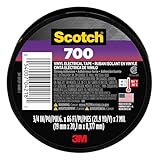
I’ve seen more than a few DIY disasters unfold because someone thought electrical tape was the be-all and end-all of wire connections. Honestly, it’s often the cheap, lazy way out, and it bites you later. My own journey with wiring, from fixing up an old shed to wrangling the spaghetti monster behind my TV, has taught me that there’s a right tool for the job. And more often than not, that tool isn’t just a roll of black tape. So, let’s talk straight: are electric wire caps better then tape? My answer is a resounding ‘yes,’ but not all caps are created equal, and neither is the tape.
Why I Ditched Tape for Twisters (mostly)
Look, I get it. Electrical tape is cheap. It’s everywhere. You probably have a roll sitting in a junk drawer right now.
And for a quick, temporary fix, maybe it’s okay. I’ve used it myself in a pinch, sealing a loose connection on a lamp that I knew I’d properly fix later.
But for anything permanent, anything that needs to be safe and reliable, tape is a gamble. My biggest screw-up? Trying to connect some outdoor string lights.
I used tape, thinking it would be fine because it was ‘weatherproof’ tape. A few months later, after a couple of rainstorms, I found a loose wire, sparking ominously. Turns out, the tape had degraded, lost its stick, and the moisture had gotten in. It was a wake-up call.
Wire nuts, or ‘caps’ as some call them, are designed for this. They twist onto the wires, creating a secure mechanical and electrical connection that’s far more solid than a few wraps of tape.
The mechanics are simple: you strip back the ends of your wires, gather them together, and then screw on a cap. The cap has internal threads that grip the wires, twisting them together tightly. This creates a solid connection that’s much less likely to come loose or fail over time. Unlike tape, which relies solely on adhesion and can dry out, peel, or get damaged, wire caps provide a physical enclosure and a confirmed connection.
It’s not just about holding wires together; it’s about making sure good conductivity and preventing shorts or grounds. The common advice to just twist and tape is often given by people who haven’t dealt with the consequences of a bad connection years down the line.
I’ve seen connections made with tape that looked fine on the outside but were corroded and loose underneath, a ticking time bomb waiting for a fault.
What to Actually Look for in a Wire Cap
Not all wire caps are born equal, and this is where a lot of people go wrong. They grab the cheapest bag they can find at the hardware store, assuming they’ll all do the same job. Wrong.
You need to consider a few things. First, the size. Wire caps come in different sizes to accommodate different wire gauges and numbers of wires. Trying to cram too many wires into a cap, or using one that’s too big, is a recipe for disaster.
A cap that’s too small won’t grip properly, and one that’s too big won’t provide enough pressure. You’ll see numbers on the sides of the caps, usually indicating the range of wire gauges (like 18-22 AWG) and the maximum number of wires it can safely hold (e.g., ‘3x 14 AWG’). Always check this.
Second, the material and design. Most are plastic, but some have a rubber or silicone lining inside for extra sealing, which is great for damp environments.
The internal thread design matters too. Some have a sort of helical groove that really bites into the wire, while others are smoother. (See Also: Can I Use Electrical Tape To Connect Wires )
I’ve found the ones with more aggressive threading hold better, especially if the wires are a bit slippery from insulation. The spring inside (if it has one) is also key.
It helps maintain pressure as the wires expand and contract with temperature changes. I learned this the hard way with some incandescent track lighting – the constant heating and cooling made my tape connections fail repeatedly. Wire caps with good springs held firm. Also, look for caps that are UL listed or CSA certified.
That means they’ve met safety standards, and honestly, for anything involving electricity, that’s a must. It’s that little stamp of approval that gives you peace of mind.
Common Mistakes People Make with Wire Caps
The biggest mistake? Not stripping the wire ends correctly. You need a clean strip, usually about 1/2 to 3/4 inch, depending on the cap size. Too little insulation left on, and you risk stray strands poking out. Too much, and the cap won’t thread on properly, or the connection won’t be secure. Another common goof is not twisting the wires together before screwing on the cap. Some caps are designed to do the twisting for you, but it’s always good practice to give the stripped ends a gentle twist with pliers first. This makes sure a more uniform and tighter connection. I’ve seen people just shove untwisted wires into a cap and hope for the best. That’s lazy and dangerous.
Then there’s the ‘too many wires’ issue. People think they can just cram five or six wires into a cap meant for three.
That overloads the cap, can cause poor contact, and might even split the cap open. Always respect the manufacturer’s limits.
I once saw a junction box where someone had tried to connect six 12-gauge wires with a cap clearly marked for three 14-gauge. It was a mess. A simple mistake, but one that could have easily led to a fire.
Also, don’t reuse old caps. They can get stretched out or damaged, and their grip will be compromised. It’s a few cents to get a new one, and worth every penny for safety.
Finally, some people don’t check the connection after they’re done. Give the wires a gentle tug. They shouldn’t pull out. If they do, the cap isn’t seated correctly or is the wrong size.
| Method | Pros | Cons | My Verdict |
|---|---|---|---|
| Electrical Tape | Cheap, readily available, flexible | Degrades over time, can lose adhesion, requires skill to apply correctly, not always reliable for permanent connections, can be a fire hazard if applied poorly. | Temporary fixes ONLY. Overrated for anything permanent. |
| Wire Caps (Nuts) | Secure mechanical and electrical connection, durable, come in various sizes, generally safer for permanent installations, easier for beginners. | Requires correct sizing, can be slightly more expensive initially than tape, can be difficult to remove if overtightened. | My go-to for almost all permanent wire connections. |
When Tape might Still Be Your Friend
Okay, I’ve been hard on tape, but let’s be fair. Are electric wire caps better then tape?
For permanent, load-bearing electrical connections, yes. But there are niche situations where tape shines, or at least doesn’t actively hurt. Think about wrapping a tool handle for grip, or securing a loose wire temporarily while you’re working on it.
I’ve also used it to bundle loose cables behind my entertainment center, but that’s not an electrical connection, just management. The real issue with tape comes when it’s the only method of electrical insulation for a splice. The adhesive can dry out, the tape can peel, and moisture, dust, or physical damage can compromise the connection.
I remember trying to fix a frayed cord on a small appliance years ago. I wrapped it with tape, thinking it was a quick fix. Well, the heat generated by the motor caused the tape adhesive to melt and ooze, creating a sticky, dangerous mess. That’s a scenario where a proper splice connector would have been vastly superior. (See Also: Can Electrica Tape Catch On Fire )
Another place tape used to be common was in older appliance repairs, especially where wiring was cramped and hard to get a connector onto. However, modern wire connectors have become much smaller and more adaptable.
For instance, lever nuts (like Wago connectors) offer a fantastic alternative in tight spaces, and they’re not really ‘caps’ in the traditional sense but are still a superior connection method. Even then, when using tape for something like a temporary repair on a low-voltage garden light, as long as it’s not exposed to harsh weather or significant heat, it might hold for a while. But it’s always a gamble. The real problem is that ‘good enough’ often becomes permanent, and that’s where the danger lies.
If you’re even questioning if tape is the right choice for an electrical connection, it probably isn’t.
The Real-World Use Case: My Shed Project
Let’s talk about my shed. It’s a basic, uninsulated structure, and I wanted to run power out there for lights and outlets. This isn’t rocket science, but it needs to be done right.
I had to run a cable from the house to the shed, and at the shed, I needed to make a junction. I used a weatherproof junction box, of course. Inside, I had to connect the main power feed to the wires going to the lights and the outlets.
This is exactly where wire caps come into play. I had three wires from the feed cable (hot, neutral, ground) and then I had wires for the interior lighting and the outlets. So, I needed to connect the three incoming wires to multiple outgoing wires for each circuit.
I used three different sizes of wire caps. For the grounds, I used a larger, orange-colored cap that could handle multiple 12-gauge wires. For the neutrals, I used a medium-sized blue cap. And for the hot (live) wires, I used a smaller red cap.
I stripped the ends of all the wires, gave them a quick twist with pliers to keep them neat and make sure good contact, and then screwed on the appropriate caps. I gave each one a firm tug to make sure it was secure. The whole process took maybe an extra five minutes compared to if I’d tried to wrap it all in tape, but the peace of mind was worth it. I knew that connection wouldn’t be degrading in the damp shed air or vibrating loose every time a lawnmower went by outside.
That’s the difference: reliability and safety over a few minutes saved.
People Also Ask: Wire Connections
Is Electrical Tape Rated for Permanent Use?
No, electrical tape is generally not rated for permanent electrical connections. While it provides initial insulation, its adhesive can degrade over time due to temperature fluctuations, UV exposure, and general aging. This can lead to the tape losing its adhesion, unraveling, and exposing the wires, compromising the connection’s safety and integrity. For permanent splices, approved wire connectors like wire nuts or lever connectors are the industry standard and much more reliable.
Can You Use Wire Nuts on Low Voltage Wire?
Yes, you can absolutely use wire nuts on low-voltage wire, although they might be overkill for some very low-voltage applications. Wire nuts are designed to create a secure connection between wires, and this principle applies to low-voltage systems as well. Just make sure you use a wire nut that is appropriately sized for the gauge of the low-voltage wires you are connecting. They offer a more solid and reliable connection than simply twisting the wires together or using tape in many low-voltage scenarios, especially where vibration or movement is a factor.
What Is the Safest Way to Connect Electrical Wires?
The safest way to connect electrical wires permanently is by using approved connectors designed for the specific application, such as wire nuts (screw-on connectors) or lever connectors (e.g., Wago). These connectors provide a secure mechanical and electrical junction. Always make sure the wires are stripped to the correct length, the connector is appropriately sized for the number and gauge of wires, and the connection is tested for security before finalizing. Following electrical codes and best practices, like using junction boxes for all splices, is also most important for safety.
The Future Is Push-in: A Word on Lever Nuts
While we’re talking about superior connection methods, I have to mention lever nuts, often called push-in connectors. If you’ve done any wiring in the last decade, you’ve probably seen them. Brands like Wago are the big players here. These aren’t screw-on caps at all. You strip the wire, and then you just push it into a port. A little lever or a clamp mechanism inside grips the wire securely. Why am I bringing these up when we’re comparing caps to tape? Because they represent the evolution of electrical connections, and in many cases, they are a step up even from traditional wire nuts. (See Also: Can I Substitute Duct Tape For Electrical Tape )
For me, the biggest advantage is speed and simplicity. Especially in tight spots where you might be struggling to twist a wire nut on, a lever nut is a dream.
You strip the wire to the length indicated on the connector, and it just clicks into place. No threading, no screwing.
They also make it incredibly easy to add or remove wires from a junction. If you need to tap into an existing circuit, you can often just pop open the lever and insert a new wire.
This makes troubleshooting and modifications so much easier than with old-school wire nuts, which can sometimes be a bear to get off without damaging the wires. I’ve used them in my kitchen remodel to wire up new under-cabinet lights, and the speed and clean look were fantastic.
They offer a reliable connection, often with visual indicators that the wire is seated correctly. While they might cost a bit more upfront than a bag of generic wire nuts, the time savings and ease of use are often well worth it for any serious DIYer or electrician.
When to Absolutely Not Use Tape
Let’s be brutally honest here. If you’re dealing with anything involving household mains voltage (120V or 240V in North America, or similar in other regions), and you’re thinking tape is the solution for a splice, stop. Just stop. Don’t even consider it. The risks are far too high. Fires, electrocution, and significant property damage are all very real possibilities. Electrical tape is simply not designed to withstand the electrical load, heat, or physical stresses involved in permanent household wiring. Its adhesive will fail, it can melt, and it offers very little mechanical protection to the connection itself.
Another scenario where tape is a terrible idea is in damp or wet environments. Even ‘weatherproof’ tape will eventually fail when exposed to moisture, leading to corrosion and shorts.
Think outdoor lighting, bathroom exhaust fans, or any area where condensation is common. If the connection is in a place that gets frequently handled, bumped, or subjected to vibration, tape will likely come loose. For any situation where a failed connection could lead to injury, fire, or damage to sensitive equipment, always opt for the proper, approved connectors. This includes anything connected to your breaker panel, major appliances, or any circuit that carries significant current.
The question ‘are electric wire caps better then tape’ has a very clear answer in these situations: unequivocally yes, and there’s no contest.
Final Verdict
So, to wrap this up, while electrical tape has its place for very minor, temporary tasks, it’s a poor choice for any permanent electrical connection. Wire caps, on the other hand, offer a secure, reliable, and safe method for joining wires. They are designed for the job and, when used correctly, provide a connection that will stand the test of time and environmental factors.
My advice? Ditch the tape for anything more than a quick wrap on a tool handle. Invest in a good assortment of wire caps, and if you’re feeling adventurous, try out some lever connectors too. They’ll save you headaches and keep your home safer. Next time you’re faced with a wiring job, remember this conversation and choose the right tool for the job.
Are electric wire caps better then tape? For anything that matters electrically, it’s not even a question.