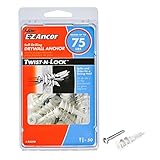
I remember the first time I needed to hang something heavy on drywall. I confidently grabbed a handful of those plastic, ribbed anchors, hammered them in, and screwed my shelf right on. Then, a few months later, I moved. Pulling that shelf down was a minor battle, but removing the anchors? That was a whole other nightmare. It left gaping holes and shredded drywall. It made me seriously question: are wall claw anchors easy to remove, or are they just another DIY trap?
Honestly, the promise of an anchor that holds strong is great, but the aftermath is what really matters. We’ve all been there, right? Staring at a wall that looks like a battlefield after a poorly executed DIY project. It’s frustrating and can be expensive to fix.
So, let’s cut through the noise and talk about what really happens when you need to take these things out. Forget the marketing hype; this is the ground truth.
The Truth About Removing Wall Claw Anchors
Let’s get straight to it: are wall claw anchors easy to remove? The short answer is: it depends, and often, ‘easy’ is a relative term here. These anchors, often made of plastic or sometimes metal, are designed to expand or grip behind the drywall when you screw into them. This expansion is what gives them their holding power. But that same gripping mechanism is what can make them a pain to remove without damaging your wall. Unlike a simple screw going into a stud, these anchors embed themselves in the drywall material itself. When you try to pull them straight out, you’re basically fighting against that grip, which can tear the surrounding drywall paper and plaster.
I’ve had situations where, after removing the screw, the anchor body just spins in place, refusing to budge. Other times, it feels like you’re ripping a chunk of the wall out with it. The design of the anchor plays a huge role. Some have wings or fins that are meant to dig into the back of the drywall, and these can be particularly stubborn. Others, like the classic ribbed plastic ones, rely on friction and the expanded shape. The type of drywall also matters; older, more brittle drywall will crumble more easily than newer, more solid stuff. And let’s not forget the size of the anchor – larger ones generally have a more aggressive grip.
The common advice you’ll find online often glosses over the difficulty. They’ll tell you to just unscrew them, maybe wiggle them a bit. That works for some anchors, in some walls, under certain conditions. But when you’ve got a stubborn one, or you’re dealing with a wall that’s seen better days, it’s a different story. I once tried to remove a set of heavy-duty toggle bolts that had been in place for years. It wasn’t just a wiggle; it was a full-on wrestling match with my drywall, ending in a patch job that took longer than hanging the shelf in the first place. It’s the kind of experience that makes you rethink your entire hanging strategy for the future.
So, while some might slide out with minimal fuss, many require a bit more finesse or, frankly, more destructive methods than you’d hope for. It’s not always a simple ‘unscrew and done’ operation. The primary goal of these anchors is to hold, and their design prioritizes that holding power over ease of removal. This is a important point many DIY guides fail to emphasize adequately.
What to Look for in an Anchor (before It Becomes a Problem)
This is where foresight saves you future headaches. When you’re standing in the aisle, staring at a bewildering array of wall anchors, it’s easy to just grab the most common-looking one. But if ease of removal is even a secondary concern for you, you need to look closer.
The first thing I check is the material and design. For general lightweight hanging, those simple plastic ribbed anchors are often fine, and they can be removed relatively easily if they haven’t been stressed too much and the drywall is solid. However, for anything heavier, or if you anticipate needing to remove it down the line, you start looking at different categories. Self-drilling anchors, for instance, screw directly into the drywall without a pilot hole and often have a smaller profile.
Some of these are designed for easier removal.
Then there are the toggle bolts and molly bolts. These are the heavyweights of drywall anchoring. Toggle bolts, with their spring-loaded wings, are fantastic for holding significant weight, but their removal can be tricky. You often have to push the bolt through the hole to retract the wings, which can enlarge the hole considerably. Molly bolts, which have a metal sleeve that expands behind the wall, are generally easier to remove than toggle bolts, but still require a bit of effort. The key is understanding how the anchor works to hold. If it expands or grips behind the wall, you’re going to have some resistance on removal. (See Also: Can Concrete Anchors Be Used In Brick )
Another factor is the intended use. Anchors designed for permanent fixtures are obviously going to be harder to remove. If you’re hanging a picture frame that might move or be taken down seasonally, you’ll want something different than if you’re mounting a TV bracket that will likely stay put for years. I made the mistake of using what I thought were ‘heavy-duty’ anchors for a temporary display shelf in my workshop.
They held perfectly, but when it was time to dismantle the display, I spent an hour chiseling away drywall. It was a learning moment. Always consider if the anchor is meant to be permanent or temporary.
I now keep a stash of various anchor types and pay close attention to the packaging for removal instructions or intended use.
When in doubt, look for anchors that advertise ‘easy removal’ or ‘flush removal,’ though I’ve found these are often marketing speak and the reality can vary. A simple screw-in anchor that doesn’t expand much behind the wall will almost always be easier to remove than one that employs a mechanical expansion. It’s a trade-off: holding power versus ease of removal. You can’t have everything, but you can make a more informed choice upfront.
Common Mistakes People Make with Wall Anchors
There are a few classic blunders I’ve seen (and, let’s be honest, made myself) when it comes to wall anchors. The most common is simply using the wrong type of anchor for the job. You see a picture of a heavy mirror and a bunch of generic plastic anchors, so you assume they’ll work. Wrong. These anchors have weight limits, and exceeding them doesn’t just mean the anchor fails; it can also make removal an absolute nightmare because the anchor might have deformed or dug itself in deeper under stress. I’ve pulled out anchors that looked like melted plastic after a heavy load.
Another mistake is not preparing the wall properly. For some anchors, you need to drill a specific size hole.
Too small, and you risk damaging the anchor or the wall trying to force it in. Too large, and it won’t grip. For self-drilling anchors, not drilling a pilot hole when the instructions suggest it, or drilling one that’s too big, can lead to the anchor not seating properly, or worse, spinning freely in a hole that’s now too large for it to grip effectively.
I learned this the hard way when trying to install a lightweight curtain rod bracket. The instructions were clear about the pilot hole size, but I winged it.
The anchor went in, but it felt loose. When I tried to remove it later, it just spun endlessly.
Over-tightening is another big one. When you’re screwing in a plastic anchor or a self-drilling one, it’s easy to just keep going until it feels ‘snug.’ But plastic can strip, and self-drilling anchors can strip their threads or damage the drywall if you overdo it. This stripped anchor then becomes a real challenge to remove because it has no purchase. It just spins. Trying to remove a spinning, stripped anchor is like trying to unscrew a bolt with no head – you need specialized tools or a lot of destructive force. (See Also: Can Cords Be Used To Make Anchors Climbing )
Finally, people often don’t consider the location of the anchor. Drywall is weakest at its edges or where there are seams. Anchoring too close to a corner or a joint can lead to the drywall crumbling more easily upon removal. It’s like trying to pull a nail out of a rotten piece of wood; the material around it gives way. Always try to anchor into the solid part of the drywall panel if possible. Understanding these common pitfalls can save you a lot of frustration and wall repair work down the line, especially when you eventually need to take those anchors out.
Real-World Use and Removal Scenarios
Let’s talk practical. I was helping a friend move out of an apartment recently. They had hung a fairly heavy mirror in their living room using what looked like pretty standard plastic anchors. When it came time to take the mirror down and remove the anchors, it was a comedy of errors. The mirror came off fine, but the anchors were stuck. One pulled out with the screw, leaving a ragged hole about the size of a quarter. Another just spun. We tried pliers, we tried gently prying with a putty knife, we even tried carefully hammering a small flathead screwdriver around it. Nothing worked without making the hole significantly worse.
Eventually, for the spinning anchor, we had to resort to cutting. I grabbed a utility knife and very carefully scored a circle around the anchor, then gently pried it up, basically sacrificing a small disk of drywall. This left a hole that definitely needed patching. The other anchor, the one that had partially ripped out, was just a mess. We ended up using a drywall patch kit, which is messy and time-consuming. This experience reinforced my belief that ‘easy to remove’ is often a myth for many common anchors, especially after they’ve been in place for a while or under load.
On the flip side, I recently needed to hang a lightweight plant shelf in my kitchen. I opted for a set of screw-in anchors that are designed to be drilled in and then you just screw the bolt into them. They don’t expand much. When I decided to reposition the shelf a few months later, unscrewing the bolt left the anchor body in place. I then just unscrewed the anchor itself with a screwdriver. It came out smoothly, leaving only a small, clean hole that was barely noticeable. It took maybe 30 seconds per anchor. This was the ideal scenario, proving that some anchors live up to the ‘easy removal’ promise, but they are typically for lighter loads.
Another scenario involved some heavy-duty toggle anchors for a TV mount. The instructions specifically said to push the bolt through and then pull the anchor wings back out. This worked, but the holes left behind were substantial – much larger than where the bolt itself went. It’s a necessary evil for that kind of weight, but it’s not what I’d call ‘easy removal.’ You accept the larger hole in exchange for the security. So, the ease of removal really does hinge on the anchor type, the load it bore, and the condition of your drywall. It’s rarely a one-size-fits-all answer.
Practical Tips for Easier Anchor Removal
So, you’ve got stubborn wall anchors, and you need them out without turning your wall into a patchwork quilt. Here are a few things that have actually worked for me, beyond just ‘give it a tug.’ First, if the anchor is spinning freely, sometimes you can get just enough grip to turn it by carefully inserting a small, flathead screwdriver or a thin utility knife blade into the edge of the anchor and gently prying while you try to unscrew it. This can give it just enough resistance to catch and turn. It’s delicate work; you don’t want to gouge the wall deeply.
If it’s a plastic anchor that’s really stuck, sometimes a little bit of heat can help. Not a blowtorch, obviously! But a hairdryer on a medium-high setting, held a few inches away for a minute or two, can sometimes soften the plastic just enough to make it more pliable and easier to pull out. Be cautious with this method, as too much heat can damage paint or the drywall paper. It’s a gamble, but I’ve had some success with it on stubborn plastic anchors.
For anchors that have ripped out partially, leaving a jagged hole, the best approach is often damage control and repair. You can try to carefully trim away any loose drywall paper with a utility knife, then fill the hole with spackle or drywall compound. Once dry, sand it smooth and repaint. It’s not ‘removal’ in the traditional sense, but it’s how you fix the mess left behind. Tools like a stud finder can sometimes help you avoid anchoring too close to drywall seams, which are inherently weaker.
Here’s a table summarizing some common anchor types and their typical removal difficulty, based on my experience:
| Anchor Type | Typical Holding Power | Removal Difficulty (My Verdict) |
|---|---|---|
| Ribbed Plastic Anchors | Light to Medium | Easy to Moderate (can be difficult if stressed) |
| Self-Drilling Anchors | Light to Medium | Easy (usually) |
| Molly Bolts | Medium to Heavy | Moderate (can leave larger holes) |
| Toggle Bolts | Heavy | Difficult (often leaves large holes) |
| Screw-in Anchors (no expansion) | Light | Very Easy |
The key takeaway is that many anchors designed for significant weight aren’t designed for easy removal. If you anticipate moving or changing things frequently, opt for anchors with lower holding power but simpler mechanisms, or be prepared for some wall repair. For the common plastic anchors, if they don’t come out with a gentle pull and wiggle, a little heat or carefully applied prying might be your next step before resorting to more aggressive methods. (See Also: Can Anchors In Your Shoulder Break )
Are Wall Claw Anchors Easy to Remove? Faq
How Do I Remove a Stubborn Plastic Wall Anchor?
For a stubborn plastic wall anchor, try gently prying with a flathead screwdriver or utility knife while unscrewing. You can also try warming the anchor slightly with a hairdryer to make the plastic more pliable. If it still won’t budge without tearing the drywall, you may need to carefully cut around it and then fill the resulting hole with spackle.
What If the Anchor Just Spins and Won’t Come Out?
If an anchor spins endlessly, it’s likely stripped or the hole is too large. Try to get a small tool (like a thin screwdriver or knife blade) under the edge to create some resistance while you unscrew it. If that fails, you might have to carefully cut it out or drill it out, accepting that wall repair will be necessary.
Do Screw-in Anchors Come Out Easier Than Plastic Ones?
Generally, yes, screw-in anchors that don’t rely on expansion behind the drywall are much easier to remove. Once the screw is out, you can often just unscrew the anchor body itself with a screwdriver, leaving a clean, small hole.
Can I Remove Anchors Without Damaging the Drywall?
It’s possible with some types of anchors, especially lighter-duty ones that haven’t been stressed. For heavier-duty anchors or those that have been in place for a long time, completely avoiding drywall damage during removal is challenging. Be prepared for minor patching in many cases.
When Should I Use a Toggle Bolt Instead of a Plastic Anchor?
Use a toggle bolt when you need to hang something heavy (like a TV, large mirror, or heavy shelving) on drywall, and you cannot locate a stud. Plastic anchors are generally suitable for lighter items like pictures or small shelves.
The Bottom Line on Wall Anchor Removal
So, after all this, are wall claw anchors easy to remove? My honest opinion, based on years of screwing things into walls and then having to take them down, is that ‘easy’ is a generous term for many of them, especially the ones that offer the best holding power. Plastic ribbed anchors can be easy, but they often aren’t, particularly if they’ve been loaded or left in for a while. The more solid the anchor, the less likely it is to be ‘easy’ to remove.
It’s a trade-off, and one that most DIYers don’t fully appreciate until they’re faced with a wall that looks like it lost a fight. You prioritize holding power when you hang something, but you often forget about the removal until it’s too late. The best approach is to choose your anchor wisely upfront, considering if you might need to remove it later. If so, you might have to sacrifice some holding capacity for something simpler, or just accept that some spackle and paint will be involved in your future.
Conclusion
Ultimately, the question of whether wall claw anchors are easy to remove boils down to the specific anchor, the drywall, and how long it’s been in place. For lightweight items, simpler screw-in anchors or even well-placed plastic ones might pop out with minimal fuss. But for anything substantial, or if the anchor has been stressed, expect a bit of a struggle. It’s rarely as simple as just pulling them out.
My advice? If you know you’ll be moving things around or you’re in a rental, err on the side of anchors that promise simpler removal, even if they mean slightly less holding power. For those heavier jobs where security is most important, factor in the time and effort for patching the wall afterward. It’s just part of the process.
Before you hammer in that next anchor, take a moment to consider its exit strategy. You’ll thank yourself later.