I remember staring at a bare wall, a heavy mirror in my hands, and a box of what I thought were universal anchors. They looked beefy, like they could hold up a bridge. Fast forward an hour, and my drywall looked like Swiss cheese, the mirror lay in pieces on the floor, and I was left with a hefty bill for repairs. So, can concrete anchors be used in drywall? Let me tell you, it’s a hard NO, and anyone who tells you otherwise is probably selling you something.
It’s a common mistake, especially when you’re new to hanging things or just trying to make do with what you have. You see a strong-looking anchor, and your brain goes, ‘This must be good for anything!’ But the materials are just too different, and the results are usually disastrous.
Why Trying to Use Concrete Anchors in Drywall Is a Bad Idea
Look, I get it. You’re standing there, you’ve got your heavy item, and you’ve got these beefy concrete anchors. They feel solid, right? They’re designed for masonry – brick, concrete block, that kind of stuff. Drywall, on the other hand, is basically paper and gypsum. It crumbles. It’s weak. Trying to jam a concrete anchor, which is usually metal and designed to expand or bite into something solid, into something that disintegrates is like trying to nail jelly to a tree. It just doesn’t work.
The core problem is the material difference. Concrete anchors rely on the density and strength of concrete or brick to hold.
They often work by expanding outwards when you screw them in (like wedge anchors or drop-in anchors) or by having threads that bite deep into a solid surface. Drywall has none of that. When you try to expand a concrete anchor, you’re not expanding it into a solid mass; you’re just pushing outwards on the paper and gypsum, which will crack and break. The anchor will loosen, and whatever you hung will eventually fall.
I learned this the hard way, trying to hang a ridiculously heavy shelf in my garage that I thought was going into a concrete wall but turned out to be drywall with some kind of chunky, over-engineered anchor meant for the actual concrete foundation.
The common advice you might hear, ‘just use a bigger drill bit’ or ‘screw it in really tight,’ is garbage. It doesn’t address the fundamental incompatibility. You’re not making the drywall stronger; you’re just making a bigger hole that will fail sooner. It’s the kind of advice that sounds plausible if you don’t know much about construction but falls apart the second you try it. I’ve seen people try to fill the hole around a concrete anchor with wood glue or spackle, thinking that’ll reinforce it. It’s a pathetic band-aid on a gaping wound. The real strength comes from the material the anchor is designed for, not some DIY fix-it job.
The physics of it are simple: force applied over a small area in a weak material leads to failure. Concrete anchors are designed for forces that drywall simply cannot withstand. It’s not about the size of the anchor; it’s about the material it’s supposed to grip. Trying to use concrete anchors in drywall is like trying to use a tire iron to change a bicycle tire – the tool is wrong for the job, and you’ll likely do more damage than good.
What actually Works for Hanging Stuff on Drywall
Okay, so if concrete anchors are out, what should you use? This is where people get confused because there are a bunch of different drywall anchors, and they all look vaguely similar. The key is understanding what each one is designed for and, importantly, how much weight they can actually hold. The biggest mistake is grabbing the first plastic anchor you see and assuming it’s good for anything heavier than a picture frame.
Most standard plastic expansion anchors, the ones that look like little ribbed cones, are only good for about 10-20 pounds, if you’re lucky and hit a stud. If you’re just screwing directly into the drywall with one of those, you’re probably looking at less than 5 pounds.
That’s it. Don’t even think about hanging a TV mount or a heavy mirror with those. (See Also: Can Concrete Anchors Be Used In Brick )
For anything moderately heavy – say, a decent-sized mirror, a bookshelf that isn’t loaded with encyclopedias, or a wall-mounted TV that isn’t massive – you need something more solid. This is where toggle bolts and molly bolts (also called hollow wall anchors) come into play.
These are designed specifically for hollow walls like drywall. Toggle bolts have wings that flip open behind the drywall, creating a much larger surface area to distribute the weight. Molly bolts work similarly, expanding behind the wall.
These can hold significantly more weight, often 50 pounds or more, depending on the size and the quality of your drywall. I’ve used toggle bolts for everything from mounting heavy cabinets in my kitchen (where I couldn’t find studs reliably) to hanging my massive collection of vintage record albums on a wall. They feel solid once installed, and I haven’t had one fail yet.
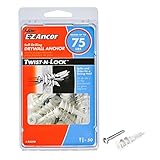
Another fantastic option, often overlooked by DIYers, are screw-in drywall anchors. These look like little screw threads, and you just screw them directly into the drywall with a screwdriver or drill.
They create their own threads in the gypsum. Some have a built-in screw, and others you screw the anchor in first, then add your own screw.
They’re super easy to install – no drilling a large hole beforehand, just a small pilot hole sometimes. These are great for medium-duty stuff, like shelves or wall sconces. Their weight rating is usually pretty good, often in the 30-50 pound range for the larger ones. I’ve used these extensively in my rental apartments where I didn’t want to make huge holes, and they’ve held up perfectly.
They’re a real lifesaver when you want a clean look without compromising too much on strength.
Here’s a quick comparison of common drywall anchors:
| Anchor Type | Best For | Typical Weight Rating (per anchor, in drywall only) | Ease of Installation | My Verdict |
|---|---|---|---|---|
| Plastic Expansion Anchor (Ribbed Cone) | Lightweight items (small pictures, decor) | 5-20 lbs | Very Easy | Barely adequate. Use only for the lightest things. |
| Screw-In Drywall Anchor (e.g., E-Z Ancor) | Medium-duty items (shelves, sconces, mirrors) | 30-50 lbs | Easy | My go-to for most mid-weight tasks. Reliable and clean. |
| Molly Bolt / Hollow Wall Anchor | Medium to Heavy-duty items (larger shelves, cabinets, heavier mirrors) | 50-100+ lbs | Moderate (requires larger hole) | Excellent for serious weight. Feels very secure. |
| Toggle Bolt | Heavy-duty items (large mirrors, heavy shelves, cabinets) | 50-100+ lbs | Moderate (requires very large hole, can be fiddly) | The king of drywall strength, but takes more effort. |
The Myth of the “universal” Anchor and Common Mistakes
There’s this persistent myth that certain anchors are “universal,” meaning they’ll work in any material. This is marketing nonsense, plain and simple. The most common offenders are those plastic cone-shaped anchors. They get packaged with all sorts of fixtures, and the instructions often say, ‘use with appropriate wall material.’ What they don’t always tell you is that ‘appropriate’ usually means drywall, and even then, their strength is severely limited. If you try to use them in plaster, they might crumble it. If you try to use them in concrete, they’ll just strip out or shatter.
The biggest mistake I see people make, beyond trying to use concrete anchors in drywall, is not considering the weight of the item they’re hanging and then not using enough anchors. Hanging a long, heavy shelf with only two flimsy plastic anchors is asking for trouble. You need to think about the total weight, including the weight of whatever you put on the shelf. And you need to distribute that weight. A single anchor carrying 50 pounds is a lot different than four anchors each carrying 12.5 pounds. The latter is much more stable and less likely to cause damage. (See Also: Can Cords Be Used To Make Anchors Climbing )
Another common error is not drilling the correct size hole for the anchor. For plastic anchors, the package usually tells you what size drill bit to use. For toggle bolts and molly bolts, you need a much larger hole, and if you get it wrong, the anchor won’t engage properly. I remember trying to install molly bolts once and using a drill bit that was just slightly too small. The anchor wouldn’t fully collapse and expand behind the wall. I ended up having to force it, which warped the anchor and made it useless. It’s important to follow the instructions for the specific anchor you’re using. Don’t wing it.
People also often underestimate the strength of the drywall itself. Even with the right anchors, if you’re screwing into a really thin, old piece of drywall, it might still pull out. Good quality drywall is denser and stronger than cheap, flimsy stuff. If you’re building something permanent or hanging something very heavy, it’s always best to try and hit a stud. Stud finders are your friend, and while they aren’t always perfect, they’re a lot better than guessing. Anchors are for when studs aren’t an option or aren’t conveniently located, not as a primary solution for extremely heavy loads if a stud is available.
Real-World Scenarios: When and How to Use Different Anchors
Let’s talk practical application. You’ve just bought a beautiful, ornate mirror that weighs a good 30 pounds.
It needs to go over your fireplace mantel. There are no studs directly behind where you want it. Your first instinct might be those concrete anchors you have lying around, but as we’ve established, that’s a recipe for disaster.
What you should grab are heavy-duty toggle bolts or molly bolts. You’ll need to drill a fairly large hole for these, so make sure you’ve got the right drill bit. I like to pre-drill a smaller pilot hole first, then use the larger bit. Installing toggle bolts involves dropping them through the hole, letting the wings pop open, and then screwing them in.
It takes a little more effort than a simple plastic anchor, but the peace of mind is worth it. For that 30-pound mirror, you’d probably want at least two anchors, maybe four if it’s wide, to distribute the load evenly.
Now, consider hanging a lightweight floating shelf for some decorative items. Maybe a few picture frames and a small plant, totaling around 15 pounds. Here, screw-in drywall anchors are perfect. They’re quick to install, don’t require a huge hole, and provide more than enough support for that kind of weight. You can screw them in by hand or with a drill in under a minute. For a shelf that’s maybe 3 feet long, you’d want at least three or four of these anchors spaced evenly along the shelf’s mounting points. They provide a clean look and are surprisingly strong for their size.
What about hanging a flat-screen TV? This is where anchors alone are almost always a bad idea, unless it’s a tiny, lightweight TV. Most TV mounts are designed to be screwed directly into wall studs. If you don’t have studs in the right place, you might need to get creative, perhaps installing a larger backing board that is secured to studs, and then mounting the TV to that.
However, if you absolutely must use anchors for a lighter TV (check the TV mount’s weight rating and the anchor’s rating carefully!), you’d be looking at the absolute strongest, largest toggle bolts or molly bolts you can find, and likely using more of them than you think you need. It’s a risk, though, and one I’d generally avoid for anything expensive or heavy.
I once saw a buddy try to mount a 50-inch TV with what he thought were ‘heavy-duty’ drywall anchors. It lasted about two weeks before one side pulled out, leaving the TV hanging at a precarious angle. (See Also: Can Anchors In Your Shoulder Break )
He was lucky it didn’t fall completely.
For hanging things like lightweight curtains or blinds, the simple plastic expansion anchors might suffice, provided the curtain rod isn’t too heavy and the curtains themselves aren’t thick velvet. But even then, I often opt for screw-in anchors for a bit more security. It’s a small upgrade in effort for a big gain in confidence. The key is always to match the anchor to the weight and the material.
Tips for Success and Avoiding Drywall Damage
Here’s the blunt truth: the best way to hang something heavy is to screw it directly into a wall stud. Always. If you can find a stud, use it. Stud finders are inexpensive and save you a lot of headaches.
I’ve got a cheap Zircon stud finder that’s probably cost me less than $20 over the years, and it’s saved me from making dozens of unnecessary holes in walls. Mark the center of the stud clearly, drill a pilot hole, and screw your item directly into it.
This is the most secure method and requires no anchors at all for most applications. For very heavy items, you might need longer screws to make sure they penetrate deeply enough into the stud.
When you can’t hit a stud, your next best bet is to choose the right anchor for the job. Don’t guess. Look at the weight rating. If your item weighs 25 pounds, don’t use an anchor rated for 10 pounds. Buy anchors rated for at least double the weight, ideally. It’s better to have overkill than underkill. I always buy anchors that are rated for more than I think I’ll need. For instance, if I’m hanging a shelf I expect to hold 30 pounds, I’ll use anchors rated for 50-75 pounds each, or toggle bolts that can handle even more. This gives you a much better safety margin and protects your drywall.
Here are a few other tips to keep your drywall looking good:
- Measure Twice, Drill Once: This old adage is gold. Mark where you want your anchor to go. Double-check that it’s level and in the right spot before you even pick up the drill.
- Use a Template: If you’re hanging multiple things or a large fixture with several mounting points, use a paper template. Trace the mounting holes from the item onto a piece of paper, cut it out, and tape it to the wall. Mark your anchor points through the template. This makes sure everything lines up perfectly.
- Clean Up Dust: When you drill into drywall, you get dust. Lots of it. Use a vacuum attachment to catch dust as you drill, or at least have a dustpan ready. A damp cloth can clean up any stray powder afterward.
- Don’t Overtighten: While you want anchors to be snug, overtightening can strip the threads in the anchor or damage the drywall. Tighten until you feel firm resistance, but don’t force it excessively.
- Repairing Mistakes: If you do mess up and create a hole that’s too big or in the wrong place, don’t panic. Small holes can be patched with spackle and sandpaper. Larger holes might require a drywall patch kit. It’s a pain, but it’s fixable.
Finally, be realistic about what drywall can handle. It’s a wall surface, not a structural beam. For anything truly heavy, like a floor-to-ceiling bookcase that will be filled to the brim, or a large entertainment center, you need to make sure it’s properly secured to the studs. Anchors are a solution for lighter to medium-duty tasks when studs aren’t available.
Verdict
So, to wrap this up, can concrete anchors be used in drywall? Absolutely not. It’s a fundamental mismatch of materials, and attempting it will almost certainly lead to damage, frustration, and potentially falling objects. You might think you’re being clever by using a ‘stronger’ anchor, but you’re actually just setting yourself up for failure.
The good news is that there are plenty of excellent anchors designed specifically for drywall. Toggle bolts, molly bolts, and screw-in anchors are your best friends when you can’t hit a stud. Just remember to check the weight ratings, use enough anchors for the job, and follow the installation instructions carefully. Investing a few extra dollars in the right anchor will save you a lot more in repairs and disappointment.
Next time you’re faced with hanging something on a wall, take a moment to assess the weight of the item and the type of wall. A little bit of knowledge goes a long way in keeping your walls intact and your belongings safely mounted. Don’t be afraid to ask for advice or do a quick search for the best anchor for your specific needs. Your walls will thank you.