I remember staring at a frayed wire on my old lamp, the insulation looking more like a crumbly cookie than protective sheath. My toolbox, as usual, was a chaotic mess. All I had handy was a roll of that ubiquitous silver stuff. ‘Can duct tape be used instead of electrical tape?’ I muttered, a familiar question popping into my head, usually accompanied by a sigh. We’ve all been there, right? Faced with a quick fix and a toolbox that’s either missing the right tool or filled with things that might work. This isn’t about fancy repairs; it’s about getting by when you need to.
Honestly, the temptation is huge. Duct tape fixes everything, or so the legend goes. But when it comes to electricity, the stakes are a bit higher than sticking a poster to the wall. Messing with live wires or even just a damaged circuit can be a one-way ticket to a shock, a fire, or just a really expensive electrical repair bill.
So, let’s cut to the chase: is that roll of silver stuff actually a viable substitute for the proper stuff?
When ‘good Enough’ Isn’t Good Enough: The Duct Tape vs. Electrical Tape Showdown
Look, I’m all for resourcefulness. I’ve duct-taped a leaky radiator hose on a road trip, sealed a gaping hole in my shed with it, and even used it to jury-rig a broken backpack strap. It’s strong, it’s sticky, and it’s usually readily available. But when you’re talking about electrical insulation, that sticky silver fabric is playing a different game entirely.
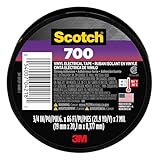
Electrical tape, the real deal, is specifically designed for one job: to safely insulate electrical wires and connections. It’s made from vinyl, a material that’s non-conductive, flexible, and importantly, resistant to the heat and chemicals that electricity can generate.
Duct tape, on the other hand, is mostly fabric mesh with an adhesive. That mesh is not non-conductive.
In fact, depending on the brand and how it’s made, it can conduct electricity to some degree, which is the exact opposite of what you want.
I learned this the hard way one winter. My outdoor Christmas lights had a section where the wire was exposed, right near a metal pole. My first thought was a quick wrap of duct tape.
Seemed fine. For about a week.
Then, during a damp spell, I noticed a faint, eerie glow around the taped section. Not cool. It turns out the moisture was seeping through, and the duct tape, far from being an insulator, was actually helping to wick that moisture and allow a tiny bit of current to escape.
Thankfully, it was low voltage, but it was a stark reminder that some jobs require the right tool. The real danger with duct tape on electrical wires is the potential for short circuits, overheating, and even fire. If the tape itself fails as an insulator, or if it degrades over time (which it does, especially with temperature fluctuations and UV exposure), you’re left with exposed wiring and a serious hazard.
Electrical tape is engineered to withstand these conditions; duct tape is engineered to hold things together, usually.
The common advice you hear is simple: don’t do it. And for good reason. While you might get away with it for a very temporary, low-voltage, non-important application, it’s a gamble. The adhesive on duct tape can also break down, leaving a sticky, gooey mess that’s hard to clean up and offers zero insulation. Plus, it can make a real mess of the wire’s original insulation, making a proper repair even harder later. So, while I appreciate the DIY spirit, when it comes to electricity, it’s best to stick to what’s designed for the job.
What Makes Electrical Tape Actually Work (and Why Duct Tape Doesn’t)
Let’s get down to brass tacks about what makes electrical tape – the good stuff – actually do its job. It’s not just about being sticky. The primary function is insulation, preventing electricity from flowing where it shouldn’t. The magic ingredient here is the material itself: vinyl.
Vinyl, or polyvinyl chloride (PVC), is a fantastic electrical insulator. It has high dielectric strength, meaning it can withstand a significant electrical field before breaking down. This is measured in volts per mil (one-thousandth of an inch). High-quality electrical tape boasts a dielectric strength of around 1,000 volts per mil.
This means a single layer of tape could, in theory, insulate a wire carrying up to 1,000 volts without breaking down. Of course, in practice, you’re layering it, so you get even more protection.
Beyond being non-conductive, electrical tape is also designed to be flexible. Wires bend, they move, and the tape needs to move with them without cracking or losing its grip. It also needs to have good adhesion, but not so much that it’s impossible to remove cleanly or that it damages the wire’s original insulation. The adhesive on electrical tape is typically a rubber-based pressure-sensitive adhesive.
It’s designed to bond well and maintain that bond over a range of temperatures, from cold basements to hot attics. It’s also formulated to resist degradation from UV light and common chemicals found in electrical environments. This is why electrical tape often comes in specific colors like black, red, blue, or green – these colors often indicate voltage ratings or specific circuit functions, making identification easier.
Now, let’s bring duct tape back into the picture. That fabric mesh? It’s a huge giveaway. It’s woven, and those fibers, even if treated, are inherently more conductive than pure vinyl. (See Also: Can I Use Electrical Tape To Connect Wires )
Think of it like a sieve versus a solid wall. The adhesive on duct tape, while incredibly strong for general-purpose use, isn’t formulated for the same environmental resilience as electrical tape adhesive. It can become brittle in the cold, sticky and gummy in the heat, and it’s often susceptible to breakdown from oils and solvents.
I once tried to use duct tape to temporarily fix a garden hose that had a small split. The sun and the water eventually degraded the adhesive, turning it into a sticky, stringy mess that was a nightmare to peel off. Imagine that happening on a live electrical wire. Scary stuff.
So, while duct tape excels at holding things together mechanically, it utterly fails at the important insulation properties required for electrical work.
Here’s a quick look at how they stack up on key properties:
| Feature | Electrical Tape (Good Quality) | Duct Tape (Typical) | Verdict |
|---|---|---|---|
| Insulation Material | Vinyl (PVC) – Excellent insulator | Fabric mesh with adhesive – Poor insulator | Electrical tape wins, big time. |
| Dielectric Strength | High (e.g., 1000V/mil) | Very Low / Negligible | Duct tape is a no-go for insulation. |
| Flexibility | Excellent, remains flexible | Can become stiff or gummy depending on temp | Electrical tape is more reliable. |
| Adhesive Resilience | Resists heat, cold, UV, chemicals | Breaks down with heat, cold, UV, solvents | Electrical tape lasts longer. |
| Intended Use | Electrical insulation and wire harnessing | General repair, sealing, binding | Completely different tool for completely different jobs. |
Common Mistakes When You Think Duct Tape Is an Option
The biggest mistake, hands down, is thinking that because duct tape sticks, it’s automatically a suitable replacement for any tape. This is a dangerous assumption, especially when electricity is involved.
People see that thick, sticky layer and think, “Okay, it’ll cover the wire, that’s the main thing.” They miss the important part: insulation. You’re not just trying to cover a wire; you’re trying to isolate it from everything else. I’ve seen folks wrap a wire with duct tape like they’re making a mummy, thinking more is better.
But that doesn’t magically make the fabric itself non-conductive. It’s like putting a thick blanket over a leaky pipe and expecting it not to drip.
The water (or in this case, electricity) will find a way.
Another common error is underestimating the environment. Wires aren’t always tucked away in a perfectly climate-controlled room.
They can be in attics where temperatures soar, in basements that are damp, or outdoors exposed to the elements. Duct tape adhesive is notorious for failing under temperature extremes. I once tried to use duct tape to temporarily seal a gap in my car’s engine bay where a rodent had chewed through some wiring loom. It worked for a day or two until the engine heat made the adhesive ooze everywhere, and the vibration eventually peeled it off.
If that had been a important electrical connection, I could have been stranded or worse. Electrical tape, conversely, is designed to handle significant temperature swings and UV exposure, maintaining its integrity for years.
A third mistake is believing that duct tape is a permanent fix. It’s rarely that.
It’s a quick-and-dirty solution for, well, dukes. It’s meant for temporary holds, for things that don’t carry risk if they fail. Using it on electrical wires, even for a short period, is asking for trouble. The adhesive can degrade, the fabric can fray, and moisture can penetrate.
This can lead to intermittent faults, where the connection works sometimes and not others, which can be incredibly frustrating and harder to diagnose. It can also lead to a complete failure of insulation, resulting in short circuits, sparks, or even a fire. I remember a friend who used duct tape to secure a loose connection on an old extension cord.
A few months later, the cord started sparking during a storm. It turned out the duct tape had degraded, and the exposed wires were arcing. We were lucky it didn’t start a fire.
My personal worst mistake was a classic: trying to be “clever” and save a few bucks. I was rewiring some old patio lights, and one of the connectors looked a bit iffy. I didn’t have any proper terminal blocks or heat shrink tubing handy, so I thought, “Duct tape will hold it together for now, and I’ll get the right stuff tomorrow.” Tomorrow never came. A few weeks later, during a rain shower, I got a nasty shock when I touched one of the posts. The duct tape had absorbed moisture and, predictably, done absolutely nothing to stop the current. It was a wake-up call that some shortcuts just aren’t worth the risk.
The Real-World (limited) Use Cases for Duct Tape on Wires
Okay, so we’ve established that duct tape is generally a terrible idea for actual electrical insulation. But are there any scenarios where you might find yourself using it on or near wires, even if it’s not the primary insulator? Yes, but we’re talking about very specific, non-important applications, and even then, it’s a stretch.
The main scenario is for temporary securing or * bundling* of wires where the insulation itself is already intact and there’s no risk of it being exposed. Think of tidying up a bundle of cables behind your TV, or temporarily securing a loose power cord to a wall or furniture leg to prevent tripping. In these cases, the duct tape isn’t doing any insulating; it’s just acting as a cheap, readily available strap. (See Also: Can Electrica Tape Catch On Fire )
Another highly limited use might be to reinforce a damaged outer sheath of a heavy-duty cable, like a thick extension cord, where the inner wires are still perfectly insulated. If the outer rubbery jacket has a small tear, but you can clearly see the intact, insulated wires underneath, you might use duct tape to prevent that tear from getting bigger and to offer a minimal level of physical protection. This is still a very temporary measure, and you should absolutely plan to repair or replace the cable properly as soon as possible. I’ve done this for a garden hose, and while it works for a bit, it’s not a solution.
For cables, it’s the same story. It’s about preventing further mechanical damage to something that is already adequately insulated.
It’s not about adding insulation where it’s missing.
One very, very niche situation might be to temporarily hold a wire in place while you apply the proper electrical tape. For instance, if you have a wire that’s constantly trying to pull away from a connection point, you could use a small piece of duct tape to tack it down just long enough to get your electrical tape wrapped around it correctly.
But this is more like using it as a helper tool, not as the insulator itself. The moment you’re done with the proper tape, the duct tape should ideally be removed, especially if it’s in a place where it might get hot or be exposed to anything.
I’ve seen electricians use tape to hold things temporarily, but it’s always with the understanding that it’s not part of the final, safe setup. The key is that the insulation is already there, provided by the correct materials.
Duct tape is merely a mechanical binder in these fringe cases.
It’s important to reiterate that in all these limited scenarios, the actual electrical insulation is still provided by the original wire insulation or by proper electrical tape applied correctly. Duct tape is at best a placeholder for mechanical integrity or a temporary binder. It is never, ever a substitute for insulation itself. The temptation to use it will always be there, but the risks associated with using it incorrectly on electrical applications are simply too high. My own experience with the glowing Christmas lights, while minor, was enough to scare me straight. Always prioritize safety and use the right materials for the job, especially when dealing with electricity.
Practical Tips for Using Electrical Tape (the Right Way)
Alright, so you’ve decided to do it right and use actual electrical tape. Good choice.
Now, how do you use it effectively? First off, always start with clean, dry wires. Any dirt, grease, or moisture on the wire will compromise the tape’s adhesion and insulation. If you’re working on a damaged wire, strip back just enough of the old insulation to expose clean copper, and then make your splice or repair.
When you start applying the tape, begin about an inch back from the end of the splice or the exposed wire. Overlap each wrap by about half the width of the tape. This makes sure there are no gaps for moisture or contaminants to seep in. Pull the tape taut as you wrap – not so tight that you cut into the wire or your fingers, but firm enough so it adheres well and creates a smooth, smooth finish.
Work your way back along the wire, extending the tape at least an inch beyond the splice or the end of the damaged area. This creates a good seal and protects the entire connection. For important applications or wires that might experience a lot of movement or vibration, you might want to apply two or even three layers of tape.
The second layer should overlap the first, and so on. This not only adds an extra layer of insulation but also helps to mechanically secure the connection.
When you reach the end of your wrapping, give the tape a firm press to make sure it’s fully adhered. Some high-quality electrical tapes have a tendency to “cure” slightly over time, becoming even more bonded and resilient.
I’ve found that brands like 3M Super 33+ or Scotch Vinyl Electrical Tape 88 are worth the slightly higher price because they really do hold up better.
Here’s a quick step-by-step for a good wrap:
- Prepare the Wire: Clean the wire ends thoroughly. If you’re making a splice, make sure the conductors are securely joined (e.g., with a wire nut or crimp connector).
- Start the Wrap: Begin applying the electrical tape about an inch before the end of the splice or the damaged area. Anchor the tape firmly.
- Overlap and Stretch: Wrap the tape around the wire, overlapping each previous turn by approximately 50%. Apply consistent, firm tension to the tape as you wrap.
- Extend the Coverage: Continue wrapping, moving towards the end of the wire, and extend the tape at least an inch past the splice or the end of the repair area.
- Finish and Seal: Once you’ve achieved sufficient coverage (usually at least 2-3 layers for good insulation), press the end of the tape down firmly to make sure a good seal. Trim excess if necessary.
A practical tip: keep your electrical tape in a relatively cool, dry place. Extreme heat can cause the adhesive to soften and ooze, while extreme cold can make it brittle and prone to cracking. Storing it in a toolbox or a drawer is usually fine. Another tip is to always buy reputable brands. While the cheap stuff might seem like a bargain, it often has poorer adhesion, less durable material, and lower dielectric strength, meaning you’ll likely have to redo the job sooner, costing you more time and potentially more money. Investing in good quality electrical tape is one of those small expenses that pays off big in terms of safety and reliability.
When to Just Buy the Right Tape and Call It a Day
Look, I get it. Sometimes you’re in a pinch. (See Also: Can I Substitute Duct Tape For Electrical Tape )
You’ve got a busted wire, it’s late, stores are closed, and that roll of silver tape is staring you down. The siren song of “it’ll probably work” is loud.
But here’s the honest truth: for electrical work, the cost of electrical tape is peanuts compared to the potential cost of a fire, an electric shock, or a ruined appliance. I’ve spent probably $180 over the years on various “quick fix” tapes and adhesives that ultimately failed, only to have to buy the correct product anyway, plus deal with the mess and the frustration. Buying a good roll of electrical tape, something like 3M Super 33+ or even a decent quality generic vinyl tape, will set you back maybe $5-$10. That’s it.
It’s designed for the job, it’s tested, and it’s safe.
Think about the consequences. If you’re insulating a wire in your home, a faulty repair could lead to an electrical fire. The damage from that could be catastrophic, costing tens of thousands, if not hundreds of thousands, of dollars. Your homeowner’s insurance might cover some of it, but the hassle and the loss of possessions are immeasurable.
On a personal level, an electric shock can cause serious injury or even death. Is a few dollars saved on tape worth that risk? Absolutely not. My contrarian take here is that while DIY ingenuity is fantastic, there are certain lines you just don’t cross.
Electrical insulation is one of them. It’s not about being a professional; it’s about using materials that are designed and rated for safety.
I once had a neighbor who was convinced duct tape was a universal solution. He used it to “fix” a cracked plastic casing on a small appliance that had exposed wiring inside.
Within a month, the appliance stopped working, and there was a faint burning smell. Turns out the duct tape had degraded, allowed dust and grime to get in, and the wiring shorted out, frying the internal components.
He ended up having to buy a whole new appliance. If he’d just used a small piece of proper electrical tape to cover the exposed wire and then maybe some plastic epoxy or even a dab of super glue for the casing, it would have been a safe and effective repair. The lesson here is that when you’re dealing with electricity, the right tool for the job isn’t just about performance; it’s about safety.
The few dollars you save by using duct tape instead of electrical tape are never, ever worth the risk.
Faq: Can Duct Tape Be Used Instead of Electrical Tape?
Can I Use Duct Tape for a Temporary Electrical Repair?
It’s strongly advised against. While duct tape is sticky and can hold things together mechanically, it is not designed to be an electrical insulator. Its fabric mesh construction can conduct electricity, and its adhesive degrades under heat and UV light, making it an unreliable and potentially dangerous choice for any electrical application. Always use proper electrical tape for safety.
What Happens If I Use Duct Tape on Electrical Wires?
If you use duct tape on electrical wires, you risk a short circuit, overheating, or even fire, especially if moisture is present or the tape degrades. The fabric in duct tape is not a good insulator, and its adhesive is not formulated for the stresses of electrical connections. This can lead to intermittent faults or complete electrical failure.
Is There Any Situation Where Duct Tape Is Okay Near Wires?
Yes, but only for non-insulating purposes. For example, you might use duct tape to bundle cables together for neatness or to temporarily secure a power cord to prevent tripping, provided the wires themselves are fully insulated and undamaged. It should never be used as a primary insulator or to cover exposed wiring.
What’s the Difference Between Duct Tape and Electrical Tape?
Electrical tape is made of vinyl (PVC) which is a non-conductive material with high dielectric strength, designed specifically for insulating electrical wires. It remains flexible and resistant to temperature fluctuations and chemicals. Duct tape is made of a fabric mesh coated with a strong adhesive, designed for general-purpose repairs, and lacks the necessary insulating properties and resilience for electrical work.
How Many Layers of Electrical Tape Should I Use?
For most common applications, two to three layers of properly overlapped electrical tape are sufficient. Make sure each layer is stretched taut and overlaps the previous one by at least 50% to create a smooth, insulated barrier. For higher voltage or more important applications, more layers may be necessary, or a different insulation method might be required.
Final Thoughts
So, to wrap it all up: can duct tape be used instead of electrical tape? In my book, the answer is a resounding no, unless you’re talking about purely mechanical bundling of already insulated wires. The risks involved with using it as an insulator are just too high, and the consequences can be severe. I’ve seen firsthand how even seemingly minor shortcuts can turn into major headaches, and with electricity, it’s not worth the gamble.
My advice? Keep a roll of proper vinyl electrical tape in your toolbox. It’s cheap, it’s effective, and it’s designed for the job. Don’t be that person who causes a fire or gets shocked because they tried to be clever with silver tape. Stick to the tools and materials that are actually made for electrical work. It’s the safest and most reliable approach, every single time.
Next time you’re tempted to reach for the duct tape for a wiring job, take a deep breath, find the right stuff, and do it right.