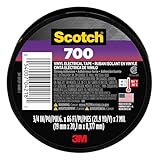
I remember the first time I had to fix a frayed cord on my ancient toaster. It looked like a minor job, just a bit of insulation worn away near the plug. My dad, bless his heart, handed me a roll of electrical tape and said, ‘Wrap it up tight, son.’ So I did. Perfectly neat, all the way down to where the bare ground wire peeked out. Problem solved, right? Wrong.
That little repair held for about a week before I noticed a faint smell of burning plastic. It’s a question many DIYers ponder: can electrical tape be touching ground wire? The simple answer is more nuanced than just ‘yes’ or ‘no,’ and getting it wrong can lead to more than just a burnt toast smell.
We’ve all been there, staring at a mess of wires and wondering if that roll of black tape is the magic bullet for every electrical ailment. Let’s cut through the confusion.
When the Tape Fails: Why Your Electrical Tape Fix Might Be a Fire Hazard
Look, electrical tape is great. It’s stretchy, it sticks like nobody’s business, and it comes in all sorts of cool colors if you’re into that sort of thing. For its intended purpose – insulating individual hot or neutral wires that aren’t physically stressed or exposed to extreme conditions – it’s usually perfectly fine. I’ve wrapped countless wire splices with it after terminating cables, and they’ve held up for years. It’s cheap, readily available, and feels like the go-to fix for anything electrical that looks a bit sad.
But here’s the kicker: that shiny black tape isn’t some kind of magical force field that makes any wire it touches safe. Electrical tape has limitations, and one of the biggest blind spots people have is assuming it’s suitable for everything. When you’re dealing with the ground wire specifically, things get a bit more serious. The ground wire isn’t about carrying current during normal operation; its job is to be the emergency exit for electricity if something goes catastrophically wrong inside an appliance or wiring. It’s supposed to provide a low-resistance path to earth so that a fuse blows or a breaker trips, instead of you becoming the path of least resistance when you touch a metal casing.
My first major electrical oopsie involved a garden power tool that had seen better days. The cord was nicked, and the ground wire looked a bit roughed up.
I did exactly what my dad told me to do with the toaster – wrapped it with electrical tape, thinking I was being resourceful. A few weeks later, during a particularly damp afternoon, I reached for the tool and got a solid jolt that made my teeth rattle.
The tape had degraded, moisture had seeped in, and the ground wire was no longer providing that important safety path. It was a harsh lesson: electrical tape, while useful, is not a permanent or universally safe solution, especially when it comes to safety ground connections.
The common advice often says, ‘Just tape it up.’ And sure, for a temporary fix, or on a wire that’s barely being touched, it might seem okay. But the reality is, electrical tape degrades. UV light, heat, cold, oil, solvents – they all break down the adhesive and the vinyl over time.
And if that ground wire is somewhere it could get physically abraded, snagged, or repeatedly flexed, that tape is going to start peeling, splitting, or losing its grip. That’s when you’ve effectively just covered up a problem, not fixed it. And covering up a compromised ground wire is like putting a band-aid on a gaping wound; it looks like you did something, but it’s not addressing the real danger.
The Ground Wire’s Job: Why It Deserves Better Than Just Tape
Let’s talk about what a ground wire actually does because understanding its role is key to understanding why simply taping it is a bad idea. The ground wire, often green or bare copper, is a safety feature. It’s connected to the metal casing of an appliance and runs back to your electrical panel, ultimately connecting to the earth. Its primary purpose is to prevent electric shock.
Imagine this: the hot wire inside an appliance accidentally touches the metal casing. Without a ground wire, that entire casing becomes live, carrying the full voltage of the circuit. If you touch that appliance and are also touching something grounded (like a water pipe, or even just standing on a damp floor), electricity will flow through you to the ground. It’s incredibly dangerous and can be fatal. The ground wire provides an alternative, much easier path for that fault current to flow. This massive surge of current will trip your circuit breaker or blow a fuse almost instantly, cutting off power and preventing a shock. It’s a failsafe, an emergency exit for electricity. (See Also: Can I Use Electrical Tape To Connect Wires )
Now, consider what happens when you wrap electrical tape around a damaged ground wire. You’re basically insulating that wire from its intended job. If a fault occurs, the electricity can’t easily flow to ground.
It might still find a path through you. Plus, electrical tape isn’t designed to handle the kind of current that would flow during a ground fault. It could melt, catch fire, or simply fail under the stress, leaving you with no protection at all.
I once had a friend who tried to ‘fix’ a frayed cord on his workbench grinder with tape. He figured it was just a little nick.
A few weeks later, he brushed against the metal housing while his hand was damp and got a shock that sent him flying across the room. He was lucky. The tape had done nothing to mitigate the problem, and his ‘fix’ had given him a false sense of security.
The common advice often skips over the why and just tells you how to do a quick fix. People see a bit of exposed copper and think, ‘electrical tape,’ because it’s the most accessible insulating material. But the ground wire’s job is too important for a quick fix.
It’s not carrying normal current; it’s waiting for a disaster. And when disaster strikes, it needs to be a clear, unimpeded path. Tape can become brittle, it can lose adhesion, it can be damaged by abrasion, and it can even become conductive if it gets sufficiently contaminated or degraded. Relying on it for a safety ground is like trusting a flimsy screen door to stop a charging bull.
It’s just not built for that kind of stress.
My Own Dumb Mistake: When Tape Created More Trouble
I’ll admit it, I’ve made my share of electrical blunders. One that still makes me cringe involved an old extension cord for my outdoor Christmas lights. The insulation was cracked in a few spots, and a section of the ground wire was showing. Naturally, my first instinct, fueled by years of DIY magazine articles and general laziness, was electrical tape. I meticulously wrapped each damaged spot, making sure the tape was tight and covered everything. I even used a few different colors, thinking I was being clever about identifying the different wires for future reference. Felt pretty proud of myself, honestly. It looked good, and the tape was sticking well.
That first winter, everything seemed fine. The lights worked, no shocks, no smoke.
But the following year, when I pulled the cord out of storage, the tape was brittle and cracked in places. Worse, during a particularly heavy rainstorm, a portion of the cord got submerged. The tape, which had been compromised by UV exposure and temperature changes over the year, started to absorb moisture.
It wasn’t a perfect seal anymore. Suddenly, my porch lights started flickering erratically, and I got a nasty tingle when I tried to unplug the string. (See Also: Can Electrica Tape Catch On Fire )
Turns out, the moisture had seeped through the degraded tape and created a partial short circuit, but not enough to trip the breaker immediately. It was a hazardous situation, and the tape, which I thought was protecting the ground wire, was actually making it worse by creating a path for moisture and intermittent faults.
I learned that day that electrical tape is not a permanent fix for damaged insulation, especially on a ground wire. It’s a temporary patch at best, and often a dangerous one. The common advice to just ‘wrap it up’ with electrical tape often fails to account for the environmental factors and the long-term degradation of the tape itself. It’s a shortcut that can lead to a much bigger headache, or worse.
My friend, who is an electrician by trade, came over and just shook his head. He replaced the entire cord section, explaining that a proper repair involves more than just tape – it requires materials rated for the conditions and a method that makes sure a truly safe and lasting connection. He said, ‘You can’t just tape over a safety feature and expect it to work like new. That ground wire is there for a reason, and covering it with something that breaks down isn’t doing anyone any favors.’
Alternatives to Tape: Real Solutions for Damaged Wires
Okay, so if electrical tape isn’t the answer for a damaged ground wire, what is? Fortunately, there are better, more reliable ways to handle this. The goal is always to restore the integrity of the wire’s insulation in a way that’s safe and durable. This isn’t about making things look pretty; it’s about preventing shocks and fires.
One of the most effective methods is using heat-shrink tubing. You get a piece of tubing that’s slightly larger than the wire, slip it over the damaged area (or over a splice if you’re joining wires), and then heat it with a heat gun or even a lighter (carefully!). The tubing shrinks down tightly around the wire, creating a solid, insulated, and often waterproof seal. It’s much more durable than electrical tape and is rated for electrical insulation. I used this to fix a lawnmower cord that got nicked by the blade, and it’s been solid for three seasons now.
Another excellent option, especially for repairing cut or frayed cords where you need to splice wires, is using waterproof wire nuts or connectors designed for outdoor or wet locations. These are basically plastic housings filled with a sealant or designed to create a tight, moisture-resistant seal. You twist the stripped wires into them, and they provide a mechanically strong and electrically sound connection. They are overkill for a simple abrasion, but if you’ve had to cut out a bad section of cord and splice it back together, these are the way to go. I used a set of these to repair a submersible pump cable, and they’ve held up perfectly through submersion and temperature fluctuations.
For smaller nicks or abrasions on a wire that doesn’t experience a lot of flexing or physical stress, a good quality silicone tape (often called self-fusing tape) can be a decent temporary or semi-permanent solution. Unlike regular electrical tape, silicone tape fuses to itself, creating a solid, watertight bond. You stretch it as you wrap it, overlapping each layer. It’s more forgiving of temperature extremes than vinyl electrical tape. However, for a ground wire that’s meant to be a fail-safe in a important situation, I still lean towards heat-shrink or proper splicing connectors over even silicone tape if the damage is significant or in a high-wear area.
Here’s a quick rundown of what I tend to reach for, and when:
| Repair Method | Best For | My Verdict |
|---|---|---|
| Electrical Tape (Vinyl) | Temporary insulation on non-important wires, bundling cables. | Okay for its intended use, but NOT for ground wire repairs or high-stress areas. Degrades easily. |
| Heat-Shrink Tubing | Insulating splices, repairing frayed wire ends, covering minor damage. | Excellent. Durable, professional-looking, and provides a reliable seal. My go-to for most wire repairs. |
| Waterproof Wire Nuts/Connectors | Joining spliced wires, especially in outdoor or wet environments. | Top-notch for joining wires. Provides a secure, sealed connection that’s built to last. Overkill for simple nicks. |
| Silicone Self-Fusing Tape | Sealing minor abrasions, creating a watertight barrier. Can be a decent temporary fix. | Better than vinyl tape for some conditions, but still not my first choice for important safety grounds. |
Common Mistakes People Make (and How to Avoid Them)
When it comes to electrical repairs, especially for DIYers, there are a few pitfalls that people tend to fall into, often with the best intentions. Understanding these common mistakes can save you a lot of trouble, and potentially a lot of danger.
The most frequent mistake, as we’ve discussed, is over-relying on electrical tape for everything. People see a bit of exposed wire and think, ‘Ah, electrical tape!’ They don’t consider the specific function of the wire (is it a ground wire?), the environment it’s in (is it exposed to moisture, UV, heat, or abrasion?), or the long-term durability of the tape. Electrical tape is a vinyl product, and vinyl degrades. It gets brittle in the cold, soft and gummy in the heat, and the adhesive can break down. It’s designed for insulating individual conductors in junction boxes, not for fixing a cord that’s going to be kicked around the garage or left out in the elements.
Another mistake is not stripping enough insulation, or not stripping it cleanly. When you’re making a splice, you need to expose a sufficient length of clean, undamaged copper wire to make a good connection. If you’re just trying to cover a nick, you still need to make sure the surrounding insulation is sound. Trying to tape over a damaged section without properly cleaning or preparing the wire underneath is just a superficial fix. (See Also: Can I Substitute Duct Tape For Electrical Tape )
I remember trying to repair a lamp cord once and only stripping back a tiny bit of the wire. The connection was loose, and it kept coming apart.
It took me a few tries to realize I needed to expose more wire and make a solid, twisted connection before insulating it properly.
People also often fail to check the rating of the materials they are using. Not all tapes are created equal. Standard electrical tape is usually rated for 600 volts and 105°C (221°F). However, if you’re working with higher voltage or higher temperature applications, you need tape specifically designed for that. More importantly, if you’re splicing wires, you need connectors that are rated for the amperage and voltage of the circuit. Using a small wire nut on a heavy-duty appliance cord is a recipe for disaster. Always check the packaging for voltage, temperature, and application ratings.
Finally, there’s the temptation to do a ‘temporary’ fix that never gets made permanent. That little bit of tape you put on the cord might seem fine for now, but if it’s a safety issue, it needs a proper repair as soon as possible. Electrical safety isn’t a ‘later’ job. If you’re unsure about how to make a repair, or if the damage seems extensive, it’s always best to call a qualified electrician. The cost of a professional repair is far less than the cost of an electrical fire or a serious injury.
The Faq: Can Electrical Tape Be Touching Ground Wire?
Is It Ever Okay for Electrical Tape to Be Touching the Ground Wire?
Generally, no. While electrical tape is designed for insulating wires, its primary purpose is for individual conductor insulation in controlled environments, not for making repairs to safety ground wires. The ground wire is a safety feature meant to provide a clear path for fault current. Electrical tape can degrade, lose adhesion, absorb moisture, and is not designed to withstand the stresses or currents that a ground fault might involve. Covering a damaged ground wire with tape can create a false sense of security and prevent it from functioning correctly in an emergency.
What Should I Use Instead of Electrical Tape on a Damaged Ground Wire?
For damaged ground wires, more solid solutions are recommended. Heat-shrink tubing offers a durable, insulated, and often watertight seal when properly applied with a heat source. For splicing wires where a section of the cord is replaced, waterproof wire nuts or specialized splicing connectors designed for outdoor or wet conditions are ideal. These provide a mechanically strong and electrically sound connection that is far more reliable than tape.
Can a Damaged Ground Wire Cause a Fire?
Yes, a damaged ground wire can contribute to a fire hazard. If the ground wire is compromised, it cannot effectively direct fault current to trip a breaker or blow a fuse. This can lead to overheating in damaged sections of the wiring or in the faulty appliance itself, which can then ignite surrounding combustible materials. A properly functioning ground wire is a key part of preventing electrical fires.
How Long Does Electrical Tape Last on a Wire?
The lifespan of electrical tape varies greatly depending on the quality of the tape, the environment it’s exposed to, and the application. In ideal conditions, it might last for many years. However, exposure to UV light, extreme temperatures, moisture, oil, or physical abrasion can significantly shorten its life, causing it to become brittle, lose adhesion, or crack within months or a couple of years. It is generally not considered a permanent repair solution, especially for important safety components like ground wires.
Final Verdict
So, to circle back to the original question: can electrical tape be touching ground wire? My honest take, after years of tinkering and a few close calls, is that it’s a gamble you shouldn’t take. Electrical tape has its place, but that place isn’t as a permanent fix for a compromised safety ground. You’re basically putting a flimsy shield over a important life-saving feature.
Think of it this way: the ground wire is the superhero’s cape, always ready to swoop in and save the day when things go wrong. Electrical tape is more like a cheap costume accessory that might look the part for a bit, but it’s going to fall apart when the real action starts. If you find yourself looking at a damaged ground wire, reach for the heat-shrink tubing or a proper splicing connector. It’s a small investment in time and a few bucks that could save you a lot more down the line.
Don’t let a little bit of exposed wire lead to a big problem. Take the time to do it right. Your future self, the one who might unknowingly touch a faulty appliance, will thank you.