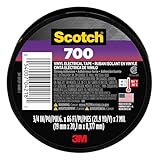
Remember that time you needed to fix a frayed lamp cord, and all you had was that roll of black tape in the junk drawer? Yeah, me too. We’ve all been there, staring at exposed copper and wondering if that roll of electrical tape is going to save the day or cause a bigger problem down the line. So, let’s cut to the chase: can electrical tape be used on bare wire? The short answer is a resounding, but highly conditional, ‘yes, but it’s not ideal and you really shouldn’t rely on it for long-term safety.’
This isn’t some corporate-speak answer designed to sell you more expensive connectors. This is born from years of fiddling with wiring, seeing what holds up and what turns into a sticky mess. I’ve wasted more money on fancy, overpriced ‘solutions’ than I care to admit, and I’ve learned a thing or two about what actually does the job and, more importantly, what doesn’t.
Why We Even Ask: The Allure of the Quick Fix
Look, nobody wants to deal with electrical work. It’s intimidating, potentially dangerous, and often requires specialized tools. So, when a wire frays or a connection comes loose, the first thing many people reach for is that ubiquitous roll of black vinyl tape. It’s cheap, it’s everywhere, and it feels like it should work, right? It’s tape, it insulates. Simple.
The reality is a bit more complicated. Electrical tape is designed to provide a degree of insulation and mechanical protection against abrasion and moisture for already joined wires. It’s primarily a secondary layer of defense, not a primary connector or a long-term insulator for exposed, bare conductors that are carrying current. Think of it like a band-aid for a wire – it can stop a minor bleed, but it’s not going to fix a broken bone. The pressure is on to find a more permanent solution, and fast.
I once had a cheap extension cord where the plastic sheathing split near the plug. My first instinct, being young and impatient, was to just wrap the heck out of it with electrical tape.
I figured, ‘It’s just a lamp cord, not the main house supply.’ For a few weeks, it seemed fine. Then, one humid afternoon, I touched the cord and got a nasty jolt.
The tape had absorbed moisture and lost its insulating properties. It was a stark reminder that ‘good enough’ isn’t good enough when electricity is involved.
That incident alone cost me a new extension cord and a healthy dose of respect for proper insulation. It’s a lesson I don’t forget, and one I hope you can learn without a shock.
The common advice often leans towards using wire nuts or crimp connectors for joining wires, and for good reason. These are designed to create a secure, mechanically sound, and electrically continuous connection. Electrical tape, when used on bare wire as the sole means of insulation, doesn’t offer that same level of reliability. It’s like trying to build a bridge out of chewing gum – it might hold for a bit, but you wouldn’t want to drive a truck over it.
The primary reason we even consider using electrical tape on bare wire is the temptation of convenience. It’s the path of least resistance in a moment of need. However, understanding why it’s not ideal is the first step to making safer, smarter choices. It’s not just about covering the wire; it’s about making sure a safe, reliable electrical connection that won’t fail under stress, heat, or time.
What Electrical Tape is Good for (and What It Isn’t)
Let’s get this straight: electrical tape isn’t some magical multi-purpose adhesive. It’s a specific type of tape made from vinyl (PVC) with a rubber-based adhesive. The key here is ‘vinyl’. It’s flexible, stretchy, and has a decent dielectric strength – meaning it can resist electrical current to a certain point. When applied correctly over properly made connections (like wire nuts or crimp connectors), it adds a important layer of protection against moisture, abrasion, and accidental contact with other conductors. It’s a second line of defense, a sealant, and a way to bundle wires neatly.
The problem arises when you try to use it as the primary insulator for bare wire that’s supposed to be connected. The voltage ratings on electrical tape are usually for low-voltage applications, and even then, they assume the tape is applied in multiple, overlapping layers over a secure connection. Wrapping a single layer of tape directly onto bare wire might seem to cover it, but it doesn’t create a mechanically solid joint. The adhesive can degrade over time, especially with heat generated by current flow or ambient temperature changes.
Think about it: have you ever pulled old electrical tape off something only to find it’s turned into a sticky, gooey mess that’s impossible to remove cleanly? That’s a sign of degradation.
I remember working on an old car stereo install years ago. The previous owner had ‘fixed’ a speaker wire connection with just electrical tape. When I went to replace the speaker, the tape had hardened and cracked, exposing the wire. Worse, the adhesive had melted and fused, making it a nightmare to clean up. It was a mess that took me twice as long to fix properly because I had to undo the shoddy tape job first. That taught me that while electrical tape can cover, it doesn’t necessarily secure or insulate reliably on its own for any length of time. (See Also: Can I Use Electrical Tape To Connect Wires )
The common advice to use proper connectors like wire nuts or Wago connectors for joining wires is spot on. These devices are designed to do two things: create a strong mechanical grip that prevents wires from pulling apart, and provide a reliable electrical path. Electrical tape, when used on bare wire, fails on the mechanical grip aspect entirely. It’s just stuck on; it’s not holding anything together. This means that any vibration, tugging, or even thermal expansion and contraction can compromise the ‘connection’ you’ve made.
Furthermore, the dielectric strength of electrical tape is not infinite. While it can handle low voltages, it’s not designed for continuous exposure to higher voltages or environments where arcing might occur. If you’re dealing with anything beyond a simple low-voltage lighting circuit or a temporary fix on a low-power device, relying solely on electrical tape for bare wire insulation is a recipe for disaster. It’s important to differentiate between using tape to reinforce a proper connection and using it to replace one.
| Application | Verdict | Why |
|---|---|---|
| Reinforcing wire nuts/crimps | Good | Adds moisture/abrasion protection to a secure connection. |
| Insulating a properly made splice | Good | Seals and protects an already sound electrical joint. |
| Insulating bare wire as sole protection | Bad | Lacks mechanical strength, adhesive degrades, unreliable dielectric. |
| Bundling wires | Okay | Works for neatness, but not for insulation of exposed conductors. |
| Temporary fix on low-voltage, non-important circuits (e.g., battery terminals) | Risky, but sometimes done | Only if voltage is very low and failure won’t cause harm. Use with extreme caution. |
This table really sums it up. The tape itself is decent stuff for what it’s intended for, but using it on bare wire as a primary insulator is where it falls apart. It’s like using a raincoat as your only armor in a sword fight; it might offer a tiny bit of protection, but it’s not what it’s designed for and it’s going to fail.
The Dangers of a Sticky Situation: Why It’s a Bad Idea
Let’s be blunt: using electrical tape on bare wire as a long-term or primary insulator is a genuinely bad idea, and it’s mostly about safety. My first-hand experience with that extension cord taught me a valuable lesson, but others aren’t so lucky. The biggest risk is fire. If the tape fails, and the bare wires come into contact with each other, with a metal casing, or with something flammable, you’ve got a direct path for a short circuit. This can generate a tremendous amount of heat very quickly, igniting dust, insulation, or whatever else is nearby. It’s not a question of if it will fail, but when.
Beyond fire, there’s the risk of electric shock. If the tape’s adhesive degrades, or it gets nicked, or simply doesn’t adhere anymore, the bare wire is exposed. Anyone touching that wire, or even something conductive that’s in contact with it, can receive a nasty shock. I’ve seen appliances that were supposedly ‘fixed’ with tape that made the metal casing live. It’s terrifying and completely avoidable. A single jolt can range from a painful zap to something far more serious, especially for individuals with certain health conditions.
The common advice for safe electrical work often emphasizes using connectors rated for the gauge of wire and the voltage/amperage of the circuit. These connectors (wire nuts, crimps, Wagos) are designed to provide a secure, continuous electrical connection and sufficient mechanical strength to prevent wires from separating.
Electrical tape simply doesn’t offer this. It’s a flexible plastic film with adhesive. It’s not designed to bear mechanical load, nor is its adhesive rated for prolonged exposure to the temperatures and stresses found in electrical connections. Over time, the adhesive breaks down, it can become brittle, or it can melt and ooze, all of which compromise its insulating properties.
This is why you’ll often see old tape looking like a melted, sticky mess.
I once had to troubleshoot a buzzing noise in a client’s workshop. Turns out, a seemingly minor connection in an overhead light fixture had been ‘repaired’ with electrical tape.
The tape had degraded, allowing the conductor to fray and arc slightly against the metal housing of the fixture. It wasn’t enough to trip the breaker immediately, but it was enough to cause a constant, unnerving hum and create a significant fire hazard.
The repair involved stripping the wire back properly, using a secure connector, and then, and only then, reinforcing it with tape. The difference was night and day – the hum stopped, and the safety factor went through the roof.
This scenario is unfortunately more common than people realize. People think they’ve fixed a problem, but they’ve actually just created a ticking time bomb.
The electrical industry has standards for a reason. UL certification, for example, means a product has been tested to meet specific safety requirements. Standard electrical tape, when used outside its intended purpose of reinforcing a proper connection, falls outside these safety parameters. It’s the DIY equivalent of using duct tape to fix your brakes – it might seem like a solution in a pinch, but it’s incredibly dangerous. The cheapness and convenience are never worth the potential for serious injury, property damage, or worse. (See Also: Can Electrica Tape Catch On Fire )
What to Use Instead: The Right Tools for the Job
So, if electrical tape isn’t the hero we sometimes wish it was for bare wire, what should you be reaching for? The answer depends on what you’re trying to achieve, but for most common electrical tasks involving joined wires, you want something that provides both mechanical security and reliable electrical insulation. The go-to solutions are wire connectors.
The most common and widely recognized are wire nuts. These are plastic caps with internal threads or springs that screw onto stripped ends of wires, twisting them together and holding them securely. They come in various sizes to accommodate different wire gauges and numbers of wires. They’re cheap, readily available, and effective for solid or stranded copper wire connections in most household applications. When using them, make sure you’ve stripped the wires to the correct length (usually indicated on the connector or packaging) and twist them together firmly. Don’t be shy; you want a solid twist.
Another excellent option, especially for solid wire or when a very solid connection is needed, are crimp connectors. These are metal sleeves that are placed over the stripped ends of wires and then compressed using a special crimping tool. This creates a very strong mechanical and electrical bond. They’re often used in automotive or industrial settings where vibration is a concern. For household wiring, they’re a bit more work than wire nuts but can offer superior reliability.
More modern and increasingly popular are lever-actuated connectors, like Wago connectors. These have small levers that you flip up to open a clamp, insert the stripped wire, and then flip the lever back down to secure the wire. They’re incredibly easy to use, provide a very secure connection, and often have test ports to check voltage without disconnecting. They work well for both solid and stranded wire and are a favorite for quick, reliable splices. They can be a bit pricier per connection than wire nuts, but the ease of use often makes up for it.
For permanent splices that need to be completely sealed against moisture and physical damage, heat-shrink tubing is fantastic. You slide a piece of this special tubing over the wire before making the connection. After you’ve used a wire nut or crimp connector, you slide the heat shrink over the entire connection and heat it with a heat gun. It shrinks down, forming a tight, protective, and insulated seal. This is often used in conjunction with other connectors for added protection.
Here’s a quick comparison of common connectors:
| Connector Type | Ease of Use | Mechanical Strength | Electrical Reliability | Best For | Notes |
|---|---|---|---|---|---|
| Wire Nuts | Moderate | Good | Good | General household splices, solid & stranded wire | Most common, affordable. Make sure proper twist. |
| Crimp Connectors | Moderate-Difficult | Excellent | Excellent | High vibration environments, automotive, permanent splices | Requires specific crimping tool. |
| Lever Connectors (e.g., Wago) | Very Easy | Very Good | Excellent | Quick splices, solid & stranded wire, junction boxes | Fast, secure, often have test ports. Can be pricier. |
| Heat Shrink Tubing | Requires heat source | N/A (used with other connectors) | Excellent (when sealed) | Sealing splices, protecting connections from elements | Provides excellent moisture and abrasion resistance. |
My personal favorite for quick, reliable work is the lever-actuated connectors. They’ve saved me so much time and frustration compared to fiddling with wire nuts, especially when I’m working in tight spaces or have my hands full. They give you that confidence that the connection is solid. But at the end of the day, the most important thing is using any of these proper connectors, rather than relying on tape.
Common Mistakes and How to Avoid Them
When it comes to DIY electrical work, especially with something as tempting as electrical tape, mistakes are all too common. The biggest one, as we’ve discussed, is using electrical tape as the sole means of insulating bare wire. This is the fundamental error that leads to most of the subsequent problems. The solution? Simply don’t do it. Always use a proper wire connector for joining wires.
Another frequent mistake is not using the right size connector for the job. A wire nut that’s too small won’t grip the wires securely, leading to loose connections that can arc and overheat. One that’s too large won’t provide enough pressure, also resulting in a poor connection. Always check the packaging or the wire itself to make sure you’re using a connector rated for the gauge and number of wires you’re joining. For instance, a tiny blue wire nut is for joining two or three thin wires, while a larger red or yellow one can handle thicker wires or more of them.
Improper wire stripping is another pitfall. If you strip too much insulation, you leave too much bare copper exposed, which increases the risk of accidental contact with other wires or metal parts. If you don’t strip enough, the connector won’t make proper contact with the conductor, leading to a high-resistance connection that can overheat. Aim for just enough bare wire to be fully enclosed within the connector. A good rule of thumb is to strip the wire so that only about 1/4 to 1/2 inch of bare copper is showing. Some connectors have guides or indicators for this.
Over-tightening or under-tightening connections is also a problem. With wire nuts, you need a firm twist until they feel snug and the wires are held securely. Jerking or wiggling the wires after attaching the nut should reveal no looseness. With crimp connectors, you need to use the correct crimping tool and apply enough pressure to create a solid metal bond. With lever connectors, make sure the lever is fully closed, securing the wire. Don’t force wires in, and don’t leave levers partially open.
I learned the hard way about under-tightening wire nuts. I was trying to rush through a simple light fixture replacement, and I thought I had the wire nuts on tight enough. A few weeks later, the light started flickering. When I went back to check, one of the wire nuts had vibrated loose, and the bare wire was exposed, making intermittent contact. It was a minor inconvenience this time, but it highlighted how important a secure connection is. It made me double-check every connection I make now, no matter how simple it seems.
Finally, a common mistake is neglecting to add that secondary layer of protection if needed. Once you’ve made a secure connection with a proper connector, wrapping the connection with electrical tape can add an extra layer of protection against moisture and abrasion, especially in damp environments or where the connection might be subject to movement. This is the correct way to use electrical tape – to reinforce a sound connection, not to create one. Always make sure the tape is applied in overlapping layers, extending a bit onto the wire insulation on either side of the connector. (See Also: Can I Substitute Duct Tape For Electrical Tape )
A Few Practical Tips for Electrical Work
When you’re dealing with electrical work, even minor stuff, a few practical tips can make the job safer and easier. First and foremost: always turn off the power. Locate the correct circuit breaker or fuse for the area you’re working on and flip it off. Then, to be absolutely sure, test the wires with a non-contact voltage tester or a multimeter to confirm there’s no power before you touch anything. Don’t rely on just the switch being off; breakers can be mislabeled, or switches can fail.
Second, use the right tools. This means not just the correct connectors, but also proper wire strippers, screwdrivers, pliers, and a reliable voltage tester. Trying to strip wire with a knife or cut connections with the wrong pliers is dangerous and likely to damage the wire or the tool. Invest in a decent set of electrical tools; they’re worth every penny in safety and efficiency. I’ve seen people try to use kitchen knives to strip wire – it’s a recipe for nicks, cuts, and a bad connection.
Third, keep your workspace clean and organized. Remove any clutter, especially flammable materials. Make sure you have adequate lighting. If you’re working in a tight spot, use a headlamp. Having a clear, well-lit area reduces the risk of tripping, dropping tools, or accidentally touching live wires. It also makes it easier to find the right connector or tool when you need it.
Fourth, understand wire colors, but don’t rely on them exclusively. In North America, standard wiring colors are typically black or red for hot (live) wires, white for neutral, and green or bare copper for ground. However, older homes or amateur wiring jobs can have non-standard colors. Always test to confirm the function of a wire if you’re unsure. The voltage tester is your best friend here.
Fifth, when in doubt, consult the professionals. If you’re uncomfortable with any part of the process, if the wiring looks complex or damaged, or if you’re dealing with high-voltage systems, it’s always best to call a qualified electrician. The cost of a professional is far less than the cost of a house fire or a serious injury. Don’t risk it if you’re not 100% confident.
Lastly, remember the role of electrical tape: it’s for reinforcing and sealing already made, secure connections, not for creating them. Apply it in tight, overlapping layers, extending onto the wire insulation at both ends of the connection. This seals out moisture and provides abrasion resistance. It’s the finishing touch, not the main event. For example, after I’ve made a solid connection with a Wago connector, I’ll often wrap the entire connector and the ends of the wires with a few good wraps of electrical tape. It makes the connection look neater and adds that extra layer of protection, especially if the junction box is a bit cramped.
Frequently Asked Questions About Electrical Tape
Can Electrical Tape Be Used on Bare Wire as a Permanent Fix?
No, absolutely not. Electrical tape is not designed to be the sole means of insulation for bare wire in any permanent application. It lacks the mechanical strength and long-term adhesive integrity required for a safe and reliable electrical connection. Relying on it for a permanent fix is a significant safety hazard.
What Is the Difference Between Electrical Tape and Duct Tape for Wiring?
Electrical tape is made of vinyl and has specific dielectric properties designed for electrical insulation. Duct tape is made of fabric with a strong adhesive but lacks the necessary insulating properties and can degrade quickly when exposed to heat or electrical current, making it extremely dangerous for wiring applications.
How Many Layers of Electrical Tape Are Needed for a Secure Connection?
Electrical tape is intended to reinforce already made connections, not create them. When used correctly to seal a wire nut or crimp connector, 2-3 overlapping layers are usually sufficient to provide good moisture and abrasion resistance.
What Should I Use If I Don’t Have Wire Nuts?
If you don’t have wire nuts, you can use other appropriate wire connectors like lever-actuated connectors (e.g., Wago), crimp connectors (with the proper tool), or terminal blocks, depending on the application. Always make sure the connector is rated for the wire gauge and type you are using.
Final Thoughts
So, to circle back to the main question: can electrical tape be used on bare wire? The honest answer, after years of seeing what works and what spectacularly fails, is that it can cover it, but it really, really shouldn’t be your go-to solution for any kind of lasting electrical repair. It’s a temporary, emergency measure at best, and even then, the risks often outweigh the convenience.
My advice? Keep a roll of good quality electrical tape handy for reinforcing proper connections, but invest in a small kit of wire nuts, lever connectors, and a voltage tester. These few tools will save you a world of trouble and keep you from creating a fire hazard or getting a nasty shock. Don’t be like my younger self, tempted by the quick fix; be the person who does it right, the first time.
The next time you find yourself staring at a frayed wire, pause and consider the right way to fix it. Is that roll of tape really going to do the job safely, or is it time to reach for a proper connector and maybe call in a pro if you’re unsure? Your safety, and your home’s, are worth more than a few minutes saved with a questionable repair.