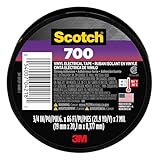
I once found myself staring at a mess of wires after a basement renovation, a tangle that made my stomach clench. One particular wire, meant to be the ground, looked… well, naked. My first thought, fueled by pure panic and a toolbox that was more aspirational than practical, was: can electrical tape be used on ground wire? It’s a question that pops up when you’re in a pinch, facing a DIY job that’s suddenly way more complicated than you planned.
Look, we’ve all been there. You need to fix something, you’re missing the exact right part, and your brain starts scrambling for workarounds. Electrical tape is the duct tape of the electrical world, right? Ubiquitous, cheap, and seemingly capable of anything. But when it comes to something as serious as grounding, ‘seemingly’ isn’t good enough. You need to know if it’s a legitimate fix or just a ticking time bomb waiting to go off.
Why People Even Ask: The Illusion of a Quick Fix
The allure of using electrical tape on a ground wire is pretty straightforward: it’s accessible. Most people have a roll of it lying around somewhere.
It’s flexible, it’s insulating, and it sticks. In a pinch, especially if you’re just trying to temporarily secure a loose connection or protect a wire from fraying further, it feels like a reasonable idea. I remember a time I was working on an old amplifier, trying to get it back to life. The ground lug was a bit corroded, and the wire insulation had started to peel back, exposing a tiny bit of bare copper.
My instinct was to just wrap it with electrical tape and be done with it. It felt like it would hold it in place and prevent any accidental shorts against the metal chassis.
This is where the confusion starts. Electrical tape is specifically designed to insulate wires from electrical current. Its primary job is to prevent shocks and shorts by acting as a barrier. A ground wire’s job is to provide a safe path for fault current to flow away from people and equipment, back to the earth. So, on the surface, if a ground wire needs a bit of protection or insulation where the original sheathing has failed, why wouldn’t electrical tape work? It’s an insulator, and the ground wire is a wire. It’s a logical, albeit dangerously incomplete, conclusion.
The problem isn’t that electrical tape can’t insulate. It’s that its properties and purpose aren’t a perfect match for the long-term, solid requirements of a ground connection. Think about it: a ground wire isn’t just about preventing a direct shock from touching a live wire. It’s about providing a low-resistance path for massive amounts of current to flow safely during a fault.
Electrical tape, while a good insulator in typical household voltage scenarios, isn’t built to withstand the physical stresses, temperature fluctuations, or the sheer current a ground wire might have to handle in an emergency. It can degrade, become brittle, or even melt under the wrong conditions, compromising the very safety it’s supposed to provide. This is why you see advice online that’s a mix of ‘yes, for temporary fixes’ and ‘absolutely not, it’s dangerous’. The nuance is lost in the soundbite, and danger lurks in the oversimplification.
When ‘temporary’ Becomes Permanent (and Why That’s a Problem)
I’ve seen people use electrical tape as a ‘fix’ for a frayed ground wire and then just… leave it. Years pass, the tape dries out, cracks, and then you’ve got a worse problem than you started with.
It’s like putting a band-aid on a broken bone and hoping for the best. In my early days of tinkering, I made this mistake.
I was working on a very old lamp with a questionable plug. The ground pin looked a little bent, and the wire going into it was frayed. I wrapped it with electrical tape, thinking, ‘It’s just the ground, it’s not carrying power.’ That lamp sat in the corner for about six months.
Then, one day, I moved it, the tape snagged on the carpet, and a chunk ripped off, exposing bare wire. Thankfully, the lamp wasn’t plugged in at that exact moment, but it was a stark reminder that ‘temporary’ can easily become permanent, and permanent bad fixes are the worst kind.
The core issue with relying on electrical tape for ground wires, even for what seems like a temporary situation, is its lack of mechanical integrity and its susceptibility to environmental factors. Unlike proper wire nuts, crimp connectors, or grounding clamps, electrical tape doesn’t create a mechanically strong, permanent bond. It’s sticky, yes, but it’s not designed for the constant tugs, vibrations, or temperature swings that wiring can experience. Over time, the adhesive can dry out, lose its tackiness, and the tape itself can become brittle, especially if exposed to heat or sunlight. This leaves the exposed conductor vulnerable to corrosion, physical damage, and worst-case scenario, a break in the ground path. (See Also: Can I Use Electrical Tape To Connect Wires )
A proper ground connection needs to be solid. It needs to maintain a low resistance path to the earth at all times.
If that path is compromised by degrading tape, it means that in the event of a fault – like a short circuit within an appliance – the fault current might not have an easy way to get to ground. Instead, it could flow through unintended paths, potentially energizing metal casings that you might touch, leading to a serious electric shock. Think of the ground wire as your safety net.
You don’t want to patch your safety net with something that degrades over time and might snap when you need it most. Using electrical tape here is like using a flimsy net made of dental floss when you need a heavy-duty rescue rope. It’s a shortcut that bypasses the fundamental requirement for reliability in safety systems.
What You should Be Using Instead (it’s Not Fancy)
So, if electrical tape is a no-go, what’s the right way to fix a ground wire issue? Honestly, it’s usually pretty simple and doesn’t involve anything exotic. For frayed wires or connections that have come loose, your best bet is a proper wire connector.
The most common ones for household wiring are wire nuts. You know, those little plastic caps that you twist onto the ends of wires?
They come in various sizes for different wire gauges, and they create a secure, mechanically sound connection. You just strip a little more insulation off the wire if needed, twist the wires together (or one wire if it’s a single termination), and then screw the wire nut on until it’s snug. It’s designed to hold the wires together and provide a good electrical connection.
Another excellent option, especially for more permanent or high-vibration applications, are crimp connectors. These are metal sleeves that you slide the stripped wire ends into, and then you use a special crimping tool to squeeze the sleeve down, permanently joining the wires. For grounding specifically, you might encounter grounding lugs or connectors that are designed to attach directly to a metal box or chassis. These often use screws or clamps to secure the ground wire. The key here is that these methods create a secure, low-resistance, and mechanically stable connection. They aren’t going to dry out, fall off, or become brittle like tape can.
Here’s a little table I put together to show you the difference:
| Method | Pros | Cons | Verdict for Ground Wires |
|---|---|---|---|
| Electrical Tape | Cheap, readily available, good insulator for general use. | Degrades over time, loses adhesion, brittle, poor mechanical strength, not designed for high-current fault paths. | NO. Unreliable for long-term safety. Only a very temporary insulation for a non-important wire where no current will ever flow, and even then, it’s sketchy. Definitely not for ground wires. |
| Wire Nuts | Easy to use, inexpensive, creates a secure connection, widely accepted for household wiring. | Can loosen if not installed correctly, not ideal for high vibration. | YES. Standard, reliable method for connecting ground wires in junction boxes or to other conductors. |
| Crimp Connectors | Extremely secure, creates a very strong mechanical bond, excellent conductivity. | Requires a specific crimping tool, permanent once crimped. | YES. Excellent for high-stress applications or where a permanent, super-strong connection is needed. |
| Grounding Lugs/Clamps | Specifically designed for chassis/earth grounding, provides a secure point of connection. | Can be specific to the application. | YES. The correct way to connect to a metal box or grounding bar. |
The takeaway is simple: use products designed for the job. For grounding, that means mechanical connectors that make sure a reliable, low-resistance path. Don’t let convenience or cost-cutting lead you down a path of potential danger.
The Real Risk: What Happens When Grounding Fails
People often underestimate the importance of a functional ground wire. They see it as just another wire, maybe less important than the hot or neutral. This is a massive, potentially lethal, mistake. The ground wire is your emergency exit for electricity.
Imagine an appliance – say, your washing machine – develops an internal fault. A hot wire somehow comes loose and touches the metal casing of the machine. Without a proper ground, that entire metal casing becomes energized at a dangerous voltage.
If you then touch the machine and are also in contact with something grounded, like a plumbing pipe or a concrete floor, the electricity has a clear path through you to get to ground. This can cause severe burns, muscle contractions, heart fibrillation, and death. (See Also: Can Electrica Tape Catch On Fire )
Now, picture the same scenario with a working ground wire. That fault current, instead of looking for a person to travel through, immediately has a low-resistance path back to the electrical panel and then to the earth. This massive surge of current should trip your circuit breaker or blow a fuse almost instantly, cutting off power to the faulty appliance. The ground wire acts as a sort of electrical ‘fire alarm’ and sprinkler system, identifying the problem and shutting things down before anyone gets hurt. This is why the integrity of the ground connection is a must. It’s not just about preventing shocks; it’s about preventing fires and making sure that protective devices work as intended.
When you use something like electrical tape, you’re basically putting a weak link in that safety chain. That tape can degrade, overheat, or simply not provide a good enough connection, especially under fault conditions.
If that happens, the ground path is broken or becomes high-resistance. The fault current might not be enough to trip the breaker immediately, leaving the appliance casing energized indefinitely. Or, the tape itself could fail catastrophically, potentially leading to arcing or even a small fire. It’s a gamble with incredibly high stakes.
I’ve heard stories – and seen the aftermath – of fires that started because a seemingly minor electrical fault wasn’t properly grounded, and the protective devices failed to activate. It’s a sobering thought, and it underlines why shortcuts on safety systems are never worth it.
The relatively small cost of proper connectors versus the potential cost of injury, death, or property damage is astronomical.
When ‘good Enough’ Is Dangerously Wrong: A Contrarian Take
Now, I know what some people are thinking. ‘But I’ve seen electricians use electrical tape to temporarily secure things!’ And you might have. But here’s my contrarian take: even then, it’s a bad habit. Everyone says electrical tape is for insulating wires, and technically, it is. But it’s designed for specific applications, usually in panel work or for bundling wires where there’s no mechanical stress and the insulation is secondary to the primary connection. My beef is with the casual assumption that because it’s electrical tape, it’s somehow universally applicable to all electrical components, especially safety-important ones like ground wires.
The common advice is often nuanced, but people tend to grab the simplest part of it. They hear ‘insulate’ and think ‘ground wire is bare, so tape it’. They don’t consider the type of insulation needed, the mechanical load, the long-term stability, or the specific function of a ground wire. Using electrical tape on a ground wire is akin to using a cheap, flimsy plastic tarp to seal a hole in a dam.
It might keep the water out for a little while, but it’s fundamentally not designed for the pressure, and when it fails, the consequences can be devastating. The ‘temporary’ fix often becomes the permanent problem because people forget about it, or the situation is never addressed properly.
Electrical tape, in this context, is a crutch that allows a dangerous omission to persist.
The problem isn’t the tape’s insulating ability in a vacuum; it’s its inadequacy as a long-term, solid solution for a safety component. A ground wire needs to be a reliable, low-resistance path.
Electrical tape, by its very nature, degrades. It can dry out, become brittle, lose its adhesive quality, and be affected by temperature and moisture. This degradation directly compromises the ground path.
While a professional might use it for a fleeting moment to keep a wire from flopping around while they are actively working on a proper fix, it should never be left as the final solution. If you see it, question it. (See Also: Can I Substitute Duct Tape For Electrical Tape )
Is it truly temporary, with a proper fix scheduled immediately? Or is it a lazy, dangerous ‘solution’ that’s being relied upon indefinitely? I’d rather spend an extra $2 on a wire nut than risk the ‘what ifs’ that come with a compromised ground.
It’s just not worth it, no matter how convincing the convenience might seem.
Putting It All Together: A Simple Checklist
So, let’s cut through the noise. Can electrical tape be used on a ground wire? The short, blunt answer is: no, not as a permanent or even a reliable temporary fix. It’s a compromise that seriously undermines safety. When you’re dealing with any wiring, especially the grounding system, you need reliability. Here’s a quick rundown of what to keep in mind:
- Understand the Ground Wire’s Job: It’s your safety net. It provides a path for fault current to go to ground, tripping breakers and preventing shocks. It needs to be a strong, consistent, low-resistance path.
- Electrical Tape is for Insulation, Not Mechanical Security or Long-Term Grounding: Its adhesive degrades, it can become brittle, and it’s not designed for the stresses a ground wire might face.
- Use Proper Connectors: Wire nuts are standard for joining wires. Crimp connectors offer a super-secure bond. Grounding lugs are for connecting to chassis or ground bars.
- Inspect and Repair Promptly: If you find damaged insulation on a ground wire, fix it with the right materials immediately. Don’t rely on tape as a placeholder.
- When in Doubt, Consult an Expert: If you’re unsure about any electrical work, especially involving grounding, call a qualified electrician. It’s cheaper than a hospital bill or rebuilding after a fire.
I once had a situation where a ground wire in an outdoor outlet box had corroded at the screw terminal. The insulation was fine, but the connection was bad. My first thought was to try and clean it and wrap the terminal with tape, but I stopped myself. I ended up replacing the entire outlet and making sure the new ground screw was clean and tight.
It took maybe 15 minutes and cost me about $5 for a new outlet. That little bit of effort saved me from a potential shock hazard when I was using my lawnmower near that outlet later. It reinforced my belief that the right tool, the right connector, and the right approach are always most important when it comes to electrical safety.
Frequently Asked Questions About Ground Wires and Tape
Can Electrical Tape Hold a Ground Wire Together Temporarily?
While electrical tape can technically hold two pieces of wire together for a very short time, it is not a safe or reliable method for a ground wire. Ground wires are important safety components, and tape degrades, losing its adhesion and insulating properties, especially when exposed to heat or stress. A compromised ground path is a serious hazard.
Is Electrical Tape Rated for Grounding Applications?
No, electrical tape is not rated or designed for grounding applications. Its primary function is to insulate conductors in normal operating conditions, not to provide a solid, long-term mechanical or electrical connection for a safety path like grounding. Grounding requires specific connectors designed for secure, low-resistance connections.
What Should I Use If My Ground Wire Insulation Is Damaged?
If the insulation on a ground wire is damaged, you should repair it using appropriate wire connectors like wire nuts or crimp sleeves to secure the conductor. If the wire itself is frayed or damaged, it should be replaced. Never use electrical tape as a repair for damaged ground wire insulation; use a proper connector and make sure the connection is secure.
Final Verdict
So, to circle back to that question that started it all: can electrical tape be used on ground wire? My answer, based on years of fumbling with wires and learning the hard way, is a resounding no. It’s a shortcut that promises convenience but delivers danger. The integrity of your grounding system is most important for safety, and patching it with something as impermanent as electrical tape is just asking for trouble down the line.
Think of it this way: when you’re building a house, you don’t use chewing gum to hold up the load-bearing walls. Electrical grounding is a load-bearing wall for safety in your home. Use the right materials – wire nuts, crimps, proper connectors – that are designed for the job. They’re inexpensive, readily available, and they actually work.
If you’ve got damaged ground wires or loose connections, take the time to do it right. A few minutes and a few dollars spent on proper connectors can prevent a lifetime of regret. And if you’re ever unsure, don’t guess. Call a pro. Your safety, and the safety of anyone using your electrical system, is way too important to mess with.