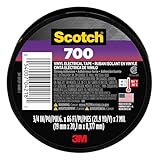
I remember the first time I tried to use a heat gun to reshape a slightly warped plastic part. My brilliant idea was to use some good old electrical tape to hold it in place while it cooled. Seemed logical, right? Well, about five minutes into heating, I had a gooey, sticky mess that looked less like a repair and more like a science experiment gone wrong. So, to cut to the chase: can heat strength melt electrical tape? Absolutely, and it’s not even a close call under most common scenarios. This isn’t some abstract question; it’s about avoiding a sticky, frustrating situation you’ve probably faced or will face.
Most standard electrical tapes, the kind you’ve got coiled in your toolbox, are made from PVC or rubber. These materials are great for insulation and basic adhesion, but they have a pretty low melting point compared to, say, metal. When you crank up the heat, whether from a soldering iron, a direct flame, or even a high-setting heat gun, you’re basically breaking down the polymer chains in the tape. It’s not just softening; it’s degrading, turning into a sticky, potentially hazardous goo.
The Science of Stickiness Under Heat
Let’s get down to brass tacks: why does electrical tape turn into a melted mess when things get hot? It all comes down to the materials used and their inherent properties. The vast majority of electrical tape you find at the hardware store is made from polyvinyl chloride (PVC) as the base material, often with a rubber-based adhesive. PVC is a common plastic, but it’s not exactly designed for high-temperature applications. Its glass transition temperature, the point at which it starts to become soft and pliable, is relatively low – typically somewhere between 70°C and 100°C (158°F to 212°F).
Now, think about what happens when you’re working with anything that requires heat. A basic soldering iron tip can easily hit 300°C (572°F) or more. A heat gun, even on a low setting, can push out air that’s 100°C to 200°C (212°F to 392°F), and on high, it can go much hotter. Direct flame, obviously, is way beyond that. When the temperature of your heat source exceeds the thermal stability of the PVC and its adhesive, the polymer chains start to break down. This process releases plasticizers and other components, leading to that familiar sticky, gummy residue that’s a pain to clean up. It’s not just melting; it’s chemical degradation.
The adhesive is often the first to go. It’s usually a pressure-sensitive adhesive (PSA), designed to bond with light pressure. These PSAs are typically polymers that become less viscous and more fluid when heated. So, even before the PVC backing completely liquefies, the adhesive will soften, lose its grip, and start to ooze. This is why you often see electrical tape slumping and sliding off a hot surface rather than just cleanly melting.
I learned this the hard way when I was trying to temporarily insulate some wires near a car exhaust manifold. I figured a few layers of electrical tape would be fine for a short drive until I could get proper heat-shrink tubing. Big mistake. Within minutes, the tape started to sag, dripping goo onto the exhaust and creating a rather unpleasant burning smell. It held for maybe five minutes before failing spectacularly, leaving me with a sticky mess and a very hot, exposed wire. So, to answer the core question: yes, standard electrical tape melts under significant heat, and its adhesive fails even sooner.
When Does Heat Strength Become a Problem?
The real question isn’t if heat can melt electrical tape, but when and how much heat is needed. For most DIYers and professionals dealing with electronics or minor repairs, the common heat sources are the ones that spell trouble for standard tape. Think about a soldering iron. If the tip gets too close, or if you’re working on a component that’s already hot and you touch it with the tape, you’re asking for it to melt. I’ve seen folks try to use electrical tape as a temporary fix for a leaky pipe near a radiator – that’s a recipe for a gooey disaster.
Another common culprit is a heat gun. People use these for shrinking tubing, softening adhesives, or even stripping paint. Even on a lower setting, the concentrated hot air can easily breach the thermal limits of electrical tape. I once saw a colleague trying to shrink some heat-shrink tubing on a cable that was already bundled with electrical tape. He cranked up the heat gun, and within seconds, the outer layer of electrical tape started to bubble and sag, sticking to the heat-shrink tubing itself. It made the job ten times harder and looked absolutely terrible. The common advice to just “wrap it up” for temporary insulation often overlooks the temperature limitations of the materials involved.
What about direct sunlight? On a hot summer day, dark surfaces can get surprisingly hot. While it might not reach the melting point of the PVC itself, prolonged exposure to intense sun can degrade the adhesive, making the tape lose its stickiness and potentially peel or sag. This is especially true if the tape is holding something under tension or in a important spot. (See Also: Can I Use Electrical Tape To Connect Wires )
Then there’s the simple matter of proximity. If your electrical tape is near a motor that runs hot, a light bulb that emits a lot of heat, or any other heat-generating component, it’s slowly being cooked. Over time, even temperatures that don’t cause immediate melting can degrade the tape, making it brittle and prone to cracking or losing its adhesive properties. So, it’s not just about direct, intense heat; ambient heat can be a slow killer of tape integrity.
Common Heat Sources and Tape Reactions
| Heat Source | Typical Temperature Range (approx.) | Effect on Standard Electrical Tape | Verdict |
|---|---|---|---|
| Soldering Iron Tip | 300°C – 450°C (572°F – 842°F) | Rapid melting, charring, adhesive failure. Melts almost instantly. | DO NOT USE |
| Heat Gun (High Setting) | 150°C – 600°C (300°F – 1112°F) | Melting, bubbling, severe degradation, goo formation. | AVOID DIRECT EXPOSURE |
| Heat Gun (Low Setting) | 60°C – 150°C (140°F – 300°F) | Softening, potential adhesive ooze, tape may stretch and sag. | RISKY, USE WITH CAUTION |
| Hot Water Immersion | 60°C – 100°C (140°F – 212°F) | Adhesive may soften significantly, tape might lose grip. PVC might become pliable. | UNRELIABLE FOR BONDING |
| Direct Sunlight (Hot Day) | 40°C – 70°C (104°F – 158°F) (surface temp) | Adhesive degradation, loss of tackiness, potential for slumping over time. | NOT SUITABLE FOR LONG-TERM ADHESION |
| Car Engine/Exhaust | Varies wildly, can be >200°C (392°F) | Will melt and drip very quickly. Hazardous goo. | EXTREMELY DANGEROUS |
This table highlights a key point: standard electrical tape is designed for specific conditions, and those conditions don’t involve significant heat. You can get away with it for short bursts around room temperature or slightly lifted ambient temps, but anything approaching direct contact with a heat source is a no-go.
What to Use Instead: The Right Tape for the Job
Alright, so standard electrical tape is out for anything involving real heat. What’s the alternative? This is where I see people make the same mistakes over and over. They reach for what they have – which is usually the ubiquitous black roll of electrical tape – instead of understanding that different jobs require different tools. If you need to insulate wires that are going to get hot, or hold something together in a high-temperature environment, you need specialized tape. This is a must for safety and effectiveness.
The first go-to for higher temperatures is usually vinyl tape designed for higher-temperature applications. While still often PVC-based, these tapes are formulated with additives that increase their thermal resistance. They won’t melt at the first sign of warmth. However, they still have limits. You won’t be wrapping them around a red-hot exhaust pipe and expecting miracles.
For more serious heat, you’re looking at tapes made from different materials altogether. Fiberglass tape, often coated with silicone or other high-temperature adhesives, is a common choice. It’s non-flammable and can withstand very high temperatures, often exceeding 200°C (392°F) or even 500°C (932°F), depending on the specific coating. This is the kind of stuff you see used in automotive applications to wrap exhaust pipes or in industrial settings around hot machinery. It feels different, too – more rigid and less stretchy than standard electrical tape.
Another option is PTFE (polytetrafluoroethylene) tape, commonly known by the brand name Teflon tape. While often associated with plumbing, PTFE tape has excellent thermal stability and a very low coefficient of friction. It’s often used as an insulating tape in electrical applications that experience high temperatures or require chemical resistance. It’s slippery and doesn’t adhere aggressively like PVC tape, which can be an advantage or disadvantage depending on the application.
Kapton tape, made from polyimide film, is the superhero of high-temperature tapes. It’s designed for extreme conditions, often found in aerospace and high-end electronics where components are subjected to significant thermal cycling. Kapton tape can handle temperatures well over 260°C (500°F) and has excellent dielectric strength. It’s usually amber or brown in color, and it’s noticeably thinner and more rigid than standard electrical tape. It’s more expensive, but for important applications, it’s worth every penny. I once had to repair a heating element in a specialized piece of lab equipment, and only Kapton tape would do. It held perfectly, even under constant cycling of heat and cool.
When choosing, always check the manufacturer’s specifications for the maximum operating temperature. Don’t just guess. If a product claims to be “heat resistant,” find out what that actually means in terms of degrees Celsius or Fahrenheit. For instance, some tapes might be rated for intermittent exposure to high heat, while others are designed for continuous operation. (See Also: Can Electrica Tape Catch On Fire )
Common Mistakes and How to Avoid Them
The biggest mistake people make, hands down, is assuming all tapes are created equal when it comes to heat. They grab the black roll from the junk drawer and expect it to perform like a high-tech industrial product. It’s like trying to hammer a nail with a screwdriver – it might sort of work for a second, but it’s the wrong tool for the job and likely to cause more problems than it solves. I’ve seen this happen in workshops, garages, and even in people’s homes when they’re trying to fix something quickly.
Another frequent error is not considering the duration of heat exposure. A tape might withstand a brief blast of hot air, but if it’s continuously exposed to temperatures near its limit, it will degrade. This is why “temporary” fixes can often become permanent failures. You might think it’s holding fine now, but the heat is slowly breaking down the adhesive and the material, setting you up for a failure down the line.
Overlooking the adhesive is also a big one. The backing material might be somewhat heat-resistant, but the glue holding it down might not be. Many standard adhesives are designed to soften and become tacky at relatively low temperatures, which is great for general adhesion but terrible when exposed to heat. This leads to the tape sliding, oozing, or simply falling off.
Incorrect application is another common pitfall. Even with the right tape, if you don’t apply it correctly – not cleaning the surface, not applying enough pressure, or not wrapping it tightly enough – it won’t perform as intended. For high-temperature applications, surfaces need to be scrupulously clean, free of oils, dust, or any contaminants that could interfere with the adhesive bond. I’ve spent more time cleaning surfaces than I care to admit, but it makes a world of difference.
Finally, there’s the issue of misinterpreting product descriptions. Terms like “high-temperature tape” can be vague. Always look for specific temperature ratings. Is it rated for 150°F, 300°F, or 500°F? Is that rating for continuous or intermittent exposure? Don’t be afraid to call the manufacturer or do a quick online search to verify specifications if they aren’t clear on the packaging. My first foray into buying specialized tapes for a project involved a lot of guesswork, and I ended up with a roll that looked right but couldn’t handle half the heat I needed it to.
Common Mistakes vs. Best Practices
- Mistake: Using standard electrical tape for hot environments.
Best Practice: Use tapes specifically rated for high temperatures (e.g., fiberglass, polyimide). - Mistake: Ignoring duration of heat exposure.
Best Practice: Check if the tape is rated for continuous or intermittent heat. - Mistake: Focusing only on the backing material’s heat resistance.
Best Practice: Make sure the adhesive is also suitable for the required temperatures. - Mistake: Applying tape to dirty or oily surfaces.
Best Practice: Thoroughly clean and dry surfaces before application. - Mistake: Vague product descriptions leading to wrong tape choice.
Best Practice: Always look for specific temperature ratings and consult manufacturer data.
Real-World Applications and First-Hand Experiences
I’ve seen electrical tape fail in spectacular fashion in a few different scenarios, and it always boils down to heat. One of the most memorable was during a car repair. I was trying to temporarily insulate a splice on a sensor wire near the engine block. It was a hot day, and the engine had been running. I figured a wrap of standard electrical tape would be fine for the short drive to the parts store. Within 10 minutes of starting the car, I saw a wisp of smoke. The tape hadn’t just melted; it had oozed down and started to burn on the hot engine block. It left a sticky, black residue that was a nightmare to clean off.
Another time, I was working on a small electronics project involving a resistive heating element. I needed to secure some wires to the housing, which was getting warm but not excessively hot to the touch. I used regular electrical tape, thinking it would hold. It worked for a few hours, but then the adhesive started to break down. The tape sagged, and the wires started to shift. This is a classic example of how ambient heat, even if not intense, can degrade standard tape over time. Had I used a high-temperature vinyl tape or even a bit of Kapton tape, it would have lasted indefinitely.
Contrast this with my experience using fiberglass tape with a silicone adhesive to wrap some exhaust headers on a project car. This stuff is designed for heat. It feels solid, and the adhesive is tacky but doesn’t turn into goo. Even after significant driving and exposure to the high temperatures of the exhaust, the tape held firm, showing no signs of degradation or melting. It was a bit more work to apply cleanly, but the result was a professional and durable finish that performed as expected. This is where you see the value of using the right material for the job. (See Also: Can I Substitute Duct Tape For Electrical Tape )
The key takeaway from these experiences is that standard electrical tape is for low-voltage, low-temperature applications. Think wire splices in a junction box that’s inside a climate-controlled room, or temporarily bundling cables where heat isn’t a factor. For anything involving motors, engines, heating elements, soldering irons, or even prolonged exposure to hot sun, you need to step up your tape game. It’s not just about aesthetics; it’s about safety and preventing fires or equipment failure. I learned the hard way that cheaping out on the right tape can cost a lot more in the long run, both in time and potential damage.
How to Apply High-Temperature Tape Correctly
- Surface Preparation: Make sure the surface is clean, dry, and free from oils, grease, or dust. Use an appropriate solvent if necessary.
- Proper Tension: Apply the tape with consistent tension. Too loose, and it won’t adhere well; too tight, and you might stretch the material, weakening it.
- Overlap: Overlap each wrap of tape by at least half its width to create a continuous, sealed layer.
- Pressure: After application, apply firm pressure to the tape, especially along the edges, to make sure good adhesion. A roller can be helpful for larger areas.
- Curing (if applicable): Some high-temperature adhesives may require a curing process (e.g., heating to a specific temperature for a set time) to achieve their maximum bond strength. Check the product instructions.
Faq: Your Burning Questions Answered
Can Heat Strength Melt Electrical Tape?
Yes, the heat from many common sources, like soldering irons, heat guns, or even direct flame, can easily melt standard electrical tape. Its base material (usually PVC) and adhesive have relatively low melting points compared to the temperatures generated by these tools, causing degradation and goo formation.
What Temperature Does Electrical Tape Melt at?
Standard electrical tape, typically made from PVC, begins to soften significantly around its glass transition temperature, which is often between 70°C and 100°C (158°F to 212°F). It will fully melt or degrade at higher temperatures, which are easily reached by common tools.
What Kind of Tape Is Heat Resistant?
Heat-resistant tapes include fiberglass tape (often with silicone adhesive), polyimide tape (like Kapton tape), and specialized high-temperature vinyl tapes. These are formulated with materials that can withstand much higher temperatures than standard electrical tape.
Can Electrical Tape Be Used Near a Soldering Iron?
Absolutely not. Even brief contact with a hot soldering iron tip will melt standard electrical tape instantly, creating a dangerous mess and potentially damaging components. Always use heat-resistant materials or make sure adequate distance and shielding.
How Do I Remove Melted Electrical Tape Goo?
Removing melted electrical tape goo can be tricky. Often, using a solvent like Goo Gone, isopropyl alcohol, or a specialized adhesive remover is necessary. For stubborn residue, gentle scraping with a plastic scraper might help, but be careful not to scratch the underlying surface. Sometimes, applying a bit of heat from a hairdryer can soften the goo enough to wipe it away more easily, but you must be cautious not to melt it further.
Conclusion
So, there you have it. Standard electrical tape is great for what it’s designed for: insulating low-voltage wires in cool environments. But when heat strength becomes a factor, you’re asking for trouble if you rely on it. It’s a common mistake, and one I’ve made myself, but understanding the materials and their limits can save you a lot of hassle and potential danger.
If your project involves anything more than a warm room, do yourself a favor and grab the right tape. Whether it’s a heat-resistant vinyl, sturdy fiberglass, or the almost indestructible Kapton, investing in specialized tape is a no-brainer. It’s the difference between a repair that holds and a sticky, melted mess that looks terrible and might even cause a fire.
Next time you’re tempted to grab that roll of black tape for a hot job, pause for a second. Ask yourself if the heat strength of your chosen tape is up to the task, or if you’re just setting yourself up for a melt-down. Consider what you’re actually trying to achieve and then find a tape that’s engineered for it.