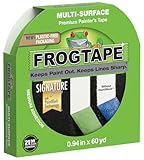
I stood there, holding a framed picture, a roll of blue tape in my other hand, staring at the freshly painted living room wall. My brain was screaming, ‘Don’t you dare!’ But my impatience was louder. I’d seen it done a million times online, looked like the easiest thing ever. So, I dove in, convinced this was the magic bullet for temporary wall decor. That’s when the real learning started about whether or not you can tape things to your wall using painters tape.
Let’s cut to the chase: the answer isn’t a simple yes or no. It’s a ‘maybe, but with serious caveats.’ This stuff isn’t some magical adhesive that works flawlessly on every surface, every time. I’ve learned that the hard way, peeling off paint, leaving sticky residue, and generally regretting my life choices.
The Truth About Blue Tape and Your Walls
Alright, let’s talk brass tacks. Can you tape things to your wall using painters tape? The short answer, as I’ve discovered through countless botched attempts and a few triumphant successes, is yes, but with massive, flashing red lights and a whole lot of ‘it depends.’
I’m not talking about some corporate-speak, ‘results may vary’ nonsense. I’m talking about the gritty reality from someone who’s spent way too much time wrestling with this stuff.
My first house, the walls were a nightmare. I wanted to hang some temporary holiday decorations, figured painters tape was the no-brainer solution. Wrong.
I ended up with little bits of paint ripped off the corners of my freshly painted walls. Felt like I’d failed a basic life skill test.
The core issue is that painters tape, despite its name, isn’t designed for heavy-duty adhesion. It’s formulated to create clean lines between different painted surfaces and, importantly, to be removed easily without damaging those surfaces. This means the adhesive is intentionally weaker than, say, duct tape or packing tape. It’s a delicate balance: strong enough to prevent paint bleed, but weak enough to pull off cleanly. When you try to stick anything substantial to it, you’re pushing the limits of that delicate balance.
Different walls present different challenges. Think about it: a matte, flat paint finish has a very different surface texture and porosity than a satin or semi-gloss finish. Newer paint jobs are also more susceptible to damage than older, fully cured paint. Even the humidity in your house can play a role. I’ve found that in my older house, with its slightly chalky flat paint, the tape sometimes sticks a little too well, or worse, pulls up the paint itself. Then there’s the opposite problem: in a bathroom where the humidity is higher, tape might lose its grip faster, especially if it’s holding something with a bit of weight.
So, while the idea sounds simple, the reality involves understanding your wall’s condition, the type of paint, and what exactly you’re trying to stick. It’s not a universal ‘yes.’ It’s more of a ‘proceed with extreme caution and manage your expectations.’
What to Look for in Painters Tape (and What to Avoid)
Not all blue tape is created equal, and neither are the walls you’re taping to. If you’re going to attempt this, you need to understand the nuances. I’ve wasted probably $50 over the years on generic brands that looked the same but performed wildly differently. Some of them were practically duct tape in disguise, leaving a sticky, gooey mess that took hours to clean. Others were so flimsy they barely stuck to themselves, let alone the wall.
The most common type you’ll see is the standard blue painters tape. This is generally the best bet for the average DIYer. Brands like 3M and FrogTape are usually reliable. They strike a decent balance between adhesion and removability. However, even within these brands, there are different versions. Some are marketed for delicate surfaces, which might be too weak for anything beyond holding a piece of paper. Others are designed for rough surfaces, which might have a stronger adhesive that’s more likely to damage your paint.
My biggest mistake early on was thinking that ‘painters tape’ meant one thing. I grabbed whatever was cheapest. Big error. I once tried to hang a fairly lightweight poster with some no-name brand, and when I pulled it off a few days later, it took a good chunk of the wallpaper with it. The wallpaper was textured, which probably didn’t help, but the tape’s adhesive was just too aggressive for it. That’s when I learned to read the labels more carefully. (See Also: Does Painters Tape Rip Paint Off Walls )
Some tapes have what’s called a ‘low tack’ or ‘delicate surface’ formulation. These are often a pale green or lavender color, not the classic blue. These are your safest bet if you have very sensitive walls, like wallpaper or freshly painted (and I mean very recently painted) surfaces. They have a much gentler adhesive. On the flip side, if you’re dealing with a slightly rougher texture and need something that will hold a bit better without being destructive, a standard blue tape from a reputable brand is usually the way to go. Avoid anything that explicitly boasts ‘extra sticky’ or ‘heavy-duty adhesion’ if your primary goal is damage-free removal.
Here’s a quick rundown:
| Tape Type | Adhesive Strength | Best For | My Verdict |
|---|---|---|---|
| Standard Blue (e.g., 3M, FrogTape) | Medium | Clean paint lines, temporary posters, lightweight decorations on most painted surfaces. | Reliable workhorse, but always test first. |
| Delicate Surface (Green/Lavender) | Low | Wallpaper, freshly painted walls, delicate finishes. | Your go-to for sensitive situations. |
| Heavy-Duty/Exterior (Often Tan or Orange) | High | Outdoor painting, rough surfaces (not recommended for interior walls where removal is key). | Avoid for interior walls unless you like paint repairs. |
| Generic/Unknown Brands | Variable (often too high) | Unknown. May work, may ruin your paint. | Buyer beware. I’ve had too many bad experiences to trust them. |
Common Mistakes That Lead to Paint Damage
Oh, the mistakes I’ve made. If you want to know how not to use painters tape on your walls, just follow my early footsteps. It’s a comedy of errors, really. The biggest, most glaring mistake?
Assuming painters tape is universally safe for all walls and all paint jobs. It’s not. I learned this the hard way when I tried to tape up a string of fairy lights on a wall that had been painted with a satin finish just three months prior. I figured, ‘It’s painters tape, it’s meant for walls!’
Wrong. When I pulled the tape off, it took a perfect, albeit unwelcome, outline of the tape’s path right off the wall.
My heart sank. That’s a $5 roll of tape costing me $50 in touch-up paint and an hour of my life.
Another classic blunder is leaving the tape on for too long. The adhesive is designed for short-term use. When you leave it on for days, weeks, or – God forbid – months, the adhesive can cure, bond too strongly to the surface, or break down, leaving behind a sticky residue that’s a nightmare to remove. I once left some tape up for about two weeks while I was rearranging furniture, thinking it would be fine. Big mistake. The paint underneath had basically bonded to the tape. Pulling it off felt like I was flaying the wall. It was ugly, and the residue was even worse.
Heat and direct sunlight are also enemies of painters tape. If you’re taping something to a wall that gets direct sun all day, the heat can make the adhesive gooey and more likely to leave a residue or even pull off paint. I tried hanging a lightweight, paper-thin map in a sunny spot once, and within a day, the tape was looking sad and the map was sliding down. When I removed the tape, it left a dark, sticky stain that sun hadn’t even faded.
Finally, and this is a big one: not doing a test patch. Before you go taping up your entire gallery wall, grab a tiny corner of your tape and stick it to an inconspicuous part of your wall. Leave it for a day or two, then remove it. Does it pull off cleanly? Does it leave any residue? If the answer is no, or if it damages the paint, then whatever you were planning to hang is probably not worth the potential headache. I’ve learned to do this religiously, especially in rental properties or when I’m unsure about the paint’s integrity. It takes two minutes and can save you a lot of grief.
Real-World Uses: What Actually Works
So, if painters tape isn’t some miracle adhesive for everything, what can you actually use it for on your walls without turning into a paint-repair specialist? After all my trials and errors, I’ve found a few sweet spots where it actually shines, as long as you’re realistic about its limitations.
The absolute, undisputed king of painters tape applications is, unsurprisingly, painting. Creating crisp lines between trim and walls, masking off areas you don’t want to paint, or creating geometric patterns – that’s its bread and butter. For this, a good quality blue tape from a reputable brand is your best friend. Make sure you press it down firmly along the edge to prevent bleed-through. I’ve found that running a fingernail or a plastic putty knife along the edge helps create a really good seal. (See Also: Does Masking Tape Work The Same As Painters Tape )
Beyond painting, the next most reliable use is for temporary hanging of very lightweight items. Think paper posters, unmounted photos, maybe a very thin piece of cardstock artwork. Even then, I’m talking about items that weigh next to nothing. I once tried to hang a thin fabric banner, and it lasted about 12 hours before it decided to take a nap on the floor. The tape was still stuck to the wall, but the banner had ripped away from it. So, for paper-based items, especially if they’re small and you’re not worried about them falling down overnight, painters tape can work.
Another practical use I’ve found is as a temporary marker or guide. For instance, if you’re trying to figure out where to place multiple items on a wall, you can use small strips of painters tape as placeholders. You can easily move them around, try different configurations, and see how it looks before you commit to drilling holes or using more permanent adhesive. It’s like a low-stakes sketchpad for your wall.
I’ve also seen people use it for holding up blueprints or plans on a workshop wall. Again, these are usually large, lightweight paper documents. The key here is that the surface is often unfinished wood or drywall that’s less sensitive than a high-end painted finish. For temporary labeling of items in a storage area or on shelves, it’s also perfectly fine.
The important takeaway is to be honest with yourself about the weight and material of what you’re trying to hang. If it’s a framed picture, a mirror, a shelf, or anything with even a modicum of weight, painters tape is going to disappoint you, and likely damage your wall in the process. You need to graduate to something stronger for those jobs.
When to Use Command Strips or Something Stronger
Look, I love a good DIY hack as much as the next person, but there comes a point where you have to admit that painters tape just isn’t going to cut it. My frustration threshold with painters tape has been reached many times, usually around 2 AM when I’m trying to hang something for a party that’s happening in six hours. That’s when I learned to reach for the heavy artillery, or at least, the medium-duty artillery.
For anything more than a piece of paper or a very lightweight poster, you’re going to want to step up your game. This is where products like Command Strips come into their own.
I was skeptical at first. They seemed like glorified sticky pads. But honestly, they work.
They have a clever adhesive that holds quite well, and the real magic is in the removal mechanism. You pull a tab, and the strip stretches, releasing the adhesive cleanly. I’ve hung framed pictures, small shelves, and even a surprisingly hefty decorative mirror using Command Strips, and I haven’t had a single incident of paint damage. The key is to follow the instructions precisely: clean the surface, apply the strip, wait the recommended time before hanging anything, and use the correct strip for the weight of the item.
I remember trying to hang a gallery wall in my apartment, about ten pieces of varying sizes and weights. I used Command Strips for all of them. It took a bit longer than I anticipated because I was meticulous about cleaning the walls and letting the strips cure, but the result was fantastic. No holes, no tape residue, just clean walls and my art exactly where I wanted it. The initial cost felt a bit higher than a roll of tape, maybe around $25 for a pack of assorted strips, but it was worth every penny for the peace of mind and the professional-looking finish.
What about heavier items, like actual shelves with books on them, or large mirrors? For those, you’re looking at traditional mounting hardware: screws, anchors, the works. There’s no tape, no magic adhesive strip that’s going to safely hold significant weight on a drywall surface long-term without risking damage to the wall or, worse, the item falling and breaking. This is where you need to accept that some things require more permanent solutions.
The lesson I’ve really internalized is this: painters tape is for painting and very, very light, temporary things. For everything else that has weight, or that you want to stay put for more than a few days, invest in products designed for that specific purpose. It’s not a compromise; it’s being smart about materials and saving yourself future headaches and repair costs. Think of it as an investment in your walls’ integrity. (See Also: Does Painters Tape Peel Paint )
People Also Ask
Can Painters Tape Damage New Paint?
Yes, painters tape can absolutely damage new paint. Newly painted walls, especially those painted within the last few weeks or months, have paint that is still curing and is more fragile. The adhesive on painters tape, even the gentler formulations, can bond too strongly to this delicate surface, pulling off paint chips or leaving a sticky residue when removed. Always wait for paint to fully cure and test tape in an inconspicuous area first.
Will Painters Tape Leave Residue on Walls?
Painters tape can leave residue on walls, especially if it’s old tape, generic brand tape, or has been left on for an extended period. The adhesive can break down or bond too strongly over time, making it difficult to remove cleanly. Reputable brands designed for specific surfaces are less likely to leave residue, but proper removal techniques and testing are still important to avoid this issue.
How Long Can Painters Tape Stay on a Wall?
Generally, painters tape is designed for short-term use, typically recommended for removal within 24 to 72 hours after application, depending on the brand and the surface. Leaving it on for longer periods increases the risk of the adhesive bonding too strongly, leaving residue, or even damaging the paint. Always check the manufacturer’s recommendations for the specific tape you are using.
What Is the Difference Between Blue and Green Painters Tape?
The main difference between blue and green painters tape lies in their adhesive strength and intended use. Blue painters tape is the standard and generally has medium adhesion, suitable for most painted surfaces where clean lines are needed. Green painters tape is typically formulated for delicate surfaces like wallpaper, freshly painted walls, or surfaces that are prone to damage, featuring a lower tack adhesive for gentler removal.
Practical Tips for Using Painters Tape on Walls
So, you’ve decided to use painters tape, despite all the warnings (or maybe you’re just hanging a grocery list). Smart. But even for these lighter duties, there are ways to make the process smoother and less risky. I’ve picked up a few tricks over the years that have saved me from paint-related nightmares. First and foremost, always clean the surface you’re applying the tape to. Dust, grime, or even just fingerprints can prevent the tape from adhering properly, leading to paint bleed, or make it harder to remove cleanly later. A quick wipe with a damp cloth (and letting it dry completely) can make a world of difference.
When applying the tape, really commit to pressing it down firmly. Don’t just slap it on. Run your fingernail, a plastic scraper, or even a credit card along the edge where the tape meets the wall. This creates a good seal and is the primary way painters tape prevents paint from seeping underneath. A weak seal is a recipe for messy lines and frustration.
When it’s time to remove the tape, do it slowly and at an angle. Don’t just rip it off quickly. Pull it back on itself, at about a 45-degree angle, gently and steadily. This motion helps to release the adhesive more cleanly and reduces the chance of pulling up paint. If you encounter resistance, stop, try a slightly different angle, or even use a hairdryer on a low setting to gently warm the adhesive; heat can sometimes make the adhesive more pliable and easier to remove without damage. I’ve used this hairdryer trick a few times on stubborn tape, and it’s worked like a charm.
If you’re taping something to a wall that’s been painted recently, always do a test patch. Seriously. Find an inconspicuous spot – behind a door, in a closet – stick a small piece of tape there, leave it for a day or two, and then remove it. If it pulls off clean, you’re probably good to go. If it damages the paint, then you know you need to find a different solution for whatever you’re trying to hang. This simple step has saved me so much grief.
Finally, consider the actual object you’re taping. If you’re taping a poster, use a strip of tape along the top edge. If it’s a very lightweight piece of paper, you might even get away with a couple of small pieces at the corners. But if you’re trying to tape something that has any kind of edge that could snag or pull, you’re asking for trouble. Be realistic about the forces at play. It’s a delicate dance between adhesion and removal, and understanding that is key to using painters tape successfully, or at least, without major disaster.
Final Thoughts
So, can I tape things to my wall using painters tape? The short, no-nonsense answer is: sometimes, for the right things, and with the right approach. I’ve learned that it’s best reserved for creating crisp paint lines or temporarily holding up paper-thin items that weigh next to nothing. Anything more substantial, or anything you want to stay put for more than a few days, is asking for trouble and likely a trip to the paint store.
My advice? Treat painters tape for what it is: a temporary solution with a gentle adhesive. If you’re unsure about your wall’s finish or the paint’s integrity, always test first. And if you’re looking to hang anything with a bit of weight – a framed photo, a small shelf, a mirror – do yourself a favor and invest in proper mounting solutions like Command Strips or traditional hardware. It’s less about being lazy and more about being smart and saving yourself future headaches.
Ultimately, knowing the limitations of your materials is just as important as knowing their strengths. For those lightweight, temporary needs, painters tape can be handy, but don’t push your luck.