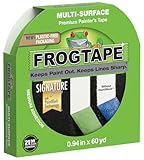
I remember staring at a half-finished craft project, completely out of the delicate, patterned tape I needed. Panic set in. Then, I spotted a roll of painter’s tape on my workbench. My brain, in its frazzled state, just blurted out: can I use painters tape instead of washi tape? It seemed like a decent idea at the time – both are tapes, right? Wrong. So very wrong.
This whole tape situation is more complicated than it looks. There are specific jobs for specific tapes, and mixing them up can lead to a sticky mess, literally.
Let’s cut through the noise and talk about what actually works.
When Painter’s Tape Tries to Be Fancy (and Fails)
Look, I’ve been there. You’re elbow-deep in a DIY project, maybe you’re decorating a journal, scrapbooking, or even just trying to add a little flair to a plain picture frame. You reach for that pretty, decorative paper tape – washi tape, everyone calls it. Then, disaster strikes: you’re out. Your eyes scan the room, landing on a roll of blue or green painter’s tape. It’s tape. It sticks. What’s the harm?
Well, the harm is that painter’s tape and washi tape are built for fundamentally different things, and using one for the other’s job is usually a recipe for disappointment, or worse, a ruined project. Washi tape is designed for delicate applications. It’s made from natural fibers, usually rice paper, which makes it thin, somewhat translucent, and most importantly, it adheres lightly. This light tack is its superpower for crafts. It lets you reposition it easily, it doesn’t leave a sticky residue when you peel it off, and it adds a decorative element without being permanent or damaging the surface underneath. Think of it as a temporary sticker that looks good.
Painter’s tape, on the other hand, is built for protection and a strong, clean line during painting. Its adhesive is designed to stick firmly to surfaces like walls, trim, and furniture, holding strong against paint.
It’s meant to create a crisp edge. While some lighter-duty painter’s tapes exist, the standard blue or green stuff is often quite aggressive. This means when you try to peel it off, especially from delicate paper or finished surfaces, it can tear the paper, lift paint, or leave behind a sticky, gummy residue that’s a nightmare to clean.
I learned this the hard way when I tried to ‘temporarily’ tape down some printed photos for a scrapbook page using painter’s tape. Not only did it leave a faint sticky mark, but when I tried to reposition one piece, it actually ripped the corner of the photo. Lesson learned: painter’s tape is for painting walls, not decorating memories.
The common advice you’ll find online often suggests that if you’re careful, you can make painter’s tape work. And sure, for certain very specific, non-delicate applications, maybe. But for the vast majority of what people want to use washi tape for – scrapbooking, journaling, gift wrapping accents, temporary labeling – painter’s tape is a poor substitute. It lacks the delicate aesthetic, the repositionability, and the gentleness on surfaces that makes washi tape so popular. So, while the answer to ‘can I use painters tape instead of washi tape’ might technically be ‘yes, but don’t,’ it’s important to understand why it’s a bad idea for most common uses.
The Real Differences: What’s Actually Under the Hood
It all comes down to materials and intended purpose. Think of it this way: you wouldn’t use a sledgehammer to hang a picture frame, and you shouldn’t use painter’s tape for delicate decorative work. Washi tape, as I mentioned, is primarily made from rice paper. This gives it a unique texture and a certain degree of translucency that’s hard to replicate.
The adhesive used is typically a low-tack acrylic or rubber-based glue, formulated to be repositionable and residue-free on most surfaces. This is why it’s a favorite among crafters. You can lay it down, lift it up, move it around, and it won’t usually damage the paper or surface beneath.
It’s gentle. I once had a roll of washi tape that I’d been using for months, and when I finally peeled a section off a piece of cardstock, there was no residue, no lifting of the cardstock’s print.
It was pristine. That’s the magic of good washi tape.
Painter’s tape, conversely, is usually made of a paper backing that’s treated for water and solvent resistance, allowing it to create clean paint lines without the paint bleeding through. The adhesive is formulated for a stronger bond.
It needs to stick to walls, wood, and sometimes even glass for extended periods, often in the presence of moisture or paint solvents. This stronger adhesive is its strength for painting, but its downfall for delicate crafts.
Generic blue painter’s tape might work okay on a sturdy notebook cover for a short while, but try using it to border a delicate watercolor painting, and you risk lifting the paint or paper when you remove it. There’s a reason 3M, the makers of Scotch tape, have a whole range of tapes. They understand that different jobs require different tools.
The ‘delicate surface’ painter’s tapes are a step in the right direction for crafters, but they still aren’t quite washi tape. (See Also: Does Painters Tape Pull Off Paint )
The visual difference is also stark. Washi tape comes in an astronomical number of patterns, colors, and finishes – from glittery to metallic to embossed. It’s meant to be seen and to add aesthetic value. Painter’s tape is utilitarian. It’s typically solid blue, green, or sometimes yellow. It’s functional, not decorative. If you’re looking for visual appeal, painter’s tape simply doesn’t offer it. Trying to achieve a delicate, decorative look with painter’s tape is like trying to paint a watercolor with a house-painting brush – you can technically make marks, but you won’t get the desired result. So, when considering ‘can I use painters tape instead of washi tape,’ remember that the materials and the intended aesthetics are worlds apart.
What to Look for in Washi Tape (and Why Painter’s Tape Falls Short)
When you’re buying washi tape, you’re looking for a few key things: pattern variety, ease of use, and reliability. The sheer diversity of designs is a huge draw – from minimalist dots to elaborate floral prints. The thinness and slightly textured feel of rice paper is also a big part of its charm. Most importantly, you want tape that sticks well enough to stay put but peels off cleanly without damage.
This is where the low-tack adhesive truly shines. I’ve spent probably $300 over the years on various sets of washi tape, and the good ones are a joy to use. The cheap, off-brand stuff, though? That’s where you run into problems – either it doesn’t stick at all, or it leaves a gummy mess.
So, even within the washi tape world, quality matters.
What to Look for in Painter’s Tape (and Its Limitations for Crafts)
Painter’s tape is all about creating a clean line and protecting surfaces during painting. You want good adhesion to prevent paint bleed, but you also need it to be removable without damaging the painted surface itself. Most standard painter’s tapes are good at this for walls and trim. However, there are specialized versions.
For example, 3M’s ‘delicate surface’ painter’s tape is designed for surfaces like wallpaper, freshly painted walls (less than 24 hours old), or wood floors. This is the closest you might get to a ‘craft-friendly’ painter’s tape. It has a lower tack than standard versions.
But even this tape is still primarily designed for painting applications, not for the decorative, easily repositionable needs of scrapbooking or journaling. Its adhesion is still stronger than what you’d ideally want for delicate paper crafts.
| Feature | Washi Tape | Painter’s Tape (Standard) | Verdict for Crafts |
|---|---|---|---|
| Material | Rice paper, natural fibers | Treated paper backing | Washi is lighter, more decorative. Painter’s is more durable for painting. |
| Adhesive | Low-tack, repositionable, residue-free | Medium-to-high tack, strong bond, can leave residue | Washi is ideal for delicate surfaces. Painter’s is too aggressive. |
| Appearance | Vast array of colors, patterns, textures | Solid colors (blue, green, yellow), utilitarian | Washi wins for aesthetics. Painter’s is purely functional. |
| Tearability | Tears easily and cleanly | Can tear paper or leave jagged edges | Washi is much easier to work with by hand. |
| Repositionability | High | Low to medium (can stretch or damage surface) | Washi is superior for correcting mistakes. |
| Cost | Varies, can be more expensive per roll for specialty designs | Generally less expensive per roll | Washi is a better investment for crafting. |
Common Mistakes and What to Avoid
The biggest mistake, of course, is assuming painter’s tape is a direct substitute for washi tape in decorative applications. People think, ‘It’s tape, it sticks, how bad can it be?’ Then they end up with ripped paper, stubborn sticky residue, or a line that looks more like it was applied with a ruler and a trowel than a delicate decorative tape. I’ve seen people try to use painter’s tape to border photo mats in scrapbooks.
It looks clunky, the lines aren’t sharp enough in a decorative sense, and the real kicker is when they try to remove it later and it takes a chunk of the photo or the matting with it. That’s a project ruined because of a tape swap.
Another mistake is buying the cheapest possible washi tape. While it might seem like a bargain, ultra-cheap washi tape often has inconsistent adhesive. It might not stick at all, or it might leave a horrible, gummy residue that’s almost impossible to get off. It’s like buying the cheapest paint; you end up with poor coverage and a streaky finish. I once bought a massive pack of ‘bargain’ washi tape online, and almost every roll was unusable because the adhesive was either practically non-existent or so sticky it destroyed the paper I was trying to decorate. So, buyer beware! Always check reviews if you can, and if a deal seems too good to be true, it probably is.
People also sometimes try to force painter’s tape to work by using heat or trying to peel it off very, very slowly. While these techniques might help minimize damage on some surfaces, they are often futile when dealing with delicate paper.
You can accidentally stretch the tape, tear the underlying paper, or still leave behind a sticky mess. It’s like trying to untangle a delicate necklace with pliers – you’re more likely to break it than fix it. The goal is to make crafting enjoyable and stress-free, not to battle your supplies. So, when you’re asking ‘can I use painters tape instead of washi tape,’ remember that trying to ‘fix’ its shortcomings for craft use often creates more problems than it solves.
The ‘delicate Surface’ Painter’s Tape Myth
There’s a category of painter’s tape called ‘delicate surface’ tape. It’s often lavender or pale pink. The marketing suggests it’s gentler and safer for things like wallpaper or freshly painted walls. Some people might think, ‘Aha!
This is the perfect happy medium!’ And for its intended purpose – protecting delicate surfaces during painting – it’s good. But for decorative crafting? Not so much.
I tried using the delicate surface tape to temporarily hold down a stencil on a cardstock project. It was still too sticky.
It lifted the cardstock fibers when I removed it, leaving a fuzzy edge where the tape had been. It’s still designed to adhere for a painting job, not to be a temporary repositionable embellishment. (See Also: Does Painters Tape Rip Paint Off Walls )
Its tack is simply higher than what’s ideal for most paper crafts. So, while it’s a step up from standard painter’s tape, it’s still not a true washi tape replacement for anything beyond very basic, temporary adhesion on sturdy surfaces.
Real-World Uses: Where Each Tape Belongs
Let’s be clear: painter’s tape has its place, and it’s a vital tool in my home maintenance arsenal. If I’m painting a wall, priming a piece of furniture before staining, or masking off areas of a window frame, painter’s tape is my go-to.
It creates those crisp lines that make a paint job look professional. For example, last summer I tackled painting my kitchen cabinets.
It was a multi-day project, and I used blue painter’s tape religiously to protect the countertops, the backsplash, and the areas where the cabinets met the ceiling. It held firm, didn’t bleed paint, and peeled off cleanly once the paint was dry, leaving perfectly sharp edges.
That’s where painter’s tape shines. It’s about protection and clean lines in a painting context.
Washi tape, on the other hand, is for adding personality and decorative touches. Think of it as a craft embellishment. It’s perfect for:
- Scrapbooking and Journaling: Bordering photos, adding decorative strips to pages, masking areas for journaling.
- Gift Wrapping: Sealing envelopes, adding decorative bands to plain wrapping paper, creating custom gift tags.
- Card Making: Adding borders, patterns, or accents to handmade cards.
- Decorating Planners: Sectioning off days, adding color and flair.
- Temporary Decor: Lightly adhering fairy lights to a wall (if the tape is truly low tack and the wall is painted), decorating jars or vases for temporary displays.
I recently decorated a plain white ceramic pot for a new plant using a few rolls of floral washi tape.
It completely transformed the pot into something much more interesting, and it was so easy to apply. The tape conformed to the curve of the pot, and it looks like part of the design. If I had used painter’s tape, it would have looked clumsy, potentially peeled off in the humidity, and would have been a sticky mess to remove later.
The key takeaway is that they serve different masters. Painter’s tape is about function and protection in a painting or DIY context. Washi tape is about form and decoration in a crafting or aesthetic context. Asking ‘can I use painters tape instead of washi tape’ is like asking if you can use a hammer to stir your coffee; you might manage, but it’s not what either tool is designed for, and the results will likely be subpar, if not disastrous.
A Practical Comparison: When to Grab Which
Let’s put it simply. If your goal is to prevent paint from seeping onto a surface you want to keep clean, grab painter’s tape. If you’re trying to add a bit of patterned flair to a piece of paper, a card, or a journal, reach for washi tape. I learned this the hard way when I tried to use washi tape to create a clean line for painting a border on a piece of wood.
The washi tape, being so thin and having a low tack, let the paint bleed underneath. So, even washi tape isn’t great for painting borders. It’s a two-way street of incompatibility. I once spent an hour trying to get painter’s tape to create a clean border for a small watercolour painting on thick paper.
It looked okay, but when I peeled it off, it lifted some of the paper fibers, ruining the crisp edge. That was a $20 lesson in using the right tool for the job.
Tips for Using Washi Tape Like a Pro (and Avoiding Painter’s Tape Pitfalls)
When you’re working with washi tape, the world is your oyster. Here are a few tips that have made my crafting life easier.
First, always have a variety of widths and patterns on hand. A thin 5mm tape is great for delicate accents, while a 1-inch tape can make a bolder statement. I keep my washi tapes organized in a clear plastic container, so I can see all my options at a glance. It makes choosing the right one for a project much faster.
Second, for cleaner cuts, especially on thinner tapes, use small craft scissors or a craft knife and a ruler. Sometimes tearing is fine, but for precision, a sharp blade is your friend.
I’ve found that trying to tear thicker glitter tapes often results in a messy, uneven edge. You want that clean line! (See Also: Does Masking Tape Work The Same As Painters Tape )
Third, if you’re applying washi tape to a curved surface, like a mug or a rounded jar, take your time. You might need to make small snips in the tape so it can lie smoothly without bunching up. A seam roller or even the back of a spoon can help press it down firmly. Fourth, don’t be afraid to layer tapes. Two different patterns or a patterned tape over a solid color can create unique effects. It’s all about experimentation. Finally, store your washi tape away from direct sunlight and extreme heat or humidity, as this can degrade the adhesive over time.
Now, on the flip side, if you absolutely, positively MUST use painter’s tape for something that feels like a craft, here are a few things to keep in mind, though I still highly advise against it for delicate work. If you must use it, opt for the ‘delicate surface’ varieties. Always test it on an inconspicuous area first.
Apply it firmly, but don’t press down so hard that you’re embedding it permanently. When removing, pull it off slowly and at a sharp angle (around 45 degrees) away from the surface. If you feel it snagging or lifting the paper, stop.
You’ve gone too far. I tried this method once on a thicker cardstock, hoping to create a stencil-like border. It still lifted some of the paper.
So, while these tips might mitigate some damage, they won’t prevent it entirely. The fundamental question of ‘can I use painters tape instead of washi tape’ really boils down to understanding that they are designed for different purposes, and trying to force one into the other’s role is usually a losing battle.
When Washi Tape Is Not the Answer (and Painter’s Tape Might Be)
It’s not all roses for washi tape. There are times when its low tack is a serious drawback.
For instance, if you’re trying to mask off a large area for painting, washi tape simply won’t adhere strongly enough. You’ll get significant paint bleed, and it’s too expensive to use that way. I learned this when I tried to mask off a small section of a wall for a two-tone paint job using washi tape. It looked beautiful, but the paint bled under every single edge.
It was a mess. So, for any job where you need a strong, reliable seal against paint or other liquids, painter’s tape is the only sensible choice.
Washi tape is also not suitable for permanent adhesion on surfaces that will be handled a lot or exposed to the elements. It’s a decorative, temporary adhesive for the most part. So, while the question is ‘can I use painters tape instead of washi tape,’ it’s equally important to know when washi tape itself isn’t up to the task.
Can Painter’s Tape Damage Paper?
Yes, standard painter’s tape can absolutely damage paper. Its adhesive is designed to be strong, and when you peel it off delicate paper, it can tear the fibers, lift ink or printed designs, or leave behind a sticky, gummy residue that’s difficult to remove. Even ‘delicate surface’ painter’s tape carries a risk for very sensitive papers.
Will Painter’s Tape Leave Residue on My Journal Pages?
It’s highly likely that standard painter’s tape will leave a sticky residue on your journal pages. The stronger adhesive can also pull at the paper itself, potentially causing tears or lifting. Washi tape is specifically designed to be residue-free for this reason.
Is Washi Tape Truly Residue-Free?
Good quality washi tape is generally considered residue-free on most common crafting surfaces like paper, cardstock, and finished wood. However, very cheap or old washi tape can sometimes leave a slight stickiness, especially if exposed to heat or humidity. Always test on a small, inconspicuous area if you’re concerned.
Can I Use Painter’s Tape for Temporary Labels?
You can use painter’s tape for temporary labels on surfaces like storage bins or painted walls, where its stronger adhesion is beneficial and residue is less of a concern. However, for labeling paper items like notebooks or craft supplies, where you might want to remove it cleanly later, washi tape or dedicated label tape would be a better choice.
What’s the Difference Between Washi Tape and Masking Tape?
Washi tape is made from rice paper and has a low-tack, repositionable adhesive, making it ideal for decorative crafts. Masking tape, like painter’s tape, is typically made from paper and has a stronger adhesive designed for protection during painting or for general-purpose temporary adhesion. It can be more aggressive and prone to leaving residue than washi tape.
Verdict
So, to finally put this to bed: can I use painters tape instead of washi tape? The honest answer, based on years of fumbling with both, is a resounding ‘no, not for what you probably want to do with it.’ Painter’s tape is a workhorse for painting, creating crisp lines and protecting surfaces. Washi tape is a delicate artist’s tool, meant for adding beauty and personality to your projects.
Trying to use them interchangeably is like expecting a bulldozer to perform delicate surgery. You’ll likely end up with a mess, damaged materials, and a lot of frustration. Stick to the right tool for the job, and you’ll save yourself a headache (and potentially some ruined craft projects).
Next time you’re tempted to grab that blue roll for a decorative flourish, resist. Go buy yourself some actual washi tape. Your future self, and your projects, will thank you.