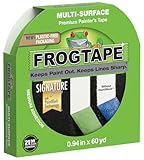
I remember staring at my Ender 3, a brand new frustration machine, and wondering if I could just slap some blue tape down and call it a day for my ABS prints. It felt like a genius shortcut. Why wouldn’t it work? It sticks to things, right? Well, let me tell you, that initial thought process is where a lot of people go wrong when they first ask themselves, ‘can i use painters tape to print abs’. It’s a question born out of desperation, usually after a few spaghetti-like failures.
The truth is, it’s not a straightforward ‘yes’ or ‘no’. There are layers to this, and if you’re not careful, you’ll just end up with more wasted filament and a bigger mess than you started with. I’ve been there, and I’m here to tell you what actually happens when you try to cheat the system.
Why Blue Tape Isn’t Your Abs Bff
Look, I’ve wasted enough money on filament to buy a decent used car, so I get wanting to cut corners. Painters tape, that lovely blue stuff everyone seems to have lying around, feels like the obvious cheap fix for bed adhesion. It’s readily available, it’s cheap, and it’s supposed to stick to stuff. What’s not to like? Well, a lot, when it comes to ABS. The core issue is that ABS needs serious heat to print properly, and it needs to stay warm even after it’s extruded. Painters tape, bless its heart, just can’t handle that kind of sustained, high-temperature abuse, and more importantly, it doesn’t offer the kind of consistent grip that ABS demands.
When you’re printing ABS, you’re often looking at bed temperatures of 90-110°C. That’s hot enough to make many adhesives weep. Painters tape is designed for painting, which means it needs to peel off cleanly without damaging the surface underneath. This means its adhesive isn’t formulated for extreme temperatures or for providing a tenacious grip on plastics that are prone to warping. As the ABS cools, it shrinks. This shrinking force is immense, and if your bed surface isn’t holding that first layer down with unwavering resolve, the print will lift, curl, and eventually detach itself, often with a sad little ‘pop’ sound that signals your print is doomed.
I tried it once on a particularly stubborn ABS print. I layered it on thick, thinking more tape meant more stick. Big mistake. The corners curled up within the first 20 layers. It looked like a miniature desert landscape with mountains forming at the edges. The filament just wasn’t adhering to the tape consistently. It was like trying to build a house on quicksand. You end up with a mess, and you’ve wasted time and material. It’s a classic case of ‘penny wise, pound foolish’ in the 3D printing world.
The Science of Stick: What Abs Actually Needs
ABS is a finicky beast. It’s a fantastic material for functional parts – strong, durable, and resistant to heat and UV. But those same properties that make it great for the final product make it a nightmare to print. The key player here is thermal expansion and contraction. When ABS is hot, it expands. When it cools, it shrinks. This shrinkage is what causes warping. If your print bed can’t keep that initial layer of ABS firmly stuck down, the shrinking plastic will pull itself away from the bed, creating those dreaded lifting corners and ultimately a failed print. This is why bed adhesion is king for ABS.
What you need is a surface that offers a strong, consistent bond across the entire print area, even at lifted temperatures. This means a surface that can withstand 90-110°C without degrading or losing its grip. Painters tape is typically made from paper and a relatively low-temperature adhesive. Exceeding its thermal limits not only weakens the bond but can also leave a sticky, gummy residue on your print bed that’s a pain to clean. I once tried using painters tape on a PLA print that was just slightly too large, and even at PLA temperatures (around 60°C), I found the tape had started to bubble and peel in places. ABS is a whole other ballgame. (See Also: Does Painters Tape Pull Off Paint )
Think of it like this: you wouldn’t try to secure a heavy anchor with a piece of string, would you? Painters tape is the string in this analogy. It’s just not built for the kind of force ABS exerts as it cools. You need something more solid, something designed to handle the thermal stresses and provide a reliable surface for that important first layer. This is why specialized build surfaces and adhesives are so popular and, frankly, necessary for consistent ABS printing.
Common Mistakes When (trying To) Use Painters Tape for Abs
One of the biggest mistakes people make, besides just assuming it will work, is not realizing the limitations of the tape itself. If you’re going to even attempt this, you need to understand that not all painters tape is created equal. Some are more forgiving than others, but none are ideal. A common error is not overlapping the tape strips properly, leaving gaps where ABS can seep through or start to lift. Another is not making sure the tape is applied perfectly smooth. Any bubbles or wrinkles create weak points for adhesion. I learned this the hard way when a small wrinkle under the tape caused a massive warp on a important part.
Another trap is thinking that just because you can get a print to stick initially, it’s a viable solution. A print might seem to be holding for the first 30 layers, but then the cumulative stress of cooling causes it to peel away dramatically. This is often when you hear that heart-sinking ‘crack’ or ‘pop’ sound as a large chunk of your print detaches itself from the build plate. It’s usually an all-or-nothing failure at that point. You’re left with a mangled mess on the print bed and a sense of deep disappointment.
The belief that more tape equals more adhesion is also a fallacy. Laying down multiple layers of painters tape can sometimes interfere with the heat transfer from the bed, creating uneven temperatures. This can actually worsen warping. The tape itself acts as an insulator, and if it’s not uniform, you’ll get hot and cold spots. My own experience with this involved a part that warped even more severely than when I’d used a single layer, because the heat distribution was all over the place. It was a lesson in ‘less is more’ when you’re already using a suboptimal material.
| Surface Type | Pros | Cons | Verdict for ABS |
|---|---|---|---|
| Blue Painters Tape | Cheap, readily available | Low temp resistance, weak adhesion for ABS, leaves residue, prone to warping | Poor. Only for the most desperate, short-lived attempts. Expect failure. |
| PEI Sheet (Smooth/Textured) | Excellent adhesion, durable, easy to clean, good temp resistance | Can be pricier, some textured PEI may require scraping for removal | Excellent. A go-to for reliable ABS adhesion. |
| Glass Bed (with Adhesive) | Flat, stable, easy to clean, reusable | Requires adhesive (glue stick, hairspray), can be slow to heat up | Good to Very Good. With the right adhesive, it’s a solid option. |
| BuildTak/Similar Surfaces | Aggressive adhesion, good durability | Can be expensive, may wear out over time, difficult to remove some prints | Very Good. Provides strong grip, but can be overkill for some. |
Real-World Use: When I Actually Tried (and Failed)
I’ll be honest, there was a time I thought, ‘What if I just preheat my bed to the absolute max it can go, crank up the enclosure temps, and then put the ABS down on painters tape?’ This was during a period where I was trying to print a fairly large, detailed functional part for a tool organizer, and my usual go-to build surface was out of stock. I had a spool of black ABS, and I was determined. So, I meticulously covered my entire print bed with strips of high-quality blue painters tape, making sure they overlapped perfectly and were smoothed down with a credit card until I thought my fingers would bleed.
I set my bed to 105°C, the enclosure to a toasty 50°C, and started the print. The first layer laid down okay, but it didn’t have that satisfying ‘squish’ into the surface that you get with better adhesion methods. It looked a bit too much like it was just sitting on the tape rather than bonding to it. (See Also: Does Painters Tape Rip Paint Off Walls )
About 40 layers in, I heard it. A faint crack. I tried to ignore it, hoping it was just a loose screw somewhere on the printer.
Then came a more definitive pop, and I saw it. One corner, then another, had lifted a good millimeter or two. By layer 60, the entire print was a warped, twisted mess, looking more like a contemporary art sculpture than the functional part I needed.
It was a spectacular failure. The tape had clearly lost its grip under the thermal stress, and the ABS had done what ABS does when it’s not properly secured: it shrank and pulled itself apart.
That experience cemented my understanding that while painters tape might seem like a viable shortcut for some materials or very small prints, for ABS, it’s a gamble that rarely pays off. The time and filament wasted trying to make it work far outweigh the cost of a proper build surface. It’s the kind of lesson you only need to learn once to understand the fundamental importance of the first layer.
Alternatives and Practical Tips for Abs Adhesion
If you’re serious about printing ABS, and I mean really serious about getting reliable results, you need to ditch the painters tape for your main build surface. The most consistently effective solution I’ve found is a PEI sheet. Whether it’s smooth or textured, PEI provides an incredible bond for ABS at its required temperatures and releases the print cleanly once it cools. I’ve had prints that I thought were welded to the bed, only to pop off with a gentle flex of the PEI sheet after it cooled. Another popular and effective method is using a glass bed with a suitable adhesive.
For adhesives on glass, your best bets are a thin layer of PVA glue stick (like Elmer’s purple) or a coat of specialized 3D printing adhesive spray. Hairspray can work in a pinch, but I find it less consistent and messier. The key is to apply a thin, even layer. Too much glue stick can actually make it harder to remove prints. I usually apply a light coat of glue stick, heat the bed to my target ABS temperature, and then lay down the print. For textured PEI, you often don’t need any additional adhesive; the texture itself provides enough grip, and the cooling process helps with release. (See Also: Does Masking Tape Work The Same As Painters Tape )
When it comes to temperature, don’t be afraid to experiment. While 90-110°C is the general range for the bed, your specific printer, filament brand, and ambient room temperature can influence what works best. An enclosure is also a big deal for ABS. It traps the heat around your print, reducing the temperature gradient between the extruded plastic and the ambient air. This significantly minimizes warping and layer adhesion issues. If you don’t have a dedicated enclosure, you can improvise with large cardboard boxes or even a modified plastic storage bin, as long as you’re mindful of airflow and fire safety. The goal is to keep that print warm and stable throughout the entire printing process.
People Also Ask: Do I Need an Enclosure for Abs?
Yes, an enclosure is highly recommended for printing ABS. ABS is prone to warping because it shrinks significantly as it cools. An enclosure traps heat around the print, creating a stable, warm environment that minimizes temperature fluctuations. This drastically reduces the likelihood of corners lifting, layer separation, and overall part distortion. While some people can achieve decent results without an enclosure by carefully controlling bed temperature and print speed, an enclosure makes the process much more forgiving and reliable for consistent, high-quality ABS prints.
People Also Ask: How Do You Get Abs to Stick to the Bed?
Getting ABS to stick to the bed is about providing a strong, consistent bond at high temperatures. The most reliable methods involve specialized build surfaces like PEI sheets (smooth or textured), which offer excellent adhesion without additional adhesives for many users. Another effective approach is using a glass bed with a suitable adhesive, such as a thin layer of PVA glue stick or a dedicated 3D printing adhesive spray. Maintaining a high bed temperature (typically 90-110°C) and using an enclosure to prevent drafts and maintain ambient heat are also important factors for successful ABS bed adhesion.
People Also Ask: What Bed Temperature Is Best for Abs?
The best bed temperature for ABS generally falls between 90°C and 110°C. However, this can vary slightly depending on the specific ABS filament brand, your printer’s calibration, and the ambient temperature of your printing environment. A higher bed temperature helps to keep the printed plastic warm and less prone to shrinking and warping. It’s often recommended to start with a temperature around 100°C and adjust up or down by 5°C increments based on your results. Always consult the filament manufacturer’s recommendations for their specific ABS product.
Final Thoughts
So, can you use painters tape to print ABS? Technically, you might get a tiny, insignificant print to stick for a few layers if you’re incredibly lucky and the stars align. But will it work reliably for anything substantial? Absolutely not. It’s a recipe for frustration, wasted filament, and a general feeling of despair. I’ve learned that sometimes, the cheapest option is actually the most expensive in the long run.
If you’re serious about printing with ABS, invest in a proper build surface. A PEI sheet or a glass bed with a reliable adhesive like a glue stick will save you so much grief. Trust me, your sanity and your filament spool will thank you. Stop looking for shortcuts where they don’t exist and embrace the tools that actually work for this challenging material. My journey with ABS has taught me that patience and the right equipment are a must.