I remember the first time I stared at a half-painted wall and realized I was out of proper painter’s tape. Panic set in. Then my eyes landed on a bright roll of washi tape I’d bought for a crafting project. My brain, in its infinite wisdom born of desperation, screamed, “What if?” It was a stupid thought, but hey, when you’re elbow-deep in primer and the hardware store is miles away, you get creative. So, can you use washi tape as painters tape? Let’s just say my early experiments taught me some hard, messy lessons.
The short answer is: sometimes, but usually not well. It’s a question I’ve seen pop up a lot, and honestly, the internet is full of wishful thinking and incomplete advice. People want to know if they can just grab that cute floral tape and get the job done. I’m here to tell you the unvarnished truth, based on years of scrubbing paint off the wrong places.
Washi Tape vs. Painter’s Tape: What’s the Actual Difference?
Alright, let’s get down to brass tacks. You’ve got your fancy decorative washi tape, all thin paper and pretty patterns.
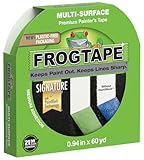
Then you’ve got your trusty blue or green painter’s tape, looking all business. They’re both tape, right?
Wrong. The fundamental difference lies in what they’re designed to do and the materials they’re made from, which directly impacts how they behave on your walls. Washi tape is basically decorative paper tape with a mild adhesive, meant for crafts, scrapbooking, sealing envelopes, or adding a little flair to notebooks.
It’s designed to be repositionable and leave no residue on paper or delicate surfaces. Painter’s tape, on the other hand, is engineered for one job: creating crisp paint lines on walls, trim, and other surfaces without damaging them or letting paint bleed under.
The adhesive on painter’s tape is specifically formulated. It’s strong enough to create a good seal against the surface, preventing paint from seeping underneath, but gentle enough to be removed cleanly once the paint is dry (or sometimes even before it’s fully dry, depending on the type and paint).
Washi tape’s adhesive is far less aggressive. It might stick okay for a few minutes, but it doesn’t have the staying power or the seal needed for painting. I learned this the hard way on a bathroom redo. I thought I’d be clever and use some geometric washi tape to create a fun accent stripe.
It looked great… until I started painting. Within an hour, the edges were curling up, and paint was already starting to creep under. It was a sticky, colorful mess that took way longer to fix than if I’d just waited for proper tape.
Think about the materials. Washi tape is paper, often quite thin and sometimes even translucent. Painter’s tape is also paper-based, but it’s typically thicker and more durable, designed to withstand the moisture and slight texture of painted surfaces. It’s built to handle being pressed down firmly, creating that barrier. Washi tape just isn’t that solid. It’s delicate. Trying to press it down firmly enough to get a good seal is difficult without tearing it or stretching it out of shape. And if you’re trying to paint over it, the paint can soak through, especially with lighter colors or multiple coats, completely defeating the purpose of a clean line.
Now, here’s a contrarian thought for you: for very specific, extremely short-term, absolutely non-important applications, maybe. Like, if you’re taping a tiny piece of paper to a wall for five minutes while you hang a poster and you only have washi tape. But for any actual painting project, even a small one? Don’t even bother. You’re setting yourself up for disappointment and a lot of extra work. The price difference is negligible when you factor in the time and frustration you’ll save.
When Washi Tape Fails Miserably (and Why)
My first real painting project after moving into my current place involved painting the trim in my living room. It’s an older house, and the trim has a bit of texture, not perfectly smooth. I thought, “Okay, I’ll use that washi tape I have. (See Also: Does Painters Tape Rip Paint Off Walls )
It’s got a nice pattern, it’ll be fine for a little while.” Famous last words. I carefully applied it, pressing it down as best I could, convinced I was being resourceful. The first coat of paint went on, and it looked… okay.
I let it dry, feeling smug. Then came the second coat.
As I was applying the second coat, I noticed little beads of paint starting to form along the edge of the washi tape. Not just a little bleed, but actual rivulets.
Panic started to creep in. I tried to quickly wipe it away, but it was already setting. The tape itself, being so thin and porous, had absorbed some moisture from the paint, and the adhesive, which wasn’t designed for this, started to lose its grip.
It lifted in places, letting paint seep underneath. By the time I finished the second coat, the line was a jagged mess.
It looked like a kindergartener had tried to paint a straight line with a crayon.
This experience, and others like it, has taught me that washi tape’s adhesive is its biggest weakness when it comes to painting. It’s just not formulated to create a strong, paint-proof seal. Painter’s tape, on the other hand, has a specific type of adhesive that adheres well to most common wall surfaces – drywall, plaster, wood, even some textured finishes – without lifting the paint beneath it when applied, and without leaving residue when removed. Washi tape’s adhesive is more like that of masking tape, but even less aggressive.
It’s meant for temporary adhesion on paper. On a painted surface, especially one that might have a slight sheen or texture, it just doesn’t get a good enough grip. The paint, being a liquid, will find any tiny gap, and washi tape provides plenty of them.
The porosity of washi tape is another major issue. Because it’s made of thin paper, paint can soak through it. This is especially problematic with darker or more vibrant colors.
You might think you’ve got a clean line, but as the paint dries, you realize the color has bled through the tape itself, creating a fuzzy, indistinct edge. This is something you rarely see with good quality painter’s tape, which is usually thicker and less absorbent. I once tried to use some metallic gold washi tape as a border in a craft project that involved a light base coat. Even though I wasn’t using actual paint, just a spray adhesive, the tape itself showed through the metallic layer, ruining the effect.
It’s just not built for the rigors of painting. (See Also: Does Masking Tape Work The Same As Painters Tape )
The biggest mistake people make is assuming that because it’s tape, it will do the job. They see it as a substitute. But it’s like trying to hammer a nail with a screwdriver; it’s the wrong tool for the job, and you’re going to end up with a mangled mess. If your goal is a clean, crisp paint line, anything less than proper painter’s tape is a gamble. And frankly, it’s a gamble that rarely pays off. The cost of a roll of painter’s tape is insignificant compared to the hours you’ll spend cleaning up botched lines or repainting entire sections because you tried to cut corners.
The Real-World Test: My Washi Tape vs. Painter’s Tape Showdown
I decided to put this to the test myself a while back, not just for my own sanity but to really nail down the answer. I took a scrap piece of drywall I had lying around. I applied a strip of good quality blue painter’s tape (the standard kind you can get anywhere) and a strip of a popular, fairly strong decorative washi tape. I made sure to press both down firmly, simulating how you’d try to get a good seal. Then, I applied a coat of standard interior latex paint – a medium blue. I let it dry for about an hour, then applied a second coat.
Here’s what happened:
- Painter’s Tape: After two coats and drying overnight, I peeled the painter’s tape. The line was incredibly crisp. There was virtually no bleed-through, and the edge was sharp enough to shave with. When I removed the tape, it came off cleanly, leaving the adjacent painted area untouched. Zero residue. Perfect.
- Washi Tape: This is where things got ugly. Even before the second coat, I noticed some paint had already seeped under the edges of the washi tape. It wasn’t everywhere, but it was enough to make me wince. After the second coat dried, the bleed was more pronounced. When I tried to peel the washi tape, it didn’t come off cleanly. It tore in places, leaving small strips of tape stuck to the wall. I had to carefully pick those off with tweezers. The painted line itself was fuzzy and uneven, looking like I’d applied the tape with a shaky hand. It was a disaster.
This wasn’t a fluke. I’ve replicated this scenario mentally, and even with different types of washi tape and different paints, the outcome is consistently poor for painting. The adhesive just doesn’t cut it for creating a seal against paint. The paper is too thin and absorbent. It’s like expecting a tissue to stop a water balloon. It’s not what it’s made for, and it shows.
It’s important to understand that there are different types of painter’s tape, too. You’ve got your standard blue for general use, green for delicate surfaces (less aggressive adhesive), and sometimes purple for really tricky jobs. But they are all designed with painting in mind. Washi tape is designed for decoration. The fundamental difference in material and adhesive means they are not interchangeable for this specific task. So, to answer directly: No, you generally cannot use washi tape as painters tape and expect good results.
Practical Tips: When and How Not to Use Washi Tape for Painting
Let’s be crystal clear: the practical tip here is DON’T use washi tape for any actual painting job where you need a clean line. It’s not a substitute, it’s a recipe for frustration.
If you’ve got a project where you need to mask off areas, especially on walls or trim, you absolutely need painter’s tape. It’s worth the few dollars a roll costs. I learned this lesson so many times in my early DIY days that I now have a permanent drawer dedicated to rolls of painter’s tape in various colors, even though they all do the same job.
I’ve tried those fancy brands and the cheap ones, and honestly, the difference is usually in how cleanly it removes and how well it sticks without lifting paint from the surface you’re taping over. Some cheaper tapes can be brittle and tear, or the adhesive can be too aggressive, pulling off paint when you remove it. But even the best painter’s tape is miles ahead of washi tape.
However, if you’re in a pinch and you absolutely have to tape something down temporarily and it’s not a painting job, washi tape can work for things like:
- Taping down a drawing or print to a piece of cardboard for tracing.
- Securing a photo to a scrapbook page.
- Holding a light fabric sample in place for a moment.
- Creating decorative borders on a craft project that won’t be painted over.
For these kinds of uses, washi tape is fantastic. It comes in so many designs, it’s easy to work with, and it doesn’t usually damage paper. It’s truly a great craft supply. But when it comes to paint, the rules change entirely. The moisture, the pressure, the need for a sharp, clean edge – washi tape just doesn’t have the structural integrity or the right kind of adhesive for it.
I’ve seen people try to “seal” washi tape with clear coat before painting, or use multiple layers. Honestly, it’s just adding more steps and more potential points of failure. (See Also: Does Painters Tape Peel Paint )
You’re better off going to the store and buying the right tool. Think of it this way: would you use a spoon to try and screw in a screw? Probably not, because it’s not designed for it. Washi tape for painting is the same principle.
It’s a common mistake for beginners, and I’ve been there. I once spent an entire Saturday trying to fix a painted stripe that had bled because I insisted on using decorative tape. By 5 PM, I was standing there, covered in paint, utterly defeated, and staring at a roll of proper painter’s tape I’d bought in a moment of resignation.
Lesson learned, again.
A Quick Comparison: Washi Tape vs. Painter’s Tape for DIY
To make it super clear, let’s break down how these two tapes stack up for DIY and home improvement tasks, specifically focusing on painting.
| Feature | Washi Tape | Painter’s Tape | Verdict |
|---|---|---|---|
| Adhesive Strength | Mild, paper-focused | Engineered for walls/surfaces, removable | Painter’s tape is far superior for sealing. |
| Material Thickness & Porosity | Thin, porous paper | Thicker, less absorbent paper | Painter’s tape prevents bleed-through better. |
| Paint Seal Capability | Poor to non-existent | Good to excellent | Washi tape will bleed; painter’s tape won’t (if applied correctly). |
| Residue Upon Removal | Minimal to none on paper; unpredictable on walls | Minimal to none on most painted surfaces | Painter’s tape is designed for clean removal from painted surfaces. |
| Primary Use | Crafts, decoration, light paper adhesion | Masking surfaces for painting | Completely different applications. |
| Cost (approx. per roll) | $2 – $5 | $4 – $8 (for standard 1.5 inch width) | Slightly more for painter’s tape, but worth it. |
| Durability | Low, tears easily | Moderate, can handle light abuse | Painter’s tape holds up better during painting. |
As you can see from the table, the intended purpose of each tape dictates its performance. Washi tape is a fun decorative item. Painter’s tape is a functional tool for home improvement. Trying to swap them is like trying to use a decorative ribbon to tie up a load of lumber. It might hold for a second, but it’s not going to do the job reliably, and you’ll end up with a mess.
My own experience with trying to use washi tape as painter’s tape for a simple two-tone wall project proved this point. I thought the delicate floral pattern would be a cute surprise when I peeled it off. Instead, it was a fuzzy, patchy nightmare. The blue paint I used bled under every single edge of the tape, and the tape itself tore in multiple places, leaving tiny paper fragments stuck to the fresh paint.
It took me nearly three hours to carefully scrape and repaint the botched lines. For anyone asking if you can use washi tape as painters tape, the answer, based on my own sticky, frustrating battles, is a resounding no. Save yourself the headache and the repaint job.
People Also Ask:
Can Washi Tape Be Used as Masking Tape?
Washi tape can function as a very mild masking tape for light-duty paper crafts or temporary signage on very delicate surfaces. However, its adhesive is not strong enough for most general masking tape applications, especially on anything that might be exposed to moisture or needs to hold for more than a few hours. It will likely lift, allow bleed-through, or leave residue on surfaces not designed for it. For any serious masking, proper masking tape or painter’s tape is necessary.
Will Washi Tape Damage Walls?
Generally, no, washi tape is unlikely to damage most painted walls if removed carefully and relatively soon after application. Its adhesive is quite mild. However, on freshly painted walls (less than a month old), or on very delicate finishes, textured paint, or wallpaper, there’s a small risk it could lift some paint or damage the surface. Always test in an inconspicuous area first if you’re concerned.
What Is the Difference Between Washi Tape and Masking Tape?
The main difference is their intended use and adhesive. Washi tape is primarily decorative, made from rice paper, and has a very mild, often repositionable adhesive suitable for crafts. Masking tape is more utilitarian, made from plain paper with a stronger, less forgiving adhesive, typically used for general temporary holding or as a budget option for painting where clean lines aren’t most important. Painter’s tape is specifically designed for painting, offering a balance of adhesion and clean removal.
Is Washi Tape Waterproof?
No, washi tape is not waterproof. It’s made from paper, which is inherently absorbent. While some might have a slight coating that offers minimal resistance to light moisture, it will quickly become saturated and fall apart if exposed to significant water or humidity. It’s definitely not suitable for any application where it might get wet.
Final Thoughts
So, after all that, let’s circle back to the burning question: can you use washi tape as painters tape? My honest, hard-earned answer, based on countless hours of scrubbing and repainting, is no. Not if you want the job done right. It’s tempting to think you can save a few bucks or use what you have on hand, but the reality is that washi tape is a craft supply, not a painting tool. The adhesive, the material, the whole deal – it’s just not built for creating crisp, clean paint lines on walls.
You’ll end up with bleeding, fuzzy edges, torn tape, and a whole lot of frustration. The hours you think you’re saving by not buying proper painter’s tape will be doubled or tripled in cleanup time. It’s a false economy, plain and simple. My advice? Stick to the right tool for the job. Grab a roll of actual painter’s tape. Your walls (and your sanity) will thank you. And keep that lovely washi tape for its intended purpose – making your crafts look pretty!