I remember staring at a half-painted wall, my knuckles white, holding a roll of what I thought was a decent substitute for painter’s tape. The paint bleeds were epic. We’re talking abstract expressionism when all I wanted was a clean line. So, when you ask ‘does masking tape work as painters tape?’, my immediate, visceral answer is a resounding ‘hell no,’ but like most things in life, there’s a bit more nuance to it.
This isn’t about fancy jargon; it’s about actual results I’ve seen (and paid for) with my own two hands. If you’ve ever found yourself in a bind, eyeing up that roll of masking tape in your garage, wondering if you can cheat your way to a crisp edge, stick around. We’re going to get real about whether it’s a viable option or just a recipe for a weekend redo.
The Bare-Bones Truth: Why Masking Tape Isn’t Painter’s Tape
Let’s cut to the chase. Masking tape and painter’s tape look similar, they’re both sticky, and they both come on rolls.
But putting them in the same category is like saying a bicycle is the same as a sports car. They both have wheels, but that’s where the similarities mostly end. The fundamental difference lies in their adhesive and material composition, designed for entirely different jobs. Masking tape, bless its heart, is designed for light-duty tasks like holding things together temporarily, wrapping packages, or bundling up loose wires.
It’s made to stick reasonably well but to come off without leaving a residue or damaging the surface underneath. Think of it as a polite guest who doesn’t overstay their welcome or trash the place.
Painter’s tape, on the other hand, is engineered with precision in mind. Its adhesive is formulated to create a strong enough seal against paint seepage while still being removable without damaging the painted surface.
This is the magic trick. It has a slightly different backing material, often paper-based, that’s less porous than typical masking tape, which helps prevent paint from bleeding through it. The adhesion is carefully calibrated: strong enough to hold firm against the pressure of a brush or roller, but weak enough to be peeled off cleanly once the paint has dried to a certain point (not too wet, not too dry – more on that later). Trying to use standard masking tape for painting is like trying to use a butter knife to saw through a piece of lumber; it’s not what it’s built for and you’ll end up frustrated and with a mess.
I learned this the hard way on my first apartment. I’d bought a decent amount of paint and some cheap masking tape, convinced I was being a frugal genius. I wanted crisp white trim against a bold blue wall.
I meticulously applied the masking tape, painted, and then, with a flourish, pulled the tape off. What I was left with was a jagged, fuzzy blue line, with flecks of blue embedded in the white trim and, inexplicably, some of the blue paint had seeped under the tape. It looked like a kindergartner had finger-painted the trim.
It took me an entire weekend of painstaking scraping and touch-up work with a tiny artist’s brush to fix it. That was the day I understood that some tools are just tools, and others are specialized instruments. Masking tape is a tool; painter’s tape is an instrument for clean lines.
When Does Masking Tape seem Like a Good Idea? (spoiler: Rarely)
Okay, so the general rule is no. But are there any scenarios where you might consider reaching for that generic tan tape?
Maybe, just maybe, if you’re painting something that isn’t a finished wall or a piece of furniture you care about preserving the pristine look of. For instance, if you’re doing a quick, rough primer coat on a wall that’s about to be wallpapered anyway, and you only need to mask off a small, unimportant area like the very top edge where it meets the ceiling, and you’re not worried about a perfect line, then maybe. Or if you’re masking off an area on a surface that’s going to be painted over entirely anyway – like masking off a section of a concrete floor before laying down a secondary coat of concrete sealant, where the sealant is going to go over the tape line. In these fringe cases, the risk of bleed or residue might be acceptable because the subsequent steps will cover it or the surface itself isn’t a high-visibility finish.
The other situation where masking tape might seem acceptable is if you’re in a real pinch and the hardware store is closed, or you’re on a remote job site with no access to proper supplies. In such a desperate moment, you might think, “It’s better than nothing.” But I’d caution you to temper your expectations severely. Even then, if you decide to go this route, you’ll need to be extra vigilant. This means applying the tape with extreme care, pressing down every single edge with your fingernail or a putty knife to get the best possible seal, and then, importantly, painting with a very light touch, applying multiple thin coats rather than one thick one.
You’ll also want to remove the tape while the paint is still wet. Like, really wet. This is a gamble. The thinner the paint application, the less chance it has to seep under, and removing it wet means the paint edge hasn’t had a chance to fully adhere to the tape, increasing the odds of a clean pull.
It’s a high-wire act, and I wouldn’t recommend it for anything you actually want to look good.
I once saw a buddy try to mask off a large, intricate stencil pattern on a piece of plywood using standard masking tape. He was building some custom shelves and wanted a decorative inlay.
He spent hours carefully cutting out the stencil and applying the tape. The result? A tape that stretched unevenly, lifting in places, and bleeding in others.
The plywood ended up with a hazy, indistinct stencil pattern. He spent more time trying to clean up the mess than he would have spent buying actual stencil mask or using a proper fine-line tape. (See Also: Does Painters Tape Pull Off Paint )
It was a classic case of trying to save a few bucks and ending up costing himself time and a decent finish. The lesson was clear: if the job demands a precise line, you need the right tape. Anything else is just a shortcut that leads you down a longer, more frustrating road.
What to Look for in Actual Painter’s Tape
Alright, if masking tape is generally a no-go, what should you be looking for? The world of painter’s tape isn’t as simple as it looks.
You’ve got different colors, different widths, and different levels of adhesion. Think of it as a spectrum. The most common type you’ll find is the blue painter’s tape.
This is usually your go-to for general interior painting on walls, trim, and woodwork. It’s a good all-rounder, balancing adhesion with ease of removal. I’ve used countless rolls of the standard blue stuff, and for most wall-to-trim jobs, it’s reliable. It sticks well enough to paint over, and usually pulls off clean if you remove it at the right time – usually within a few hours of the final coat of paint drying to the touch, or before it fully cures.
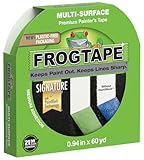
Then you have what’s often called ‘delicate surface’ painter’s tape. This usually comes in a green or sometimes a lavender color.
This is your best friend when you’re painting over freshly painted walls (within the last 24-48 hours, depending on the paint), delicate wallpaper, or surfaces that you know are prone to damage. The adhesive on these tapes is significantly less aggressive.
They’re designed not to lift paint or tear wallpaper. They are a bit trickier to get a perfect seal with because they’re so much lighter, so you have to be extra careful with your application and sealing. I used green tape when painting a room that had a rather expensive, textured wallpaper.
The idea was to paint the ceiling a different color and avoid any contact with the paper. The green tape held just fine and came off without a single tear, which was a massive relief. If I’d used standard blue tape there, I’d have been in for a world of hurt.
For more demanding situations, like painting outdoors on rough surfaces, or when you need a really strong seal that can withstand multiple coats or heavier paints, you might look for ‘exterior’ or ‘heavy-duty’ painter’s tapes. These often come in shades of orange or yellow. They have a more solid adhesive and a tougher backing.
They’re designed to stick to concrete, brick, or wood siding and resist weather. However, they also come with a higher risk of leaving residue or pulling off paint if you’re not careful, especially on delicate interior surfaces.
So, the golden rule is: match the tape to the job. Always read the packaging.
They usually tell you what surfaces the tape is best suited for. My personal rule of thumb: when in doubt, go with the tape designed for the most delicate surface.
You can always add more pressure to seal it, but you can’t easily un-damage a ripped wallpaper or a peeled paint job.
Common Mistakes That Ruin Your Lines
Even with the right painter’s tape, you can still mess up. It’s almost a rite of passage. The most common blunder?
Waiting too long to remove the tape. Seriously, this is a big one. Paint cures, it hardens, and it bonds. If you leave that tape on for days, or even overnight after the paint has fully dried, you’re basically asking for trouble.
When you pull it off, you’re not just pulling off tape; you’re pulling off a piece of the paint job you just did. The paint can harden onto the tape, and when you pull, it rips the paint layer with it, leaving those jagged edges and little paint flakes everywhere.
I’ve had paint peel off in long strips because I got distracted and left the tape on too long. The paint was practically welded to the tape. (See Also: Does Painters Tape Rip Paint Off Walls )
Another huge mistake is not sealing the edge properly. People just slap the tape down and assume it’s good enough. Nope.
You need to press down firmly along the entire length of the tape. Use your fingernail, the edge of a putty knife, or even a dedicated tape tool.
You’re looking to create an airtight seal between the tape and the surface. If there are any gaps, no matter how small, paint will find its way underneath. This is especially true on textured surfaces like popcorn ceilings or rough plaster walls.
Those tiny imperfections can create little highways for paint to sneak under. I’ve seen people try to paint with a thick, gloppy coat over a poorly taped edge, thinking the thick paint will somehow fill the gap. It just makes the bleed worse and creates a thick, ugly paint ridge where the tape was.
And then there’s the ‘peel too fast’ scenario. It’s tempting, right? You’re done painting, you’re excited to see the results, and you yank that tape off like you’re ripping off a band-aid.
Slow and steady wins the race here. You want to pull the tape off at a 45-degree angle, smoothly and consistently. If you pull too quickly, you can create chips or uneven lines.
Conversely, pulling too slowly might allow the paint to start dragging with the tape if it’s not quite dry enough. It’s a delicate balance. The ideal time is usually when the paint is dry to the touch but not fully cured.
This allows the paint to have some structure but not to be so bonded to the tape that it will tear. A good trick is to score the edge of the tape with a utility knife just before you pull it off, but you have to be incredibly careful not to cut into the underlying paint layer.
This creates a clean break for the paint.
My Honest Take: When Can Masking Tape Actually Work?
Look, I’m going to be blunt. If you’re painting anything where a clean, crisp line is important – and let’s be honest, most painting jobs fall into this category – then using masking tape instead of painter’s tape is a gamble you’re likely to lose. I’ve tried it. I’ve seen others try it. The results are almost universally disappointing. The risk of paint bleed, the difficulty in getting a clean line, the potential for damaging the underlying surface, and the extra time spent on touch-ups far outweigh any perceived cost savings. Masking tape is for masking; painter’s tape is for painting edges. It’s a different tool for a different job, and trying to cross-apply them is usually a mistake.
There are very, very few situations where I would say, “Yeah, go ahead, use masking tape.” Maybe if you’re masking off a section of a piece of cardboard for a craft project that you’re going to paint over entirely. Or if you’re taping up a temporary sign on a window for an event and you don’t care if the paint bleeds a little. But for walls, trim, furniture, or any project where you want a professional-looking finish, it’s just not worth it. I’ve spent more money on fixing mistakes made with cheap tape than I would have ever spent on good quality painter’s tape. It’s one of those “buy once, cry once” situations where investing in the right tool upfront saves you so much grief later.
My contrarian take? Some people swear by masking tape for certain things, claiming they get good results by carefully sealing it and painting thin coats. I disagree. Those people are either incredibly skilled at masking tape application, are painting surfaces that are forgiving of imperfect lines, or they’re just telling themselves they got lucky. The inherent properties of the tape itself are the limiting factor. It’s designed to be slightly porous and to have an adhesion level that’s just strong enough for temporary holding. Painter’s tape is designed for controlled adhesion and barrier properties. Why fight a battle against the tape’s own nature when the right tool exists and is readily available?
People Also Ask: Masking Tape vs. Painter’s Tape
What’s the difference between masking tape and painter’s tape?
The main difference is in their adhesive and material. Masking tape has a weaker, less specialized adhesive designed for light-duty temporary holding. Its backing can be more porous, allowing paint to seep through. Painter’s tape, on the other hand, has a precisely formulated adhesive for strong adhesion without damaging surfaces, and its backing is less porous to prevent paint bleed. Painter’s tape is specifically engineered for creating clean paint lines.
Can I use masking tape if I’m careful?
While you might get away with it in very specific, forgiving situations by being extremely careful with application, sealing, and removal, it’s generally not recommended for projects where a clean paint line is important. The tape’s properties make it prone to bleeding and difficult removal, often leading to more work fixing mistakes than if you had used painter’s tape.
Will masking tape damage my walls? (See Also: Does Masking Tape Work The Same As Painters Tape )
Standard masking tape can potentially damage freshly painted walls or delicate surfaces like wallpaper if left on for too long or if it has a stronger adhesive than intended for that surface. While it’s less likely to cause significant damage than, say, duct tape, it’s still a risk, especially if the paint underneath is not fully cured or is a delicate finish.
How do I get a clean line with painter’s tape?
To get a clean line, make sure the surface is clean and dry. Apply the painter’s tape firmly, pressing down all edges with your fingernail or a putty knife to create a tight seal. Apply paint in thin, even coats, and remove the tape while the paint is still wet or tacky, pulling it off at a 45-degree angle smoothly. Never let the paint fully cure with the tape on.
A Practical Comparison: Masking Tape vs. Painter’s Tape
To really hammer this home, let’s look at a direct comparison. I’ve run a few informal tests over the years, sometimes out of sheer curiosity, other times out of budget constraints.
The results were always pretty consistent. For this table, I’m thinking about a typical interior wall-to-trim painting scenario where you want a sharp, clean line. The price difference is usually negligible when you consider the amount of tape you’ll actually use for a decent-sized room.
A standard roll of generic masking tape (around 1.5 inches wide) might cost $3-$5, whereas a roll of good quality blue painter’s tape (the same width) is often $8-$15, depending on the brand and length. So yes, painter’s tape is more expensive per roll, but as you’ll see, the value proposition shifts dramatically.
For my tests, I used a standard latex wall paint on a primed drywall surface, with standard semi-gloss trim paint. The masking tape was a generic hardware store brand, and the painter’s tape was a popular mid-range blue tape. The application process involved careful alignment and pressing down the edges of both tapes equally. The results speak for themselves.
| Feature | Generic Masking Tape | Mid-Range Blue Painter’s Tape | Verdict |
|---|---|---|---|
| Adhesion Strength | Moderate, prone to lifting or shifting | Good balance: sticks well, removes cleanly | Painter’s Tape Wins |
| Paint Bleed Resistance | Poor; significant bleed-through common | Good; minimal bleed if sealed properly | Painter’s Tape Wins |
| Ease of Removal | Can be difficult, sometimes leaves residue | Easy, clean removal when used correctly | Painter’s Tape Wins |
| Surface Damage Risk | Moderate, especially on delicate surfaces | Low, if used on appropriate surfaces and removed correctly | Painter’s Tape Wins |
| Line Crispness | Poor; ragged, fuzzy edges | Excellent; sharp, clean lines achievable | Painter’s Tape Wins |
| Durability During Painting | Can tear easily, especially when wet | Fairly solid; holds up to brushing/rolling | Painter’s Tape Wins |
| Cost Per Roll | Lower ($3-$5) | Higher ($8-$15) | Masking Tape Wins (Initial Purchase) |
| Overall Value & Outcome | Low; leads to rework, frustration, and poor finish. Not recommended. | High; saves time, reduces frustration, delivers professional results. Highly recommended. | Painter’s Tape Wins (By a Landslide) |
This table really highlights why painter’s tape is the standard for a reason. The initial cost difference is easily swallowed up by the time and effort saved, not to mention the significantly better aesthetic outcome. Trying to cut corners with masking tape on a painting project is like trying to use a dull knife to carve a detailed sculpture – it’s just not the right tool for the job and the results will reflect that.
The True Cost of “saving Money”
The idea that you can save money by using masking tape when you need painter’s tape is a myth. It’s a false economy that almost always costs you more in the long run. Think about it: if the masking tape bleeds, you have to go back and meticulously touch up those lines.
This often involves a tiny brush, multiple coats, and a lot of patience, which you might not have after you thought you were done. Or, worse, if the paint peels off with the tape, you might have to repaint the entire section. That’s not saving money; that’s spending more money on paint, supplies, and most importantly, your time. Your time is valuable, and I’d much rather spend it enjoying my freshly painted room than hunched over fixing botched lines.
Beyond the direct cost of fixing mistakes, there’s the intangible cost of frustration and the lowered quality of the final finish. A project that looks sloppy because of bad tape lines is demoralizing. It can make a space feel unfinished or poorly maintained, even if the paint color itself is exactly what you wanted. I’ve seen perfectly good paint jobs ruined by the illusion of saving a few dollars on tape. It’s like buying the cheapest engine oil for your car; it might work for a little while, but eventually, it’s going to cause problems that are far more expensive to fix than the initial oil change would have been.
When I’m advising friends or clients on painting projects, this is one of the first things I stress. Don’t skimp on the painter’s tape. Buy a reputable brand, and buy the right type for your surface. It’s one of the few areas in DIY where spending a little more upfront truly guarantees a better outcome and less grief down the line. It’s not about being a perfectionist; it’s about being smart and efficient with your resources. So, when someone asks me if masking tape works as painter’s tape, my answer is always a firm ‘no,’ because the true cost of using it is far too high.
The question of ‘does masking tape work as painters tape’ has a pretty straightforward answer for anyone who’s actually done a decent amount of painting. It’s a tool built for different purposes, and trying to force it into a role it wasn’t designed for will almost certainly lead to disappointment and extra work. The specialized adhesive and backing of painter’s tape are there for a reason, and they are worth every penny. So, next time you’re staring at those two rolls, remember the potential for a weekend of frustration and make the smart choice.
Final Verdict
So, to wrap it all up, does masking tape work as painters tape? My honest, no-bones-about-it answer is no, not if you want a good result. The few bucks you might save upfront will be lost tenfold in wasted time, extra paint, and the sheer agony of trying to fix bleeding edges and ripped finishes. Painter’s tape is a specialized tool for a reason, and it’s one of the few things in DIY that I absolutely will not compromise on.
If you’re painting trim, a feature wall, or anything where a clean line matters, do yourself a favor and buy the proper painter’s tape. It’s not a luxury; it’s a necessity for a professional-looking finish. Trust me, your future self will thank you when you’re admiring those crisp, clean lines instead of staring at a messy paint job you have to fix.
Next time you’re at the store, grab the blue (or green, or orange, depending on your surface) and save yourself a world of hurt. It’s the best advice I can give you for a stress-free painting project. Now go forth and paint cleanly!