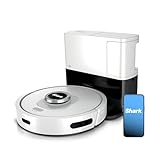
Honestly, the first time my brand-new Shark robot vacuum started doing laps like a confused hamster, I thought I’d broken it. It was supposed to clean my floors, not audition for a demolition derby. This wasn’t a quick spin; it was a full-on spiral, getting tighter and tighter until it bumped into the same wall repeatedly. I spent about two hours fiddling with it, convinced it was a software glitch or a sensor issue that needed a factory reset. Turns out, it was something far simpler, and frankly, a bit embarrassing.
Suddenly, it was just… going in circles. Why is my Shark robot vacuum going in circles? It’s a question that can turn a moment of supposed automated convenience into pure, unadulterated frustration. You paid good money for this thing to work, and now it’s behaving like it’s had one too many energy drinks.
Fear not, fellow sufferers of rogue robot vacuums. I’ve been there, stared at my own spinning disc of despair, and I’ve figured out what’s really going on. It’s usually not rocket science, but it is usually something incredibly simple that the manual glosses over.
The Dumbest Reason: It Can’t See
Seriously, this is often the culprit. Your robot vacuum, bless its little electronic heart, relies on sensors to understand its environment. If those sensors are dirty, smudged, or outright blocked, it’s effectively blind. Think of it like trying to drive your car with mud splattered all over the windshield and cameras. It doesn’t know where it is, where it’s going, or even if it’s in a room or the middle of the ocean. This is why ‘why is my Shark robot vacuum going in circles’ often has such a mundane answer.
I remember one particularly frustrating Saturday. My Shark was supposed to be handling the post-weekend crumb situation, and instead, it was doing a bizarre, tight pirouette in the middle of the living room, bumping into the same leg of the coffee table again and again. I unplugged it, replugged it, cursed its name under my breath, and then, in a fit of pique, grabbed a microfiber cloth. A few swipes over the main optical sensors on the front, and BAM. It straightened itself out and went back to work like nothing happened. Never underestimate a bit of dust. It’s like trying to have a serious conversation with someone who’s just had soap in their eyes.
The dirt builds up in the most insidious ways. Pet dander, fine dust kicked up from the carpet, even a stray bit of lint can obscure the tiny windows these sensors peek through. You’d think a machine designed to clean would be better at keeping its own eyes clean, but alas, that’s not always the case. So, before you start thinking about firmware updates or faulty navigation systems, grab a soft, dry cloth and give those sensors a good clean. (See Also: How To Empty Shark Robot Vacuum )
When the Floor Itself Is the Problem
Now, sometimes, it’s not the robot’s fault at all. The floor itself can be the villain. Shiny, highly reflective surfaces are the enemy of many robot vacuums. Think of highly polished dark hardwood, very glossy tile, or even a large, dark area rug with a subtle sheen. The cliff sensors, which are meant to prevent the robot from tumbling down stairs, can get confused by these surfaces. They bounce light off the floor and interpret it as a drop, causing the robot to back away, try again, and eventually, just get stuck in a repetitive loop of confusion.
I once saw a friend’s robot vacuum spin out of control on a brand-new, super-glossy black tile floor. It looked like a confused disco ball. The manual mentioned cliff sensors, but it didn’t really hammer home how sensitive they could be. This is where advice from online forums, which often just repeat manufacturer talking points, can be less than helpful. They’ll tell you to clean the sensors, which is good advice, but they won’t tell you that sometimes, your floor is the actual issue.
The fix here can be a bit more involved. If you have large areas of highly reflective flooring, you might need to temporarily block off those sections with a physical barrier or even strategically place dark, non-reflective mats. It’s a pain, I know. It feels like the robot is telling you your taste in flooring is too fancy for its own good. It’s a similar problem to how some older security cameras struggle with pure white walls because the sensor gets overloaded with light.
Obstacles: Small, Slippery, and Sinister
This is where things get truly maddening. We’re not talking about big stuff like furniture legs or walls that the robot should easily detect. No, we’re talking about the little things that conspire against your automated cleaner. Things like loose shoelaces, stray charging cables that snake across the floor, or even a particularly fluffy rug fringe can get tangled in the brushes or sensors. When this happens, the robot might try to push through, get stuck, and then just spin its wheels uselessly, leading to that dreaded circular motion.
My absolute worst offender was a set of my kid’s thin, colorful shoelaces that had fallen off a pair of sneakers. The Shark’s brushes snagged them, and the whole unit just started grinding and whining, stuck in a tight circle by the shoe rack. It was like it was trying to eat them. The noise was awful, a high-pitched whine that made me wince. I had to physically pry the brushes free, and the laces were a mangled mess. At that point, I figured the vacuum was toast, but after untangling it, it actually went back to work. (See Also: How To Dump Shark Robot Vacuum )
This also applies to things that are just too slippery or too low to the ground for the bump sensors to register effectively. Think of those thin, flexible plastic mats under office chairs or certain types of very low-profile rugs. The robot might glide over them, get stuck underneath, or simply get confused by the sudden change in terrain and start its circular dance of despair.
| Problem Type | Likely Cause | My Verdict |
|---|---|---|
| Spinning in place | Dirty cliff sensors, overly reflective floor | Clean sensors first, then assess floor type. Often the fix. |
| Bumping into same spot | Dirty bumper sensors, software glitch | Clean bumper sensors. If persistent, consider a reboot. |
| Getting stuck on edges | Low-profile rugs, loose cables, fringe | Clear floor debris. Physical barriers might be needed for tricky floors. |
| Erratic movement, random turns | Mapping issues, interference, software bug | Try a full reboot or factory reset as a last resort. Map your room thoroughly. |
Software Shenanigans and Mapping Mishaps
Sometimes, the reason your Shark robot vacuum is going in circles isn’t a physical one at all. It’s a digital one. Modern robot vacuums, especially the ‘smart’ ones, rely on mapping technology to navigate your home. If this map gets corrupted, if there’s interference with the sensors that create the map, or if the robot simply gets confused about its current location in relation to its programmed map, it can enter a loop.
I’ve experienced this after a power outage briefly messed with the Wi-Fi network that my vacuum uses for its smart features. Suddenly, it didn’t ‘know’ where it was in the house anymore. It started spinning in what it *thought* was the center of its known territory, which in reality was just an empty spot on the floor. The manual suggests a reboot or a factory reset for these kinds of issues, and honestly, after about six different attempts trying to ‘help’ it find its way, a reset was the only thing that worked. It was like it had amnesia.
What’s particularly frustrating about these software issues is that they can be intermittent. One day it’s fine, the next it’s doing the spin cycle. It’s the digital equivalent of a human having a bad hair day, but with your expensive cleaning appliance. When you’re troubleshooting, and you’ve cleaned every sensor imaginable, this is the next logical place to look. You might even need to delete the old map and have it create a new one from scratch. This process can take a while, but it’s often better than watching your expensive gadget go in circles for an hour.
What If My Shark Robot Vacuum Keeps Getting Stuck in Corners?
This usually points to a problem with the bumper sensors not registering the corner correctly, or the navigation software not properly calculating the turn. Ensure the bumper is clean and can move freely. Sometimes, the corner itself might be an unusually tight or awkwardly shaped space that confuses the sensors. Try blocking off that specific corner temporarily to see if it resolves the issue elsewhere. If it persists, a software reboot or recalibration might be needed. (See Also: How To Fix Shark Robot Vacuum )
Is It Normal for a Robot Vacuum to Go in Circles Sometimes?
No, it’s not normal for a robot vacuum to consistently go in circles. Occasional, brief hesitations or slight adjustments are normal as it navigates. However, persistent circular motion indicates a problem. This could be a dirty sensor, an issue with the floor surface, a physical obstruction, or a software glitch. It’s a sign that something isn’t quite right and needs attention.
Why Is My Shark Robot Vacuum Ignoring Certain Areas?
If your robot vacuum is ignoring specific areas, it could be due to a few reasons. First, the ‘no-go’ zones might be set incorrectly in the app, or the mapping feature might have created an invisible barrier there. Second, the sensors might be detecting an obstacle (real or perceived) in that area, like a particularly dark rug or a low-hanging curtain, and avoiding it. Lastly, if the robot frequently gets stuck or has trouble navigating that area, it might learn to avoid it altogether to prevent future errors.
Final Verdict
So, when you find yourself asking ‘why is my Shark robot vacuum going in circles?’, don’t panic and don’t immediately assume it’s broken beyond repair. In my experience, it’s almost always something straightforward. I once spent nearly $150 on replacement parts for a different brand of robot vacuum that was acting up, only to find out later that a bit of dust on the sensor was the actual problem. A humbling, and expensive, lesson.
Start with the simplest solutions: clean those sensors religiously. Seriously, make it a weekly thing. Then, consider your floor type and look for any rogue cables or fringes that might be causing trouble. If all else fails, a good old-fashioned reboot or a full factory reset (check your manual for how to do this specific to your Shark model) can often clear up any digital confusion.
It takes a bit of detective work, but usually, you can get your little cleaning buddy back on track without needing to call support or buy a new one. It’s all about understanding what these little machines are seeing, or rather, not seeing.
Recommended Products